 Orcas Island Siding
 Composite Decking Built for Lopez Village's Marine Climate
A deck in Lopez Village doesn't live an easy life. It sits under wet Pacific Northwest weather most of the year, catches salt-laden air off the water, and spends long stretches of fall and winter in shade and damp that never really dries out. Composite decking handles that combination better than most materials, but only when it's installed with those conditions in mind. A deck built the same way you'd build one in a dry inland climate will underperform here, no matter how good the boards themselves are.
This page is about one job, done right, in one place: composite decking for homes in and around Lopez Village. We'll walk through what the local climate actually does to a deck, what correct installation looks like, how composite compares to the alternatives, and why working with a crew that's already familiar with this part of San Juan County makes a real difference in how the finished deck holds up.
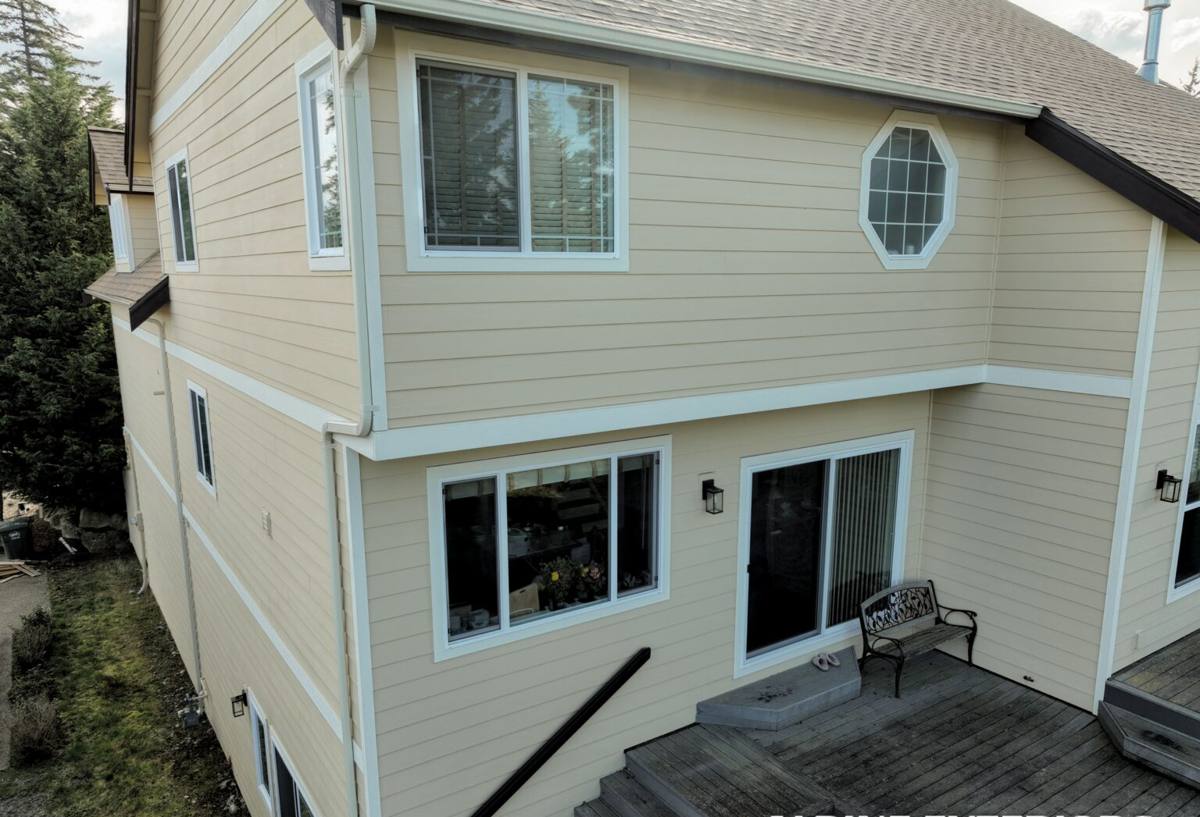
Why Salt Air, Rain, and Moss Change the Decking Equation
Salt Air
Being this close to saltwater means airborne salt settles on every exterior surface, including deck boards and, more importantly, the metal fasteners and hardware underneath them. Salt speeds up corrosion on anything less than fully rated for coastal exposure. It's a slow process, so it's easy to miss until a few years in when hidden fastener clips or ledger hardware start to fail before the decking itself shows any wear.
Driving Rain
Storms here don't always come straight down. Wind-driven rain gets pushed sideways into the gaps between boards, along the house-to-deck connection, and under railings. A deck that's only detailed to shed water from above will still take on moisture from the side, which matters most at the framing and flashing level, not at the visible surface.
Moss Season
San Juan County's long, cool, wet stretch from fall through spring is prime moss and algae territory. Any horizontal wood-look surface that stays shaded and damp will grow something on it eventually. Composite decking resists rot the way wood can't, but it isn't immune to surface growth, and boards installed without enough airflow underneath stay damp longer and grow moss faster than boards with proper drainage and ventilation built into the structure.
What a Correctly Installed Composite Deck Looks Like Here
Substructure First
The decking itself is the part everyone sees, but the framing underneath decides how long it lasts. In this climate, that means joists and beams either built from naturally durable, treated, or corrosion-resistant material appropriate for ground and moisture exposure, joist tape or a comparable moisture barrier on top of framing to keep water off the wood, and enough ledger and post spacing to give the structure real airflow. Skipping any of this to save a day of labor is the single most common reason a composite deck develops problems in its framing while the boards on top still look brand new.
Fastening and Board Spacing
Composite boards expand and contract with temperature more than most people expect, and they need fasteners and clips rated for exterior, corrosion-prone environments — not standard interior-grade hardware. Board gapping has to account for both moisture drainage and the material's expansion range; too tight and boards can buckle, too loose and the deck looks and feels unfinished. Getting this dialed in on day one avoids a deck that needs board replacement or refastening within a few seasons.
Flashing Where the Deck Meets the House
The ledger board connection — where the deck attaches to the house — is the single highest-risk point for hidden water damage on any deck, and it's the spot driving rain punishes hardest. Proper flashing, correct fastener spacing, and a real gap or flashing detail between the ledger and the siding above it are non-negotiable here. This is also the point most likely to get shortcut on a rushed job, because it's covered up quickly and doesn't show a problem until there's rot in the house framing behind it.
Composite vs. Wood vs. PVC Decking: What Fits Lopez Village Homes
Every decking material has real trade-offs. Here's an honest comparison for a marine, moss-prone climate like this one — not a sales pitch for any single product.
| Factor | Composite | PVC / Cellular | Wood (cedar or treated) |
|---|---|---|---|
| Upfront cost | Mid-range | Highest | Lowest |
| Ongoing maintenance | Low — periodic cleaning | Lowest | Annual sealing/staining |
| Rot resistance | Very good | Excellent | Depends on wood species and upkeep |
| Salt air / corrosion sensitivity | Low if hardware is rated correctly | Low | Moderate — fasteners corrode over time |
| Moss/algae resistance | Good with proper airflow | Good | Poor without regular cleaning |
| Typical lifespan | 25–30+ years | 30+ years | 10–15 years with upkeep |
Composite lands in the middle for most homeowners: better long-term durability and lower upkeep than wood, at a lower cost than full PVC systems. Wood can still make sense for a smaller budget or a homeowner who genuinely enjoys the annual maintenance ritual. PVC is worth considering for very high-moisture or heavy-shade spots where even composite's moss resistance gets pushed to its limit. We'll talk through which fits your specific site and budget rather than push one option across the board.
Our Process for a Lopez Village Decking Project
Working on the islands means building a schedule around ferry logistics, not just a calendar date. Here's how a typical project runs:
- On-site assessment of the existing deck or build area, including drainage, sun/shade exposure, and framing condition.
- A written proposal covering material options, substructure work needed, and a realistic timeline that accounts for ferry-dependent material and crew scheduling.
- Material and equipment brought over in a single coordinated trip whenever possible, to avoid multiple ferry crossings mid-project.
- Framing and substructure work first, with moisture barrier and flashing details completed and checked before a single deck board goes down.
- Decking installation with attention to fastening, gapping, and airflow underneath — the details that determine how the deck ages, not just how it looks on day one.
- Final walkthrough covering care and maintenance specific to your site's sun exposure and moss risk.
Keeping a Composite Deck Clean Through Moss Season
Composite decking is genuinely low-maintenance, but "low" isn't "none," especially in a climate this wet and shaded for months at a time. A little regular care keeps a good deck looking good for decades instead of just years.
- Sweep debris and standing organic matter (leaves, needles) off the deck regularly through fall — it holds moisture against the boards and feeds moss.
- Rinse the deck with a garden hose every few weeks during the wet season, focusing on shaded areas and spots near railings or planters.
- Use a soft-bristle brush and a cleaner made for composite decking on any early moss or algae — avoid pressure washers on composite, which can damage the surface finish.
- Check that gaps between boards and under railings stay clear of debris so water and air can keep moving underneath.
- Inspect visible fasteners, clips, and railing hardware once a year for early signs of corrosion, especially on decks facing open water.
- Keep planters and furniture feet lifted slightly or on protective pads so damp organic matter isn't sitting directly on the boards long-term.
Permits and Working on an Island Timeline
San Juan County has its own permitting requirements for deck construction, and depending on the scope, size, and location of the project, a permit may be required before work starts. We handle that process as part of the job rather than leaving it on the homeowner's plate. Island projects also just take different planning than mainland ones — material orders, equipment, and crew time all have to work around ferry schedules, so a realistic timeline is part of the proposal from the start, not a surprise partway through the job.
Why a Crew That Already Works Lopez Village Matters
Decking contractors who only occasionally make the trip out to the islands tend to build the same way they would anywhere else, because it's not worth their time to learn the local conditions for one job. A crew that regularly works San Juan County has already made the adjustments that matter here — the right hardware for salt exposure, framing details that account for moss season, and a project schedule that doesn't fall apart the first time a ferry gets cancelled or delayed. That familiarity shows up less in what the deck looks like on installation day and more in how it holds up five and ten years out.
Our crew is based on Orcas Island and works across the San Juan Islands, including Lopez Village, so island logistics aren't a special accommodation — they're just how we plan every job out here.
If you're weighing composite decking for a home in Lopez Village, we're glad to take a look and give you a straight, no-pressure estimate — what your site actually needs, what it will cost, and a realistic timeline that accounts for island scheduling. Use the form below to get started.