 Orcas Island Siding
 Siding Built for the Crow Valley Setting
Crow Valley sits inland from the shoreline but still lives inside San Juan County's marine climate — the same moisture cycle that soaks the rest of Orcas Island, just filtered through more tree cover and less direct wind exposure than the bluffs and waterfront lots closer to the water. That combination brings its own version of the same problem every siding contractor on this island deals with: siding that stays damp longer than it should, because the valley's tree canopy and terrain slow down drying time even when the rain itself is lighter than what waterfront homes take directly.
Homeowners here often assume that being off the water means their siding is safer from moisture damage. In practice, the opposite can be true. Salt-laden air still moves through the valley on prevailing winds, and the shade and humidity that make Crow Valley a beautiful place to live also mean siding surfaces dry more slowly after every rain event, giving moss, mildew, and rot more time to take hold. A siding system that isn't built to shed water fast and resist sustained dampness is working against the site from day one.
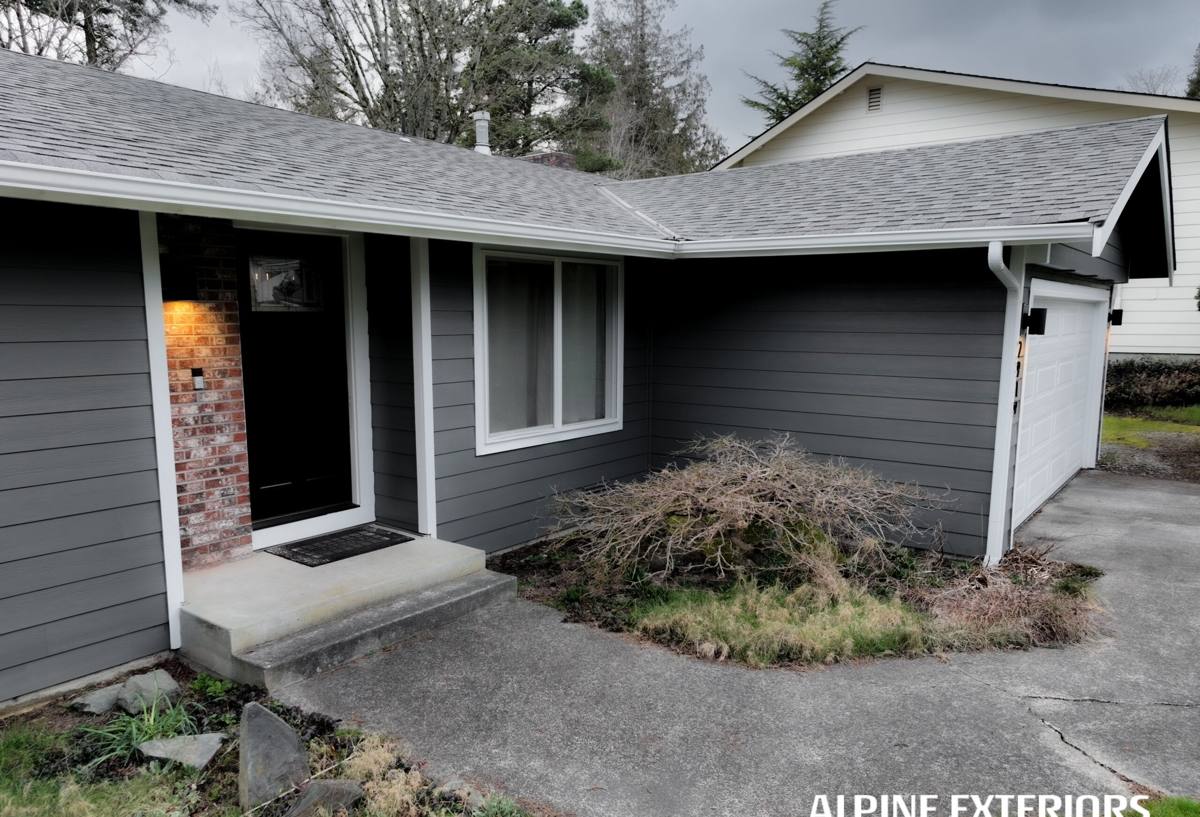
What Salt Air, Driving Rain, and Moss Season Actually Do to Siding
These three conditions don't act independently — they compound each other over a full Orcas Island year.
Salt Air
Salt carried on marine wind settles on exterior surfaces island-wide, including inland pockets like Crow Valley. On absorbent or poorly sealed siding, that salt residue holds moisture against the surface and accelerates the breakdown of paint films, caulk, and any exposed wood fiber.
Driving Rain
San Juan County's rain doesn't just fall — wind pushes it sideways into wall assemblies, especially around windows, trim, and butt joints. Siding and flashing details that aren't installed correctly let that water past the surface and into the wall, where it does damage no one sees until there's a soft spot or a stain on the interior.
Moss Season
The Pacific Northwest's long wet season, combined with Crow Valley's shade, gives moss and algae an extended window to establish on north-facing walls, under eaves, and anywhere siding stays damp. Moss holds water against the surface and, on materials prone to swelling or delaminating, keeps that damage actively progressing rather than drying out between storms.
Why We Install James Hardie Fiber Cement — And Only That
We standardized on James Hardie fiber cement siding for every home we work on, including Crow Valley, and we don't install vinyl, LP SmartSide, primed spruce, cedar, or other fiber cement brands. That's a deliberate professional standard, not a sales pitch, and it comes down to how each material actually performs in exactly the conditions described above.
Fiber cement is non-combustible and dimensionally stable — it doesn't expand, contract, warp, or absorb water the way wood-based or engineered-wood products can, which matters directly in a climate where siding spends a large share of the year damp. James Hardie's ColorPlus factory finish is baked on under controlled conditions and backed by a real finish warranty, which matters here because field-applied paint in a shaded, humid valley environment fails faster and needs more frequent maintenance than a factory finish engineered for exactly this kind of exposure. Hardie also builds region-specific HZ5 product formulations for climates like ours, rather than a single national spec.
None of this means other products are junk — vinyl is inexpensive and low-maintenance in mild, dry climates, and engineered wood siding has real advantages in some settings. But we've made a professional call that the maintenance burden, moisture sensitivity, and shorter realistic service life of those alternatives aren't worth it on Orcas Island, and we'd rather install one product correctly and stand behind it than offer options we don't fully trust in this environment.
What a Correct Installation Actually Involves
Fiber cement siding only performs as well as the assembly behind it. A rushed or undertrained crew can install the right material the wrong way and still leave a homeowner with moisture problems in a few years. On every Crow Valley project, correct installation means:
- A weather-resistant barrier installed and lapped correctly, with no gaps at seams or penetrations
- Properly flashed windows, doors, and any wall penetrations, so water is directed out and down rather than trapped behind the siding
- Correct fastener type, spacing, and placement per James Hardie's published installation specifications — this is where warranty coverage is most often lost when other crews cut corners
- Proper clearance between siding and grade, decks, roof lines, and other surfaces so water doesn't wick up from below or pool against the bottom edge
- Caulking and sealant used only where Hardie's specifications call for it — over-caulking traps moisture just as badly as under-caulking exposes gaps
- Panel and joint layout planned to shed water at every horizontal seam, not just at the field of the wall
Every one of these steps matters more in Crow Valley's slower-drying environment than it would somewhere dry. A gap or shortcut that might go unnoticed for a decade in a dry climate can start causing problems within a couple of wet seasons here.
Our Process, Start to Finish
We keep the process straightforward and give homeowners a clear picture of what's happening at each stage:
- On-site assessment — we walk the exterior, check for existing moisture damage, and evaluate the current siding, trim, and water management details before quoting anything.
- Detailed estimate — a written scope covering material, prep, flashing and water-management work, and cleanup, so there are no surprises mid-project.
- Prep and tear-off — removal of failing siding, inspection of sheathing underneath for rot or hidden damage, and repair of anything compromised before new siding goes on.
- Weather barrier and flashing installation — the part of the job that determines whether the siding actually keeps water out, done to spec before a single piece of Hardie board goes up.
- Siding installation — James Hardie panels or lap siding installed to manufacturer specification, with attention to fastening, clearances, and joint layout.
- Final inspection and cleanup — a walkthrough with the homeowner and full site cleanup before we consider the job finished.
Siding Options Compared for a Crow Valley Home
| Factor | James Hardie Fiber Cement | Vinyl | Engineered Wood / LP SmartSide |
|---|---|---|---|
| Moisture resistance in a slow-drying, shaded valley | Strong — dimensionally stable, won't rot | Won't rot, but can warp or buckle with heat/cold cycling | Requires consistent maintenance to prevent moisture intake |
| Salt air exposure | Non-porous surface, factory finish resists breakdown | Can fade and become brittle over time | Painted surfaces need more frequent upkeep near salt air |
| Moss and algae resistance | Surface doesn't feed moss the way wood-based products can | Moss sits on surface, doesn't damage material | Moss retention against wood fiber accelerates decay if untreated |
| Fire resistance | Non-combustible | Combustible | Combustible, engineered wood core |
| Typical finish warranty | Factory ColorPlus finish, long-term coverage | Color is through-body, but material can degrade | Field-applied paint, warranty tied to maintenance schedule |
Signs Your Current Siding Needs Attention
Because Crow Valley's shade and moisture cycle work slowly, siding problems here often show up as small signs long before they become structural ones. Worth a closer look if you're seeing:
- Persistent moss or dark staining on north- or shade-facing walls that returns quickly after cleaning
- Soft, spongy, or bubbling spots on wood-based or engineered siding
- Visible gaps, cracking, or separation at seams and around trim
- Peeling or blistering paint, especially on field-painted siding
- Interior stains, musty odors, or drafts near exterior walls, which can indicate moisture has already gotten past the siding
What to Ask Any Crew Before They Start
Whether you call us or someone else, a few questions will tell you quickly whether a contractor understands what this climate requires:
- Do you follow James Hardie's published fastening and clearance specifications, and can you explain what they are?
- What's your plan for flashing windows, doors, and wall penetrations before siding goes on?
- Will you inspect and repair the sheathing underneath before installing new siding?
- Are you James Hardie certified or trained specifically on their installation requirements?
- What does your warranty actually cover — material, labor, or both — and for how long?
Why It Matters to Hire a Crew That Already Works This Area
Crow Valley isn't a generic Pacific Northwest job site — it's a specific microclimate within San Juan County, with its own balance of shade, moisture retention, and wind exposure that differs from waterfront Orcas Island properties even a few miles away. A crew that regularly works this part of the island already understands how that terrain affects drying time, where moss tends to establish first, and how to sequence a project around the area's weather patterns rather than learning it on your project. That local familiarity, combined with disciplined installation to James Hardie's specifications, is what actually protects a home here — not just the material on the wall, but how and why it was put there.
If you're planning new siding or replacing failing siding in Crow Valley, we're happy to walk the property, take a real look at what's going on, and put together a straightforward, no-pressure estimate using the form below.