 Orcas Island Siding
 Building Decks for the Obstruction Pass Stretch of Orcas Island
Obstruction Pass sits on the quieter, wooded east side of Orcas Island, near Olga, where forested lots run down toward the water and homes are tucked among fir and madrona. It's a beautiful setting, but it's a demanding one for any outdoor structure. Decks here take on salt-laden air moving up from the pass, long stretches of driving rain in the fall and winter, and deep shade in places that never fully dries out — which means moss, algae, and slow-drying wood are a fact of life, not a maintenance failure. A deck built without those conditions in mind will show problems within a few seasons: soft spots at fastener locations, black streaking under trees, ledger boards that trap water against the house, and railings that loosen as end grain swells and shrinks.
We build and rebuild decks specifically for this kind of site. That means choosing materials and details that shed water fast, resist moss colonization, and hold up to salt air without constant upkeep — not a generic deck dropped onto a San Juan County lot and hoped for the best.
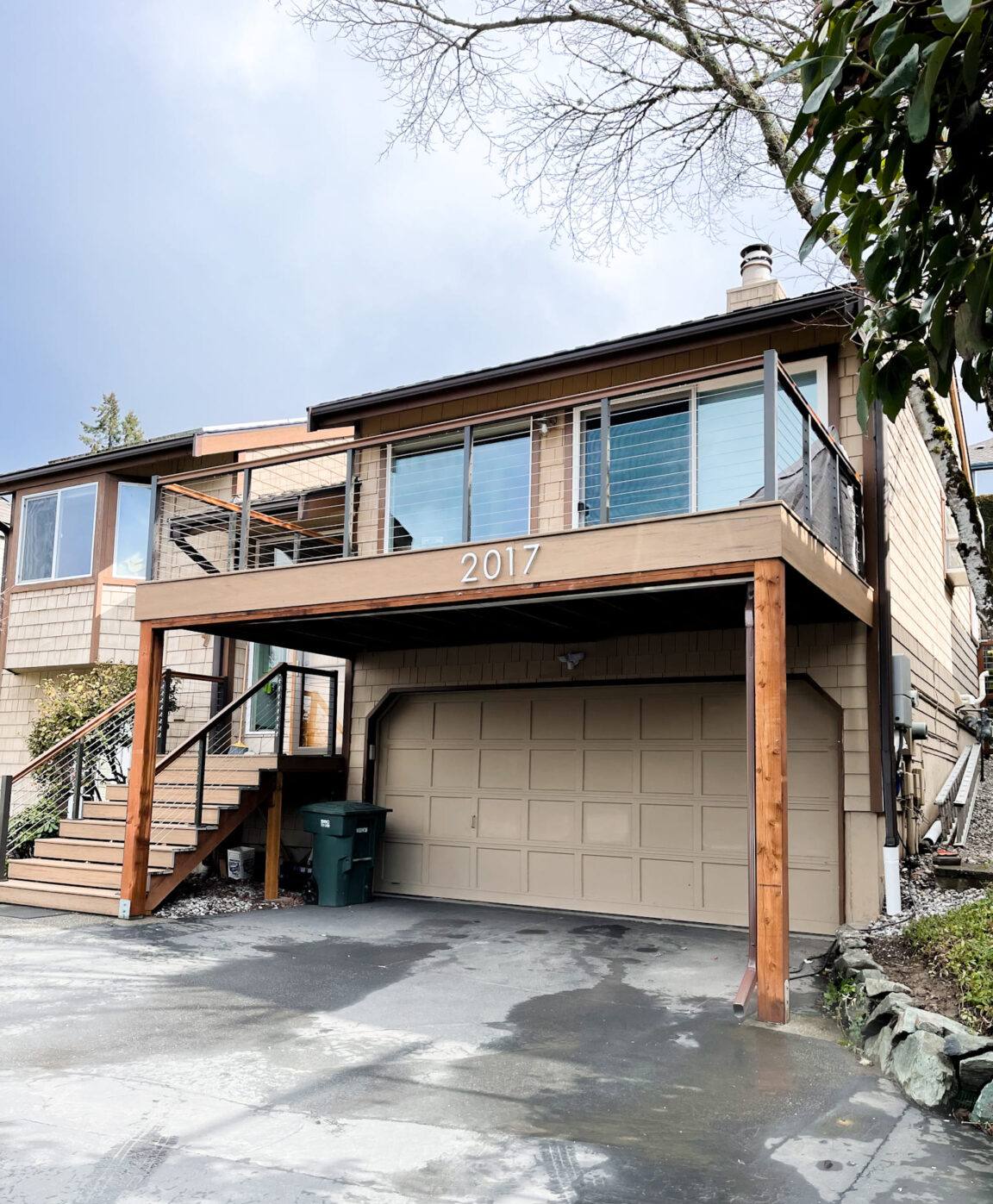
What Obstruction Pass Homes Need From a Deck
Moisture Management First
More decks fail from trapped water than from any other cause. On a wooded, shaded lot like much of Obstruction Pass, a deck doesn't get the afternoon sun that would normally dry it out between rains. That makes flashing, drainage gaps, and airflow underneath the deck far more important than they'd be on an open, sunny lot. Every ledger board attachment to the house needs proper flashing and a capillary break — this is the single most common failure point we find on older decks in this area, and it's also the point where water damage can migrate into the house framing if it's ignored.
Moss and Algae Resistance
Shaded, damp decking grows moss whether it's wood or composite. The difference is how much that moss actually damages the material. Untreated or poorly finished wood decking gives moss and algae something to root into, and scrubbing it off repeatedly wears down the wood fibers and any finish that's protecting them. Board spacing, surface texture, and finish choice all affect how fast moss takes hold and how easily it comes off without damaging the deck.
Salt Air and Hardware
Even set back from the water, homes in this part of Orcas Island get salt-laden air, especially on windy days when weather moves through the pass. Standard fasteners and connectors corrode faster here than they would inland. We spec hardware rated for coastal exposure — stainless steel or heavy-duty coated fasteners at minimum — because a deck is only as strong as the connections holding it together, and hidden corrosion at a joist hanger doesn't announce itself until it's a structural problem.
Decking Material Options for This Climate
There's no single right answer for every lot — sun exposure, tree cover, budget, and how much upkeep you want to do all matter. Here's how the common options actually perform under Obstruction Pass conditions.
| Material | Moss/Moisture Behavior | Upkeep | Notes for This Area |
|---|---|---|---|
| Cedar | Naturally rot-resistant but still needs sealing; moss will grow on shaded boards | Annual cleaning and periodic refinishing | Good look and local familiarity; needs real commitment to upkeep in shade |
| Pressure-treated fir/pine | Treated for rot but end cuts and fastener holes are vulnerable points | Regular sealing, moss cleaning | Budget-friendly; every field cut must be re-sealed or it becomes a weak point |
| Composite decking | Won't rot, but moss and algae can still grow on the surface film | Occasional cleaning, no sealing/staining | Strong fit for shaded, wet lots; upfront cost higher, lifetime upkeep lower |
| PVC decking | Fully moisture-resistant material; surface moss wipes off easily | Lowest upkeep of the group | Best for heavy shade and constant dampness; premium price point |
We'll walk through these trade-offs against your specific lot — how much sun the deck actually gets, how close you are to salt exposure, and what kind of maintenance schedule you realistically want to keep up — rather than defaulting to one product for every job.
What a Correctly Built Deck Involves
Framing and Structure
The framing is what actually holds the deck up, and it's also the part that's hardest to inspect once the decking is on. Joists, beams, and posts need to be sized correctly for the span and load, set with proper spacing, and protected at every cut end — a joist cut on site and left unsealed is a moisture entry point no matter how good the decking above it is. Footings need to reach stable, frost-appropriate depth, which matters on sloped, forested lots where soil conditions can vary across a short distance.
Ledger Attachment
Where the deck attaches to the house is the highest-risk connection on the whole structure. It needs correct flashing, proper fasteners rated for the load, and a small air gap or flashing detail that keeps water from wicking behind the ledger and into the house wall. This is not a place to cut corners, and it's the detail we check first on every deck we inspect or rebuild.
Railings and Guards
Railings take direct weather exposure and constant hand contact, so they need to be both structurally solid and built from materials that won't loosen as they weather. Post attachment to the framing — not just to the decking boards — is what keeps a railing from developing wobble over a few seasons.
Fasteners and Connectors
As noted above, coastal-rated hardware throughout — hidden fastener systems, joist hangers, and structural screws all matter more here than in a dry inland climate. This is a detail that's invisible once the deck is finished but determines how long it actually lasts.
Our Process for a Obstruction Pass Deck Project
- On-site assessment. We look at sun exposure, tree cover, drainage, existing structure (for rebuilds), and how the deck will actually be used before recommending anything.
- Material and layout discussion. We walk through decking material trade-offs, railing style, and layout options against your budget and maintenance preference — no pressure toward the most expensive option.
- Design and scope. We put together a clear scope covering framing, decking, railings, stairs if needed, and finish details, so there are no surprise change orders mid-project.
- Permitting. Deck projects on Orcas Island typically require a permit through San Juan County, and setback or shoreline rules can apply depending on how close the lot is to the water. We handle this step so you're not navigating county requirements alone.
- Build. Framing first, with every cut end and connection protected before decking goes down; then decking, railings, and finish work.
- Final walkthrough. We go over the finished deck with you, including what maintenance it actually needs — and what it doesn't — so you're not guessing at care instructions later.
New Build Versus Deck Repair or Rebuild
Not every deck on an older Obstruction Pass property needs to be torn out. Sometimes the framing is sound and the problem is isolated — a rotted ledger connection, failing railing posts, or decking that's reached the end of its life while the structure underneath is still solid. We'll tell you honestly which situation you're in. Replacing decking on top of failing framing just delays the real problem and wastes money; rebuilding a whole deck when only the surface has failed is an unnecessary cost. A proper assessment before any work starts is what tells the difference.
Signs Your Existing Deck Needs Attention
- Soft, spongy spots when you walk across the deck, especially near the house or stair landings
- Black or green staining that keeps returning shortly after cleaning
- Visible gaps, rust streaks, or movement at metal connectors and fastener heads
- Railings or posts that flex or wobble under hand pressure
- Water pooling on the surface instead of draining off between boards
- Any sign of staining or softness on the siding directly above or around the ledger connection
If any of these sound familiar, it's worth having it looked at before the next wet season rather than after a problem shows up inside the house.
Why Local Experience on This Coastline Matters
A deck built to a generic spec sheet, without accounting for shade, salt air, and San Juan County's wet season, tends to show its age fast — moss returning within a season of cleaning, hardware rusting ahead of schedule, or a ledger connection that was never properly flashed for this level of exposure. A crew that already works Obstruction Pass and the surrounding parts of Orcas Island knows which details matter for this specific coastline: where moss actually takes hold, which materials hold up under sustained shade and moisture, and how to detail the framing so it survives more than a couple of wet Northwest winters. That local knowledge shows up in decisions you won't necessarily see on the surface — fastener selection, flashing details, drainage planning — but that determine whether your deck is still solid in fifteen years or needs major repair in five.
Get an Estimate
If you're planning a new deck or need an honest look at an existing one in Obstruction Pass, we're happy to come take a look. The estimate is free, there's no pressure, and we'll give you a straight assessment of what your deck actually needs — whether that's a full build, a targeted repair, or just a maintenance plan to keep it going. Fill out the form below to get started.