 Orcas Island Siding
 Building a Deck That Actually Holds Up in Rosario
Rosario sits on the east side of Orcas Island, facing Rosario Strait, which means homes here take weather straight off the water. That's a different set of demands than a deck built inland or on the mainland. Salt-laden air accelerates corrosion on anything metal. Driving rain off the Strait finds its way into every gap a builder leaves. And the tree cover that gives so many Rosario properties their privacy also keeps decks shaded and damp long enough for moss and algae to take hold. A deck built to a generic spec sheet will show its age here in a few years. One built for this specific environment won't.
We're not talking about exotic engineering. We're talking about getting the ordinary details right — fastener selection, flashing, drainage, footing depth, material choice — in a place where getting them wrong shows up faster than it would somewhere drier and calmer.
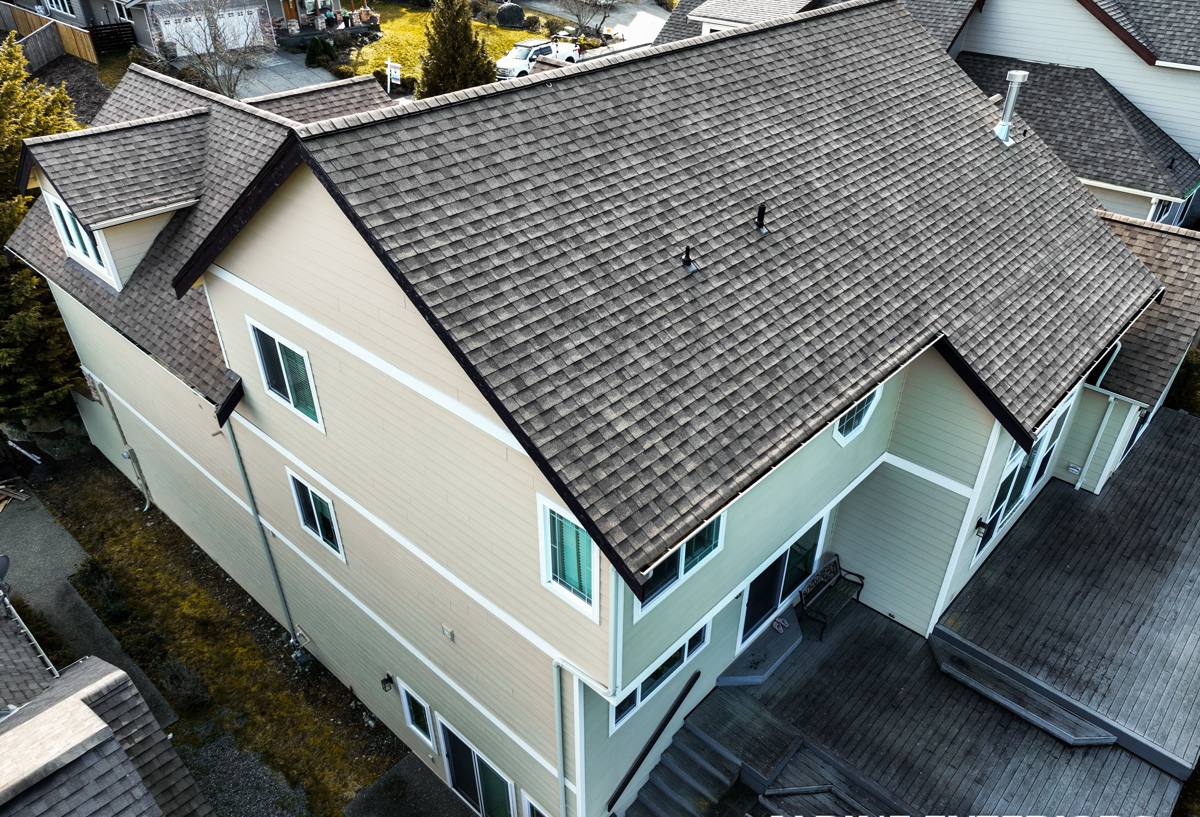
What Rosario's Terrain and Setting Do to a Deck
A lot of Rosario properties share a few traits that matter to how we build: sloped or waterfront lots, shallow or rocky soil typical of the San Juan Islands, and mature tree cover. Each of those changes the job.
Slope and Elevation
Waterfront and view lots on this side of the island are often built up on a grade, which means the deck isn't sitting a foot or two off the ground — it's a structure with real height, real wind exposure, and railings that are doing actual safety work, not just decoration. Taller decks need engineered footings and bracing, not the minimum spec you'd use for a ground-level patio deck.
Rocky, Shallow Soil
San Juan County soil is often thin over rock or glacial till. Standard poured concrete footings can be difficult or expensive to sink to frost depth in some spots, which is why we evaluate each site individually — sometimes concrete piers are the right call, sometimes helical piles make more sense when bedrock is close to the surface or excavation access is tight.
Shade and Moss
Wooded lots keep decks cooler and more private, but they also keep the surface wet longer after rain and cut down on the sun exposure that would otherwise dry things out and slow moss growth. That changes which decking material makes sense and how we detail drainage underneath the deck itself, not just on top of it.
Choosing a Decking Material for Salt Air and Shade
There isn't one "best" decking material for Rosario — there's a best material for your specific lot, budget, and how much upkeep you want to do. Here's how the common options actually perform in this climate, honestly:
| Material | How it handles salt air and moisture | Maintenance burden | Where it fits best |
|---|---|---|---|
| Pressure-treated fir/pine | Fine if properly sealed and re-sealed on schedule; the framing lumber itself is usually treated regardless of surface choice | Highest — annual cleaning and periodic re-staining or sealing | Budget-conscious builds, framing/substructure everywhere |
| Cedar | Naturally rot- and insect-resistant, handles moisture well, but silvers and needs finish maintenance to keep its color | Moderate to high if you want to preserve color; low if you're fine letting it weather gray | Homeowners who want a natural look and don't mind the upkeep, or don't mind the weathered look |
| Composite decking | Doesn't rot, doesn't need sealing, but can be more prone to surface mold/algae in constant shade if not cleaned | Low — periodic washing, no staining or sealing | Shaded, moss-prone lots where owners want to minimize upkeep |
| PVC/capped polymer decking | Fully sealed surface, best moisture and mold resistance of the group, holds up well in constant damp shade | Lowest — occasional washing | Heavily wooded, low-sun lots where moss and algae are the main long-term concern |
We'll walk you through the honest trade-offs for your specific lot rather than push whatever has the best margin. A shaded, wooded Rosario lot and a wide-open water-view lot often call for different answers even on the same street.
Rails and Fasteners: Where Salt Air Actually Wins
Most deck failures we see in coastal Washington aren't the decking boards — they're the hardware. Standard zinc-coated fasteners and connectors corrode faster in salt air than inland, and once a joist hanger or ledger bolt starts rusting, it's weakening the connection long before anything looks wrong on the surface. We use stainless steel or heavy hot-dip galvanized fasteners and structural connectors rated for coastal/marine exposure on every Rosario job, not just where it's visible.
The Structure Underneath: Framing, Flashing, and Footings
The parts of a deck nobody sees are the parts that determine whether it's still solid in fifteen years.
- Ledger flashing — where the deck attaches to the house is the single most common source of hidden water damage. Proper flashing (not just caulk) keeps driving rain from getting behind the ledger board and into the house framing.
- Joist protection — joist tape or a comparable moisture barrier on top of framing lumber keeps standing water from sitting directly on cut and fastened wood, which is exactly where rot starts.
- Footing depth and type — sized for the actual soil and load at your site, not a one-size-fits-all minimum, especially on sloped or elevated Rosario lots.
- Drainage under the deck — on shaded, low-airflow lots we pay attention to how water and moist air move underneath the structure, not just off the top surface.
- Ventilation and gaps — proper spacing between boards lets moisture escape instead of getting trapped, which matters more under tree cover than in open sun.
Permits Near the Shoreline
San Juan County requires a building permit for most new decks and significant deck rebuilds, and Orcas Island properties near marine water — which describes a good number of Rosario lots — can also fall under the County's shoreline regulations, which govern setbacks and construction near the water's edge. Whether your project needs shoreline review depends on your specific parcel and its distance from the water, so this is worth confirming early rather than assuming either way. We handle the permit application and coordinate with the County as part of the job, so you're not the one chasing down requirements.
Our Process, Start to Finish
- On-site evaluation. We walk your Rosario property, look at slope, soil, tree cover, sun exposure, and existing structure if you're replacing a deck, and talk through what you actually want to use the space for.
- Honest material and design conversation. We lay out real trade-offs between decking materials, railing options, and layout — no upselling toward whatever's most profitable for us.
- Permitting. We prepare and submit what San Juan County requires, including shoreline review if your parcel needs it, and keep you posted on timing.
- Material staging. Because everything reaching Orcas Island comes by ferry, we plan delivery windows in advance so weather or ferry schedules don't stall your project mid-build.
- Framing and footings. Built to the load and soil conditions of your specific site, not a generic minimum.
- Decking, rails, and finish work. Installed with corrosion-resistant fasteners throughout, including anywhere the connection isn't visible once the job is done.
- Final walkthrough. We go over care and maintenance specific to your material choice and your lot's sun/shade conditions before we consider the job finished.
Maintaining a Deck in Rosario's Climate
Even the best-built deck needs some ongoing attention in this environment. What that attention looks like depends on your decking material and how much shade your lot gets, but a few things apply across the board:
- Sweep off standing debris (needles, leaves) regularly — trapped organic matter holds moisture and feeds moss growth
- Wash the surface at least once or twice a year to interrupt moss and algae before it takes hold, more often on heavily shaded decks
- Check railings and stair connections annually for movement, especially on elevated or waterfront decks that take direct wind load
- Re-seal or re-stain wood decking on the schedule appropriate to the product — skipping this is the single biggest reason wood decks age poorly here
- Keep gutters and downspouts near the deck clear so roof runoff isn't dumping extra water onto or under the structure
- Have a professional check under-deck framing and footings every few years, since that's the area most likely to show a problem before it's visible from the top
Why It Matters That We Already Work in Rosario
A contractor who mostly builds inland or in drier climates can still frame a deck that looks right on installation day. Whether it's still sound in ten years comes down to details that only show their importance after a few wet seasons — flashing that actually keeps water out of the ledger, hardware that doesn't corrode in salt air, footings sized for the soil that's actually under your lot, and a material choice that matches how much sun your specific spot gets. We build decks on Orcas Island as a regular part of our work, not as an occasional job away from home base, which means we've already seen how these choices play out on properties with the same conditions yours has.
We also know the practical side of building here: ferry-dependent material delivery, San Juan County's permitting process, and how shoreline rules apply to waterfront and near-water parcels. None of that is exotic, but it does need to be planned for rather than discovered partway through a project.
Ready to Talk About Your Deck?
If you're planning a new deck or need to replace one that's showing its age in Rosario's salt air and shade, we're happy to come take a look. We'll give you a straightforward, no-pressure estimate based on your actual lot, not a generic price list — just fill out the form below to get started.