 Orcas Island Siding
 Building Decks That Hold Up on Shaw Island
Shaw Island is one of the quietest corners of San Juan County, and that's part of what makes it such a good setting for outdoor living space. It's also one of the more demanding places in the region to build a deck that actually lasts. The same salt-laden air and driving rain that roll in off the water will just as happily rust an exposed screw, rot an unflashed ledger board, or turn a shaded deck surface into a slick carpet of moss within a couple of wet seasons. A deck built to a generic, one-size-fits-all spec doesn't hold up out here the way it needs to.
We work throughout Orcas Island and the wider San Juan County area, and Shaw Island is regular territory for us, not a special trip. That matters more than it might seem, because getting a deck project right on a ferry-served island comes down to planning material deliveries, crew time, and inspections so the job doesn't stall out waiting on the next sailing or a forgotten part.
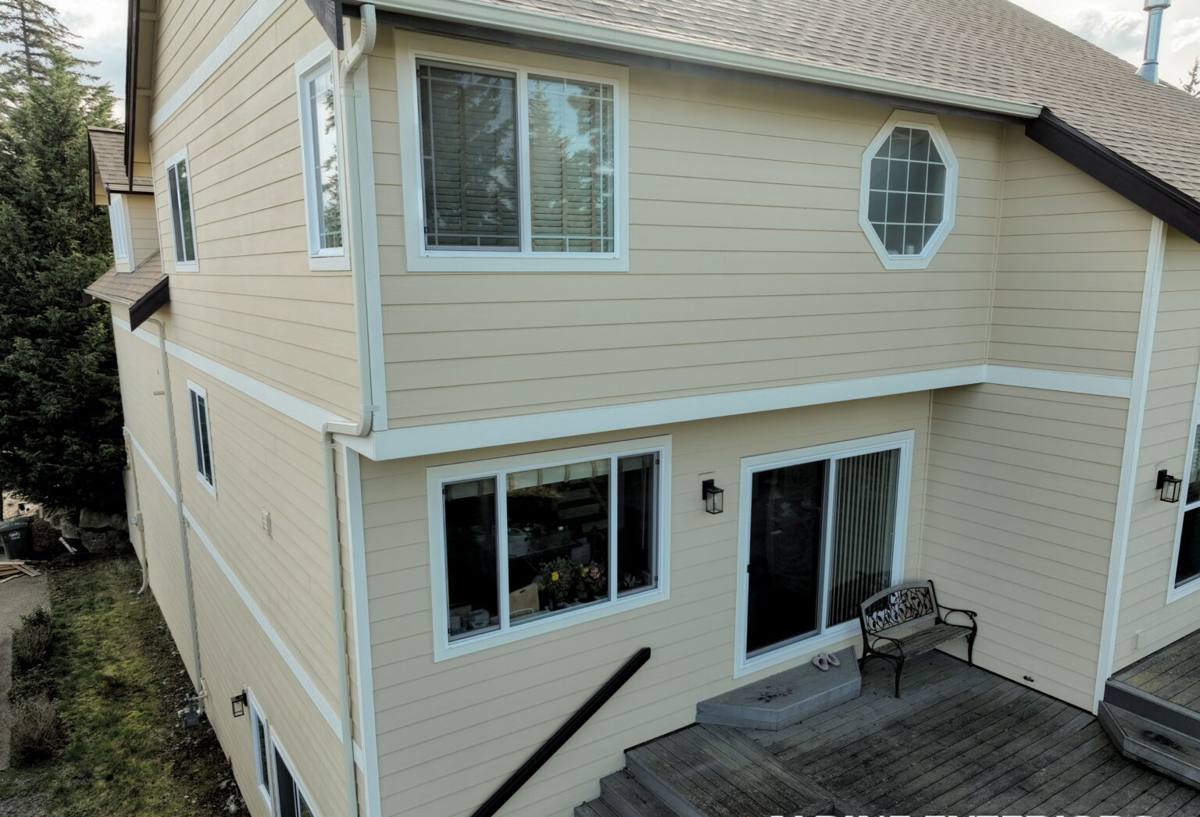
What Shaw Island's Climate Actually Does to a Deck
Every deck failure we get called out to inspect traces back to one of three things: moisture getting somewhere it shouldn't, hardware that couldn't handle the salt air, or a surface that never got a chance to dry out between rain events. Shaw Island gives you all three at once.
Salt Air and Corrosion
Airborne salt doesn't need direct ocean spray to do damage. It rides the wind, settles on metal surfaces, and accelerates rust on anything that isn't rated for a marine or coastal environment. Standard zinc-coated deck screws, cheap joist hangers, and mixed-metal hardware are the most common points of early failure we see on island decks, usually showing up as rust streaks and loosening connections well before the wood itself is a problem.
Driving Rain and Water Intrusion
Wind-driven rain doesn't just fall straight down here. It gets pushed sideways into the gap between a deck and the house, which is exactly where a poorly flashed ledger board lets water track behind siding and into framing you can't see. Once that starts, the damage is often well underway before anyone notices a soft spot underfoot.
A Long Moss Season
Shade, humidity, and long stretches without direct sun are a perfect combination for moss and algae growth on horizontal wood and composite surfaces. Beyond looking bad, moss holds moisture against decking, feeds wood rot, and turns a deck genuinely slippery, which is a real safety issue on stairs and near steps.
The Ledger Connection: Where Most Deck Failures Start
The ledger board, the piece that attaches a deck to the house, is the single most important connection in the entire structure, and it's the one most often installed wrong on older or budget decks. Done correctly, it means proper flashing that directs water away from the wall assembly, a gap or drainage plane behind the ledger so water can't pool against the house, and structural fasteners sized and spaced to code, not just whatever lag bolts were on hand.
On a site that gets regular driving rain, skipping or shortcutting ledger flashing isn't a minor corner cut. It's the difference between a deck that stays structurally sound for decades and one that starts hiding rot behind the siding within a few years. If you're having an older deck evaluated, this connection is the first place we look.
Footings, Framing, and Drainage for Wet Ground
Below the decking itself, the structure needs to be built for ground that stays wet for long stretches of the year. That means footings sized and set to local code depth, concrete work that accounts for drainage rather than sitting in standing water, and framing lumber rated for ground contact where it's close to grade.
Joist hangers and structural connectors matter just as much as the ledger. We use hardware rated for the exposure the deck will actually see, not the minimum that happens to be cheapest. Under the deck itself, grading and gravel or drainage systems that move water away from posts and footings keep the whole structure drying out between storms instead of sitting damp.
Choosing a Decking Material That Resists Salt Air and Moss
Wood Decking
Cedar and other wood species are still a good-looking, honest choice for a lot of homeowners, and cedar in particular resists rot better than many other softwoods. The trade-off is upkeep: wood decking on Shaw Island needs regular cleaning and re-sealing to keep moss from taking hold and to keep the wood shedding water instead of absorbing it.
Composite and PVC Decking
Capped composite and PVC decking resist moisture absorption and rot far better than wood, which is a real advantage in a climate like this. They still get algae and grime buildup in shaded, damp spots, just like any surface exposed to this much moisture, so they aren't maintenance-free, but the maintenance is lighter and less time-sensitive than wood.
The table below is a general guide. The right choice for your project depends on budget, how shaded the deck site is, and how much upkeep you actually want to take on.
| Material | Moss/Algae Resistance | Upkeep Required | Relative Cost |
|---|---|---|---|
| Cedar | Moderate — needs regular cleaning and sealing | High | Lower initial cost |
| Pressure-Treated Wood | Lower — more prone to surface staining | High | Lowest initial cost |
| Capped Composite | Good — resists moisture absorption | Moderate | Mid to higher |
| PVC Decking | Very good — no organic material to feed rot | Lower | Higher |
Guardrails, Stairs, and Permitting
Any deck built above a certain height off grade needs a code-compliant guardrail, with baluster spacing and rail height set by building code, not personal preference. Stairs need consistent rise and run, and landings and railings need to be secured with the same attention to hardware and fastening as the deck frame itself.
Because Shaw Island falls under San Juan County jurisdiction rather than a city building department, permitting and inspections run through the county process. We handle that coordination as part of the project, including scheduling inspections around ferry timing so a required sign-off doesn't turn into a multi-week delay.
Fasteners and Hardware: The Detail That Determines Whether the Deck Lasts
If there's one detail that separates a deck that ages gracefully from one that starts showing rust streaks and loose boards in a few years, it's the fastener and hardware selection. In a coastal, salt-air environment, that means stainless steel deck screws and hot-dip galvanized or stainless structural connectors, not the standard zinc-coated hardware that's fine inland but corrodes faster out here.
This is also where hidden fastening systems need a closer look. Some clip-based hidden fastener systems perform well in coastal conditions; others aren't rated for it and will corrode or fail faster than a visible, properly rated screw would. We choose hardware based on how it actually holds up in this exposure, not just what looks cleanest on day one.
Our Process — And Why a Crew That Already Works Shaw Island Matters
Building on an island served by ferry changes how a project needs to be run. A crew that treats Shaw Island like any other job site, showing up piecemeal, forgetting a part, making repeat trips, ends up costing the homeowner time and money in ways that have nothing to do with the actual construction.
Design and Permitting
We start with a site visit to assess ground conditions, sun and shade exposure, and how the new deck will connect to the house. From there we handle design details and the San Juan County permitting process before any material orders go in.
Build Day Logistics
Because we already work this area regularly, material orders, tool needs, and crew scheduling are planned around ferry sailings in advance, not figured out on the fly. That means fewer disruptions to your property, a tighter timeline, and a crew that already understands the exposure conditions your deck needs to be built for instead of learning it on your job.
Keeping a Deck Looking Good Through a Long Moss Season
Even a well-built deck needs some regular attention in this climate to stay safe and look good. A simple seasonal routine goes a long way:
- Rinse pollen, salt film, and organic debris off the deck surface every few weeks during wet months
- Keep nearby branches trimmed back so sun and air can reach the deck and slow moss growth
- Clear gutters and downspouts above the deck so runoff doesn't sheet across the boards
- Check fastener heads and visible hardware once a year for early rust staining
- Re-oil or re-seal wood decking on the manufacturer's recommended schedule, not just when it looks dry
- Avoid high-pressure washing on wood or capped composite, which can strip finish or damage a cap layer
- Check underneath the deck occasionally for standing water, debris buildup, or hardware corrosion
None of this is complicated, but skipping it is how a well-built deck ends up looking neglected and slippery within a couple of years, regardless of how well it was constructed.
If you're planning a new deck or want an honest look at whether an existing one is holding up the way it should, we're happy to come take a look. Reach out for a free, no-pressure estimate using the form below.