 Orcas Island Siding
 Deck Repair Built for West Sound's Marine Climate
West Sound sits along one of Orcas Island's protected bays, which means decks here take a different kind of beating than decks fifty miles inland. Salt-laden air moves off the water and settles into fasteners, flashing, and end grain. Driving rain off the Salish Sea finds every gap in a ledger board or missed flashing detail. And the long, damp shoulder seasons that San Juan County is known for turn shaded, north-facing decks into moss farms for months at a time. None of this is exotic knowledge to anyone who has lived here a while, but it matters a great deal when you're deciding how to repair a deck correctly instead of just patching what's visible.
A deck repair on Orcas Island isn't the same job as a deck repair in a dry inland climate. The framing lumber, fastener choice, flashing details, and even the timing of the work all need to account for salt exposure and near-constant moisture cycling. We've built our repair process around those realities.
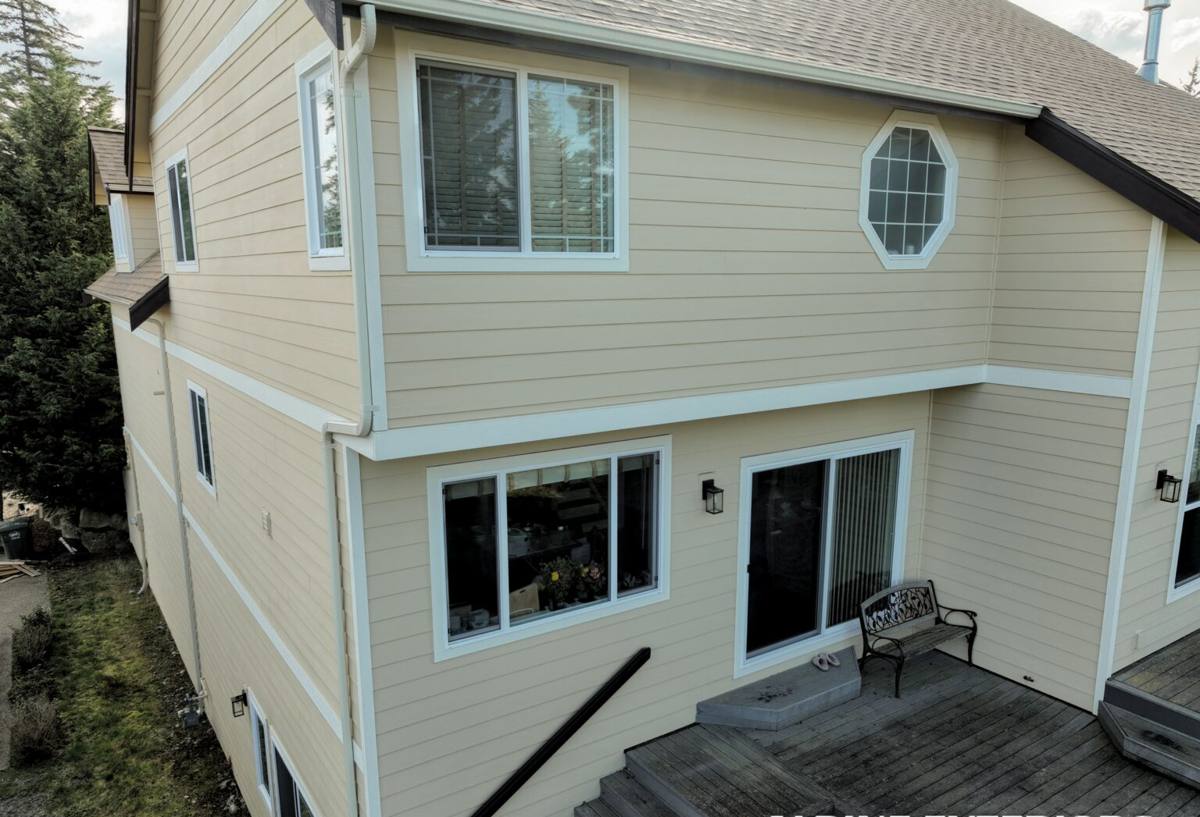
Why Decks Fail Faster in a West Sound Environment
Salt Air and Metal Fatigue
Standard fasteners and hardware corrode faster near saltwater. Once a nail or screw starts to rust, it swells slightly, which cracks the wood fiber around it and lets in more moisture — a cycle that accelerates itself. On waterfront and near-waterfront properties in West Sound, we see this show up first at joist hangers, ledger bolts, and any exposed screw heads on the decking surface.
Driving Rain and Hidden Water Paths
Wind-driven rain doesn't fall straight down — it gets pushed sideways into ledger connections, stair stringers, and the underside of rim joists. A deck can look fine from the top and still have rot developing where the ledger meets the house, especially if the original flashing was minimal or missing. This is one of the most common issues we find on older decks in the area, and it's rarely visible without pulling a board or two.
Moss, Shade, and Slow Drying
Orcas Island's tree cover and marine layer keep a lot of decks shaded and slow to dry out after rain. Moss and algae hold moisture against the wood surface, which softens fibers, makes the surface slick and unsafe, and — on painted or stained decks — traps moisture under the finish where it does the most damage. A deck that never fully dries out between storms ages faster than one in full sun, even with the same materials.
Signs a Deck Needs Repair — and When It's Past That
Most decks give warning signs well before they become unsafe. Knowing what to look for helps you catch problems while they're still a repair, not a full rebuild.
- Soft or spongy spots underfoot, especially near the house or stair landing
- Rust streaks below fastener heads or joist hangers
- Gaps opening up at the ledger board where the deck meets the house
- Guardrail posts that flex or wiggle when pushed
- Persistent moss or dark staining that keeps returning after cleaning
- Stair stringers that feel bouncy or uneven
- Visible daylight or water staining on the framing underneath the deck
If the problems are limited to surface boards, fasteners, or isolated framing members, repair is usually the right call. When rot has spread through multiple structural members, or the ledger connection itself has failed, a rebuild of the affected section — or the whole deck — is often more cost-effective than chasing repairs piece by piece.
What a Correct Deck Repair Actually Involves
A repair that only replaces what's visibly broken often misses the cause. Our approach on West Sound properties typically includes:
Structural Assessment First
Before replacing a single board, we check the ledger connection, joist condition, post bases, and any load-bearing hardware. On a marine-exposed deck, corrosion at connection points is often more urgent than a rotted board — it's just less obvious.
Matching Fasteners to the Environment
Standard galvanized hardware isn't always enough this close to saltwater. Depending on exposure, we use stainless steel or heavier hot-dip galvanized fasteners and connectors rated for coastal use, so the repair doesn't corrode again in a few seasons.
Flashing and Water Management
Any repair that touches the ledger board is an opportunity to correct or upgrade flashing. Proper ledger flashing, along with a small air gap or drainage path behind the board, is one of the most effective things we can do to stop the rain-driven rot that's common in this area.
Grading, Slope, and Drainage
Decking boards need consistent spacing and slight slope away from the house so water sheds rather than pools. On shaded, moss-prone decks, we also look at whether nearby vegetation is keeping the deck damp longer than it should be and flag that as part of the assessment.
Repair vs. Rebuild: What Drives the Decision
Homeowners often ask whether it's worth repairing an older deck or better to plan for a rebuild. The honest answer depends on where the damage is and how much of the structure is still sound.
| Factor | Favors Repair | Favors Rebuild |
|---|---|---|
| Framing condition | Joists and posts are solid, damage is localized | Rot or corrosion has spread through multiple framing members |
| Ledger connection | Intact, just needs updated flashing | Failed, pulling away, or improperly attached originally |
| Age of decking | Boards are mid-life, isolated failures | Decking is uniformly weathered or delaminating |
| Fastener condition | Isolated rust spots | Widespread corrosion at multiple connection points |
| Design issues | None — original build was sound | Poor drainage, undersized framing, or missing flashing by design |
Most decks we look at in West Sound fall somewhere in the middle — sound framing with specific trouble spots at the ledger, stairs, or a shaded section that never dries properly. That's the sweet spot for a targeted, honest repair rather than tearing the whole thing out.
Materials That Hold Up Near Salt Water
We match materials to the specific deck rather than defaulting to whatever's cheapest. For decking boards, that usually means a choice between pressure-treated lumber, cedar, or composite, each with different maintenance and moisture trade-offs near the coast.
| Material | Maintenance | Notes for Coastal Use |
|---|---|---|
| Pressure-treated lumber | Needs periodic sealing/staining | Affordable and strong; performance depends on keeping it sealed against salt-laden moisture |
| Cedar | Needs regular finish maintenance | Naturally rot-resistant but still benefits from finish upkeep in a damp, shaded environment |
| Composite decking | Low maintenance, occasional cleaning | Resists moss staining better than wood, though surface can still get slick and needs cleaning in shaded areas |
For hardware, we lean toward stainless steel or marine-grade coated fasteners in higher-exposure areas, even when it costs a bit more up front — it's cheaper than repairing the same connection again in a few years.
Our Deck Repair Process
- On-site assessment — we inspect framing, fasteners, flashing, and decking condition, including areas that aren't visible from the surface
- Honest scope and estimate — we tell you what needs to happen now, what can wait, and why
- Material sourcing — since supplies for island jobs need to come over by ferry, we plan material orders early so a repair isn't held up mid-project waiting on lumber or hardware
- Repair work — structural fixes first, then flashing and drainage corrections, then surface decking and railing work
- Site cleanup — old material hauled off, work area left clean
Maintaining Your Deck Between Repairs
Good maintenance won't stop weather damage entirely, but it slows it down significantly — especially in a climate this wet and shaded for parts of the year.
- Sweep debris and standing leaves off the deck surface regularly, especially in fall
- Clean moss and algae off boards before it stains or softens the wood
- Check fastener heads once a year for early rust
- Reseal or restain wood decking on the manufacturer's recommended schedule, not just when it looks faded
- Keep gutters and downspouts clear so roof runoff isn't dumping onto the deck
- Trim back vegetation that's shading the deck and keeping it damp longer than necessary
- Watch the ledger board area closely — it's the first place rain-driven moisture tends to cause trouble
Why It Matters to Hire a Crew That Already Works West Sound
Deck repair on Orcas Island comes with logistics that don't apply on the mainland — ferry scheduling for material deliveries, San Juan County permitting requirements, and a real understanding of how a specific bay's exposure and shade pattern affects a deck over time. A crew that already works West Sound regularly isn't guessing at any of that. We know which details actually matter here — proper ledger flashing, the right fastener grade, drainage that accounts for a wet, shaded climate — because we've repaired decks dealing with exactly these conditions before.
If you're seeing early signs of trouble, or just want an honest read on what a repair versus a rebuild would look like for your deck, we're happy to take a look. Reach out for a free, no-pressure estimate using the form below.