 Orcas Island Siding
 Board & Batten on Orcas Island: A Style That Has to Earn Its Keep
Board and batten shows up on a lot of homes around Doe Bay for good reason — the vertical lines suit the cabins, cottages, and shingle-style houses tucked into this part of Orcas Island, and the look ages well against fir, madrona, and water views. But on San Juan County properties exposed to salt air and long wet stretches off Rosario Strait, board and batten is also one of the less forgiving siding profiles if it's built wrong. The battens create seams, the vertical boards shed water differently than lap siding, and every one of those joints is a place moisture can find its way behind the cladding if the install isn't detailed correctly.
This page is about doing that one job right for this one area: what Doe Bay homes actually need from a board and batten system, what a correct installation involves, and why the crew you hire matters as much as the material.
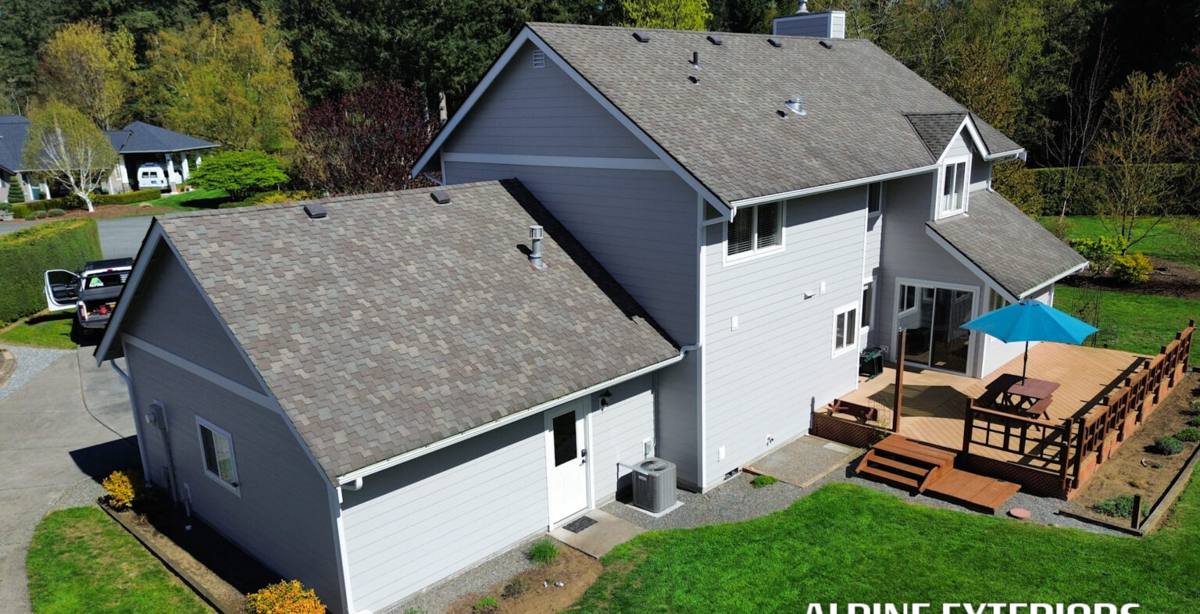
What Doe Bay's Climate Does to Vertical Siding
Doe Bay sits close enough to the water that salt-laden air is a constant, not an occasional event. Combined with driving rain off the water and the shoulder-season damp that settles into the trees here, exterior wood and wood-based products on Orcas Island spend a lot of the year staying wet longer than they would inland.
Salt Air
Salt aerosol accelerates corrosion on fasteners and metal flashing, and it degrades paint and factory finishes faster than an inland climate would. Any board and batten system near Doe Bay needs fasteners and flashing rated for a marine-influenced environment, and a finish that's built to hold color and seal integrity under that exposure — not just a standard exterior paint job.
Driving Rain
Wind-driven rain doesn't just hit a wall — it gets pushed sideways and upward under laps, battens, and trim. On a vertical profile, that means the batten-to-board seams and every horizontal transition (window heads, belly bands, base trim) are the highest-risk spots for intrusion if they're not flashed and lapped correctly.
Moss Season
San Juan County's long damp season grows moss and algae on north-facing and shaded walls, which is common under the fir canopy around Doe Bay. Moss holds moisture against the siding face for extended periods. A material that can't tolerate sustained dampness without swelling, cupping, or losing its finish will show it first in exactly those shaded, moss-prone areas.
What a Correct Board & Batten Installation Requires
A board and batten job that looks fine from the street can still be failing behind the boards. The details that actually matter are mostly invisible once the siding is up:
- A drainage gap behind the siding. Furring strips or a rainscreen mat create a ventilated cavity so any water that gets past the cladding can drain and dry instead of sitting against the sheathing.
- A continuous water-resistive barrier installed and lapped correctly underneath, with all penetrations (hose bibs, vents, light fixtures) properly flashed into it.
- Correct fastening. Battens and boards need to be fastened into framing with corrosion-resistant fasteners, spaced and placed per the manufacturer's engineering — not just nailed wherever it's convenient.
- Flashing at every horizontal break. Window and door heads, belly bands, and the base of the wall all need metal flashing that sheds water outward, not trim that simply butts against the wall and hopes.
- Proper clearance at grade and roof lines. Siding that runs too close to grade, decks, or roofing wicks moisture continuously — a common issue on older Doe Bay homes that were sided before current best practices.
- Factory-applied finish on cut ends. Every field cut needs to be sealed before installation, since an unsealed cut edge is a direct path for water into the board itself.
Skip any one of these and the siding can look good for a year or two before the climate finds the gap.
Comparing Board & Batten Materials for This Climate
Homeowners in Doe Bay usually consider the same handful of options. Here's an honest comparison of how each holds up under salt air, driving rain, and moss exposure specifically:
| Material | Moisture Behavior | Salt Air Durability | Long-Term Upkeep |
|---|---|---|---|
| Cedar board & batten | Attractive when new, but swells, cups, and checks with repeated wetting; needs the finish to stay intact to perform | Finish breaks down faster near salt air; refinishing cycles shorten | Regular refinishing, sealing cut ends, and moss removal to prevent trapped moisture |
| Vinyl board & batten | Won't rot, but panels aren't a true water barrier — performance depends entirely on what's behind them | Can fade, chalk, and become brittle over time in coastal exposure | Low routine maintenance, but panels crack or warp and are hard to color-match when replaced |
| LP SmartSide (engineered wood) | Wood-strand substrate; cut edges and panel joints are moisture-sensitive if not fully sealed and maintained | Factory finish helps, but sustained damp exposure is the failure mode to watch | Requires diligent caulking and touch-up at every seam to keep the substrate protected |
| James Hardie fiber cement | Non-combustible, dimensionally stable; doesn't swell, cup, or rot from moisture exposure | ColorPlus factory finish is engineered to hold up under UV and coastal weathering | Occasional rinsing; no refinishing cycle required for the life of the ColorPlus warranty |
This is exactly why we standardized on James Hardie for every home we side, including board and batten profiles: it's the option that holds up to Doe Bay's specific combination of salt, rain, and shade without asking the homeowner to keep up with a maintenance cycle just to keep the wall protected.
How We Build a Hardie Board & Batten System
For board and batten specifically, we install Hardie panel products with true battens over a properly detailed rainscreen assembly, using the fastening schedule and clearances James Hardie engineers for this application. That means:
- Furring or a drainage mat behind the panels so the wall can breathe and dry
- ColorPlus factory-finished panels and trim, so the color and sealed edges are baked on before the material ever reaches the site
- Flashing integrated at every window, door, and horizontal trim line before the panels go on
- Sealed, painted, or capped cut ends on every field cut
- Fastener spacing and placement matched to Hardie's published installation instructions for the specific panel and climate zone
None of this is exotic — it's the difference between an installation that happens to look right on install day and one engineered to still be performing correctly a decade from now.
Our Process, Doe Bay to Finish
Because we already work this part of Orcas Island, we know what a typical Doe Bay wall assembly looks like before we ever pull the old siding off, and that shortens the surprises during a tear-off. Our process runs the same way on every job:
- On-site assessment. We look at existing moisture damage, sheathing condition, moss patterns, and any past repairs before quoting anything.
- Tear-off and sheathing check. We don't cover up rot or soft sheathing — anything compromised gets repaired before new siding goes on.
- Weather barrier and rainscreen installation. This is the step that determines how the wall performs for the next 30-plus years, and it's done before a single Hardie panel is hung.
- Panel and batten installation. Installed to Hardie's fastening and clearance specs, with flashing integrated as we go rather than caulked in after the fact.
- Final detailing. Trim, caulking at appropriate joints only (not as a substitute for flashing), and a walk-through so you know exactly what was done and why.
Living With Board & Batten Through Moss Season
Even a correctly installed Hardie system benefits from a little seasonal attention on shaded Doe Bay lots. A soft wash to remove moss and algae buildup before it accumulates, keeping gutters clear so runoff doesn't sheet down the wall face, and trimming back vegetation that keeps a wall in permanent shade all go a long way. The difference with fiber cement is that skipping a season of upkeep won't cause the material itself to fail the way it can with cedar or engineered wood — it's a cosmetic maintenance item, not a structural one.
What to Ask Before You Hire a Board & Batten Crew
Board and batten hides its installation quality behind the boards, so the contractor's process matters more than the sales pitch. Before hiring anyone for a Doe Bay project, it's worth asking:
- Do you install a drainage gap or rainscreen behind the panels, or does the siding go directly over the weather barrier?
- How do you flash window heads, belly bands, and the base of the wall?
- Are cut ends sealed on-site before installation, and with what product?
- What fastener type and spacing do you use, and is it matched to the manufacturer's published specs?
- Have you worked on Orcas Island or in similar marine-exposed locations before, and can you speak to how that changed your approach?
A crew that already works Doe Bay isn't just convenient logistically — it means they've already seen how the local exposure treats different materials and installation methods, and they build for it from the start instead of learning the hard way on your home.
If you're weighing options for a board and batten project in Doe Bay, we're happy to take a look and walk you through what your home specifically needs. Reach out for a free, no-pressure estimate using the form below.