 Orcas Island Siding
 Why Eastsound Roofs Wear Differently Than Roofs Inland
A shingle roof in Eastsound isn't fighting the same conditions as a roof forty miles inland. Orcas Island sits surrounded by saltwater, which means most homes get a steady, low-level dose of salt-laden air even when there's no storm in sight. Add the tree cover that gives so many Eastsound properties their privacy, and you get shaded, slow-drying roof slopes for a good part of the year. Layer on the wind-driven rain that comes through San Juan County in the fall and winter, and you have three separate stresses working on the same roof at once: corrosion, moisture intrusion, and moss.
None of that means asphalt shingles are a bad choice here — they're not. It means the installation details that get skipped or shortcut on an easier job matter more in Eastsound than they do almost anywhere else in Western Washington.
Salt Air and Metal Components
Shingles themselves handle salt exposure reasonably well, but the metal around them is where problems show up first. Standard or under-spec fasteners, cheap flashing, and unprotected vent stacks corrode faster near the water. Once fasteners start to rust, you often see staining bleeding through the shingle above the nail head years before the shingle itself is actually failing. It's a cosmetic warning sign worth paying attention to, because it tells you the metal underneath is degrading.
Wind-Driven Rain and Water Intrusion
Most roof leaks don't come from rain landing flat on open shingle field — they come from rain that's been pushed sideways by wind and finds its way in at a valley, an eave, a chimney, a skylight curb, or a wall-to-roof transition. Eastsound gets enough of this kind of weather that the underlayment, flashing, and detailing around penetrations end up doing more of the real waterproofing work than the shingles themselves. A roof that looks fine from the ground can still be under-protected at these transition points.
Moss, Shade, and Slow-Drying Slopes
Mature fir and cedar are part of what makes so many Orcas Island lots desirable, but they also mean north-facing or heavily shaded roof slopes can stay damp for days after a storm passes. That moisture is exactly what moss and algae need to establish. Once moss takes hold, it holds water directly against the shingle mat, breaks down granule adhesion faster, and physically lifts shingle edges — which gives wind-driven rain a path underneath the shingle instead of over it.
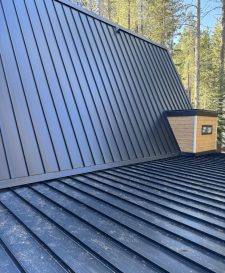
What a Correctly Installed Shingle Roof Needs on Orcas Island
A roof built for this climate isn't a different product — it's the same asphalt shingle system with the underlayment, ventilation, and metal details handled to a higher standard than a "just get it dried in" job.
Underlayment and Water-Shedding Details
We treat eaves, valleys, and every penetration as a self-adhered waterproofing membrane detail, not just a felt lap. Even though snow and ice dams aren't the main driver here the way they are inland, wind-driven rain pushes water uphill under shingles in exactly the same way ice damming does — so those areas get the same level of protection. Synthetic underlayment across the full deck holds up better than old-style felt through a long, wet Eastsound winter and gives the roof a second line of defense if a shingle ever gets damaged.
Ventilation to Fight Trapped Moisture
Balanced intake and exhaust ventilation keeps the attic and roof deck closer to outside temperature and humidity. That matters two ways: it reduces condensation forming on the underside of the deck, and it keeps the deck itself from staying damp longer than it needs to, which is one more factor that feeds moss growth from below as well as above.
Fasteners and Flashing for a Marine Climate
In a salt-air environment we favor corrosion-resistant fasteners and flashing metals, and we're careful not to mix dissimilar metals that can accelerate galvanic corrosion when they're in contact near salt exposure. Step flashing, continuous flashing at long wall runs, and kick-out flashing where a roof edge meets a wall are all places where a few extra minutes of correct installation prevents years of hidden water damage.
Choosing the Right Shingle for Salt Air and Moss Pressure
Not every asphalt shingle handles this climate the same way. The biggest practical difference for Eastsound homeowners is algae and moss resistance, which comes from copper or zinc granules blended into the shingle itself rather than a coating that wears off.
| Shingle Type | Typical Lifespan | Moss/Algae Resistance | Best Fit |
|---|---|---|---|
| Standard 3-tab | Shorter end of the range | Low unless treated | Budget-driven projects, less-shaded roofs |
| Architectural/dimensional | Mid-to-long range | Moderate | Most Eastsound homes; better wind performance and appearance |
| Algae-resistant architectural (copper/zinc granules) | Long end of the range | High | Shaded, tree-covered, or north-facing slopes |
For most Eastsound properties with any meaningful tree cover, we steer homeowners toward algae-resistant architectural shingles. It costs more up front than standard 3-tab, but it's a maintenance and longevity trade-off that tends to pay for itself on a shaded roof, where moss pressure is constant rather than occasional.
Signs Your Eastsound Roof Needs Attention
Because moss and salt-air corrosion both work slowly, a lot of roof damage here builds up quietly before it shows up as an actual leak. It's worth walking your property and checking for these signs, or having a crew do it for you before a problem gets into the house.
- Moss mats or thick green streaking, especially on shaded or north-facing slopes
- Granules collecting in gutters or at downspout outlets
- Shingle edges curling, cupping, or lifting slightly at the corners
- Rust staining running down from nail heads, vent stacks, or flashing edges
- Dark streaking that isn't just dirt — often algae rather than debris
- Soft or spongy spots underfoot near valleys or chimneys
- Daylight or water stains visible from inside the attic near penetrations
- A roof approaching or past the upper end of its expected lifespan with no recent inspection
Our Process for Asphalt Shingle Roofing in Eastsound
Orcas Island Siding Company approaches every roof the same disciplined way, whether it's a repair or a full replacement.
- Inspection and honest assessment. We look at the shingle field, but also the flashing, ventilation, and any moss or shade patterns specific to your lot, and tell you plainly whether you're looking at a repair, a partial section replacement, or a full re-roof.
- Scope and material selection. We walk through shingle options with actual trade-offs for your roof's exposure and shade — not a one-size-fits-all recommendation.
- Tear-off and deck check. On a full replacement, we remove existing roofing down to the deck and inspect the sheathing for rot or soft spots before anything new goes down, since covering over a compromised deck defeats the purpose of a new roof.
- Underlayment and flashing installation. Full-deck synthetic underlayment, self-adhered membrane at vulnerable areas, and new flashing at every valley, penetration, and wall transition.
- Shingle installation. Installed to manufacturer nailing and exposure specs, with attention to ventilation components tying in correctly.
- Cleanup and walkthrough. Magnetic sweep for stray fasteners, debris hauled off, and a walkthrough so you understand what was done and what to watch for going forward.
Repair, Recover, or Full Replacement
Not every roof problem in Eastsound requires a full tear-off. The right call depends on the roof's age, how widespread the damage is, and what's happening underneath the shingles.
| Factor | Favors Repair | Favors Full Replacement |
|---|---|---|
| Age of roof | Younger, isolated damage | Near or past expected lifespan |
| Extent of moss/algae | Localized, recently developed | Widespread, embedded in the mat |
| Deck condition | Sound, no soft spots | Soft spots, rot, or prior water damage found |
| Flashing condition | Mostly sound, minor updates needed | Corroded, undersized, or missing in multiple areas |
| Layers already on roof | Single layer, good candidate | Multiple layers or code limits reached |
We don't sell a full replacement when a repair will genuinely hold up, and we won't recommend a patch on a roof where the underlying deck or flashing is already compromised. We'll give you a straightforward read on which category your roof falls into and why, without inflating the scope of the work.
Maintenance That Actually Extends Roof Life Here
A shingle roof in a marine climate benefits from a bit more upkeep than the same roof would need in a drier part of the state. A few habits go a long way:
- Have moss treated with a proper soft-wash approach rather than pressure-washed, which can strip granules and shorten shingle life
- Keep gutters and valleys clear of needles and debris so water has a clean path off the roof
- Trim back overhanging branches where practical to reduce shade and debris buildup on the worst-affected slopes
- Have the roof looked at after major windstorms, not just on a fixed yearly schedule
- Address small flashing or fastener issues early, before they turn into deck damage
Why Hiring a Crew That Already Works Eastsound Matters
Roofing on Orcas Island isn't logistically identical to roofing on the mainland. Materials and crews often move by ferry, which means scheduling has to account for sailing times and weather windows between storms rather than just a calendar date. A crew that already works Eastsound regularly knows which streets and lots tend to run heavier on shade and moss, has working relationships with island suppliers so materials show up when planned, and understands the debris and disposal logistics that come with working on an island rather than a mainland subdivision. That local familiarity shows up in fewer surprises and fewer delays once the work actually starts.
If you're dealing with visible moss, aging shingles, or a roof you just haven't had looked at in a while, we're glad to come take an honest look. Reach out through the form below for a free, no-pressure estimate on your Eastsound home.