 Orcas Island Siding
 Decking Built for Eastsound's Specific Weather, Not Generic Weather
Eastsound sits at the head of Orcas Island, catching wind and moisture off the water from more than one direction. A deck here doesn't deal with the same conditions as a deck forty miles inland. It deals with salt-laden air, long stretches of driving rain through the fall and winter, and a moss season that can run from October well into spring. Any decking material, and any installation method, has to be chosen with those three things in mind — not with a generic Pacific Northwest sales pitch.
Composite decking has become the practical choice for a lot of Eastsound homeowners for exactly this reason. It doesn't rot the way untreated wood can, it doesn't need annual staining, and it holds up better against the cycle of wet-then-dry that defines a San Juan County winter. But composite is not maintenance-free, and it's not installer-proof. How it's installed matters as much as what brand goes down.
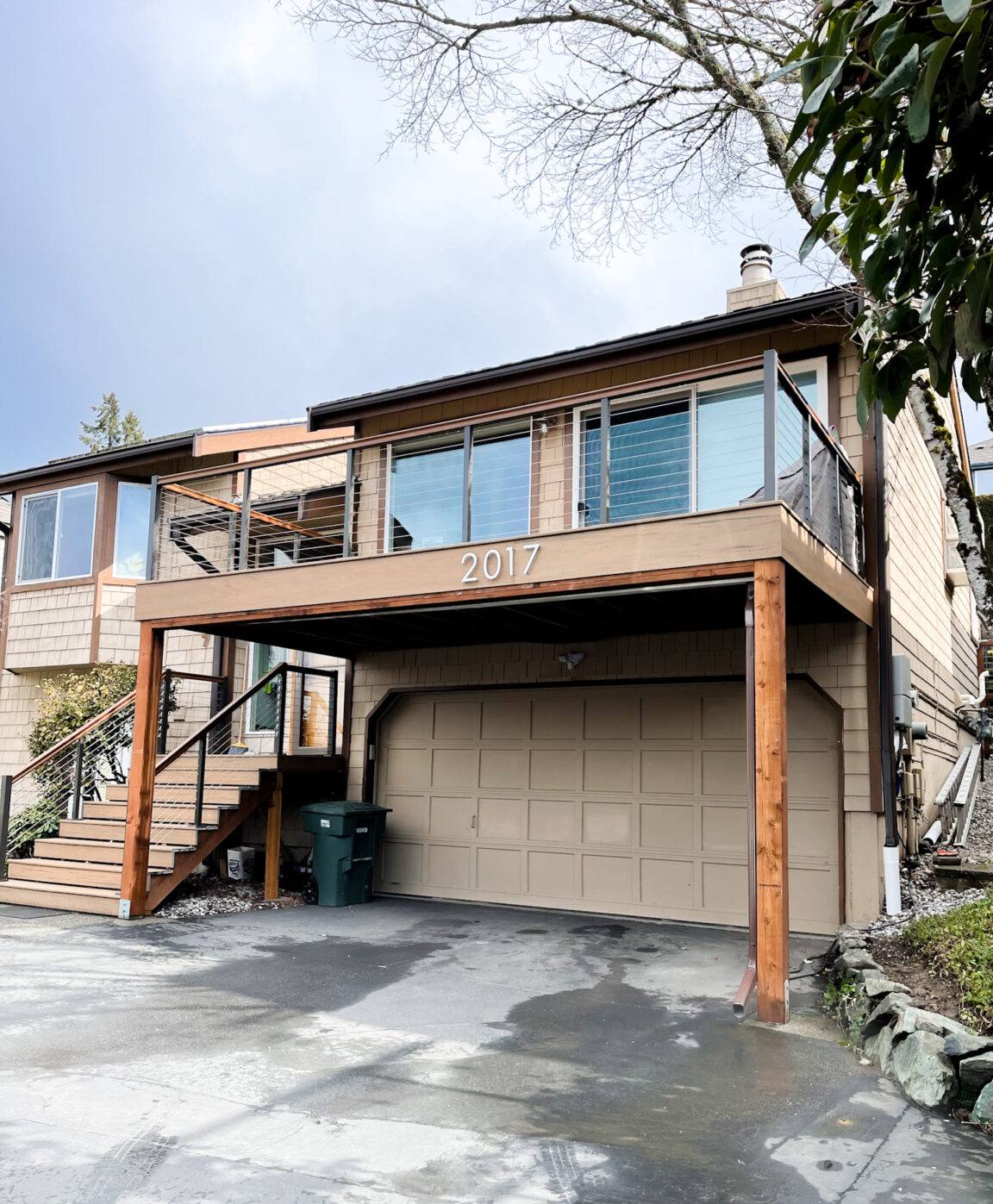
What Salt Air, Rain, and Moss Actually Do to a Deck
Salt Air
Airborne salt from the surrounding water doesn't just affect boats and metal railings — it accelerates corrosion on fasteners, hardware, and any exposed metal ledger flashing. A deck built with the wrong fastener spec will show rust streaks and loosening hardware years before the decking itself shows any wear. This is one of the most common issues we find when we're called out to look at an older deck on the island.
Driving Rain
Orcas Island gets sustained wet weather, and wind-driven rain finds its way into gaps that would stay dry in a calmer climate. Water that gets trapped between boards, under ledger boards, or against the house band joist doesn't dry out quickly here — the air stays damp for days at a time in the wet months. That's where rot, mold, and structural damage start, almost always underneath the visible deck surface.
Moss
Moss needs shade, moisture, and organic debris to get started, and Eastsound's tree cover combined with a long damp season gives it plenty of both. Moss on a deck surface isn't just cosmetic — it holds moisture against the board, it's slick and dangerous underfoot, and if it's allowed to build up in board gaps or against fasteners, it traps water exactly where you don't want it sitting.
Composite vs. Wood vs. PVC for a Marine Climate
There's no universally "best" decking material — there's the material that fits your budget, your maintenance tolerance, and the conditions your deck actually faces. Here's how the common options compare for a home in Eastsound's climate specifically:
| Material | Moisture & Moss Resistance | Maintenance | Typical Lifespan Here |
|---|---|---|---|
| Pressure-treated wood | Fair — needs sealing to hold up against constant damp | Annual cleaning and re-staining or sealing | 10–15 years with upkeep, less if skipped |
| Cedar | Good natural resistance, but still absorbs moisture over time | Regular oiling/sealing, moss control | 15–20 years with consistent care |
| Capped composite | Very good — the cap sheds water and resists staining and moss growth | Periodic washing, no staining or sealing | 25–30+ years, backed by manufacturer warranty |
| PVC/cellular decking | Excellent — fully synthetic, no organic material to feed moss | Occasional washing | 25–30+ years, higher upfront cost |
Composite splits the difference for a lot of Eastsound homeowners: it costs less than PVC, holds up far better than untreated or even sealed wood in this climate, and doesn't ask you to spend a weekend every spring stripping and re-staining a deck that's just going to get wet again in six months.
What a Correct Composite Deck Installation Actually Involves
The Substructure Matters More Than the Boards
A composite deck is only as good as what's underneath it. Joists, beams, and posts should be rated for ground contact or protected appropriately, and we check that the substructure itself is sound before a single composite board goes down. On an older Orcas Island property, this is sometimes where we find the real problem — a structurally tired frame under decking that looks fine on the surface.
Fastener Selection
Given the salt air along this stretch of the island, we use fasteners and hardware rated for coastal or marine exposure — not the standard hardware that's fine forty miles inland. This is a small line item that makes a real difference in how the deck holds up over ten or fifteen years.
Ventilation and Drainage
Composite decking needs airflow underneath it just as much as wood does. Proper joist spacing, gapping between boards, and attention to how water sheds off the deck and away from the house foundation all matter. Skipping this is one of the most common shortcuts in a rushed installation, and it's invisible until moisture problems show up years later.
Ledger and Flashing Details
Where the deck attaches to the house is the single most common point of water intrusion on any deck, composite or otherwise. Correct flashing at the ledger board keeps rain from working its way behind the siding and into the wall assembly — a detail that matters even more in a climate with as much sustained wet weather as this one.
How Our Process Works
- On-site assessment — we look at the existing structure (if there is one), sun and shade exposure, drainage patterns, and how the deck will actually be used.
- Material and layout discussion — we go over composite options, board direction, and any structural work the substructure needs before installation.
- Installation — substructure repair or build-out first, then correct fastening, spacing, and flashing detail work as the composite decking goes down.
- Final walkthrough — we check the finished deck with you, cover basic care specific to this climate, and answer questions before we consider the job done.
We don't upsell products you don't need, and we don't cut corners on the parts of the job that don't show — the substructure, the fasteners, the flashing. Those are the parts that determine whether a deck is still solid in fifteen years or starting to show problems in five.
Maintaining a Composite Deck in a Damp, Mossy Climate
Composite decking is low-maintenance compared to wood, but "low-maintenance" doesn't mean "no maintenance" — especially in a climate that stays damp for months at a stretch. A little seasonal attention goes a long way:
- Sweep debris (needles, leaves, seed pods) off the deck regularly — trapped organic material is what moss and mildew feed on
- Rinse the deck periodically with a hose, and use a soft-bristle brush with mild soap on any areas holding grime or early moss growth
- Avoid pressure washing at close range or high PSI — it can damage the cap layer on composite boards over time
- Check that gaps between boards stay clear so water and debris can pass through rather than pooling
- Inspect fasteners and railing hardware periodically for corrosion, given the salt air along this part of the island
- Trim back overhanging branches where possible to reduce shade and debris that encourage moss
What Affects Cost for a Composite Deck in Eastsound
Every deck is different, so we don't quote a blanket price without seeing the site, but a few factors consistently move the number up or down:
| Factor | Why It Matters |
|---|---|
| Substructure condition | Repairing or rebuilding an old frame adds cost before decking even starts |
| Deck size and shape | More complex layouts (angles, multiple levels) take more labor and material |
| Composite tier | Entry-level capped composite vs. premium composite/PVC lines have a real price spread |
| Railing and stair work | Custom railing, especially with glass or metal accents, adds to the total |
| Site access | Some Orcas Island properties have limited access for material delivery, which affects labor time |
We'll walk through these factors with you directly during an on-site visit so the estimate reflects your actual property, not a generic per-square-foot number.
Why a Crew That Already Works Eastsound Is Worth Hiring
Decking crews that don't work this area regularly tend to build to a generic spec — the same fastener package, the same drainage detail, the same maintenance advice they'd give a customer three states away. A crew that works Eastsound and the rest of Orcas Island routinely already knows where the salt exposure is worse, which properties see the most sustained shade and moss buildup, and how San Juan County's weather patterns actually behave through a full year, not just on a sunny estimate day.
That familiarity shows up in decisions you might not think to ask about — fastener grade, ventilation gaps, where flashing needs extra attention — the details that separate a deck that holds up for decades from one that starts having problems in year six.
Get a Free, No-Pressure Estimate
If you're considering composite decking for a home in Eastsound or elsewhere on Orcas Island, we're happy to come take a look, walk through your options honestly, and put together a clear estimate — no pressure, no obligation. Use the form below to get started.