 Orcas Island Siding
 Building New on Orcas Island? The Windows Deserve as Much Attention as the Framing
When a home on Orcas Island is going up from the studs out, the windows aren't an afterthought you bolt in after the fact — they're part of the building envelope from day one. New-construction windows are installed with a nailing fin directly into the rough opening before siding goes on, which means the flashing, the weather-resistive barrier, and the window itself all have to work together as one system. Get that sequence wrong on a new build here and you're not dealing with a simple caulk touch-up later — you're dealing with water intrusion behind finished siding, which is a far more expensive fix.
Orcas Island sits out in San Juan County, surrounded by saltwater and exposed to weather that comes off the Strait of Juan de Fuca and the Salish Sea with real force. A window package that's fine for an inland Washington build can struggle here. We install new-construction windows the way island conditions actually demand, not the way a generic spec sheet assumes.
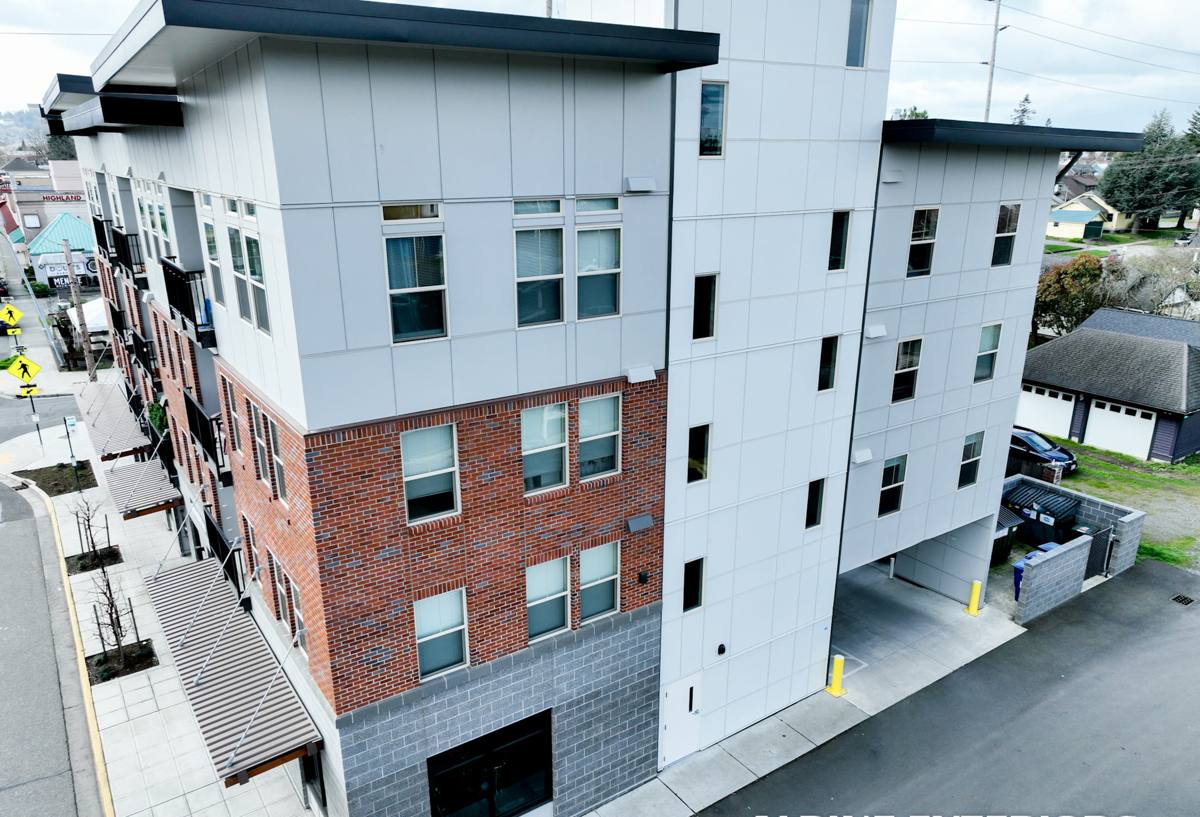
What Orcas Island's Climate Actually Demands From a Window Install
Three things define window performance on Orcas over the long run: salt-laden air, driving wind-driven rain, and a moss season that keeps north- and shade-facing surfaces damp for months at a stretch.
Salt Air
Airborne salt corrodes unprotected metal fasteners, hinges, and cladding faster near open water and on exposed, wind-facing elevations. On a new build, this means we pay attention to hardware and fastener specification before the window is ever set — not after corrosion shows up in year three.
Driving Rain
Storms here don't just fall straight down; wind pushes rain sideways into wall assemblies, especially on west- and south-facing walls with little tree cover. A new-construction window depends on correct flashing order — sill pan first, then side flashing, then head flashing lapped over the weather-resistive barrier — to shed that water outward instead of trapping it in the wall cavity.
Moss and Persistent Moisture
Shaded, north-facing walls and anything under heavy tree canopy stay damp long after a storm passes. Moss and organic growth on sills, trim, and cladding around window openings isn't just cosmetic — it holds moisture against wood and caulk joints, which shortens the life of both if the install and materials aren't chosen with that in mind.
Getting the Install Right: Flashing, Sealing, and the Rough Opening
A correct new-construction window install is a sequence, and skipping a step or doing it out of order is where most window-related water problems start — regardless of how good the window itself is.
- Rough opening checked for square, level, and correct dimension before the window ever arrives on site
- Sill pan flashing installed to direct any water that gets past the window back outside the wall
- Weather-resistive barrier integrated with the flashing in the correct shingle-lap order — never taped on as an afterthought
- Window set plumb, level, and square, and fastened per the manufacturer's structural requirements
- Nailing fin flashed and sealed on the sides and head, lapped correctly so water sheds down and out
- Backer rod and a compatible, paintable exterior sealant at the perimeter, not just a bead of caulk over a gap
- Interior air-sealing at the rough opening, separate from the exterior water management, to control drafts and condensation
- Final check of operation, hardware function, and screen fit before the crew leaves the opening
Every one of those steps matters more on Orcas than in a drier, more sheltered climate, because there's less margin for error before a small gap turns into a real leak path.
Choosing Frame Materials and Glass for Island Conditions
There's no single "best" window for every home — it depends on the elevation's wind and rain exposure, the home's style, and budget. What we do on every new build is walk the owner through the real trade-offs instead of just defaulting to whatever's cheapest to order.
| Frame Material | How It Handles Salt Air & Moisture | Maintenance | General Cost Position |
|---|---|---|---|
| Vinyl | Resists corrosion well; won't rot or rust | Low — occasional cleaning | Most economical |
| Fiberglass | Very stable in temperature swings and salt exposure; dimensionally tight | Low | Mid to upper range |
| Wood-clad (exterior clad, wood interior) | Good if cladding and flashing details are correct; exposed wood trim needs protection from driving rain | Moderate — exterior clad is low-maintenance, but any exposed wood detailing needs periodic attention | Upper range |
| Aluminum | Prone to corrosion in salt air unless properly coated; also conducts heat/cold | Higher long-term maintenance in this climate | Varies |
For glass, we generally recommend Low-E coated, argon-filled dual-pane units as a baseline for new construction on Orcas, with triple-pane or upgraded coatings worth discussing on exposed, wind-facing walls or rooms where owners want extra sound dampening from weather. We also flag hardware finish — look for corrosion-resistant hinges, locks, and rollers, since basic mill-finish hardware is often the first thing to show wear in a marine environment.
Our New-Construction Window Process
We coordinate directly with the builder or general contractor rather than working in isolation, because window timing has to line up with framing inspection, the weather-resistive barrier install, and siding.
- Plan review and take-off — we confirm window sizes, swing directions, and egress requirements against the plans before anything is ordered.
- Ordering and lead-time coordination — island deliveries take longer to plan around than mainland jobs, so we build in the extra time up front rather than scrambling later.
- Rough opening verification — we check every opening against the actual window dimensions before install day, not after.
- Flashing and install — sill pan, WRB integration, window set, and perimeter flashing done in the correct sequence, elevation by elevation.
- Sealing and air-sealing — exterior weatherproofing and interior air-sealing handled as two distinct steps.
- Final walkthrough — every window operated, checked, and documented before we consider the opening complete.
Working Around Ferry Schedules and Island Logistics
Building on Orcas Island means every material delivery and every crew day is shaped by the ferry schedule. Windows are custom-ordered, often heavy, and not something you want to reorder because a shipment got mis-timed or a crew missed a sailing. We build our new-construction schedules around ferry reality — ordering with realistic lead times, staging materials so a missed morning sailing doesn't stall the whole framing crew, and sequencing our window install day so it doesn't collide with other trades who are also fighting the same ferry constraints. A mainland crew unfamiliar with island logistics can turn a two-day window install into a week of missed connections.
Common Mistakes We See — and Avoid
Most window problems that show up years after a new build aren't because the window itself failed — they're because the install skipped a step that doesn't show until water finds it.
- Caulking a nailing fin without proper flashing underneath, relying on sealant alone to keep water out
- Skipping or improperly lapping the sill pan, so any water that gets past the sash drains into the wall instead of back outside
- Using fasteners or hardware not rated for coastal exposure, leading to early corrosion and staining
- Ordering standard glass packages for highly exposed elevations without discussing upgraded options with the owner
- Poor coordination between the window crew and siding crew, leaving flashing laps in the wrong order
Maintenance After Installation
A correctly installed new-construction window on Orcas still benefits from basic upkeep given the local climate. Rinse salt residue off frames and glass periodically, especially on wind-exposed elevations. Keep sills and trim clear of moss and organic debris, particularly on shaded north walls, so moisture doesn't sit against the frame. Check exterior sealant joints yearly for cracking or separation, since sealant is a maintenance item on any home, and address gaps before they become water paths. None of this is heavy work, but skipping it is how a well-installed window ages faster than it should.
Why Hiring a Crew That Already Works Orcas Island Matters
New-construction window installation is unforgiving of shortcuts, and island conditions raise the stakes on every step — the flashing sequence, the hardware spec, the delivery timing, the scheduling around ferries and weather windows. A crew that already works siding, decking, and windows across Orcas Island and the rest of San Juan County isn't guessing at how salt air, driving rain, and moss season affect a new build here — we've seen how these details play out on real island homes and we build the install around that experience from the first rough opening to the final walkthrough.
If you're framing a new home or addition on Orcas Island and want windows installed right the first time, we're happy to walk the plans with you and put together a free, no-pressure estimate. Use the form below to get started.