 Orcas Island Siding
 Why Eastsound Decks Wear Out Faster Than You'd Expect
A deck in Eastsound doesn't fail the way a deck in a dry inland climate fails. It's rarely one dramatic problem — it's the slow accumulation of small ones. Salt-laden air off the water accelerates corrosion on anything metal. Driving rain off Puget Sound and the Salish Sea drives moisture sideways into joints and end grain that a vertical rain would never reach. And San Juan County's long wet season, often stretching from fall through spring, keeps horizontal surfaces damp long enough for moss and algae to take hold and stay there.
None of that means a deck can't last for decades on Orcas Island. It means the design and material choices that work fine in Spokane or Seattle's drier microclimates need to be reconsidered here. A deck built without that in mind will look fine for a season or two, then start showing soft spots, rust streaks, green film, and loose connections well before it should.
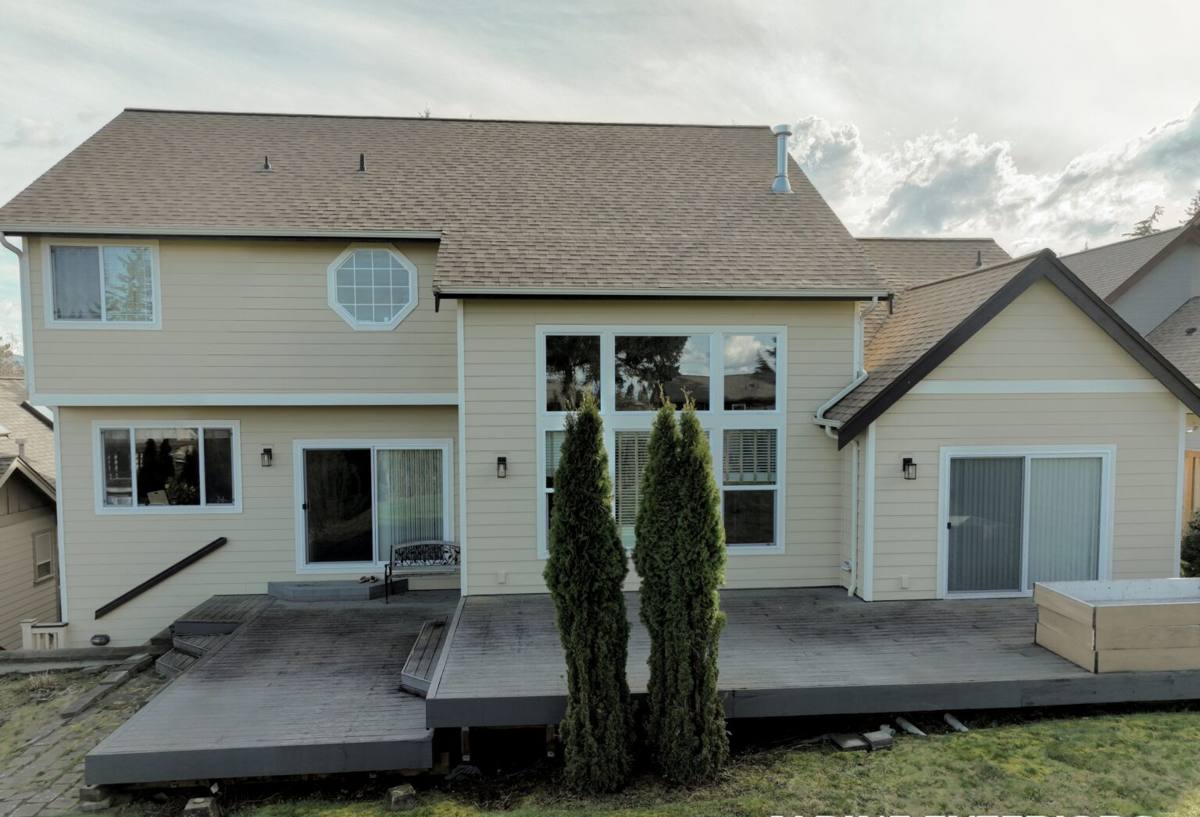
What "Custom" Should Actually Mean for a Deck Here
We use "custom" to mean the deck is designed for the specific lot, not just built from a standard plan with different measurements. On Orcas Island that usually involves a few things a mainland job wouldn't have to think about:
Site and Terrain
Eastsound properties range from flat in-town lots to sloped waterfront parcels with exposed footing conditions. Slope affects footing depth, post height, and whether the substructure needs extra bracing against wind loading — which matters more here than in a sheltered inland yard.
Orientation and Exposure
Which direction a deck faces changes almost everything: how much driving rain it takes on, how long it stays wet after a storm, and how much direct sun helps it dry out. A deck tucked under tree cover on the north side of a house will hold moisture — and grow moss — far longer than one that gets afternoon sun.
Materials and Logistics
Because Orcas Island is ferry-dependent, material selection also has a practical side: sourcing decking, hardware, and structural lumber that's actually available and doesn't require a rushed, poorly-planned delivery. Good custom design accounts for lead time, not just looks.
Getting the Structure Right Before Anything Else
The decking surface is what people notice, but the framing underneath is what determines whether the deck is still safe and level in fifteen years. A few structural details matter more here than in a drier climate:
Ledger Flashing
Where a deck attaches to the house, the ledger board and its flashing are the single most common source of hidden rot in this region. Driving rain pushes water into any gap in that flashing, and because it's hidden behind the decking, the damage often isn't visible until the structure is already compromised. Proper flashing detail here isn't optional — it's the difference between a deck that lasts and one that quietly rots from the inside.
Footings and Post Bases
Wet, sometimes acidic soils around Orcas Island mean footings and post bases need real separation from standing moisture — proper drainage gravel, correct footing depth for frost and soil conditions, and post bases that keep wood off concrete and off wet ground rather than sitting flush.
Fasteners and Connectors
This is where salt air does the most damage. Standard coated deck screws and joist hardware can start showing rust streaks within a year or two near the water. We spec hot-dip galvanized or stainless steel structural connectors and fasteners for coastal work, because replacing hardware later means tearing into a finished deck.
Decking Material Options: What Actually Holds Up
There's no single "best" decking material — there's a best material for a given budget, look, and exposure. Here's how the common options actually perform in Eastsound's conditions, not just in a showroom.
| Material | Moisture & Moss Behavior | Maintenance | Typical Lifespan Here |
|---|---|---|---|
| Pressure-treated wood | Absorbs moisture readily; needs airflow underneath to avoid trapped dampness | Annual cleaning and periodic re-staining/sealing | 10–15 years before major boards need replacing |
| Cedar | Naturally rot-resistant but still needs to dry between rain events; moss grows on shaded, damp cedar | Regular cleaning; occasional oil or stain to maintain color and water resistance | 15–20+ years with upkeep |
| Composite decking | Doesn't absorb water into the board itself, but surface algae and moss can still grow on the cap if it stays wet and shaded | Periodic washing; no staining or sealing needed | 25–30 years, backed by manufacturer warranty |
| PVC/capped polymer decking | Fully moisture-resistant surface; best resistance to staining and moss adhesion | Occasional washing | 25–30+ years, backed by manufacturer warranty |
For shaded, north-facing, or heavily tree-covered lots — common around Eastsound — we generally steer clients toward composite or PVC decking specifically because moss and algae get a much weaker foothold on a sealed synthetic surface than on wood. For sunnier, well-ventilated sites, cedar or treated wood remains a perfectly reasonable and less expensive choice, as long as the owner is realistic about the maintenance schedule.
Railings, Hardware, and the Small Parts That Fail First
Railings and hardware take the brunt of salt exposure because they're often uncovered and exposed on all sides. A few standards we hold on every custom build here:
- Stainless steel or marine-grade hardware on any railing post connection, cable railing run, or hidden fastener system
- Aluminum or composite railing systems over untreated steel wherever the design allows, since bare steel is the fastest thing on a deck to show rust in salt air
- Hidden fastener systems for decking boards specified with corrosion-resistant clips, not bargain-grade coated versions
- Post bases and structural brackets rated for exterior/coastal use, not general-purpose interior-rated hardware
These choices add some cost upfront. They also mean you're not replacing a rail post or re-doing a fastener system five years in — which, on an island where getting a crew back out means scheduling around the ferry, is worth planning for correctly the first time.
Designing Against Moss Instead of Fighting It Every Spring
Moss doesn't grow because a deck is poorly built — it grows because moisture sits somewhere long enough for spores to take hold. San Juan County's wet season gives moss months to establish itself if a deck's design doesn't account for drying time. The fix is mostly about airflow and drainage, not chemicals:
Ventilation Underneath
A deck built low to the ground with no airflow beneath it stays damp long after a rain event ends. Proper joist height and skirting with vent gaps let air move underneath and speed up drying, which matters as much for the substructure as for moss control on the surface.
Board Spacing
Correct gap spacing between decking boards lets water drain through rather than pool on the surface. Too tight, and water sits; too wide, and debris collects in the gaps and holds moisture against the board edges — either way you get more moss and faster wear.
Grading and Drainage Nearby
Where a deck sits low relative to surrounding grade or gutters, runoff from the roof can end up pooling near or under it. Tying deck drainage planning into the home's existing gutter and grading setup avoids creating a damp zone that never gets a chance to dry.
Our Process for a Custom Deck Build in Eastsound
Every property is different, but the process stays consistent:
- Site visit and assessment — we look at orientation, slope, existing structure (if replacing a deck), soil conditions, and sun/shade exposure before discussing design.
- Design and material selection — we walk through decking, railing, and hardware options against your budget and how much upkeep you actually want to take on.
- Permitting — we handle the San Juan County permit process for the build, including any additional shoreline review that applies to waterfront-adjacent lots.
- Material staging — because everything comes over by ferry, we order and stage materials with enough lead time that the job isn't stalled waiting on a delivery.
- Construction — framing and flashing first, inspected before decking goes down, then decking, railings, and hardware installed to the standards above.
- Final walkthrough — we go over the finished deck together, including what maintenance (if any) it needs going forward.
Maintenance Checklist for Orcas Island Deck Owners
Whatever material you choose, a little seasonal attention goes a long way in this climate:
- Sweep debris out of board gaps before it decomposes and holds moisture against the boards
- Rinse or gently power-wash surfaces at least once a year to knock back early moss and algae growth before it establishes
- Check under-deck ventilation isn't blocked by stored items, plants, or debris buildup
- Inspect visible hardware — railing posts, brackets, fastener heads — for early rust streaking, especially after the wet season
- Re-stain or re-seal wood decking on the schedule the product actually needs, not just when it looks faded
- Clear gutters and check that roof runoff isn't draining directly onto or under the deck
Why Hire a Crew That Already Works Eastsound
A contractor unfamiliar with island work often underestimates two things: how much salt air and moss actually shorten the lifespan of the wrong material choices, and how much logistics matter when every delivery depends on a ferry schedule. We work on Orcas Island regularly, which means material orders are planned around real lead times instead of guesswork, we already know which fastener and hardware grades hold up here versus which ones don't, and we're familiar with San Juan County's permitting process, including the additional considerations that come with shoreline-adjacent properties. That local familiarity doesn't just save time — it's usually what separates a deck that still looks good in ten years from one that needed early repairs.
If you're planning a new deck or replacing one that's showing its age, we're happy to take a look and put together a straightforward, no-pressure estimate — just fill out the form below to get started.