 Orcas Island Siding
 Storm Damage Roof Repair Built for How Eastsound Weather Actually Behaves
Eastsound sits in the path of the southeasterly storms that push through the San Juan Islands every fall and winter, and the terrain around Orcas Island has a way of funneling that wind rather than blocking it. A roof here doesn't just deal with rain — it deals with sustained gusts, salt-laden air off the water, and long stretches of damp weather that never quite let a roof dry out between storms. That combination is different from what a roofer inland deals with, and it changes how storm damage shows up and how it should be repaired.
We repair storm-damaged roofs on Eastsound homes with that reality in mind. A quick patch that would hold up fine in a drier climate can fail here within a season if it doesn't account for wind-driven rain, salt corrosion, or the moss that takes hold anywhere moisture sits too long. Our approach is to fix what the storm actually damaged, explain what we're seeing in plain terms, and use materials and methods suited to this specific stretch of San Juan County.
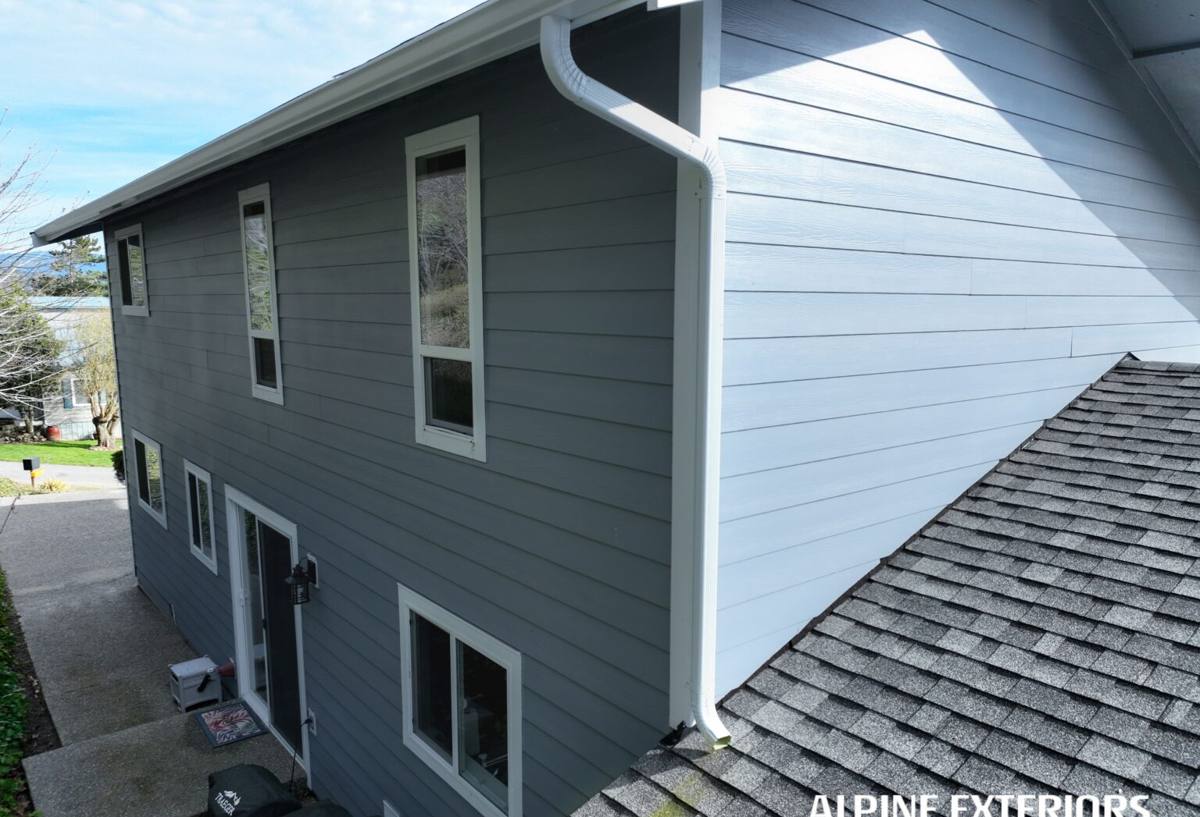
What Storm Damage Actually Looks Like on an Eastsound Roof
Wind Damage
Wind rarely tears a roof off in one dramatic event. More often it lifts shingle edges, breaks the sealant bond, or works flashing loose around chimneys, vents, and roof-to-wall transitions. Once that seal is compromised, the roof can look intact from the ground while water is already getting underneath it. Repeated wind events over a season can loosen fasteners gradually, so damage from an early-fall storm sometimes doesn't show a leak until a heavier winter storm pushes rain through the same weak spot.
Water Intrusion and Hidden Leaks
Because storms here tend to bring wind and rain together, water gets driven sideways under shingles, around skylights, and through nail holes that would stay dry in a straight-down rain. This is the kind of damage that's easy to miss during a quick visual check — it shows up later as a stain on a ceiling, a musty smell in an attic, or soft decking that wasn't soft last year.
Falling Limbs and Debris
Orcas Island has plenty of mature trees close to rooflines, and wind storms bring down branches and debris that can crack shingles, puncture underlayment, or dent metal roofing and flashing. Even when the impact looks minor, it's worth having it checked — a cracked shingle or a small puncture is a direct path for water into the roof deck.
Why Response Time Matters More on an Island
Getting a roof looked at quickly after a storm matters everywhere, but it matters more here. Materials and specialty parts often have to come over by ferry, and a supply run that would take an hour on the mainland can take most of a day once you factor in sailing schedules. That's exactly why our first move after storm damage is temporary protection — tarping exposed areas and sealing obvious entry points — so the home stays dry while we source the right materials and plan the actual repair. A roof that sits exposed through even one more heavy rain can turn a straightforward shingle repair into a deck replacement and interior drywall work.
Our Storm Damage Repair Process
- Inspection. We check the whole roof, not just the area you noticed damage on — wind damage is often worse a few feet from where it's visible.
- Documentation. We photograph and note the damage clearly, in a form that's useful if you're filing an insurance claim.
- Temporary protection. If the roof is actively letting water in, we tarp or seal it the same visit whenever possible.
- Repair plan and honest scope. We tell you what actually needs to be fixed, what can wait, and what we're not sure about until we open things up.
- Repair. We match materials as closely as we can to what's already on the roof, and use fasteners and flashing suited to salt-air exposure.
- Follow-up. We check the repair holds through the next weather cycle, especially if the work was done mid-storm-season.
Repair or Replace? What We Actually Look At
Not every storm-damaged roof needs to come off. The decision usually comes down to how much of the roof's remaining life was already used up before the storm hit, and how widespread the damage is.
| Factor | Points Toward Repair | Points Toward Full Replacement |
|---|---|---|
| Age of roof | Under 10-12 years, still has useful life left | Already near or past its expected service life |
| Extent of damage | Isolated to one section or a few spots | Spread across multiple slopes or the whole roof |
| Decking condition | Solid decking under the damaged area | Soft, rotted, or moss-compromised decking found underneath |
| Prior moss or moisture history | Minor surface moss, roof otherwise dry underneath | Long-term moss growth has been holding moisture against the roof |
| Material availability | Matching shingle or panel still obtainable | Original material discontinued, patch would look and perform differently |
We'll walk you through where your roof falls on these points before recommending either path — there's no reason to replace a roof that a proper repair will handle, and no reason to keep patching one that's genuinely at the end of its life.
Materials That Hold Up to Eastsound's Salt Air and Moss
Salt air accelerates corrosion on fasteners and flashing faster than most homeowners expect, and it's a factor we account for in every repair, not just new installs. A few things we pay attention to:
- Using flashing and fastener metals that won't set up galvanic corrosion against whatever metal is already on the roof.
- Choosing sealants rated for marine or coastal exposure rather than general-purpose caulk that breaks down faster in this climate.
- Matching shingle or panel profiles closely enough that a repaired section sheds water the same way the rest of the roof does.
- Being upfront when a repair material isn't the ideal long-term choice for a salt-air, high-moss environment — sometimes the cheaper fix now means more maintenance later, and that's a trade-off you should get to choose, not one we make for you.
We're not going to tell you a product is bad to steer you toward something else. If we recommend against a particular material for your roof, it's because of how it actually performs in wind-driven rain and prolonged dampness — not because of the brand.
Working With Your Insurance Company
Storm damage claims move faster and go smoother when the documentation is clear from the start. We provide photos, a written description of the damage, and a repair scope that an adjuster can follow. We won't inflate a scope to pad a claim, and we won't undersell damage to make a job look smaller than it is — our documentation reflects what the storm actually did to your roof, which is what protects you if there's ever a dispute about the claim.
Moss Season and Long-Term Roof Health
San Juan County's wet season runs long, and moss doesn't need much encouragement to take hold on a north-facing slope or anywhere shade keeps a roof from drying out. Moss isn't just cosmetic — it holds moisture against shingles and can work its way under the tab edges over time, which is often what turns a minor storm-related lift into a real leak. After a storm repair, it's worth having gutters and valleys checked and cleared, since debris and moss buildup in those areas is what causes water to back up under roofing material during the next heavy rain rather than running off.
Signs Your Eastsound Roof Needs a Storm Damage Inspection
- Shingle granules collecting in gutters or at downspout outlets after a windy storm
- A ceiling stain that appears or grows after a storm, even a small one
- Visible curled, cracked, or missing shingles from the ground
- Flashing that looks bent, lifted, or separated around chimneys and vents
- A musty smell or visible damp spots in the attic
- Fresh moss growth concentrated in one area rather than spread evenly
- Any tree limb contact with the roof during the storm, even without obvious damage
If you notice any of these after a storm, it's worth having it looked at before the next system rolls through — most storm damage gets worse with the next rain, not better.
If your roof took a hit in the last storm, or you're just not sure whether what you're seeing is worth worrying about, we're happy to take a look. Fill out the form below for a free, no-pressure estimate — we'll give you a straight read on what's going on and what it would take to fix it.