 Orcas Island Siding
 Crow Valley sits inland from the shoreline, but "inland" on Orcas Island still means salt-laden air moving up off the water, driving rain working sideways into every gap a window seal has, and a moss season that settles into shaded valley walls for most of the year. Homeowners here ask us about windows constantly — usually after noticing a draft, a fogged pane, or a sill that's starting to feel soft — and the honest answer almost always comes back to the same thing: windows on Orcas Island don't fail the way windows fail in a drier, milder climate, and replacing or upgrading them here means planning for conditions a mainland supplier's default recommendation was never built around. This page covers what energy-efficient windows actually need to do in Crow Valley, what a correct installation involves, and how our process works for homeowners in this part of the island.
What Crow Valley's Climate Does to Windows
Valley terrain behaves differently than open shoreline. Cold, moist air settles and lingers longer in a valley bottom than it does on a ridge or bluff with more wind moving through, which means condensation tends to be a bigger issue for Crow Valley homes than it is for a house sitting higher up with more air movement around it. Add San Juan County's marine climate on top of that — salt content in the air corrodes hardware and fasteners faster than an inland mainland site would ever see, driving rain off passing storms pushes moisture sideways into any gap in a window's seal or flashing, and the long gray, damp stretch of the year gives moss and mildew months to establish on north-facing sills and trim — and you get a set of conditions that puts real, sustained stress on both a window's glazing and the material surrounding it.
None of that means windows here are doomed to fail early. It means the products and installation details that work fine somewhere drier don't automatically hold up on Orcas, and a window chosen and installed with this climate in mind will perform a lot longer than one that wasn't.
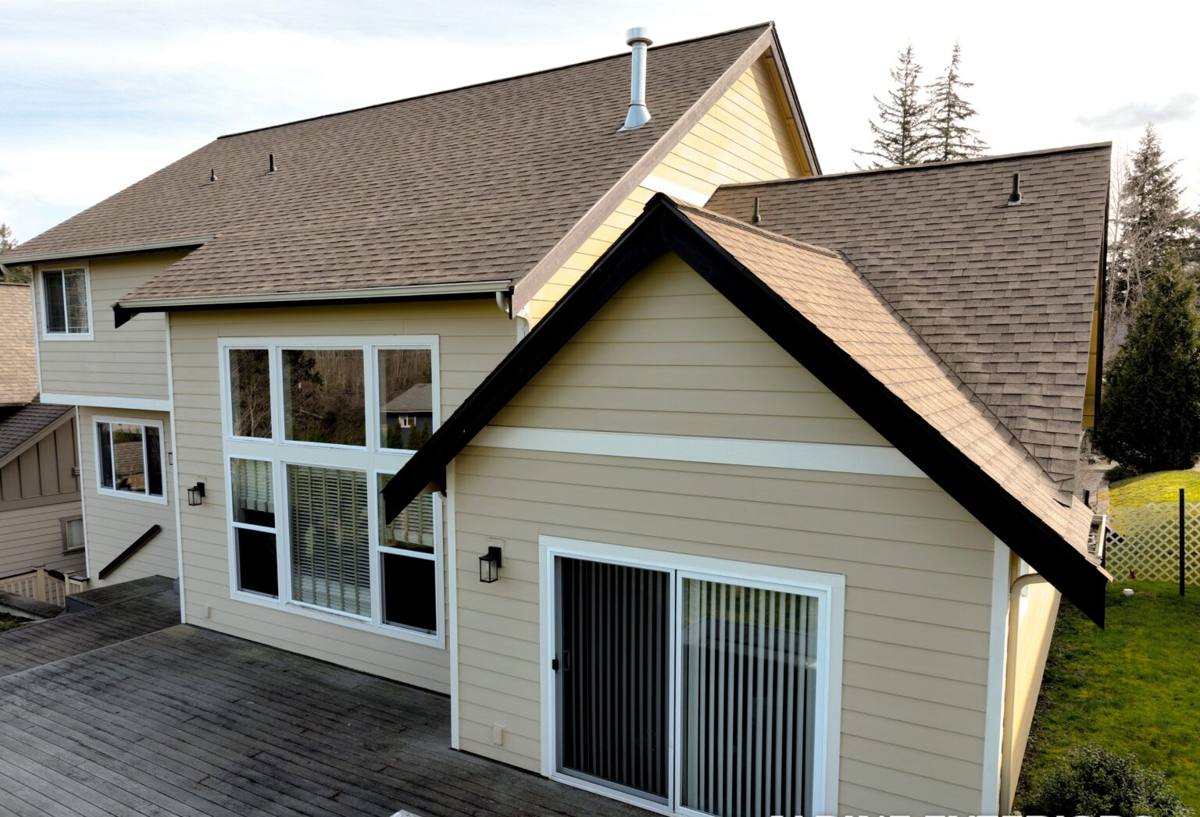
What "Energy-Efficient" Actually Means
"Energy-efficient" gets used as a catch-all marketing term, but it actually refers to a small set of measurable numbers every legitimate window comes labeled with. For a homeowner in Crow Valley comparing options, these are the ones worth understanding:
- U-factor — measures how much heat the window lets escape; lower is better, and it matters more here than in a mild summer climate because Orcas homes lean on heating for a large part of the year
- SHGC (Solar Heat Gain Coefficient) — measures how much solar heat passes through the glass; a moderate SHGC generally suits the Pacific Northwest's mix of gray winters and bright summer days better than an extreme setting in either direction
- Air leakage rating — measures how much air moves through the assembly when it's closed; a lower number matters directly for a house taking on wind-driven rain and gusty valley air
- ENERGY STAR Northern zone certification — the certification tier built around colder, wetter climates like this one, rather than a general national average
Reading a Window's Numbers Instead of Its Marketing
Every legitimate window sold in the U.S. carries an NFRC label with these numbers printed on it, and it's worth asking to see that label rather than taking a sales sheet's word for it. Two windows can both be marketed as "energy-efficient" and still have meaningfully different U-factors and air leakage ratings — the label is the only place that difference actually shows up.
Frame Material Options for a Valley Climate
Frame material affects durability and maintenance at least as much as it affects energy performance, and it's usually the decision homeowners spend the least time on relative to how much it matters.
| Frame Material | How It Handles This Climate | Maintenance |
|---|---|---|
| Vinyl | Won't rot or corrode; performs well against moisture and salt air when properly installed | Low — occasional cleaning, no refinishing |
| Fiberglass | Very stable dimensionally, strong resistance to moisture and temperature swings | Low — durable finish, minimal upkeep |
| Wood or wood-clad | Good insulating properties, but the wood core is vulnerable if the exterior cladding or finish is breached | Higher — finish and seals need regular inspection |
| Aluminum | Strong and low-maintenance, but conducts heat and cold more readily unless thermally broken | Low, but energy performance depends heavily on thermal break quality |
For most Crow Valley homes, we lean toward vinyl or fiberglass frames precisely because they don't depend on a maintained finish to resist the moisture this climate produces. Wood-clad windows can still be the right call on a home where the look matters more than anything else, but going in with a clear-eyed understanding of the maintenance that choice requires here is part of an honest recommendation.
Where Window Installations Actually Fail
Most window failures we get called out to inspect on Orcas Island aren't glass failures — they're installation failures around the opening. As a company that installs siding as well as windows, we see this constantly: a window unit itself can be a perfectly good product and still leak, rot, or fog prematurely because of how it was flashed and integrated into the wall around it.
- Flashing that doesn't properly shed water down and out at the sill, letting driving rain track behind the window into the wall assembly
- Missing or incorrect house wrap integration where the window meets the siding
- Gaps in the sealant bead at the exterior trim, which open up over time as caulk ages in salt air and sun
- Insulation gaps around the frame inside the wall cavity, which show up as drafts even though the window itself is rated well
- Sills without enough slope to shed water, which lets moisture pool against the frame
This is exactly why window replacement and siding work overlap so much in practice. A window installed without properly integrating the flashing and weather barrier into the surrounding wall is a moisture problem waiting to happen, no matter how good the window itself is.
Our Installation Process in Crow Valley
We follow the same sequence on every window job, adjusted for the specific conditions of the home:
- On-site assessment — we look at existing window condition, framing, and any signs of past moisture intrusion around each opening before recommending anything
- Product selection — we walk through frame material, glazing, and performance ratings based on the wall's exposure and the home's heating setup, not a one-size answer for the whole house
- Removal — old units come out carefully to protect the surrounding wall and siding, with the opening checked for hidden rot or damage before anything new goes in
- Flashing and weather barrier integration — this is the step that determines whether the installation actually performs long-term, and we treat it as non-negotiable
- Installation and sealing — units are set, shimmed, and insulated correctly, then sealed with materials rated for marine, salt-air exposure
- Final inspection and cleanup — every opening gets checked for square, operation, and a proper seal before we call the job done
Cost Factors for Window Projects
Every window job is different, but a few factors consistently drive cost up or down. We won't quote a number without seeing the home, but this is the honest breakdown of what moves the price:
| Factor | How It Affects Cost |
|---|---|
| Frame material | Vinyl is generally the most affordable; fiberglass and wood-clad run higher |
| Number of openings | Whole-house replacement costs less per window than piecemeal jobs spread out over time |
| Existing damage | Rot or framing damage discovered at removal adds repair scope beyond the window itself |
| Access and logistics | Second-story or hard-to-access openings, and island delivery timing, both factor into scheduling and cost |
| Glazing upgrades | Triple-pane or higher-performance glazing costs more upfront but reduces long-term heating costs |
What to Look For Before Replacing Windows
- NFRC label with U-factor and air leakage ratings you can actually see, not just a marketing claim
- A written explanation of how flashing and weather barrier integration will be handled at each opening
- A frame material recommendation tied to your home's specific exposure, not a generic default
- Clarity on whether existing siding or trim needs to be disturbed, repaired, or replaced during the install
- A manufacturer warranty the contractor is actually able to back, in writing
- A realistic answer on scheduling and material delivery timing for an island project
Why Hiring a Crew That Already Works Crow Valley Matters
Window and siding work on Orcas Island runs on different logistics than the same job on the mainland. Materials have to be ordered and timed around delivery to the island, and a crew unfamiliar with San Juan County conditions can underestimate how much flashing and sealing detail a home here actually needs. We work throughout Crow Valley and the rest of Orcas Island regularly, which means we already know what valley homes tend to need — more attention to condensation and air sealing than a shoreline property might require, and a frame and glazing choice that accounts for the damp, shaded stretches valley terrain holds onto longer than open ground does. That familiarity shows up in fewer surprises during the job and a better match between the product recommended and the conditions the window actually has to perform in.
If you're weighing window replacement or upgrades for a home in Crow Valley, we're glad to come take a look, walk through what your specific openings need, and give you a straight answer — no pressure, no upsell. Reach out for a free estimate.