 Orcas Island Siding
 Windows Built for a Lopez Island Winter, Not a Catalog Photo
Lopez Island homes deal with a specific combination of weather that inland window installers rarely think about: salt-laden marine air, wind-driven rain that finds its way sideways into wall assemblies, and a long, damp moss season that keeps exterior surfaces wet for weeks at a time. Windows are one of the biggest weak points in a home's building envelope, and on Lopez Island that weak point gets tested harder and longer than it would almost anywhere else in Washington. An energy-efficient window here isn't just about a lower heating bill — it's about a window and installation that can shed water, resist corrosion, and keep performing after years of salt exposure.
This page is about one job, done right, in one place: replacing or upgrading windows on homes in the Lopez Island area of San Juan County. We're not going to give you a generic national rundown of window types. We're going to tell you what actually matters here.
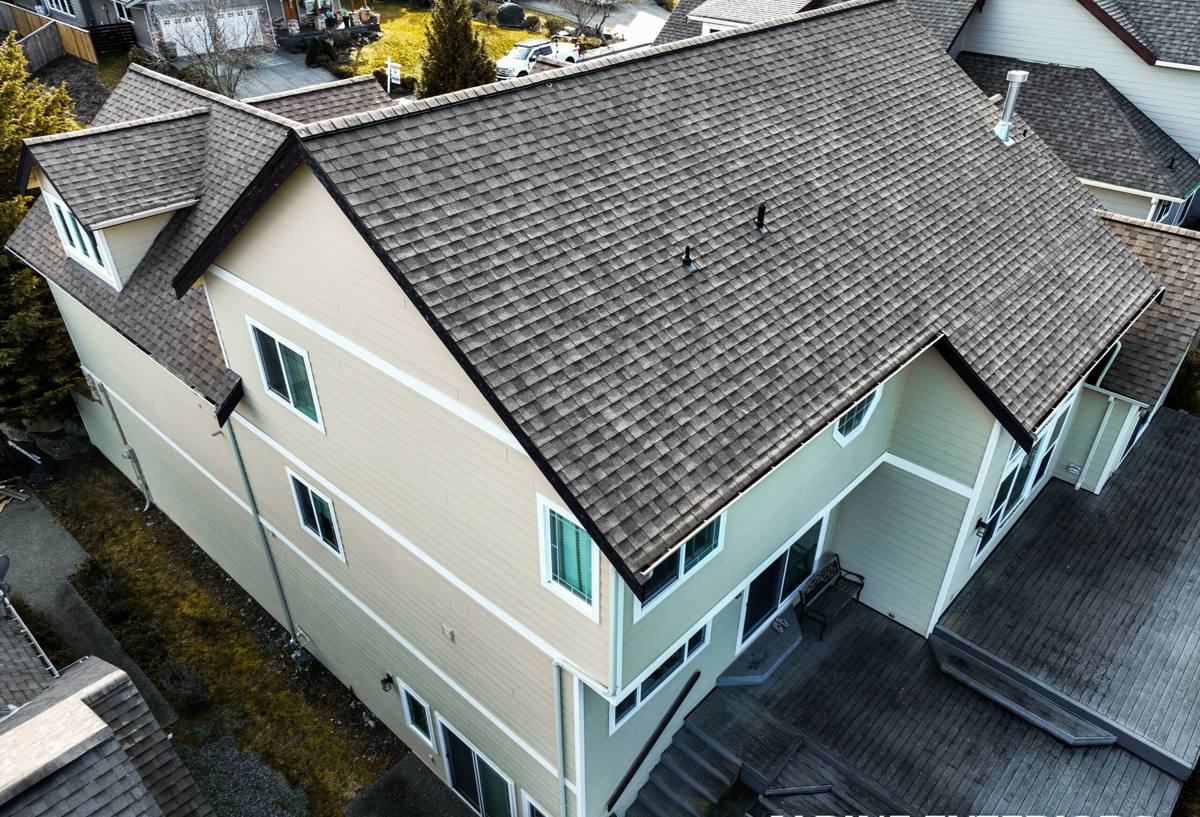
What San Juan County's Climate Does to Windows Over Time
Salt Air and Corrosion
Marine air carries fine salt particles that settle on exterior surfaces, including window frames, hardware, and fasteners. Over years, that salt accelerates corrosion on lower-grade metal components — hinges, locks, cranks, and screws — and can degrade certain finishes faster than the manufacturer's inland warranty testing ever accounted for. This is one of the biggest reasons material and hardware selection matters more here than in a typical mainland suburb.
Driving Rain and Water Intrusion
Storms coming off the Strait of Juan de Fuca and the Salish Sea don't always arrive straight-on. Wind-driven rain can be pushed sideways and upward, which means a window that would stay dry in a calm rainstorm elsewhere can still take on water here if the flashing, sill pan, and sealant details aren't done correctly. Most window leaks we find on the islands aren't failures of the window itself — they're failures of the installation around it.
Moss, Algae, and Prolonged Dampness
The long wet season on Lopez Island keeps humidity elevated around window openings for extended stretches. Combined with shade from evergreens, that creates ideal conditions for moss and algae growth on sills, tracks, and nearby trim. Left unaddressed, that moisture retention can lead to wood rot in surrounding framing, even when the window unit itself is fine.
What "Energy-Efficient" Should Actually Mean Here
Energy efficiency in a window comes down to a handful of measurable factors, and understanding them helps you compare options honestly instead of relying on a salesperson's pitch.
- U-factor — how well the window resists heat transfer. Lower is better for keeping heat inside during our cool, wet winters.
- Solar Heat Gain Coefficient (SHGC) — how much solar heat passes through the glass. This matters less for heating-dominated island homes but still affects comfort in south-facing rooms.
- Air leakage rating — how tight the window seals when closed. On a windy island site, a poor air leakage rating shows up fast as drafts.
- Condensation resistance — a rating too many homeowners never hear about, but it matters directly for our humidity levels. Poor condensation resistance means fogged glass and wet sills for months of the year.
Washington's state energy code sets minimum performance requirements for most replacement windows, and any legitimate installer should be able to tell you plainly whether a given product meets it. Beyond code minimums, the right choice depends on your home's orientation, existing wall assembly, and how exposed the openings are to weather.
Choosing Window Materials for a Marine Environment
There's no single "best" window material for every home, but some perform more predictably than others in salt air and sustained moisture. Here's how the common options generally compare for island use.
| Material | Salt Air / Corrosion Behavior | Moisture Behavior | Typical Maintenance |
|---|---|---|---|
| Vinyl | Does not corrode; hardware quality varies by manufacturer | Handles moisture well; won't rot | Low — occasional cleaning |
| Fiberglass | Very stable, minimal corrosion risk | Excellent; dimensionally stable in wet-dry cycles | Low |
| Aluminum-clad wood | Cladding protects wood, but hardware and seams need attention | Good if detailing is correct; wood core still vulnerable if breached | Moderate |
| Bare wood | Requires diligent upkeep to prevent finish failure | Most vulnerable to prolonged dampness and rot | High — regular refinishing needed |
| Aluminum (non-clad) | Conducts heat and cold; hardware can corrode without marine-grade coatings | Prone to condensation without thermal breaks | Moderate |
We don't push one manufacturer or one material as the answer for every house. What we do insist on is marine-rated hardware and finishes on anything installed on Lopez Island — a window that's technically "energy-efficient" on paper but corrodes or fails its seals within a decade isn't actually efficient once you count the redo.
Why the Installation Matters as Much as the Window
A high-performance window installed with sloppy flashing will underperform a mid-grade window installed correctly. This is especially true on Lopez Island, where wind-driven rain punishes any gap in the water management details.
What a Correct Installation Includes
- Proper sill pan flashing so any water that does get past the window drains back out, not into the wall cavity
- Weather-resistive barrier integration so the window ties correctly into the home's existing moisture barrier, not just caulked over it
- Head flashing set to shed water down and away from the window, sequenced correctly with the siding above it
- Marine-grade or corrosion-resistant fasteners and hardware
- Sealant and backer rod chosen for long-term flexibility in a wide temperature and humidity range, not just a quick bead of caulk
- Correct shimming and squaring so the window operates smoothly and seals evenly for years, not just on install day
We treat every window opening as a small waterproofing project first and a window installation second. On this island, that order of priorities is what determines whether a window is still performing well in fifteen years.
Signs Your Current Windows Are Costing You Money
Homeowners often live with underperforming windows for years without realizing how much they're losing in comfort and energy cost. Some signs are obvious; others show up quietly.
- Drafts you can feel near the frame, especially during windy weather
- Condensation or fogging between panes, which usually means a failed seal on a double-pane unit
- Visible moss, algae, or dark staining on the sill or surrounding trim
- Wood that feels soft or spongy around the frame or sill
- Windows that are difficult to open, close, or lock — often a sign of a warped or swollen frame
- Noticeably higher heating bills compared to similar-sized homes nearby
- Cold spots in rooms near windows even when the heat is running
If you're seeing more than one or two of these, it's usually worth having the openings looked at before the underlying framing is affected, not just the glass.
What Affects the Cost of a Lopez Island Window Project
We don't quote firm prices without seeing the home, but the factors that drive cost up or down are consistent from project to project. Broadly, homeowners on the islands should expect installed window pricing in the range of roughly $700 to $1,800 per opening depending on size, material, and access — with the specifics below moving that number in either direction.
| Factor | Why It Matters |
|---|---|
| Window size and configuration | Larger units, custom shapes, and multi-panel configurations cost more in both materials and labor |
| Material choice | Vinyl is typically the most budget-friendly; fiberglass and clad-wood options cost more upfront but often last longer in this climate |
| Extent of existing water damage | Rot or damage found in the framing during removal adds repair scope before the new window can go in |
| Number of openings | Whole-house replacements typically bring a better per-window cost than one-off replacements |
| Site access and logistics | Island delivery schedules and site access can affect timeline and, in some cases, cost |
| Retrofit vs. full-frame replacement | Full-frame replacement addresses flashing and moisture issues directly but requires more labor than an insert replacement |
Why Hire a Crew That Already Works on Lopez Island
Working on the San Juan Islands isn't the same as working on the mainland, and it shows in how a project gets planned. Materials, crews, and equipment all have to move by ferry, which means scheduling has to account for sailing times rather than assuming next-day delivery. A contractor who already works this route knows how to plan around it so your project doesn't stall waiting on a part that missed a boat.
There's also a practical knowledge gap between a crew that occasionally takes an island job and one that works Lopez Island and the surrounding San Juan County islands regularly. We already know which details tend to fail first in this climate, which hardware holds up to salt air, and how to sequence a job around island weather windows instead of losing days to conditions a mainland crew wouldn't plan for. As a company based on Orcas Island, this is our home region, not a service area we occasionally drive out to.
County permitting can also come into play depending on the scope of the work, particularly for full-frame replacements that affect the exterior wall assembly. A local crew that's already familiar with San Juan County's process can keep that part of the project moving instead of becoming a surprise delay.
Keeping Your New Windows Performing Long-Term
Even a correctly installed, high-quality window benefits from basic seasonal upkeep in this climate. A short annual routine goes a long way:
- Clear moss and debris from sills and tracks before it holds moisture against the frame
- Check weep holes on vinyl and aluminum-clad windows to make sure they're clear and draining
- Inspect exterior caulking and sealant once a year for cracking or separation
- Operate hardware periodically through the wet season to keep hinges and locks from seizing
- Rinse salt residue off exterior frames a couple of times a year, especially on homes with more direct water exposure
None of this is complicated, but it's the kind of small maintenance that determines whether a window installation lasts fifteen years or thirty.
If your Lopez Island home has drafty, foggy, or hard-to-operate windows — or you're planning ahead for a full replacement — we're happy to take a look and give you a straightforward, no-pressure estimate. There's a form below to get that conversation started.