 Orcas Island Siding
 Lopez Village is where most day-to-day life on Lopez Island happens — the market, the ferry landing, the summer bike traffic passing through. The homes in and around it deal with the same weather every other property in San Juan County contends with: salt-laden marine air moving off the water, rain that arrives sideways as often as it falls straight down, and a moss season that runs long on shaded, north-facing walls. If you're planning a siding installation for a home near Lopez Village, this page covers what that climate actually requires from the job, what correct installation involves, and why we install James Hardie fiber cement exclusively rather than the mix of products you'll see quoted around the islands.
What Lopez Village's Climate Actually Demands From Siding
A siding installation here has to hold up to conditions that are more sustained and more corrosive than a typical inland job. None of these are exotic problems, but together they add up to a job that has to be done right the first time, because getting a crew back out to fix something isn't a same-day errand.
Salt Air and Corrosion
Homes near Lopez Village sit close enough to the water that salt-laden air is a constant presence, not an occasional event. Over time, that air accelerates the breakdown of finishes and, more importantly, corrodes anything metal that isn't rated for the exposure — fasteners, flashing, trim connectors. A siding job that uses standard-grade hardware in this environment is setting up a problem that shows up years later as staining, streaking, or loosened boards, long after the installer has moved on.
Driving Rain and Water Management
Storms coming off the water rarely fall straight down. They drive rain horizontally into south- and west-facing walls, pushing moisture into butt joints, corner trim, and anywhere a flashing detail is doing the real work of keeping water out. Siding that looks fine from the street can still be letting water behind it at a poorly lapped joint or a window opening that wasn't flashed correctly — and on Lopez Island, that kind of hidden problem tends to sit unnoticed for a lot longer before anyone catches it.
A Moss Season That Doesn't Really End
Between tree canopy, shaded elevations, and a wet season that stretches across much of the year, moss and mildew growth is a near-constant condition on north-facing and heavily shaded walls around Lopez Village. Moss holds moisture against a wall surface far longer than open, sun-exposed siding ever sees, which matters most on any product with an organic core or a field-applied finish that depends on staying intact to keep water out.
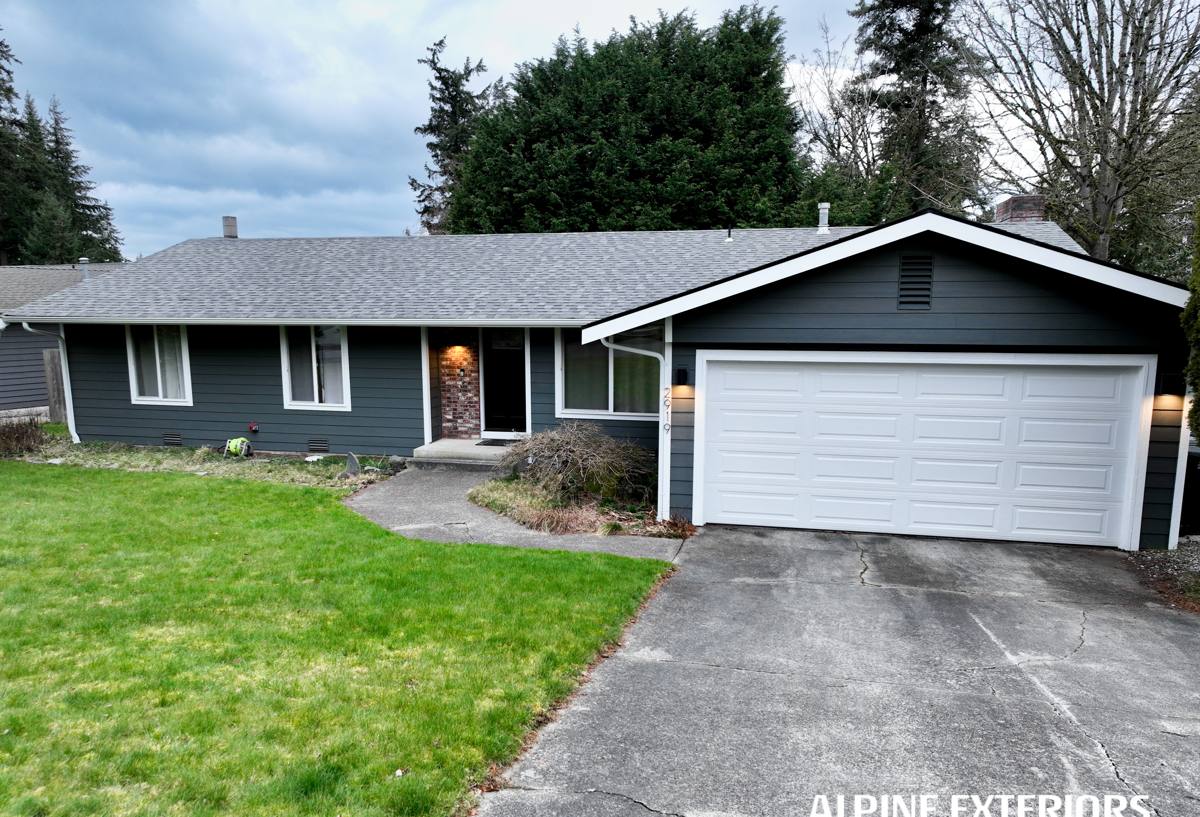
Why Installation Precision Matters More Here Than Elsewhere
On the mainland, a missed flashing detail or an undersized fastener is an inconvenience — a crew can usually get back out within a day or two to fix it. On Lopez Island, every warranty callback, repair visit, or materials run depends on ferry scheduling, which means a small installation error doesn't just cost more to fix, it sits exposed to salt air and driving rain for longer before anyone can address it. That's the real argument for getting the job right the first time: not abstract quality talk, but the practical reality that mistakes are more expensive to correct here than almost anywhere else in the region.
It's also why we're selective about the crews who work on San Juan County homes. A contractor who installs siding here occasionally is learning the island's logistics on your project. A crew that already works Lopez Village regularly has already solved the scheduling and staging problems before your job starts.
What a Correct James Hardie Installation Involves
James Hardie fiber cement is engineered to handle marine climates, but the product only performs to that standard when it's installed to spec. The material itself isn't the whole story — the details underneath it are.
Flashing and Water Management
Every window, door, and roof-to-wall intersection needs flashing that directs water away from the structure rather than behind the siding. Butt joints get flashed or sealed correctly, not just caulked and left. This is the single most common place a siding job fails, regardless of what product is on the wall, and it's the detail that matters most given how much wind-driven rain Lopez Village walls take on.
Fasteners, Clearances, and Joints
Fasteners need to be corrosion-resistant and rated for the exposure, placed to Hardie's spacing specification — not just close enough. Proper clearance from grade, decks, and roof lines keeps splash-back and standing moisture away from the bottom courses, which is where deterioration tends to start on any siding product, fiber cement included.
ColorPlus Finish and the Right HZ Line
Hardie's ColorPlus finish is baked on at the factory under controlled conditions, which gives it a real advantage over field-applied paint or stain in a climate that's hard on any exterior finish. Hardie also builds HZ product lines engineered for specific regional exposure levels — choosing the right one for a Lopez Village property, based on its sun exposure, wind exposure, and proximity to the water, is part of a correct installation, not an afterthought.
Our Installation Process for Lopez Village Homes
The steps themselves aren't unusual — what matters is doing each one to spec, in the right order, with materials and logistics planned around island access instead of assumed away.
- On-site assessment of the existing siding, wall condition, sun and wind exposure, and any moisture damage already present
- Removal of old siding where a full replacement is needed, with the wall sheathing inspected and any damage addressed before anything new goes up
- Installation of a weather-resistant barrier and correct flashing at every penetration, window, door, and roof line
- James Hardie panel or lap siding installed to manufacturer spec — fastener spacing, clearances, and joint treatment included
- Final inspection of every flashing point, joint, and clearance before the job is called complete
- Site cleanup and a walkthrough so the homeowner knows exactly what was done and what maintenance, if any, to expect
Because materials and crew both have to come over by ferry, we plan the schedule and staging in advance rather than treating logistics as something to figure out once the job starts. That planning is part of what keeps an island project on schedule instead of stretching out over weeks.
Cost Factors for a Lopez Village Siding Project
Every siding job is priced around the specifics of the house, but a few factors matter more on Lopez Island than they would on the mainland.
| Factor | Why It Affects Cost |
|---|---|
| Home size and wall complexity | More square footage, corners, and trim detail mean more material and labor time |
| Removal of existing siding | Tear-off and disposal of old material adds labor and hauling costs, more so with limited island disposal options |
| Underlying wall condition | Moisture damage found during removal may require sheathing repair before new siding goes on |
| Ferry and materials logistics | Scheduling crew and material deliveries around ferry availability affects project timeline and staging costs |
| Product line and finish selection | Panel style, HZ product line, and ColorPlus color selection all affect material cost |
| Access and site conditions | Driveway access, staging space, and how the property sits relative to the road affect labor efficiency |
A straightforward, easily accessible home costs less to side than one with tight access, extensive trim detail, or hidden moisture damage behind the old siding. We give a specific number after seeing the property, not a phone estimate, because the factors above genuinely change from house to house.
Why Hire a Crew That Already Works Lopez Village
A contractor unfamiliar with island work will often quote a Lopez Village job the same way they'd quote a mainland one, then run into the same scheduling and access problems partway through — a materials order that doesn't make the ferry it was supposed to, a crew that can't get back out for a punch-list item without burning most of a day on travel. That shows up as delays and, sometimes, corners cut to make up for lost time.
A crew that already works San Juan County has solved those problems before your project starts. We know how to stage materials so a ferry delay doesn't stall the job, how to sequence work around weather windows that close faster here than inland, and what San Juan County's permitting and inspection process actually requires for exterior work. That familiarity is worth more than it sounds like on paper — it's the difference between a project that runs on schedule and one that doesn't.
Checklist: What to Ask Before You Hire
- Are they certified to install the specific James Hardie product line they're quoting, and can they show it?
- What flashing details will they use at windows, doors, and roof lines — get specifics, not a general assurance
- What fastener type and spacing will they use, and is it rated for marine, salt-air exposure?
- Have they worked on Lopez Island or elsewhere in San Juan County before, and how do they handle materials logistics?
- What does the written warranty actually cover, and who backs it — the installer, or the manufacturer?
- How do they handle a callback or repair after the job is done, given ferry scheduling?
These questions matter more than the price on the estimate. A well-installed product with a realistic logistics plan will outlast a cheaper job that skipped a flashing detail or used the wrong fasteners, especially in a climate this consistently hard on exterior work.
Ready When You Are
If you're weighing a siding installation for a home near Lopez Village, we're glad to come take a look, walk the property, and give you a straight answer about condition, product fit, and cost — no pressure, no obligation. Reach out for a free estimate and we'll work around your schedule and the ferry's.