 Orcas Island Siding
 Why Shaw Island Homes Ask About Energy-Efficient Windows
Shaw Island sits in the middle of the San Juan Islands, surrounded by the Salish Sea, and that location shapes everything about how windows perform here. Homes on and around the island deal with salt-laden air, wind-driven rain that comes in sideways off the water, and a long, damp moss season that can stretch from fall through spring. Windows that were fine when they were installed twenty or thirty years ago often can't keep up with that combination anymore. Seals fail, frames swell or corrode, and heating bills climb every winter as the marine layer settles in.
Energy-efficient windows aren't just about lower utility bills, though that's part of it. In this climate, the bigger issue is usually moisture management and air infiltration. A window that's rated efficient on paper but installed poorly will still let wind-driven rain past the frame and let warm air leak out around the sash. The product matters, but on a small island exposed to open water on multiple sides, the installation matters just as much.
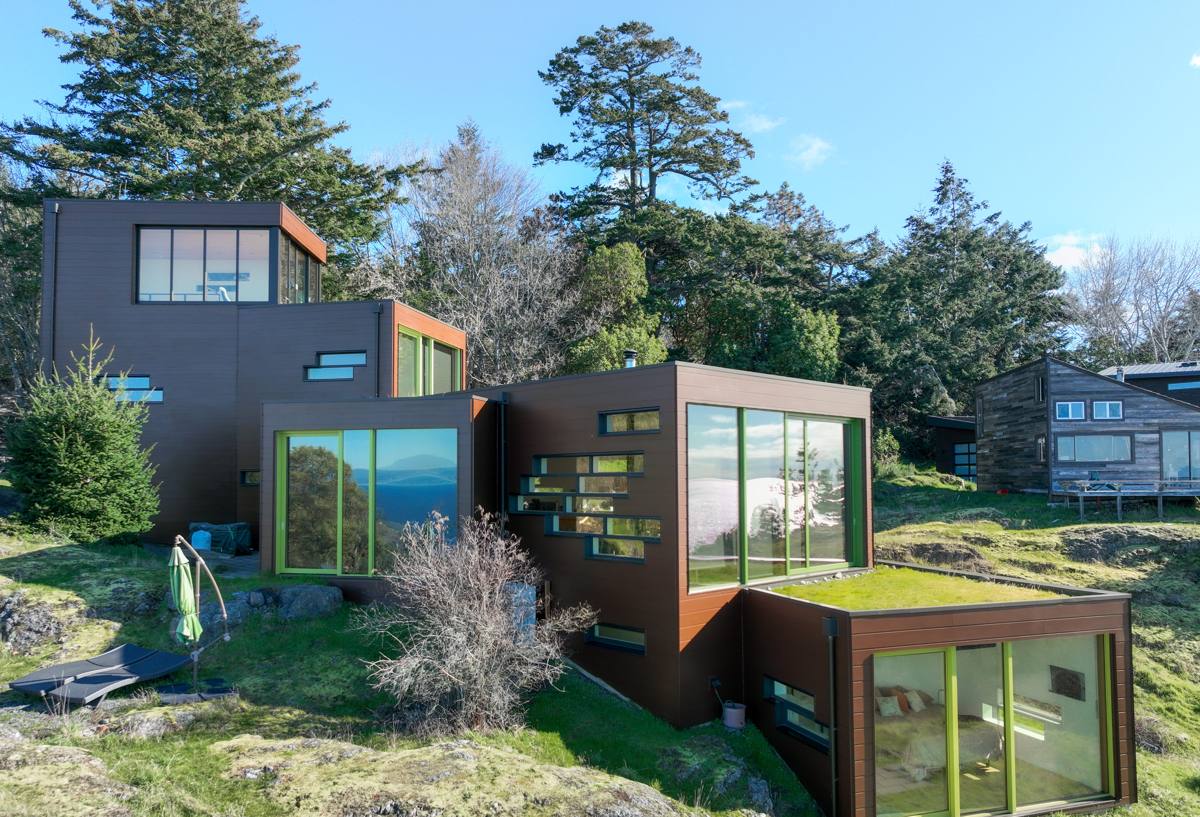
What San Juan County's Marine Climate Does to Old Windows
Salt Air and Metal Fatigue
Salt in the air corrodes aluminum hardware, screws, and older metal window frames faster than most homeowners expect, even a few miles inland from the shoreline. Once corrosion starts on hinges, locks, or balance mechanisms, windows stop sealing tightly, which is where a lot of heat loss begins.
Wind-Driven Rain
Storms moving through the Salish Sea don't just drop rain straight down — wind pushes it horizontally into siding and window openings. Older flashing details, or windows installed without proper head and sill flashing, let water track behind the trim and into the wall cavity long before anyone notices a stain indoors.
Moss and Prolonged Moisture
The long wet season on Shaw Island keeps wood trim, sills, and surrounding siding damp for months at a time. That moisture feeds moss and rot, and it also means any gap around an aging window frame stays wet longer, accelerating deterioration compared to a drier inland climate.
Signs Your Current Windows Are Underperforming
- Visible condensation or fog between panes of a double-pane window (a sign the seal has failed)
- Cold drafts near the window frame even when it's fully closed and latched
- Soft or discolored wood trim around the window, especially at the sill
- Difficulty opening, closing, or locking the window smoothly
- Noticeably higher heating costs in winter without any other change in usage
- Visible daylight or a whistling sound around the frame during windy weather
What "Energy-Efficient" Actually Means Here
Energy performance for windows comes down to a handful of measurable ratings, and for a marine climate like Shaw Island's, some matter more than others. U-factor measures how well the window resists heat transfer — lower is better for keeping heat inside during our cool, wet winters. Solar Heat Gain Coefficient (SHGC) matters less here than in sunnier climates, since the islands see a lot of overcast days, but it still affects comfort on the clear ones. Air leakage rating is arguably the most important number for this specific location, since it reflects how well the window resists the kind of wind-driven infiltration common on an exposed island site.
Double-pane, low-E glass is the standard baseline for this climate and is appropriate for most homes. Triple-pane glass adds cost and weight and is worth discussing case by case — it can help on a wall that takes direct, sustained wind exposure, but it isn't automatically the right call for every room or every home.
Frame Material Comparison for a Marine Environment
| Frame Material | Salt Air Resistance | Maintenance | Notes for This Climate |
|---|---|---|---|
| Vinyl | Good | Low | Won't corrode or rot; a solid, budget-friendly default for most island homes |
| Fiberglass | Excellent | Low | Very stable in temperature swings and moisture; higher upfront cost |
| Wood-clad | Fair | Higher | Attractive, but exterior cladding and interior wood need more attention in constant damp |
| Aluminum | Poor without upgrades | Moderate | Prone to corrosion near salt water unless specifically treated; conducts cold |
We don't push one brand or material on every homeowner. The right frame depends on your home's exposure, your budget, and how much upkeep you want to take on. What we won't do is install a frame material that's a poor fit for a directly wind-exposed wall just because it's cheaper — that's a trade-off we'll walk through honestly before you commit.
Why Correct Installation Matters More Than the Sticker on the Glass
A high-efficiency window installed without proper flashing will underperform a mid-grade window installed correctly. This is especially true on Shaw Island, where wind-driven rain tests every gap in the building envelope. A correct installation includes:
- Proper head flashing to divert water above the window opening
- Sill pan flashing so any water that does get past the frame drains back out, not into the wall
- Continuous, compatible sealant at all sides — not just caulk smeared over gaps
- Correct shimming so the window is square and operates smoothly for years, not just on install day
- Air-sealing the rough opening with appropriate insulation, not just foam sprayed in without regard to vapor movement
- Matching flashing and trim details to the surrounding siding so water is shed, not trapped
Skipping any of these steps is how homeowners end up with hidden rot behind new-looking windows a few years later. It's also the most common reason a homeowner replaces windows twice in one decade instead of once in three.
Our Process for Shaw Island Window Projects
Working on an island changes how a project gets planned, and we account for that from the first conversation.
1. On-Site Assessment
We look at each window opening individually — exposure to prevailing wind and rain, condition of the surrounding trim and siding, and any signs of existing moisture damage. Not every window on a home faces the same conditions, so not every window needs the same solution.
2. Straightforward Recommendations
You'll get a clear explanation of frame and glass options with honest trade-offs, not a upsell to the most expensive option by default. If a mid-grade vinyl window with correct flashing is the right call for a sheltered wall, we'll say so.
3. Coordinated Scheduling
Because materials and crews often need to come over by ferry, we plan orders and scheduling with enough lead time to avoid gaps where an opening sits exposed to weather longer than necessary.
4. Installation and Weatherproofing
Every opening gets proper flashing and air-sealing regardless of which window product you choose. This is non-negotiable on our jobs, especially in a climate this exposed to moisture.
5. Walkthrough and Cleanup
We confirm every window operates smoothly, locks properly, and is sealed correctly before we consider the job finished, and we leave the site clean.
Why Local, Island-Experienced Crews Make a Difference
Window replacement on Shaw Island isn't quite the same job as it is on the mainland. Ferry schedules affect how materials and crews move, weather windows for exterior work are narrower in a wet climate, and homes here are more likely to have already dealt with some degree of salt or moisture-related wear. A crew that regularly works San Juan County knows to check flashing details other contractors might skip, understands which frame materials hold up on exposed sites, and plans logistics around the realities of island access instead of treating it as an afterthought.
Maintaining Efficient Windows in a Salt Air, Moss-Prone Climate
Even good windows need occasional attention here. Rinse salt residue off exterior frames and hardware periodically, especially on walls facing open water. Keep weep holes and drainage tracks clear of moss, debris, and leaf buildup so water drains as designed. Check exterior caulking annually for cracking or gaps, since UV and moisture cycling can break down sealant faster in this environment than in a drier inland climate. Small maintenance steps like these go a long way toward protecting the investment.
Cost Factors to Expect
| Factor | Why It Affects Cost |
|---|---|
| Number and size of windows | More openings and larger glass areas increase material and labor cost |
| Frame material | Vinyl is typically the most budget-friendly; fiberglass and wood-clad cost more |
| Glass package | Triple-pane and specialty low-E coatings add cost over standard double-pane |
| Condition of existing openings | Rot repair or reframing adds labor beyond a straightforward swap |
| Access and logistics | Ferry-dependent delivery and scheduling can affect project timelines |
We give straightforward, itemized estimates so you can see exactly what's driving the price, without pressure to upgrade beyond what your home actually needs.
If your windows are drafty, fogged, or just past their prime, we're happy to take a look and talk through honest options for your specific home. Use the form below to request a free, no-pressure estimate for energy-efficient window work on Shaw Island.