 Orcas Island Siding
 Siding Built for Life in the San Juan Islands
Homes around Lopez Village live with a combination of conditions that most mainland siding never has to face: salt-laden air off the water, wind-driven rain that hits walls sideways instead of straight down, and long stretches of shade and dampness that keep moss and algae active for most of the year. San Juan County's marine climate is milder than the mainland in temperature, but it is harder on exterior materials in almost every other way. Siding here needs to shed water fast, resist salt corrosion at every fastener and seam, and stand up to moss and mildew without rotting, cracking, or losing its finish.
We install James Hardie fiber cement siding exclusively, and on island homes like the ones around Lopez Village, that choice matters more than it might on a drier, more sheltered lot. This page covers what the local climate actually does to siding, what a correct fiber cement installation looks like out here, and how our process works for island projects.
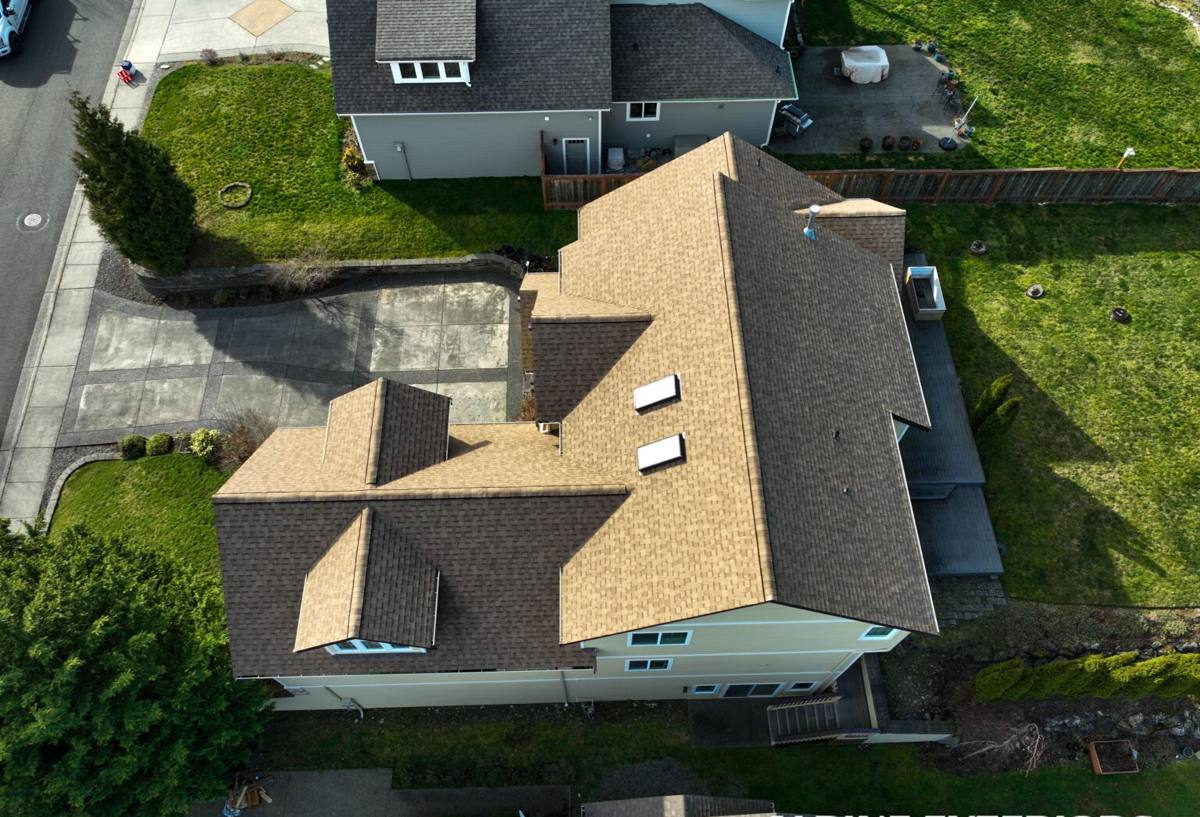
What Salt Air, Driving Rain, and Moss Actually Do to a Home
Salt Air and Corrosion
Even homes set back from the shoreline pick up salt in the air, and that salt finds every piece of exposed metal on a house — nail heads, flashing edges, trim fasteners. Over years, corrosion at those points can telegraph through paint, stain siding joints, and eventually compromise the water seal at seams and penetrations. Materials and fasteners that aren't rated for coastal exposure fail here faster than they would fifty miles inland.
Driving Rain and Wind-Driven Moisture
Storms crossing the Sound and the Strait often arrive with real wind behind them, which pushes rain sideways and up under laps, trim, and penetrations that would stay dry in a calm, straight-down rain. Siding systems depend on correct lap coverage, flashing, and drainage behind the cladding to handle that — not just a water-resistant surface. A siding job that looks fine in a light rain can still leak in a real Pacific storm if the water management behind it wasn't built right.
Moss, Algae, and Prolonged Dampness
Shaded, tree-lined lots — common throughout the islands — stay damp longer after every rain, which is exactly what moss and algae need to establish and spread. On wood-based sidings, sustained moss growth holds moisture against the substrate and accelerates rot from the surface in. On fiber cement, moss and algae are a cosmetic issue that can be managed, not a structural one, because the substrate underneath isn't wood and doesn't feed decay the same way.
Why James Hardie Fiber Cement Fits This Climate
Fiber cement is cement, sand, and cellulose fiber, engineered and cured into a rigid plank or panel. It doesn't have the food value that wood-based products offer to moisture and organic growth, and it doesn't swell, delaminate, or rot the way engineered wood siding can when it stays wet for extended periods. That difference matters directly for a moss-prone, high-moisture climate like this one.
James Hardie also builds region-specific product formulations — its HZ5 engineered-for-climate line is formulated for cold, wet regions like the Pacific Northwest, which is a meaningful distinction from a one-size-fits-all siding product. Combined with the factory-applied ColorPlus finish — baked on under controlled conditions rather than field-painted — you get a consistent, UV- and moisture-resistant color coat that holds up to years of damp, shaded exposure without the early fading or peeling that field-applied paint is prone to in this kind of climate.
James Hardie's warranty is also transferable to a new owner within the coverage period if you sell the home, which is worth knowing on island properties where buyers and inspectors often ask directly about siding age, condition, and remaining warranty during a sale.
None of that is a guarantee on its own. Fiber cement's real-world performance depends heavily on correct installation — gaps, clearances, fastening, and flashing all have to be done to spec, every time, or the material's advantages get undercut by water finding its way in anyway.
What a Correct Installation Looks Like Here
Water Management Behind the Siding
Before a single plank goes up, the wall needs a correctly lapped weather-resistive barrier, properly integrated flashing at every window, door, and penetration, and a drainage plane that lets any moisture that does get behind the siding find its way back out instead of sitting against the sheathing. This step is invisible once the job is finished, which is exactly why it's the step most likely to get shortchanged by a crew in a hurry.
Fastening and Clearances for a Marine Climate
Fasteners need to be corrosion-resistant and set to Hardie's specification — not overdriven, not underdriven. Bottom clearances above decks, patios, and grade need to be maintained so splashback and standing water don't sit against the plank edge. Butt joints and trim need to be caulked and flashed correctly rather than just butted together, since that's one of the most common places wind-driven rain finds a way in.
Factory Finish, Field Touch-Up
ColorPlus siding comes with a matched touch-up system specifically so that any field cuts or minor marks get sealed with the same finish chemistry as the factory coat — not a generic exterior paint that will weather differently and show as a mismatched patch over time.
Our Process for Lopez Village Projects
Working on the islands adds real logistics that a mainland job doesn't have — ferry schedules, material staging, and weather windows all have to be planned around, not worked around after the fact. Here's how a typical project runs:
- On-site assessment. We walk the home, check current siding and water damage at trim, corners, and penetrations, and evaluate sun/shade exposure and moss patterns specific to the lot.
- Scope and material plan. We spec the right Hardie product line, plank exposure, and color for the home, and plan trim and flashing details around the home's actual exposure to wind and rain.
- Logistics and scheduling. Materials are staged and ferry logistics are built into the schedule ahead of time, so the crew isn't waiting on a delayed sailing mid-project with a wall open to weather.
- Installation. Water-resistive barrier and flashing go in first and get inspected before any siding is installed, followed by the planks, trim, and caulking to spec.
- Walkthrough and cleanup. We walk the finished job with the homeowner, confirm everything meets spec, and clear the site of debris and packaging before we leave.
Cost Factors for Fiber Cement Siding on Island Homes
Every home is different, but the factors that move a project's cost up or down out here are fairly consistent. We give firm numbers only after an on-site look — broad ranges below are for planning purposes.
| Factor | Why It Matters Here |
|---|---|
| Existing siding removal and substrate condition | Moss and moisture exposure often mean hidden sheathing damage isn't visible until old siding comes off |
| Home size and wall complexity | Dormers, multiple gables, and cut-up wall lines add trim, flashing, and labor time |
| Plank profile and reveal | Lap width and texture (smooth vs. cedar-textured) affect material cost and install time |
| Trim and accent details | Corner boards, frieze boards, and accent panels add both material and finish-carpentry time |
| Access and staging | Ferry-dependent delivery and tight or waterfront lots can affect scheduling and logistics costs |
| Color selection | Standard ColorPlus palette vs. custom or premium color options |
Why a Crew That Already Works the San Juan Islands Matters
Island projects punish guesswork. A contractor who hasn't worked here before is learning ferry logistics, weather windows, and moisture patterns on your project instead of showing up already knowing them. A crew that regularly works Lopez Village and the surrounding San Juan Islands has already worked out material staging around ferry schedules, already knows which details on a shaded, moss-prone lot need extra attention, and already understands how far wind-driven rain can travel up a wall in a real storm off the water. That experience shows up in fewer surprises mid-project and in workmanship details — flashing laps, caulk lines, fastener patterns — that hold up under conditions a lot of siding crews never have to plan for.
A crew that already works this area also knows how to navigate San Juan County's permitting requirements for exterior work, and keeps the homeowner informed if a delayed ferry sailing or a stretch of weather pushes the schedule, rather than leaving a wall partially open and unattended.
Maintenance That Actually Matters in This Climate
Fiber cement is low-maintenance compared to wood-based siding, but "low-maintenance" isn't "no-maintenance" in a climate like this one. A short annual routine keeps siding performing the way it's supposed to:
- Rinse siding annually to clear salt residue and organic buildup before it can stain or feed moss growth
- Check caulk lines at trim, corners, and penetrations yearly, and re-caulk any cracked or shrunken joints
- Keep gutters and downspouts clear so roof runoff isn't sheeting down the wall face
- Trim back vegetation and tree cover where practical to reduce prolonged shade and dampness on siding
- Address any moss or algae growth promptly with a gentle wash rather than pressure-washing, which can force water behind laps
- Watch bottom clearances near decks, patios, and grade, and keep them clear of soil, mulch, or debris buildup
Let's Take a Look at Your Home
If your Lopez Village home's siding is showing moss staining, failing caulk joints, or damage from years of wind-driven rain, we're glad to come take a look. We'll give you a straight, no-pressure assessment of what's going on and what correctly installed James Hardie fiber cement siding would look like for your home — request a free estimate using the form below.