 Orcas Island Siding
 Why San Juan Island Asks More of Its Siding
San Juan Island sits out in the Salish Sea, and that location cuts both ways. The marine air keeps summers mild, but it also means salt-laden moisture is a constant presence on every exterior surface, year-round. Add the long stretch of fall and winter storms that bring sideways, driving rain off the water, plus a shoulder season damp enough to keep moss and algae established on shaded north and west walls almost permanently, and you have a climate that is genuinely tougher on cladding than most inland Washington towns ever see.
Homes here also deal with wide humidity swings between the dry summer months and the saturated winter ones. Siding that handles one extreme fine can still fail at the other. Wood swells and shrinks, paint chalks and peels faster near salt spray, and any product with a weak moisture-management system eventually shows it — usually as soft trim, streaking, or bubbled paint low on the wall where splashback and moss retention are worst.
None of this means siding on San Juan Island is doomed to fail. It means the product and the installation both have to be matched to the environment on purpose, not by default. That's the whole reason we standardized on James Hardie fiber cement and don't install anything else.
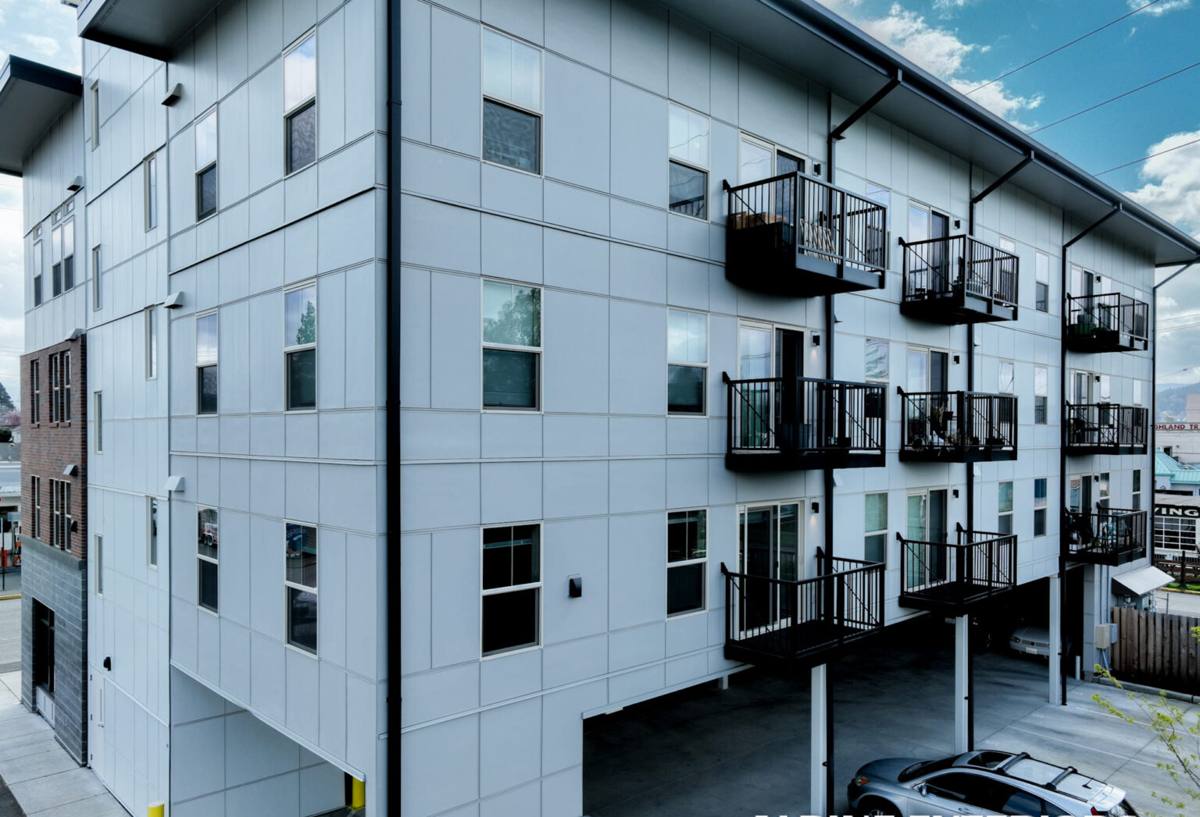
What "Correct" Fiber Cement Siding Looks Like Here
Fiber cement itself is a mix of cement, sand, and cellulose fibers, engineered to be dimensionally stable — it doesn't expand and contract with moisture the way wood does, and it doesn't degrade in UV and salt air the way some polymer products can over a long service life. James Hardie makes the HZ5 product line specifically for climates like the Pacific Northwest, engineered around the exact combination of moisture and temperature swings San Juan County sees.
The details that actually matter on an island install
- Rainscreen gap: A drainage plane behind the siding lets any moisture that does get past the cladding drain and dry instead of sitting against the wall sheathing — critical in a climate this wet.
- Flashing at every penetration: Windows, doors, hose bibs, light fixtures — anywhere something breaks the plane of the siding needs proper flashing, not just caulk. Caulk is a backup, not a strategy.
- Correct fastener pattern and clearance: Hardie's install spec calls for specific nailing patterns and a minimum clearance above grade, decks, and roof lines. Skipping this is the single most common cause of early failure we see corrected on other contractors' work.
- ColorPlus factory finish: A baked-on finish applied under controlled conditions holds color and resists the chalking and fading that field-applied paint struggles with in salt air.
Skip any one of these and you can still end up with moisture intrusion, premature caulk failure, or paint that doesn't hold — even though the siding material itself is rated for exactly this environment.
Problems We Commonly Find on Island Homes
Because we work San Juan Island regularly, certain failure patterns show up again and again — almost always tied to installation shortcuts rather than the siding material itself.
| What we find | Usual cause | Why it matters here |
|---|---|---|
| Moss and dark streaking on north/west walls | No rainscreen gap, siding installed tight to sheathing | Trapped moisture behind the wall accelerates rot even when the face looks fine |
| Cracked or gapped caulk joints | Caulk used as the primary seal instead of flashing | Salt air and UV break down sealants faster, and driving rain finds any gap quickly |
| Soft trim or fascia near grade | Insufficient clearance above grade, decks, or paving | Constant splashback and slow-drying wall assemblies in a wet climate accelerate rot |
| Fading, chalky paint | Field-painted siding rather than factory ColorPlus finish | Salt spray and UV strip field-applied coatings faster than an inland home would see |
Most of these issues aren't visible from the ground until they've been developing for years. That's part of why a siding replacement here is worth treating as a full wall-assembly correction, not a cosmetic swap.
Our Process for a San Juan Island Job
Working on an island changes the logistics of a siding job, even if the install techniques don't change. We plan material delivery and crew scheduling around ferry timing so the job isn't stalled mid-project waiting on a missed sailing, and we stage enough material and fasteners on-site to avoid repeat trips.
- On-site assessment: We check the existing wall assembly, look for moisture damage behind current siding, and confirm what's driving the replacement — cosmetic, damage, or both.
- Moisture and rot check: Any soft sheathing or trim gets identified and addressed before new siding goes on. Covering rot with new siding just hides the problem.
- Rainscreen and flashing installed to spec: This is the step that determines how the wall performs in year eight, not just year one.
- HardiePlank or panel installation: Fastened per manufacturer spec, with correct clearances at grade, roofs, and decks.
- Trim, caulking, and final detail work: Sealants are used as a backup layer, not the primary defense against water.
- Walkthrough: We go over the finished work and what maintenance, if any, the specific product line needs going forward.
Fiber Cement Compared to Other Siding Options
Homeowners on San Juan Island often ask why we don't offer vinyl, cedar, or LP SmartSide alongside Hardie. Here's the honest comparison, focused on how each performs in this specific climate:
| Material | How it handles salt air & driving rain | Moss/algae resistance | Long-term maintenance |
|---|---|---|---|
| James Hardie fiber cement | Non-combustible, dimensionally stable, engineered HZ5 line for PNW moisture cycles | Factory finish resists staining better than field-painted surfaces | Occasional wash; no repainting for many years with ColorPlus |
| Vinyl | Can warp or become brittle with temperature swings and impact; seams are a moisture entry point | Similar staining exposure; harder to refinish once faded | Low maintenance but limited repair options if damaged |
| Cedar/wood | Absorbs moisture, swells and shrinks; needs consistent sealing to resist rot in this climate | Prone to moss and algae without regular treatment | Regular refinishing and inspection required |
| LP SmartSide (engineered wood) | Treated wood strand product; performance depends heavily on correct sealing at cuts and edges | Moderate; edge sealing is critical to avoid swelling | Field-applied finish needs more frequent attention than a factory finish |
Every one of these products has a legitimate place somewhere in the country. Our decision to install only Hardie fiber cement isn't about calling the others bad products — it's that after years of island work, we've settled on the one system that consistently holds up to this exact combination of salt air, moss, and driving rain with the least amount of homeowner upkeep.
Cost Factors for a San Juan Island Siding Job
| Factor | Why it moves the price |
|---|---|
| Wall condition underneath existing siding | Rot repair or sheathing replacement adds labor and material before new siding can go on |
| Home size and wall complexity | More corners, gables, and trim detail mean more cutting and fitting time |
| Siding profile chosen | Lap siding, panel systems, and trim/batten details vary in material and labor cost |
| Material logistics | Ferry-dependent delivery and staging is factored into scheduling and, in some cases, cost |
| Access and site conditions | Steep lots, limited staging area, or older decks/porches nearby can add setup time |
We give firm, itemized quotes after an on-site look — not a phone estimate — because wall condition varies so much house to house here.
Maintaining Fiber Cement Siding in a Marine Climate
Correctly installed Hardie siding is low-maintenance, not no-maintenance. In a climate with this much moss pressure and salt exposure, a little regular attention goes a long way toward hitting the full service life of the product.
- Rinse siding annually, more often on shaded north- and west-facing walls prone to moss
- Keep gutters clear so water isn't sheeting down the wall face
- Trim back vegetation and tree cover that keeps walls damp and shaded
- Check caulk joints around windows and trim yearly for cracking or gaps
- Watch for soft spots near grade, decks, or roof-to-wall transitions and address them early
Why a Crew That Already Works San Juan Island Matters
Island work isn't the same as mainland work. Material and crew logistics have to account for ferry schedules, and a contractor who doesn't build that into their planning can leave a project half-finished for days waiting on a missed sailing or a supply run. A crew that already works San Juan County has that logistics figured out, along with a working sense of which walls and exposures on island homes take the worst weather and need the most careful detailing.
There's also the matter of follow-through. Fiber cement siding carries a long manufacturer warranty, and warranty support means less if the crew that installed it isn't reachable or familiar with the job later on. Working with a contractor who's established in San Juan County, rather than one making a one-time trip out for a single job, means someone is actually available if a question comes up down the road.
Get an Estimate for Your San Juan Island Home
If your siding is showing moss, soft trim, or paint that won't hold anymore, it's worth having someone take a real look at the wall assembly underneath — not just the surface. We offer free, no-pressure estimates for San Juan Island homes, and we'll tell you honestly what we find, whether that means a full re-side or a smaller repair. Use the form below to get started.