 Orcas Island Siding
 West Beach's Exposure Is Tougher on Siding Than Most of the Island
West Beach sits out on the exposed, west-facing shoreline of Orcas Island, and that position matters more than most homeowners realize until they're the one replacing siding for the second or third time in twenty years. Homes tucked into wooded coves elsewhere on Orcas get some natural shelter from wind and salt spray. West Beach doesn't offer that same protection. Weather coming off the water hits these homes directly, and the siding takes the brunt of it year after year.
Salt Air and Wind-Driven Rain
Salt-laden air is corrosive to metal fasteners, trim, and any material that relies on a painted or coated surface to keep moisture out. Combine that with wind-driven rain, which doesn't just fall straight down but gets pushed sideways into laps, seams, and butt joints, and you have a siding assembly that's being tested constantly, not just during the occasional storm. San Juan County gets plenty of steady, soaking rain through the fall and winter, and on an exposed shoreline like West Beach, that rain arrives with force behind it.
Shade, Moss, and Moisture That Doesn't Dry Out
The flip side of an open, windy shoreline is that many West Beach lots still have mature conifers close to the house, and those trees throw shade across north- and east-facing walls for much of the day. Shaded siding stays damp longer after every rain. That's the exact condition moss and algae need to establish themselves, and once moss gets a foothold on a wall, it holds moisture directly against the surface underneath it. On a home here, it's common to see a west wall that's sun-scoured and salt-scoured, and a north wall thirty feet away that's green with moss — two very different problems on the same house.
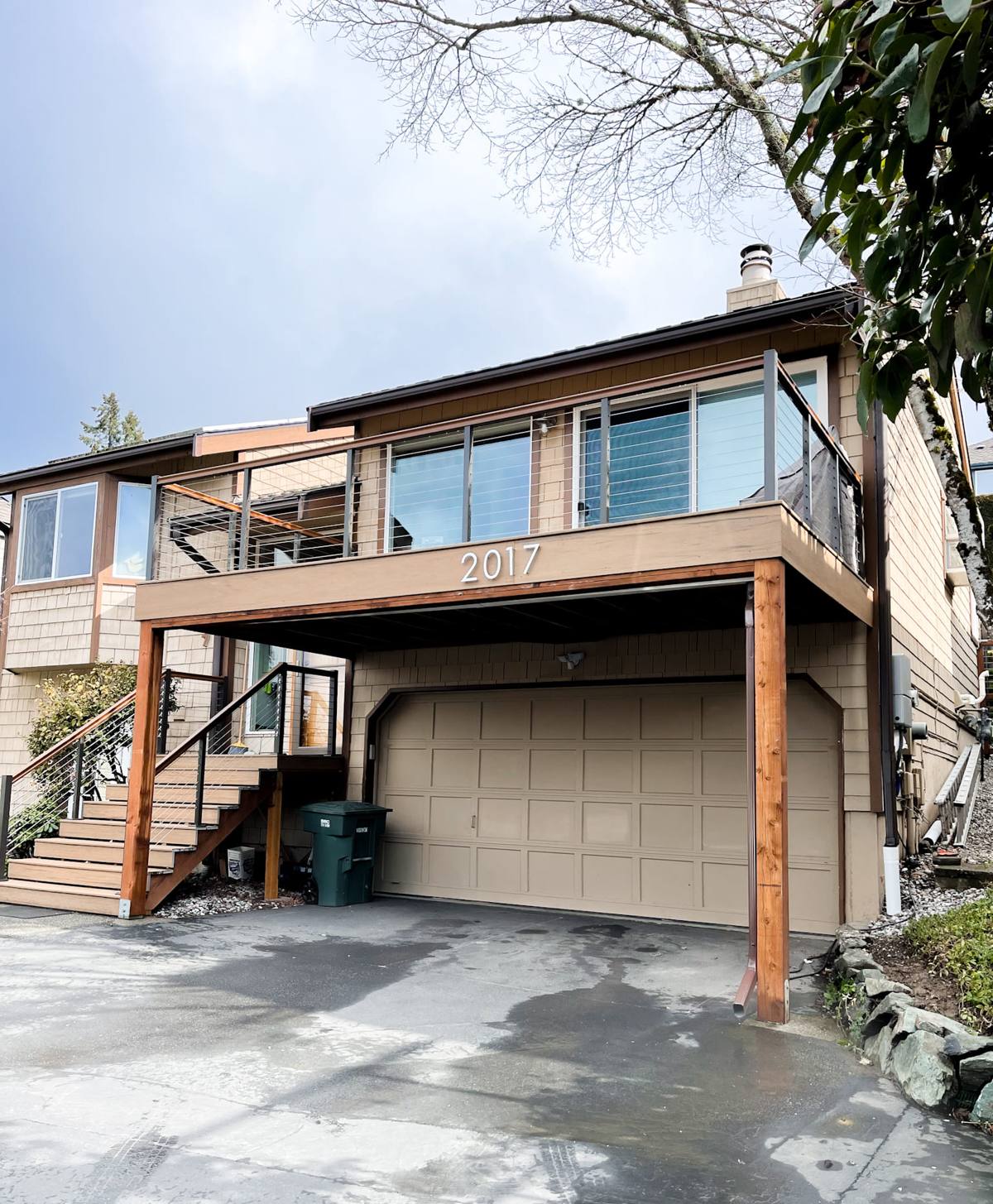
What Siding Actually Has to Do on a Home Like This
Given that combination — salt exposure on the weather side, chronic dampness and moss pressure on the shaded side — siding for a West Beach home needs to do a few specific things well:
- Resist water absorption at the plank itself, not just at the paint layer, so repeated wetting and drying doesn't degrade the material over years
- Hold a factory finish that doesn't chalk, fade, or need repainting every five to seven years in salt air
- Stay dimensionally stable through Orcas Island's damp winters and drier summers, so joints and caulk lines don't open up
- Be non-combustible, which matters increasingly in the Pacific Northwest as wildfire risk and insurance underwriting both tighten
- Shed moss and organic growth better than a porous or absorbent material would
That's a demanding list, and it's exactly why we standardized on one product line instead of offering a menu of options that each solve part of the problem.
Why We Install Only James Hardie Fiber Cement
We install James Hardie fiber cement siding exclusively. Not as a marketing position, but because after years of doing exterior work in this climate, it's the product we trust to actually hold up on an exposed site like West Beach. We don't install vinyl, LP SmartSide, Cemplank, Allura, primed spruce, or cedar, and we're upfront with homeowners about why.
A Factory Finish That's Built for This Exposure
James Hardie's ColorPlus finish is baked on in a controlled factory environment, not brushed or sprayed on site. That process gives it better adhesion and more consistent coverage than field-applied paint, and it carries its own finish warranty separate from the product warranty. In a salt air environment, where UV exposure and airborne salt both work against a coating, that factory-cured finish holds its color and integrity longer than site-applied paint typically will.
Engineered for Climate, Not Just Trimmed to Size
Hardie manufactures different product formulations for different climate zones, and the HZ5 line is engineered for regions with more moisture exposure and freeze-thaw variability, which fits western Washington. The fiber cement composition itself is dense and resists moisture absorption at the core of the material, not just at the surface — so even where a joint gets wet repeatedly, the plank isn't wicking water into itself the way a wood-based or wood-fiber product can.
Non-Combustible
Fiber cement doesn't burn. That's a straightforward, factual difference from vinyl and wood-based sidings, and it's become a meaningful factor for insurance and resale as wildfire exposure has become a bigger conversation across the Pacific Northwest, San Juan County included.
What a Correct Installation Involves
Fiber cement siding is only as good as the installation behind it. A rushed or generic install on an exposed site like West Beach will show its problems within a few winters — usually at the joints, the fastening, or the water management behind the cladding, not in the panel material itself. A correct install includes:
- A drainage plane and weather-resistive barrier installed and lapped correctly before any siding goes up
- A rainscreen gap where conditions call for it, so any water that does get behind the cladding can drain and the wall can dry
- Proper flashing at every window, door, and roof-to-wall transition — the details that generic installers most often shortcut
- Corrosion-resistant, coastal-rated fasteners set to Hardie's specified depth and pattern, not just "close enough"
- Correct clearances at the foundation, deck ledgers, and roofline so siding isn't sitting in standing water or trapped debris
- Factory-mitered or properly caulked joints using a sealant rated for the exposure, not general-purpose caulk
Every one of those steps is invisible once the wall is closed up, which is exactly why it matters who's doing the work and not just what material is going on the wall.
Fiber Cement Compared to the Alternatives in This Climate
Homeowners on West Beach often ask us to walk through why we'd steer them away from cheaper or more common options. Here's an honest comparison based on how each material actually performs under salt air, driving rain, and shade-driven moss pressure:
| Material | Salt Air Performance | Moss / Moisture Behavior | Maintenance Burden |
|---|---|---|---|
| James Hardie Fiber Cement | Factory finish resists chalking and fade; dense core resists absorption | Sheds moisture well; doesn't wick water into the material | Occasional wash-down; no repainting on ColorPlus finish |
| Vinyl | Can become brittle and discolor faster in salt-laden, UV-heavy exposure | Panels can trap moisture behind them at seams and laps | Low, but limited repair options and no repainting once faded |
| Cedar / Primed Wood | Absorbs salt-laden moisture; finish breaks down faster under coastal UV | Highly susceptible to moss, mildew, and rot in shaded, damp conditions | Repainting or restaining every few years; ongoing rot inspection |
| LP SmartSide / Engineered Wood | Engineered strand product still relies on a protective coating for moisture resistance | Can swell or delaminate at cut edges and joints if moisture gets in | Moderate; edge sealing and joint maintenance is important |
None of these alternatives are "bad" products in every setting — vinyl and engineered wood both have their place. But on an exposed, moss-prone shoreline lot like the ones on West Beach, they ask more of the homeowner in ongoing maintenance and carry more risk of early failure than fiber cement does.
Our Process for a West Beach Project
Because we already work this part of the island, our process starts with an honest look at your specific exposure, not a generic estimate.
Site Walk and Exposure Assessment
We look at which walls take direct weather, which stay shaded and hold moisture, and where the current siding is already showing stress — moss buildup, cracked caulk, soft trim, or paint failure. That tells us where the priorities are, and it often means we recommend different flashing or drainage detailing on the exposed side of the house than on the sheltered side.
Scoping the Job Around the Weather Window
Island work means paying attention to weather windows and ferry logistics for material delivery, and we plan installation schedules accordingly so the crew isn't racing incoming rain with an open wall.
Installation to Manufacturer Spec
We follow James Hardie's installation instructions to the letter — fastener spacing, clearances, flashing details — because that's what keeps the manufacturer's warranty valid and, more importantly, what actually keeps water out of your walls.
Final Walkthrough
We walk the finished job with you, point out the water management details that are now protecting the house, and go over any low-maintenance care recommendations specific to your lot's exposure.
Living With Fiber Cement Siding in a Moss-Prone Climate
Fiber cement siding is low-maintenance, not no-maintenance. On a shaded, damp West Beach lot, an occasional gentle wash-down of north- and east-facing walls goes a long way toward keeping moss and algae from ever establishing. Keeping gutters clear and trimming back vegetation that holds moisture against the wall helps too. What you won't need is repainting on any regular cycle — the ColorPlus finish is designed to go many years without it, which is a real difference from cedar or site-painted materials that need attention every few seasons.
Why Hire a Crew That Already Works West Beach
Siding contractors who mostly work inland or in more sheltered parts of San Juan County don't always account for what an exposed shoreline lot demands. We've seen the difference firsthand between an install done to a generic spec and one done for the actual conditions a West Beach wall faces — the extra attention to flashing on the weather side, the drainage detailing on the shaded side, the fastener choice that accounts for salt air. That local familiarity isn't a sales pitch; it shows up in how long the siding actually lasts.
If you're planning a siding project on West Beach or anywhere else on Orcas Island, we're happy to walk your property, look at your specific exposure, and give you an honest, no-pressure estimate — just fill out the form below.