 Orcas Island Siding
 Building Decks for Friday Harbor and the Surrounding Islands
A deck in Friday Harbor lives a harder life than a deck almost anywhere inland. It sits in salt-laden air coming off the water, takes on driving rain that blows sideways in winter storms, and spends months of the year shaded and damp enough to grow moss on anything that isn't sealed and sloped correctly. We build and repair decks for homes in and around Friday Harbor, and every material and detail choice on this page comes from what actually holds up out here — not from a generic build spec written for a dry climate.
This page covers deck building specifically for the Friday Harbor area: what the local conditions demand, what a correctly built deck actually involves, how we run the job from estimate to final walkthrough, and why it matters to hire a crew that already works this part of San Juan County rather than a mainland contractor doing a one-off ferry trip.
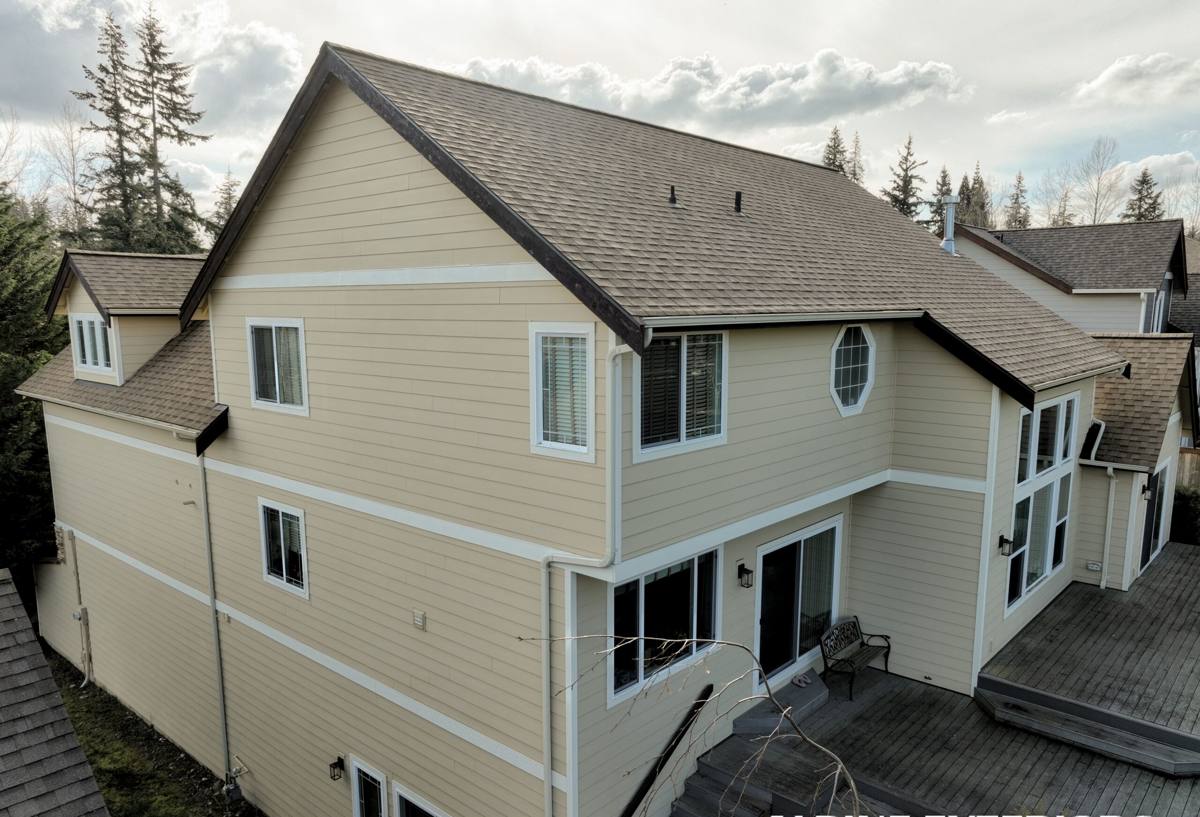
What San Juan County Weather Does to a Deck
Three conditions drive almost every deck failure we get called out to fix in this area, and they compound each other.
Salt Air and Marine Moisture
Airborne salt accelerates corrosion in fasteners, joist hangers, and any exposed metal hardware. A deck built with standard interior-grade or under-spec exterior fasteners will show rust streaks and weakening connections years before an identical deck built inland would. This is one of the most common problems we find on older decks near the water — the wood structure is fine, but the hardware holding it together has corroded.
Driving, Wind-Driven Rain
Rain here doesn't just fall straight down — it drives sideways during winter and fall storms, which means it gets up under railings, into ledger board connections, and behind any trim that isn't properly flashed. Flat or poorly pitched deck surfaces hold water instead of shedding it, and that standing water is what rots framing and delaminates composite boards at the edges.
Long Moss and Shade Season
Between tree cover, cloud cover, and the sheer number of damp months in a San Juan County year, moss and algae get a long runway to establish themselves on any deck surface that stays wet. Moss holds moisture against the wood or composite surface, which speeds up decay and makes boards slick and unsafe underfoot — a real concern on stairs and near entry doors.
What a Correctly Built Deck Needs Out Here
Given those conditions, a deck built for Friday Harbor needs a few things a generic build doesn't always account for:
- Stainless steel or heavily coated, marine-rated fasteners and joist hangers — not standard galvanized hardware that corrodes faster in salt air
- Proper ledger board flashing where the deck attaches to the house, since this is the single most common point of hidden rot on older decks
- Deck boards installed with correct spacing and pitch so water actually sheds instead of pooling
- Substructure spacing and airflow underneath the deck so framing can dry out between rain events instead of staying damp for weeks
- Material choice that matches how much sun, shade, and foot traffic the specific spot on the property actually gets
- Railing and stair connections built to hold up under wind load, not just static weight
Material Choices: What We Recommend and Why
There's no single right answer for every deck — it depends on budget, how much sun the site gets, and how much maintenance the homeowner wants to take on. Here's how the common options actually compare in this climate.
| Material | How It Handles Salt Air & Moss | Maintenance | Typical Lifespan Here |
|---|---|---|---|
| Pressure-treated lumber | Needs sealing and cleaning to resist moss and moisture staining | Annual cleaning, resealing every 1-3 years | 15-20 years with upkeep |
| Cedar | Naturally moisture-resistant, still benefits from sealing near the water | Periodic sealing/staining to hold color and resist moss | 20-25 years with upkeep |
| Composite decking | Resists rot and moisture well; still needs cleaning to prevent moss buildup on the surface | Occasional washing, no sealing or staining | 25-30+ years, manufacturer-dependent |
| Hardware & fasteners | Stainless or coated marine-grade holds up far better than standard galvanized | Visual inspection during routine deck checks | Should outlast the decking itself if specified correctly |
We don't push one material on every homeowner. What we do insist on, regardless of decking material, is marine-grade hardware and correct flashing — those two things affect the structural life of the deck more than the surface material does, and cutting corners there is what causes the expensive failures.
Wood vs. Composite: The Honest Trade-Off
Wood decking costs less upfront and can look great when it's maintained, but it requires real, ongoing commitment — cleaning, sealing, and watching for moss and soft spots, especially in shaded areas. Composite costs more initially but trades that maintenance burden for consistency: it won't rot, splinter, or need refinishing, though it still needs periodic washing to keep moss and algae from building up on the surface, particularly in shaded, low-airflow spots. We'll walk through both honestly based on your site's sun exposure and how much upkeep you actually want to do.
Our Deck Building Process
1. On-Site Assessment
We look at the site's sun and shade pattern, drainage, proximity to the water, existing structure if it's a rebuild, and any access constraints. Ferry logistics and site access factor into scheduling on the islands, so we plan for that upfront rather than discovering it mid-project.
2. Design and Material Selection
We talk through decking material, railing style, and layout based on how you'll actually use the space, then put together a straightforward proposal — no vague allowances that turn into surprise costs later.
3. Permitting
Deck projects in San Juan County typically require a permit depending on size, height, and location relative to property lines or shoreline setbacks. We handle that process as part of the job so you're not left navigating it alone.
4. Build
Framing first, with proper ledger flashing and marine-grade hardware throughout, then decking, railing, and stairs. We build in the drainage and airflow details that matter for this climate rather than treating them as optional extras.
5. Final Walkthrough
We check the deck with you before calling the job done — surface pitch, railing security, stair safety, and overall finish — and cover basic maintenance so the deck actually reaches its expected lifespan.
Repair, Rebuild, or Full Replacement?
Not every deck problem means starting over. We assess decks case by case:
- Repair makes sense when the framing is sound and the issues are isolated — a few rotted boards, corroded hardware, or a railing that's come loose
- Partial rebuild fits when the substructure has isolated rot, often near the ledger board or in a chronically shaded, damp corner, but the rest of the deck is structurally fine
- Full replacement is the honest recommendation when the framing shows widespread rot, the hardware is failing throughout, or the deck was never built with the flashing and drainage details this climate requires
We'll tell you straight which category your deck falls into and why — we're not going to recommend a full rebuild when a targeted repair will genuinely hold up.
Pre-Project Checklist for Homeowners
If you're planning a new deck or considering a rebuild in the Friday Harbor area, these are worth thinking through before we meet:
- How much sun versus shade does the deck site get through the day and across seasons
- How close is the site to the water or otherwise exposed to salt air and wind
- What's the primary use — dining, entertaining, quiet outdoor space — since that affects size and layout
- How much ongoing maintenance are you realistically willing to do
- Is this a new build, a repair, or a full replacement of an aging deck
- Any known property line, setback, or shoreline considerations for the site
Why a Local Island Crew Matters for This Job
Deck work in San Juan County isn't the same job as deck work on the mainland. Materials and crews often move by ferry, which affects scheduling and how a project needs to be planned. Local permitting has its own requirements. And most importantly, a crew that works this area regularly has already seen how salt air, driving rain, and moss behave on real decks here over years — not in a manual, but on actual job sites. That's the difference between a deck detailed for the Pacific Northwest coast in general and one detailed specifically for the conditions Friday Harbor sees.
If you're planning a new deck, or dealing with an existing one that's showing rot, corrosion, or moss buildup, we're happy to take a look and give you a straight, no-pressure assessment. Reach out using the form below for a free estimate.