 Orcas Island Siding
 Crow Valley's Climate Is Harder on Siding Than It Looks
Crow Valley sits inland from the open water that surrounds most of Orcas Island, but it doesn't escape the marine climate that defines San Juan County. Moist air moves through the valley off the surrounding sound, tree cover keeps many elevations shaded for long stretches of the day, and winter storms bring driving rain that hits siding at an angle rather than falling straight down. The result is walls that stay damp longer than homes in drier, more open parts of the state.
That combination — salt-tinged air, sustained moisture, and shade — is exactly what accelerates the problems homeowners here already know about: paint that fails early, wood trim that softens at the edges, and moss that gets a foothold on north-facing walls and never really leaves. Siding in Crow Valley isn't just a weather barrier. It has to hold up to a slow, steady dampness that doesn't dry out between storms the way it might in a sunnier microclimate.
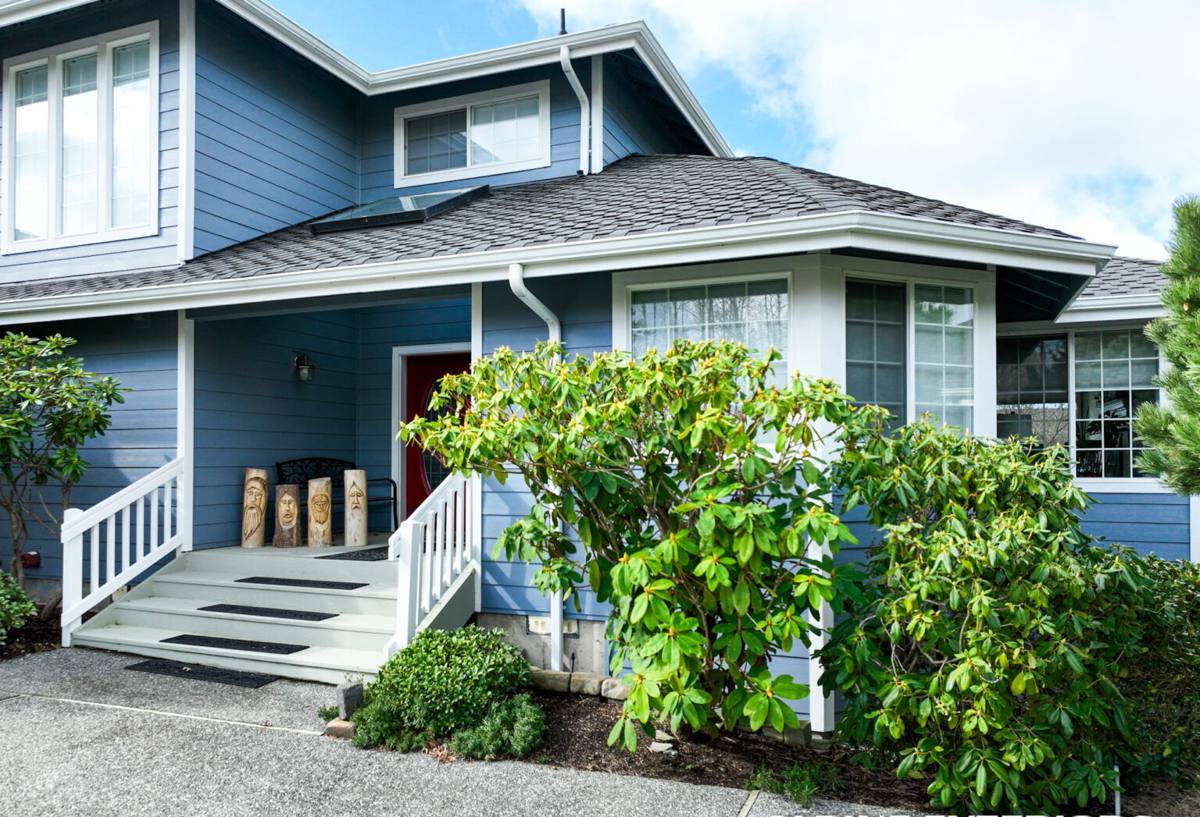
Why We Only Install James Hardie Fiber Cement Here
James Hardie siding is fiber cement — a mix of cement, sand, and cellulose fiber pressed and cured into a dense, stable board. It doesn't swell, rot, or feed mold the way wood-based products can, and it doesn't expand and contract with temperature and humidity swings the way vinyl does. In a valley where siding spends much of the year damp, that stability matters more than it does in a drier climate.
Hardie's HardieZone system engineers products differently depending on the climate they're going into. The line used in the Pacific Northwest is built around resistance to sustained moisture and freeze-thaw cycling rather than extreme heat, which is the right emphasis for a place like Crow Valley. It's also non-combustible, which matters on an island where wildfire risk and limited fire department response times are real considerations for homeowners.
We don't install vinyl, LP SmartSide, Cemplank, Allura, or bare cedar and spruce. Each of those products has legitimate strengths, but each also has a real-world weak point — vinyl's temperature movement and impact brittleness, engineered wood's dependence on unbroken paint film, cedar's ongoing maintenance demand — that shows up faster in a wet, shaded valley than it would somewhere drier. We standardized on Hardie because it holds up to this specific climate with the least amount of homeowner upkeep.
Where Installation Mistakes Actually Happen
Fiber cement siding fails less often because of the material and more often because of how it was installed. In a high-moisture area like Crow Valley, the details matter even more than usual:
- Correct clearance from grade, decks, roofing, and other siding so water has somewhere to go
- Flashing integrated behind every window, door, and penetration — not caulk substituted for flashing
- Proper gaps at butt joints, corners, and trim, sealed with a compatible sealant rather than butted tight
- Fasteners driven to the correct depth and spacing — overdriven nails crack the board's edge and create entry points for water
- A continuous weather-resistive barrier behind the siding, not just at seams
Skip any of these and the board itself can be doing its job perfectly while water still finds its way behind it. That's true of any siding material, but it shows up faster here because the valley doesn't give walls much time to dry between weather events.
Factory Finish vs. Field-Applied Paint
Most of the James Hardie siding we install uses the ColorPlus factory finish rather than field-applied paint. The finish is baked on under controlled conditions before the boards ever reach the site, which gives more even coverage and a stronger bond than paint applied outdoors after installation. In a climate where paint failure is one of the first signs of trouble on older homes, starting with a factory-cured finish removes one of the more common points of early failure.
How Hardie Compares to Other Siding Options in This Climate
| Material | Moisture Behavior | Moss/Algae Resistance | Ongoing Maintenance |
|---|---|---|---|
| James Hardie fiber cement | Dimensionally stable; doesn't swell or rot | Factory finish resists staining; surface moss can be rinsed off | Low — periodic rinsing, occasional caulk check |
| Vinyl | Moves with temperature; can warp or gap over time | Moss and algae can hold on textured surfaces | Low material upkeep, but damage isn't repairable — panels replace |
| Cedar / untreated wood | Absorbs moisture; prone to rot without diligent upkeep | Highly susceptible in shaded, damp areas | High — regular sealing, staining, and spot repair |
| LP SmartSide (engineered wood) | Wood-based core depends on unbroken paint film to stay dry | Vulnerable if finish is compromised at cuts or edges | Moderate to high — finish integrity needs monitoring |
Our Process for a Crow Valley Project
Every property in the valley sits a little differently — some elevations get more direct sun, others stay shaded most of the day under tree cover, and drainage patterns vary depending on the lot's grade. We start by walking the site and looking specifically at those conditions: which walls stay damp longest, where moss has already established, and where existing trim or siding shows early signs of moisture damage.
From there we confirm the right Hardie profile and color for the home, plan flashing and water management details around the specific trouble spots we found, and sequence the installation so that weather barrier, flashing, and siding go on in the right order without gaps. We finish with a walk-through so the homeowner knows what was done and what to expect from the siding going forward.
Living with a Long Moss Season
Moss and algae aren't a sign that siding has failed — they're a normal part of living in a shaded, moist valley on Orcas Island. What matters is keeping them from becoming a moisture problem. A few habits go a long way:
- Rinse siding with a garden hose (not a close-range pressure washer) once or twice a year, focusing on shaded, north-facing walls
- Keep gutters clear so water isn't sheeting down the wall below a clogged section
- Trim back vegetation and tree limbs that keep a wall in constant shade or hold moisture against it
- Check caulking at trim, corners, and penetrations annually — this is the first place small gaps show up
- Watch for moss holding on longer in one spot than the rest of the wall — that's often a sign of a drainage or grading issue behind it, not a siding problem
Because the ColorPlus finish is factory-applied, most homes won't need repainting on the same cycle that field-painted wood or older vinyl might require. That's one less maintenance task in a climate that already asks a lot of a home's exterior.
What Drives Cost on a Crow Valley Job
| Factor | Why It Matters Here |
|---|---|
| Condition of existing siding | Rot or hidden moisture damage found during tear-off adds repair scope before new siding goes on |
| Site access and tree cover | Shaded, wooded lots common in the valley can slow staging and material handling |
| Trim and detail complexity | Homes with more corners, windows, and architectural trim need more flashing and cut work |
| Product line and color | ColorPlus colors and specific Hardie profiles vary in material cost |
| Getting materials to the island | Ferry scheduling affects delivery timing and needs to be planned into the project schedule |
Why It Matters to Hire a Crew That Already Works Here
Working on Orcas Island isn't the same as working on the mainland. Materials and crews move by ferry, which means scheduling has to account for sailing times rather than same-day trips to a supply house. San Juan County's permitting and shoreline considerations also come into play depending on the property, and a crew that already works this island knows those steps rather than learning them mid-project.
There's also the microclimate knowledge that only comes from working Crow Valley and the surrounding area repeatedly — knowing which elevations hold moisture longest, which shaded corners are prone to moss, and how the valley's conditions differ from a homeowner's expectations built on advice from siding forums or mainland experience. That local familiarity shows up in fewer surprises during the project and a better match between the installation details and the actual conditions the siding will face.
If you're weighing a siding project for a home in Crow Valley, we're glad to take a look and walk you through what correct installation looks like for your specific property. There's no pressure and no obligation — just use the form below to request a free estimate.