 Orcas Island Siding
 James Hardie Siding for Homes Along Obstruction Pass
Obstruction Pass sits on Orcas Island's more exposed southeastern shoreline, where the water narrows and rarely stays calm for long. Homes here — waterfront cabins, wooded lots tucked under fir and madrona, newer builds set back from the water — take a steadier weathering than properties in one of the island's more sheltered bays. That's the starting point for every siding conversation we have with a homeowner in this area: what actually holds up against this specific exposure, not what looks fine on a spec sheet written for a milder climate.
This company installs James Hardie fiber cement siding exclusively. We don't offer LP SmartSide, vinyl siding, Cemplank, Allura, primed spruce, or cedar. This page covers why that standard makes sense for a house sitting this close to open water on Orcas Island, what a correct Hardie installation actually involves here, and how we run a project for a home along Obstruction Pass.
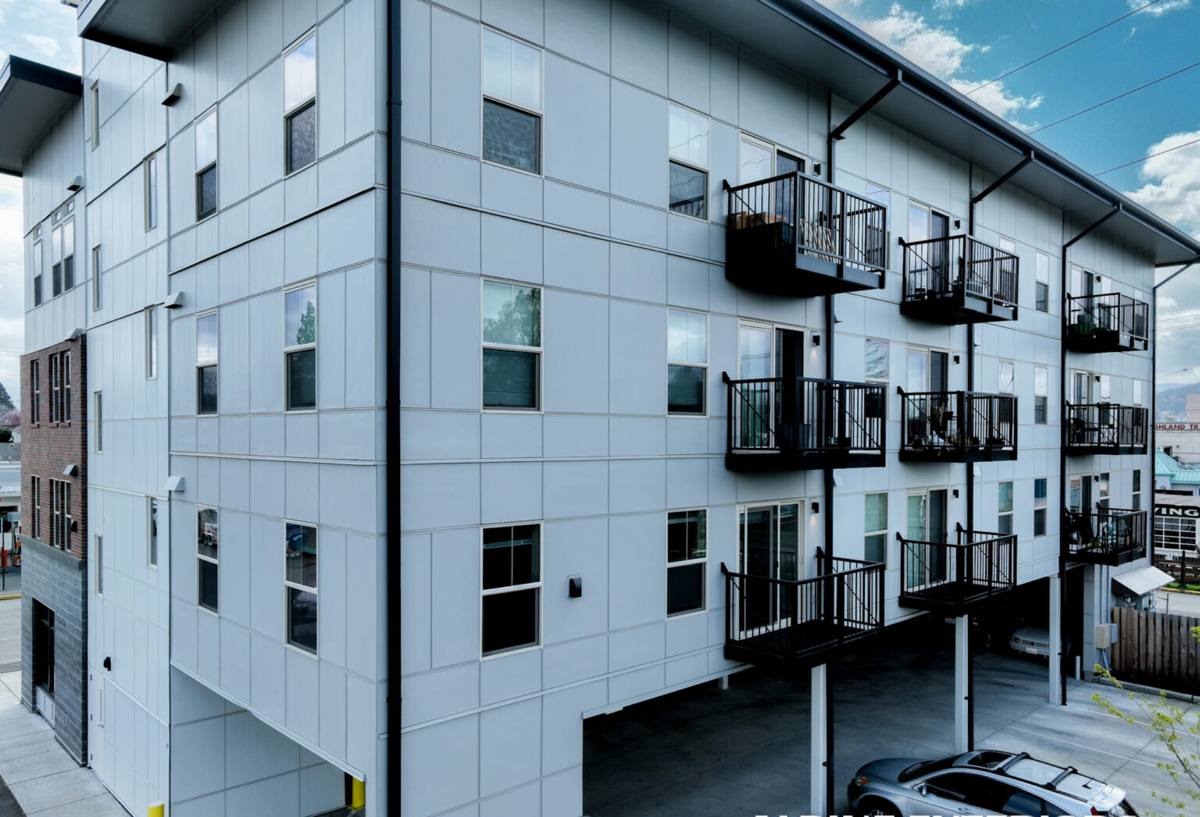
What This Stretch of Orcas Island Puts Siding Through
Open Water and Salt-Laden Air
Because Obstruction Pass faces open water rather than a protected inlet, salt-laden air moves across these properties more steadily than it does in more sheltered parts of San Juan County. Over years, that exposure corrodes exposed fasteners, flashing, and trim hardware faster than the same materials would age a few miles inland, and it breaks down a field-applied paint or stain finish well before its rated interval.
Wind-Driven Rain Off the Passage
Water moving through a pass like this one tends to bring wind with it, and that wind doesn't let rain fall straight down — it drives it sideways into whatever wall is facing the water. That sideways load finds every weak seam: an under-flashed window, a butt joint sealed with caulk instead of properly lapped, a corner detail that was rushed. Most siding failures we see on exposed Orcas Island properties start at a wall's water-facing side and work inward, rather than showing up as an obvious, all-over failure.
A Moss Season That Rarely Fully Stops
Plenty of lots along Obstruction Pass sit under heavy tree canopy even where the water is close by, and shaded, slow-drying walls are exactly where moss and mildew take hold. Combined with the island's mild, wet winters, that adds up to a growing season for organic growth that can run most of the year on north-facing or tree-covered elevations. Any siding material that holds moisture against its own surface instead of shedding it becomes a surface moss can work into over time — and once established, it holds even more moisture against the wall behind it.
Why We Install Only James Hardie Here
We narrowed our siding offering down to one system after seeing, house after house, what actually holds up on Orcas Island's more exposed shorelines versus what performs well only until it meets a real wet season.
- Non-combustible core: fiber cement doesn't feed a fire the way wood-based siding can, which matters on a wooded island with real seasonal wildfire risk.
- Factory-applied ColorPlus finish: the color coat is baked on under controlled conditions rather than brushed on in the field, and it holds adhesion and color far longer under sustained salt exposure and UV than a field-applied finish.
- HZ5 product line: Hardie's HZ5 formulation is engineered for regions with significant moisture exposure and freeze-thaw cycling, which describes Obstruction Pass's winter conditions closely.
- Dimensional stability: fiber cement doesn't swell, cup, or warp the way wood or engineered-wood siding can after repeated wetting cycles through a wet island winter.
- A strong transferable warranty: backed by the manufacturer, provided the installation follows their published spec — which matters to owners thinking about resale on a well-documented home.
Each of the materials we don't install has a legitimate place in the broader market, and other contractors install them competently. Our call is a professional one specific to this stretch of coastline: with the salt exposure, wind-driven rain, and moss season Obstruction Pass properties deal with, we'd rather stand fully behind one system than offer something that quietly shifts maintenance risk onto the homeowner a few years down the line.
How Other Siding Materials Hold Up in This Exposure
| Material | Behavior in Salt Air and Wind-Driven Rain | Typical Upkeep Here |
|---|---|---|
| James Hardie fiber cement | Non-organic core, dimensionally stable, doesn't swell or delaminate from moisture | Low — factory finish resists fading and moss growth |
| Vinyl siding | Can warp or become brittle under repeated UV and temperature swings; panel seams give wind-driven rain a path behind the cladding | Low, but hidden moisture behind panels is hard to catch early |
| LP SmartSide / engineered wood | Wood-strand core is more moisture-sensitive at cut edges and fastener points, which matters more this close to open water | Moderate — edge sealing and touch-ups need regular attention |
| Primed spruce or cedar | Organic core depends on an intact finish to resist rot; salt air and driving rain accelerate finish breakdown | High — recoating on a recurring cycle, scheduled around ferry access |
None of this makes the other materials defective — it's simply what each one asks of a homeowner when it's installed this close to open water. Fiber cement is the one system in that table that doesn't depend on a maintained finish to keep moisture out of the wall behind it.
What a Correct Installation Actually Involves
The product on the truck matters less than how it goes on the wall. Before hiring anyone for a siding project on Obstruction Pass, the details below are what actually separate work that lasts from work that doesn't:
- House wrap or weather-resistive barrier installed and correctly lapped before any siding goes up
- Correct flashing at every window, door, and roof-to-wall intersection, since most failures here start with water getting behind the cladding, not through it
- Corrosion-resistant fasteners rated for marine, salt-air exposure, placed at the manufacturer's specified spacing
- Proper clearance maintained between the siding and grade, decks, and roof lines so water can drain away instead of wicking upward
- Factory-cut and field-cut edges primed to protect the ColorPlus finish where it's been exposed
- A written manufacturer warranty the installer is actually certified to back
Skip any one of these and the wall can look fine for a year or two. The problems that follow — staining at seams, soft trim, a callback two winters later — take a few wet seasons to surface, which is exactly why they're easy for a rushed install to get away with until the homeowner is the one living with it.
Our Process for an Obstruction Pass Siding Project
Walkthrough and Assessment
We start by looking at the actual house — which walls face the water directly, which sit shaded under canopy and stay damp longer, and what the current siding's condition tells us about how the house has been performing. That drives the estimate, rather than a flat per-square-foot number that ignores the specifics of the property.
Tear-Off and Substrate Check
Once old siding comes off, we check the sheathing underneath for rot or soft spots before anything new goes up. Covering damaged sheathing with new siding just hides a problem that keeps getting worse behind the wall.
Weather Barrier and Flashing Detail
This is the step that's easiest to rush and hardest to inspect once the new siding is up, so on a water-facing wall we treat it as non-negotiable — house wrap lapped correctly, every window and penetration flashed before the first board goes on.
Installation to Manufacturer Spec
James Hardie's warranty depends on installation following their published specifications for this climate zone — correct fastener spacing, proper clearances, correct field-cutting and sealing practices. We install to that spec as the baseline, not as an upgrade option.
Final Walkthrough
We walk the finished job with you, cover what maintenance actually looks like going forward, and confirm the work matches what was estimated before calling the project complete.
Signs Your Obstruction Pass Home's Siding Needs a Look
- Moss or dark staining that returns quickly after cleaning, especially on shaded or north-facing walls
- Soft or spongy siding low on the wall or around window and door trim
- Peeling paint or visible warping, most common on older wood-based or engineered wood siding
- Rust staining running down from fasteners or trim hardware
- Cracked, buckled, or missing sections after a windstorm off the water
- Musty odors or staining on interior walls that back up to exterior siding
- Siding older than 20-25 years with no documented replacement history
None of these automatically mean a full replacement is needed, but each is worth a professional look before the next wet season adds to the damage rather than after.
What Affects the Cost of a Siding Project Out Here
| Factor | Why It Matters |
|---|---|
| Wall exposure to open water | Water-facing walls often need more attention to flashing and fastener detail than sheltered elevations |
| Existing sheathing condition | Rot or moisture damage found during tear-off needs repair before new siding goes up |
| Total square footage and stories | Larger and taller walls mean more material, staging, and labor time |
| Trim and window detail | More openings mean more flashing and finish work around each one |
| Material and crew logistics | Scheduling deliveries and crew time on Orcas Island runs around ferry availability, which we build into the timeline |
We walk the specific property and give you real numbers, rather than a rough estimate off square footage alone — two homes along Obstruction Pass with similar footprints can carry very different costs depending on exposure and existing wall condition.
Why Hire a Crew That Already Works This Part of the Island
A crew that's installed siding on Orcas Island's exposed shoreline through multiple wet seasons has already seen which orientations along Obstruction Pass need extra flashing attention, how much clearance actually holds up in this exposure versus what a generic install guide suggests, and where cutting a corner shows up as a callback two winters later instead of a problem on install day. That judgment doesn't show up on a spec sheet, and it's the difference between siding that still looks and performs the same in fifteen years and siding that's already showing seam staining by year five. It also means that when a warranty or maintenance question comes up down the road, it's a call to a crew still working this island, not a company that quoted the job once and moved on.
If you're weighing new siding for a home along Obstruction Pass, we're glad to come take a look, walk through your property's specific exposure and wall condition, and give you a straightforward, no-pressure estimate. There's a form below — reach out and we'll set up a time to take a look.