 Orcas Island Siding
 Siding Built for Rosario's Waterfront Exposure
Rosario sits close to the water on Orcas Island, and that proximity is exactly what makes siding decisions here different from a house a few miles inland. Salt-laden air moves off the water and settles on exterior surfaces daily, driving rain comes in sideways during winter storms, and the shaded, moisture-heavy pockets around mature trees keep moss and algae active for most of the year. Any siding installed here has to hold up to all three at once, not just one of them. That combination is why we install James Hardie fiber cement exclusively and why we think through Rosario jobs differently than a dry-side install.
San Juan County's marine climate means humidity rarely drops for long. Wood-based products swell, wick moisture, and eventually rot from the inside out when they can't dry between rain events. Vinyl softens and warps in prolonged damp-and-thaw cycles and can't take the granular abuse of blown salt spray without dulling and chalking early. Fiber cement, when it's the right formulation and it's installed correctly, doesn't have those failure points — but "installed correctly" is doing a lot of work in that sentence, and that's what the rest of this page is about.
What Salt Air Actually Does to a House
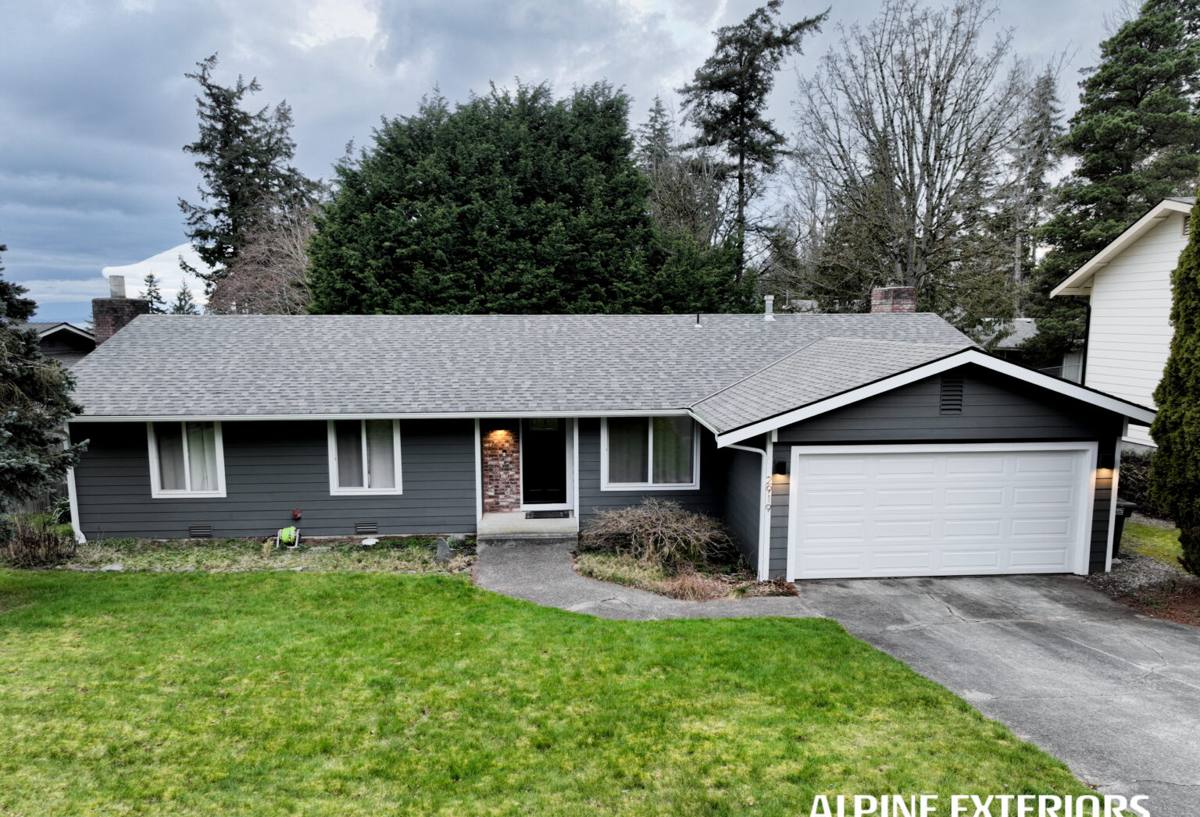
Salt air isn't just a smell — it's airborne sodium chloride that lands on every exposed surface, including fasteners, flashing, and paint film. Over years, unprotected metal corrodes, paint chalks and fades faster than it would inland, and any hairline gap in a building envelope becomes an entry point for both moisture and salt residue. Homes closest to the water take the brunt of this; homes set back or shielded by trees get a lighter dose but are never fully exempt on Orcas Island.
Why This Matters for Siding Choice
- Fastener corrosion under paint film can telegraph rust stains through a finish within a few years if the wrong fastener is used
- Chalky, faded paint on wood or fiber cement is often a sign the finish wasn't rated for coastal UV and salt exposure
- Caulk joints degrade faster in salt air, so joint design and material selection matter more here than in a dry inland town
- Trim and corner details are the first places salt-driven wear shows up, usually before the field of the siding does
James Hardie's ColorPlus factory finish is baked on and cured under controlled conditions, which gives it more consistent UV and salt resistance than a field-applied paint job. We still pay close attention to fastener spec and flashing detail on every Rosario job, because the finish is only as good as what's underneath it.
Driving Rain and the Water Management Layer
Orcas Island gets weather that comes at a house sideways, not just straight down. That means water pressure against the wall assembly during storms, not just water running off a roof edge. Correct siding installation on a home exposed to driving rain depends far more on what's behind the siding than on the siding itself.
| Water Management Element | Why It Matters in Rosario's Climate |
|---|---|
| Weather-resistive barrier (housewrap) | Provides the primary drainage plane behind the siding; must be continuous and properly lapped to shed wind-driven rain |
| Rainscreen gap | Allows any water that gets behind the siding to drain and the wall to dry, rather than trapping moisture against sheathing |
| Window and door flashing | The single most common source of hidden water intrusion; must integrate with the housewrap, not just sit on top of it |
| Kick-out flashing at roof-wall intersections | Diverts roof runoff away from the wall instead of letting it run down behind the siding |
| Sealant joints at penetrations | Salt air and freeze-thaw cycling both shorten sealant life, so joint design should minimize reliance on caulk alone |
We've opened up enough older walls on this island to know that siding failures are rarely about the siding material itself — they're about a missing or poorly lapped piece of flashing, a housewrap that wasn't sealed at the seams, or a rainscreen gap that was skipped to save a step. James Hardie panels and lap siding can handle Rosario's rain if the assembly behind them is done right. That's a crew discipline issue, not a product issue.
The Long Moss Season and Its Effect on Siding
Between the tree cover common around Rosario and the persistent damp of a San Juan County winter, moss and algae growth on exterior surfaces is a near year-round concern, not a seasonal nuisance. Shaded north- and east-facing walls, areas under eaves with limited airflow, and surfaces near dense landscaping all stay damp longer and are where growth shows up first.
Why Some Siding Handles This Better Than Others
Moss and algae need a surface that stays damp and offers something to grip. A dense, factory-finished fiber cement surface sheds water faster and offers less texture for organic growth to take hold compared to raw or lightly primed wood siding, which absorbs moisture into the substrate itself. That doesn't make Hardie siding immune to moss — nothing mounted on an exterior wall in this climate is — but it does mean the growth stays on the surface where it can be cleaned off, rather than working its way into the material.
- Keep gutters clean so overflow doesn't run down the wall face and keep siding wet longer than necessary
- Trim back vegetation that shades siding and restricts airflow along the wall
- Rinse shaded elevations periodically with a garden hose or soft wash — avoid pressure washing directly into laps and joints
- Address any moss buildup before it holds moisture against trim, corners, or fastener heads for extended periods
Why We Only Install James Hardie
We made a decision to stop installing LP SmartSide, vinyl, Cemplank, Allura, primed spruce, and cedar, and to install James Hardie exclusively. That's not a marketing position — it's what we settled on after years of servicing exteriors in exactly this kind of marine, wet-winter climate. Wood products need consistent maintenance to keep moisture out, and a missed year of upkeep on a Rosario property near the water compounds fast. Vinyl is low-maintenance but has real limits on impact resistance and long-term UV and salt exposure, and it's not fire-rated the way fiber cement is. Cemplank and Allura are also fiber cement, and reasonable products, but we standardized on one manufacturer so our crews master one installation system, one flashing detail set, and one warranty process — rather than splitting expertise across several product lines.
James Hardie's HZ5 product line is engineered specifically for climates with more moisture cycling, which fits San Juan County. It's non-combustible, which matters given how many Rosario properties sit near dry brush and tree cover in summer. And its ColorPlus finish carries a longer, factory-backed warranty than field-applied paint typically gets — which matters on a house that's going to see decades of salt air before it needs repainting.
What a Correct Rosario Installation Involves
A James Hardie install that's going to hold up on Rosario's exposure isn't meaningfully different in materials from one done anywhere else on Orcas Island — the difference is in the details a crew either respects or skips.
Our Process
- Site and exposure assessment — we look at which elevations take direct wind-driven rain, which stay shaded and damp longest, and where existing moss or paint failure is already showing on the current siding or trim.
- Tear-off and substrate check — removing old siding lets us see the sheathing condition underneath; any soft or water-damaged sheathing gets addressed before new siding goes on, not covered up.
- Water-resistive barrier installation — housewrap installed and lapped correctly, with all seams and penetrations sealed to manufacturer spec.
- Rainscreen furring — a drainage gap behind the siding so any incidental moisture can escape rather than sit against the wall.
- Flashing at every penetration — windows, doors, roof-wall intersections, and any vents or fixtures get flashed to shed water outward, not into the wall.
- Hardie panel or lap installation — fastened per manufacturer spec with corrosion-resistant fasteners, correct nailing patterns, and proper gapping at joints for expansion.
- Trim, caulk, and touch-up — factory-finished trim installed with joint sealants rated for the movement and moisture this climate produces.
- Final walkthrough — checking every elevation, corner, and penetration before we call the job done.
Checklist: What to Ask Any Contractor Bidding a Rosario Siding Job
- Will a rainscreen gap be included, or is siding fastened directly to the housewrap?
- What fastener material is being used, and is it rated for coastal/marine exposure?
- How is flashing detailed at windows, doors, and roof-wall intersections?
- Is the crew installing to the specific manufacturer's written installation instructions for this product?
- What does the warranty actually cover — material only, or workmanship too — and who backs it?
Why Local Experience on Orcas Island Matters
A crew that only occasionally works the islands treats every job as a one-off. A crew that regularly works Rosario and the rest of Orcas Island already knows which elevations take the worst weather, how ferry scheduling affects material delivery and project timelines, and what this specific microclimate does to a wall assembly over ten or twenty years. That familiarity shows up in small decisions — where we add extra flashing attention, which joints we treat as higher risk, how we sequence a job around the wetter months — that a generic install approach wouldn't catch.
It also matters for logistics. Materials, equipment, and crew scheduling all have to account for getting to and from the island, and a contractor who does this regularly builds that into the project timeline instead of treating it as a surprise. That translates into fewer delays and a smoother job for the homeowner.
Cost Factors for a Rosario Siding Project
Every project is different, but the same variables tend to drive cost on siding jobs in this area:
| Factor | Why It Affects Cost |
|---|---|
| Home size and elevation count | More square footage and more complex rooflines mean more material and labor |
| Existing siding removal and disposal | Tear-off adds labor, especially if old material requires careful handling |
| Sheathing or structural repair needs | Water damage found during tear-off can add scope not visible from the outside |
| Trim and detail complexity | Multiple gables, dormers, and corner details take more time than a simple rectangular wall |
| Site access | Island logistics and tight or sloped lots near the water can affect staging and labor time |
| Product line and color | HZ5 panel styles and ColorPlus color selections vary in material cost |
We don't quote a number without seeing the actual house — anything else would be a guess dressed up as an estimate.
Ready to Talk About Your Rosario Home
If you're planning a siding project in Rosario or elsewhere on Orcas Island, we're happy to walk the property, look at what your current siding and trim are telling us, and give you a straightforward, no-pressure estimate for James Hardie siding done right for this climate. Use the form below to get started.