 Orcas Island Siding
 Building Decks for Lopez Village's Marine Climate
A deck built for Lopez Village has to earn its keep in a different way than a deck built inland. The San Juan Islands sit right in the path of salt-laden air, long stretches of driving rain, and a moss season that can run from fall clear through spring. A deck that would hold up fine in a dry inland climate can start showing rust streaks, soft spots, and slick green growth within a couple of seasons out here if it wasn't built with this specific environment in mind. We build and repair decks across Orcas Island and the surrounding San Juan County islands, including Lopez Village, and the details that matter are almost always the same: how the frame handles moisture, how the fasteners handle salt, and how the surface handles standing water and shade.
This page focuses specifically on new deck construction for homes in and around Lopez Village. It's not a generic overview of decking materials — it's what we've found actually matters for a deck that has to survive here for twenty-plus years without turning into a maintenance headache.
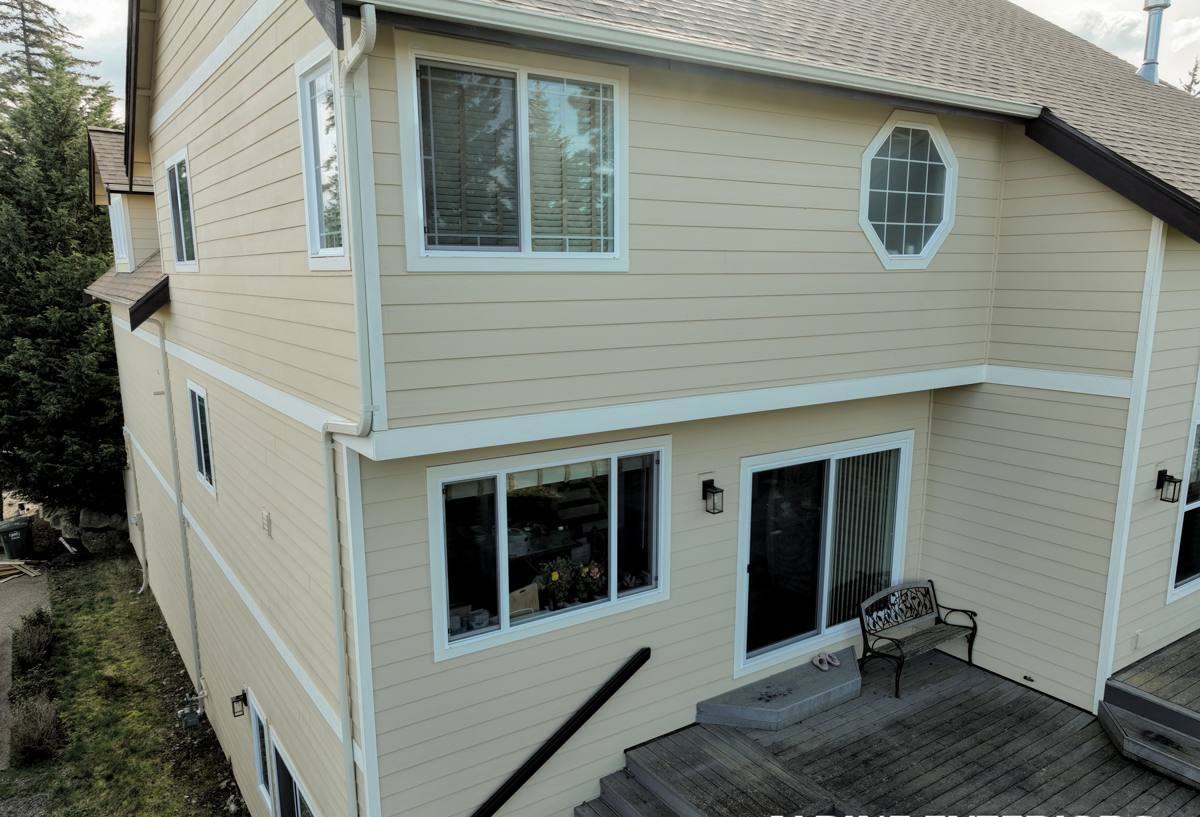
What a Lopez Village Deck Is Actually Up Against
Salt Air and Metal Fatigue
Even homes set back from the water get a steady dose of salt-carried moisture off Puget Sound and the surrounding channels. Salt air accelerates corrosion on anything metal — fasteners, joist hangers, railing brackets, hinges. On a deck, the hardware you can't see is usually the hardware doing the most work, so using the wrong grade of screw or hanger is a slow-motion problem that doesn't show up until years later, when it shows up as a sagging board or a loose post.
Driving Rain and Standing Water
Storms here tend to come in sideways, not straight down, which means water gets pushed into places a calmer rain wouldn't reach — behind ledger boards, under railing posts, into end-grain cuts that weren't sealed. Water that has nowhere to go is what rots wood decking and delaminates lower-grade composite from the inside out.
The Long Moss Season
San Juan County's wet, shaded winters give moss and algae months to establish themselves on any deck surface that stays damp and doesn't get much direct sun. Once moss takes hold on decking, it holds moisture against the board surface, and it's more than cosmetic — it makes the surface slick and speeds up wear on wood and composite alike.
Choosing Decking Material That Holds Up Here
There's no single "best" decking material — there's a best material for your budget, your maintenance appetite, and how exposed the deck is. Here's how the common options compare for a Lopez Village property specifically.
| Material | Moisture Behavior | Maintenance | Typical Lifespan Here |
|---|---|---|---|
| Pressure-treated fir/pine | Resists rot when properly sealed; end cuts need extra care | Annual cleaning, re-sealing every 2-3 years | 15-20 years with upkeep |
| Western red cedar | Naturally rot- and insect-resistant; still needs sealing against gray-out and moisture uptake | Cleaning plus stain/seal every 2-3 years | 20-25 years with upkeep |
| Composite decking | Won't rot, but lower-grade boards can absorb moisture at cut ends without capping | Periodic washing to prevent moss/algae film | 25-30 years |
| PVC/capped composite | Fully moisture-resistant surface, best against salt spray and standing water | Lowest — occasional washing | 30+ years |
Wood is still a good choice for owners who like the natural look and don't mind the upkeep — and honestly, a well-sealed cedar deck ages beautifully out here. Composite and capped composite cost more up front but make sense for homes where the deck gets heavy shade, heavy salt exposure, or where the owner just doesn't want a re-sealing project every couple of years. We'll walk through the real trade-offs for your specific site rather than push one material across the board.
Framing and Substructure: Where Decks Fail First
The decking surface is what you see, but the framing underneath is what actually determines how long a deck lasts. Most deck failures we're called out to repair in this region start below the boards, not on top of them.
- Ledger flashing: Where the deck attaches to the house needs proper flashing and a water-resistant barrier — this is the single most common failure point on decks built without it, because it's where wall moisture and deck moisture meet.
- Joist protection: Joist tape or a comparable moisture barrier on top of each joist keeps water from wicking into the wood through screw penetrations, which is where rot typically starts.
- Footing depth: Footings need to be sized and set to local frost and soil conditions, not just "deep enough to look right." Undersized or shallow footings are a slow settling problem.
- Post-to-beam connections: These take the most structural load on the deck and need hardware rated for the actual span and load, not just whatever was on hand.
None of this is visible once the deck is finished, which is exactly why it matters who's doing the framing. A deck can look great for the first two summers regardless of how it was framed underneath — the difference shows up years five through fifteen.
Fasteners, Hardware, and Railings That Won't Corrode Early
Given the salt air across the islands, fastener grade isn't a place to cut corners. We use stainless steel fasteners and corrosion-resistant coated hardware rated for coastal exposure on Lopez Village decks — standard interior-grade or galvanized hardware corrodes faster here than it would twenty miles inland, and a rusted-out joist hanger or railing bracket is a safety issue, not just a cosmetic one.
Railings deserve the same thought. Wood railings need the same sealing schedule as wood decking. Metal railings should use marine-grade or powder-coated aluminum rather than untreated steel. Cable railing systems look great but need stainless cable and hardware specifically rated for coastal use, or the cables will show rust streaks within a few seasons.
Designing Drainage and Airflow to Fight Moss
Moss doesn't grow because a deck is old — it grows because a deck stays damp longer than it should. Good deck design fights this before it starts, rather than relying on the homeowner to scrub it off every spring.
Board Gaps and Spacing
Proper gapping between boards lets water drain through instead of pooling on the surface, and lets air move underneath to dry the frame out between storms. Boards installed too tight — a common shortcut — trap water and speed up both rot and moss growth.
Under-Deck Ventilation
Low decks or decks built close to grade need enough clearance and cross-ventilation underneath to let the substructure dry out. A deck that's boxed in tight against the ground stays wet for days after a storm, which is exactly the condition moss and rot both need.
Coordinating With Gutters and Grading
A deck built directly under a roofline without gutter coordination gets a constant wash of runoff dumped onto it during every storm. Where possible, we plan decking layout and any roof drainage together so the deck isn't taking on more water than it needs to.
Our Deck Building Process, Start to Finish
Building on Lopez Village and the surrounding islands means planning around ferry schedules and material delivery in a way that mainland jobs don't require, so our process accounts for that up front rather than causing delays mid-project.
- Site visit and design: We look at sun exposure, drainage, existing grade, and how the deck will connect to the house before recommending a layout or material.
- Material and engineering plan: We size footings, framing, and hardware to the actual span and load, and select decking material based on exposure and your maintenance preference.
- Permitting: We handle the San Juan County permit application and any required inspections tied to the build.
- Material staging: Because everything comes over by ferry, we plan delivery windows and on-site staging so the job isn't stalled waiting on materials.
- Framing: Footings, posts, beams, ledger flashing, and joists go in first, with moisture protection built into every connection point.
- Decking and railing installation: Boards and railing go in with proper gapping, fastener grade, and attention to any cut ends that need sealing.
- Final walkthrough: We go over the finished deck with you, including a plain-language rundown of what maintenance it actually needs and on what schedule.
Permits and Island Logistics
New decks in San Juan County typically require a building permit, and the requirements can shift depending on deck height, size, and proximity to property lines or shoreline setback rules — Lopez Village's proximity to the water can bring shoreline considerations into play depending on the specific lot. We handle that process as part of the job rather than leaving it for the homeowner to sort out. On the logistics side, island builds also mean coordinating material orders around ferry sailings and giving realistic timelines that account for weather-dependent crossings, rather than promising a mainland-style schedule that doesn't hold up out here.
Why a Crew That Already Works the San Juan Islands Matters
Deck building isn't exotic work, but building well for this specific climate takes experience with it. A crew that mostly builds inland may not default to stainless fasteners, may not think about ledger flashing the same way, and may not plan a project around ferry logistics — not because they're careless, but because it's never been a requirement of their normal work. That's the gap a locally experienced crew closes.
When you're vetting a contractor for a Lopez Village deck project, a few questions separate the ones who've actually built for this climate from the ones who haven't:
- Do they specify stainless or coastal-rated fasteners and hardware by default, or only if asked?
- Can they explain their ledger flashing and joist protection approach without hesitating?
- Do they have a realistic plan for material delivery and staging on an island job?
- Are they familiar with San Juan County's permitting process for decks?
- Do they talk about drainage and moss prevention as part of the design, not as an afterthought?
We're Orcas Island Siding Company, and while our name centers on siding, deck building for island homes shares the same core problem: keeping a structure sound against salt air, driving rain, and a long wet season, year after year. We build with that climate in mind from the framing up, not just on the visible surface.
If you're planning a new deck in Lopez Village, we're happy to take a look at your site and talk through material and design options with no pressure and no obligation — reach out through the form below for a free estimate.