 Orcas Island Siding
 Why Crow Valley Homeowners Are Looking Hard at Metal
Crow Valley sits inland from the shoreline but still gets the full weather package that defines Orcas Island living: salt-laden air moving up from the water, long stretches of driving rain off the Pacific storm track, and the deep shade and dampness that keep moss growing nearly year-round. A roof here doesn't just need to shed water — it needs to survive a slow, constant chemical and biological assault that never really lets up between October and May.
Asphalt shingles do an adequate job for a while, but on this side of San Juan County we see them wear faster than the manufacturer's timeline suggests, mostly from moss root intrusion and repeated freeze-thaw-wet cycling under the granule layer. Metal roofing, installed correctly for this specific climate, sidesteps most of those failure points. It's not a fad — it's a practical response to what Crow Valley actually throws at a roof.
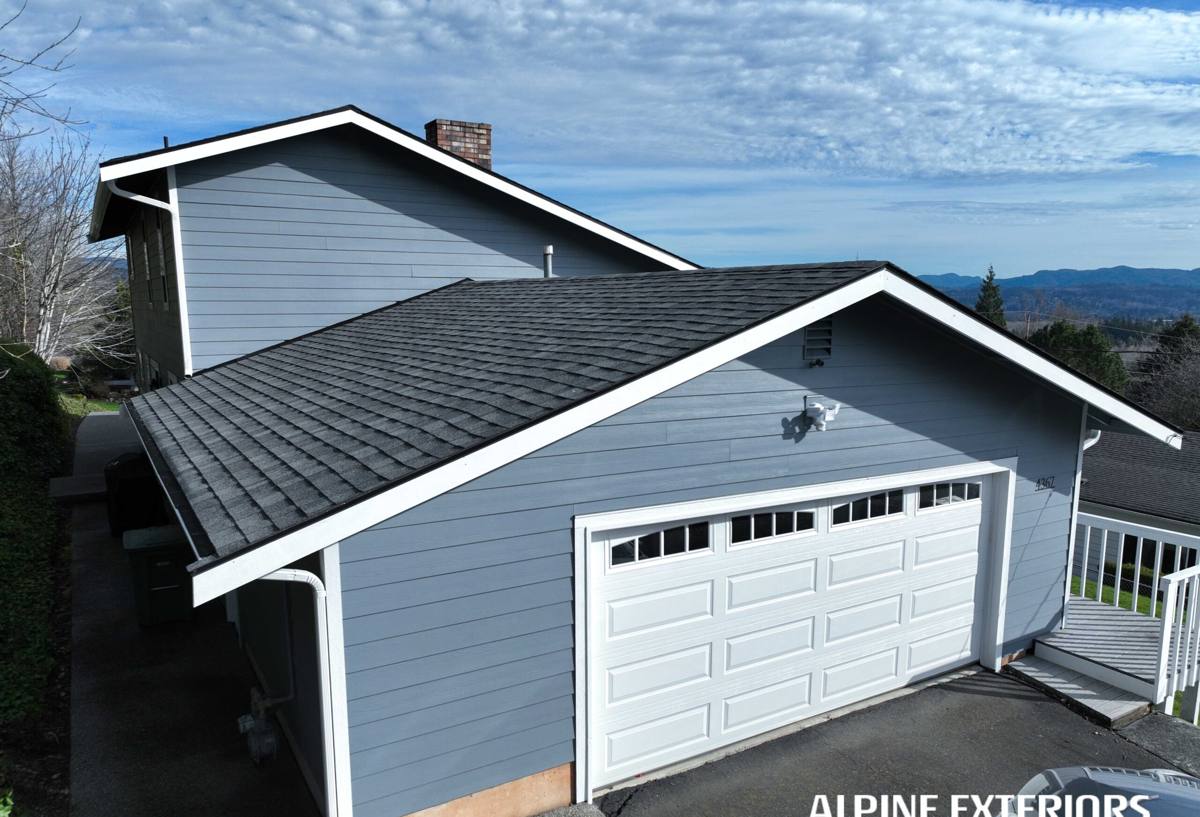
What This Climate Actually Does to a Roof
Salt Air and Corrosion
Even set back from the water, Crow Valley properties sit within the marine air zone that covers most of Orcas Island. Airborne salt settles on every exterior surface, including the roof, and it accelerates corrosion on any metal that isn't rated for a coastal environment. This is the single biggest mistake we see with metal roofing on the island: a product that's fine for an inland climate but not built to handle salt exposure. Fastener heads, cut edges, and flashing seams are where corrosion typically starts, which is why material choice and detailing matter more here than almost anywhere else in the state.
Driving Rain and Wind-Driven Water
Storms coming through the San Juans don't always drop rain straight down — wind pushes it sideways, up under laps, and into any gap that a fair-weather installation would get away with. A roof detailed for a drier climate, with minimal underlayment and standard lap coverage, will eventually let water in during a hard blow. Crow Valley roofs need underlayment and flashing details built for wind-driven rain, not just vertical rainfall.
Moss and Sustained Moisture
Tree cover and shade throughout the valley mean roofs stay damp longer after every rain, and that dampness is exactly what moss needs to establish. On asphalt shingles, moss roots work into the granules and mat, holding moisture against the surface and shortening the roof's life. Metal doesn't give moss the same foothold — there's no granule bed for roots to grip — but moss and organic debris can still collect in valleys, at panel laps, and around penetrations if the roof isn't detailed and maintained with that in mind.
Why Metal Roofing Fits This Valley
Metal roofing addresses each of those three problems directly, provided it's specified and installed correctly:
- Coastal-rated finishes and fasteners resist the corrosion that salt air causes over time
- Continuous panel runs and properly lapped seams handle wind-driven rain far better than a shingle field
- A smooth, low-friction surface doesn't give moss and moss roots anywhere to anchor the way granulated shingles do
- Steep-slope metal sheds snow and rain fast, reducing the time water sits on the surface
- A correctly installed system routinely outlasts asphalt by two to three roof cycles, which matters on an island where every roofing crew trip involves ferry logistics
None of that means metal is maintenance-free or the right call for every home. It's a bigger upfront investment, and it only delivers on that longevity if the installation accounts for this specific climate rather than a generic spec sheet.
Metal Roofing Systems We Install
Not every metal roof product performs the same way in a marine environment. Here's how the systems we install compare for a Crow Valley application:
| System | Best Fit | Coastal Durability | Trade-offs |
|---|---|---|---|
| Standing seam steel (coastal-rated finish) | Most Crow Valley homes, especially closer to water or exposed ridgelines | Excellent when specified with a marine-grade coating and stainless or coated fasteners | Higher material and labor cost; requires experienced seaming crew |
| Standing seam aluminum | Homes with the highest salt exposure | Naturally corrosion-resistant, does not rely on a coating alone | Softer material, more careful handling during install; higher material cost |
| Exposed-fastener metal panels | Shops, outbuildings, budget-conscious re-roofs | Adequate if fasteners and gaskets are coastal-rated and maintained | Fastener penetrations are the weak point long-term; needs periodic gasket checks |
| Standard steel (non-coastal coating) | Not recommended for this area | Prone to premature corrosion in salt air | We won't install this on an Orcas Island roof regardless of upfront savings |
What a Correct Installation Involves
The difference between a metal roof that lasts thirty-plus years in this climate and one that causes problems in five usually comes down to details that aren't visible once the job is finished. A correct Crow Valley metal roof installation includes:
- Full synthetic underlayment rated for high wind-driven rain exposure, not a minimal ice-and-water strip only at eaves and valleys
- Coastal-rated fasteners and closures matched to the panel metal, to avoid galvanic corrosion between dissimilar metals
- Properly lapped and sealed flashing at every penetration, valley, and wall transition — the majority of roof leaks start at these details, not the field of the roof
- Ventilation sized correctly for the roof and attic, since trapped moisture under a metal roof causes its own problems regardless of the panel's corrosion resistance
- Panel layout planned to minimize seams and cut edges facing prevailing wind and rain direction
- Snow and ice management details (snow guards where needed) appropriate to the home's roof pitch and exposure
Our Process for Crow Valley Projects
Every roof in the valley is a little different depending on tree cover, elevation, and exposure to weather off the water, so we start with an actual site walk rather than a generic quote.
- On-site assessment — we look at the existing roof deck, current moss and moisture patterns, tree cover, and how the home is oriented to prevailing wind and rain
- System recommendation — we recommend a metal type and finish based on that exposure, not a one-size-fits-all product
- Written scope and estimate — clear line items for materials, underlayment, flashing, ventilation, and labor, so there are no surprises mid-project
- Installation — deck inspection and repair as needed, underlayment, panel installation, and flashing detail work, done in sequence rather than rushed
- Final walkthrough — we go over the finished roof with you, including what maintenance to expect and when
Because we already work regularly on Orcas Island, material staging and scheduling around ferry logistics is built into how we plan the job, rather than something that causes delays partway through.
Cost Factors Homeowners Should Understand
Metal roofing costs more upfront than asphalt, and the total depends on several factors specific to your home and site:
| Factor | Why It Matters Here |
|---|---|
| Panel material (steel vs. aluminum) | Aluminum costs more but resists corrosion without relying solely on a coating — worth considering for high salt exposure sites |
| Roof complexity | Valleys, dormers, and multiple penetrations increase flashing labor, which is where leaks originate |
| Existing deck condition | Moss and moisture damage from a prior roof sometimes means deck repair before new panels go on |
| Access and staging | Tree cover and site access on some Crow Valley lots affect equipment and material staging time |
| Underlayment and ventilation upgrades | Not optional in this climate — factored into every honest estimate, not an upsell added later |
We'd rather walk you through these factors on-site and give you real numbers for your roof than quote a broad range that doesn't reflect what your home actually needs.
Maintenance and What to Expect Over Time
A metal roof in Crow Valley still needs periodic attention, even though it avoids the moss-root problem that shortens asphalt roof life:
- Clear needles, leaves, and debris from valleys and gutters, especially under heavy tree cover
- Check flashing and sealant at penetrations every few years, since these are the points most likely to need attention over the life of the roof
- Rinse accumulated salt residue and organic debris from the surface periodically if the home is in a heavier-exposure spot
- Watch for any fastener or coating wear at cut edges, and address it early rather than letting corrosion spread
None of this is heavy maintenance compared to what an asphalt roof needs under the same tree cover and moisture load — it's mostly about catching small issues before they become roof issues.
Why Local Experience in Crow Valley Matters
A roofing crew that hasn't worked this specific microclimate can spec a product correctly on paper and still get the installation wrong for what Crow Valley actually experiences — wind direction, shade patterns, and salt exposure all vary meaningfully across San Juan County, and even within Orcas Island itself. Working here regularly means we've seen how different products and details actually hold up over multiple wet seasons, not just how they're rated in a spec sheet. That experience shapes which systems we recommend and how we detail the parts of the roof that determine whether it lasts.
If you're weighing a metal roof for a Crow Valley home, we're glad to walk the roof with you and give you a straight, no-pressure estimate based on what your specific property needs — use the form below to get started.