 Orcas Island Siding
 Roofing Around Cascade Lake: A Different Kind of Wear
Homes near Cascade Lake sit in one of the more demanding microclimates on Orcas Island. The lake basin holds moisture longer than open, wind-exposed parts of the island, tree canopy shades large sections of roof from midday sun for much of the year, and salt-laden air still reaches this far inland on a west wind off the Sound. The result is a roof that stays damp longer after every rain, grows moss faster than a roof in full sun, and takes on more freeze-thaw and wind-driven-rain stress than most people expect for an inland lake setting.
None of that means a roof here is doomed to fail early. It means the roof has to be built and maintained with those specific conditions in mind — the right underlayment, the right ventilation, the right attention to shaded valleys and north-facing slopes. A roof replacement done without accounting for the lake's shade and moisture pattern will often show moss and granule loss again within a few years, even with quality shingles.
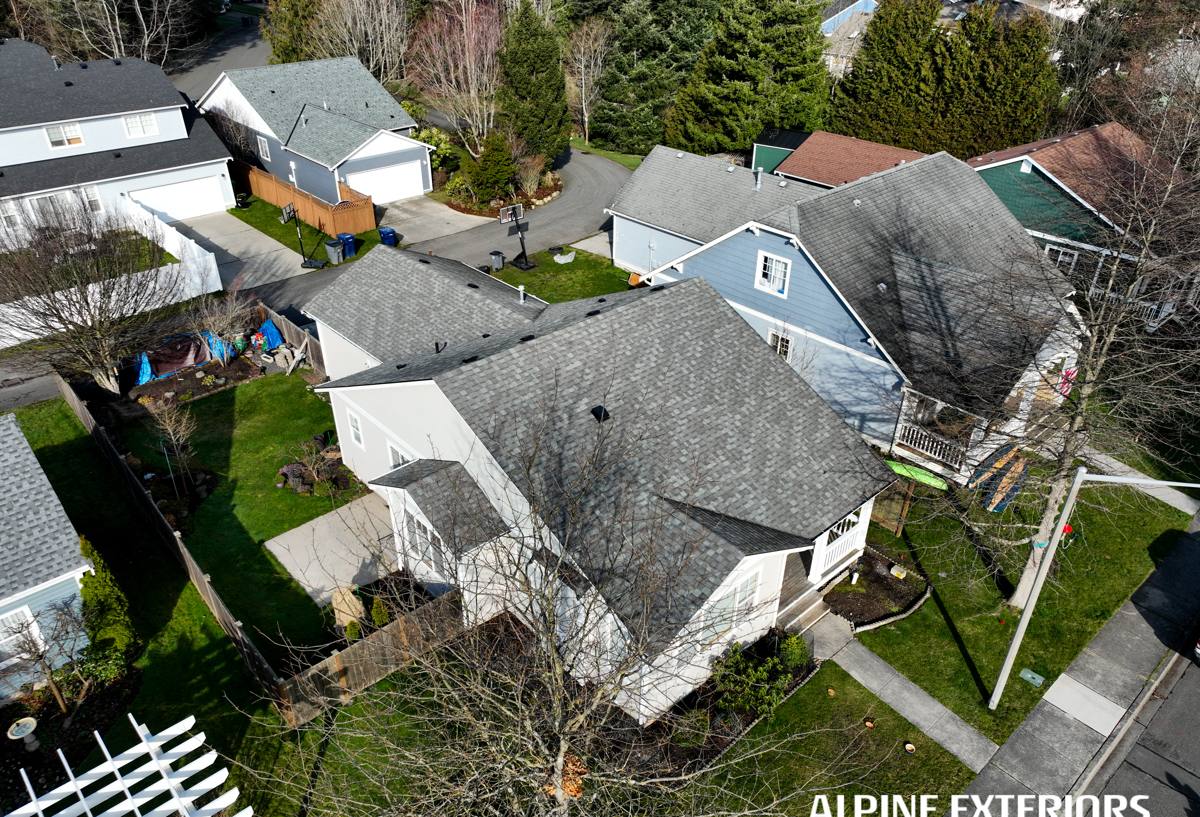
Signs a Cascade Lake Roof Needs Replacing, Not Patching
Roofs in this area tend to fail from the inside out — moisture works into the deck through small gaps before it ever shows as an obvious leak. A few patched shingles can buy time, but they don't fix what's happening underneath. Here's what tells us a roof is past the point of spot repair:
- Moss growth that has spread past the shaded edges into the main field of the roof, especially on north-facing slopes
- Granules collecting in gutters or at downspout outlets, a sign the shingle surface is breaking down
- Soft spots or slight sagging when walked, which usually means the decking underneath has taken on moisture
- Curling, cupping, or cracked shingles, particularly on the sides that catch the most driving rain
- Daylight visible through the attic roof boards, or damp insulation near the eaves
- A roof approaching 20-25 years old (asphalt) that hasn't had a full tear-off, even if it looks okay from the ground
- Repeated ice or moss damming at valleys and behind chimneys during winter
If you're seeing two or more of these, it's worth having someone look at the decking, not just the shingles.
What a Correct Replacement Actually Involves
A roof replacement is more than swapping old shingles for new ones. On a Cascade Lake property, the parts that matter most are usually the ones you can't see once the job is done.
Full Tear-Off and Deck Inspection
We remove the existing roofing down to the deck rather than layering over it. That's the only way to actually see the plywood or plank sheathing underneath — and on a shaded, moisture-holding lot, it's common to find soft or delaminated sections near valleys, eaves, and old vent penetrations that a layover would simply hide for another decade.
Underlayment Built for Wet Conditions
A synthetic or self-adhered underlayment with proper lap and fastening matters more here than in drier parts of the county. In areas prone to wind-driven rain or shaded moss buildup, we pay particular attention to eave and valley protection — those are the spots where water backs up first.
Flashing Done Right
Chimneys, skylights, dormers, and roof-wall intersections are where most leaks actually start, not in the open field of shingles. New step flashing, counter-flashing, and valley metal — installed correctly rather than reused or caulked over — is one of the most important parts of a durable roof and one of the easiest things for a rushed crew to shortcut.
Ventilation That Matches the Attic
A roof that can't breathe traps moisture underneath the deck, which speeds up rot and gives moss and mildew a head start from the inside. We balance intake (soffit or eave vents) against exhaust (ridge or roof vents) so warm, moist attic air actually moves out instead of condensing on the underside of the sheathing — a real problem in shaded, tree-covered lots where the roof rarely gets a chance to fully dry.
Choosing a Material for This Kind of Site
There's no single "best" roofing material — the right choice depends on how much shade and moisture the specific roof deals with, and how much long-term maintenance the homeowner wants to take on. Here's an honest comparison for a shaded, moisture-prone site like Cascade Lake:
| Material | Moss / Moisture Resistance | Maintenance | Typical Lifespan |
|---|---|---|---|
| Architectural asphalt shingle | Good with proper ventilation; algae-resistant granules help but don't eliminate moss in heavy shade | Periodic moss/debris removal, especially on shaded slopes | 25-30 years |
| Standing seam metal | Very good — smooth surface sheds moisture and resists moss anchoring better than textured surfaces | Low; occasional debris clearing | 40-50+ years |
| Cedar shake | Poor in heavy shade without diligent upkeep — organic material and moss both thrive in the same damp conditions | High; regular treatment and cleaning required | 20-30 years with upkeep |
| Synthetic composite shingle | Good; resists moisture absorption better than wood | Low to moderate | 30-50 years |
For heavily shaded lots near the lake, we're generally cautious about recommending cedar shake unless the owner is committed to regular maintenance — the same dampness that makes moss thrive on asphalt in shade will do the same to untreated wood, faster. That's a maintenance and moisture-behavior trade-off, not a knock on the material itself.
Working the Lake Side of the Island
Access and staging around Cascade Lake properties often differ from a straightforward in-town job — long driveways, tree cover close to the roofline, and limited turnaround space are common. Because we've worked this part of the island before, we plan material delivery, dumpster placement, and crew staging around those realities up front rather than discovering them the morning we show up. That planning also matters for scheduling: wet weather windows near the lake can run longer than on more exposed parts of the island, and a crew unfamiliar with the area's rain patterns can lose more days than necessary to weather they should have planned around.
Protecting the Property During Tear-Off
Tree cover that causes moss also means falling debris and sap are a normal part of working near Cascade Lake. We tarp landscaping, gutters, and any water features before tear-off begins, and we do a magnetic sweep for nails and staples before we consider the job finished — standard practice, but worth confirming with any crew you hire near a lake property where debris in the water or yard is a real concern.
Timeline and What to Expect
Most single-family roof replacements in this size range take two to four working days once weather cooperates, longer if we uncover deck damage that needs repair before new roofing goes down. We'll walk the roof and attic first, give you a written scope that spells out exactly what's being replaced and why, and flag anything — like soft decking or undersized ventilation — before work starts, not as a surprise mid-job. San Juan County building permit requirements apply to roof replacements in most cases; we handle that process as part of the job rather than leaving it to the homeowner.
After the Job: Keeping Moss From Coming Back
A new roof in a shaded, damp spot near the lake will still face the same conditions that aged the old one — the goal is to give it a real head start, not a false promise that moss will never return. A few habits make a measurable difference:
- Trim back overhanging branches where practical to let more light and airflow reach the roof
- Clear gutters and valleys of needles and debris at least twice a year, more often under heavy tree cover
- Rinse visible moss growth gently rather than pressure-washing, which can strip granules and shorten shingle life
- Check attic ventilation isn't blocked by insulation or debris after any attic work
- Have the roof looked at after major windstorms, which are common on the islands in fall and winter
Why Local Experience on This Roof Matters
A roofing crew that's already worked Cascade Lake properties knows which slopes hold moss longest, how far the salt air actually reaches inland here, and what ventilation setup actually keeps a shaded attic dry through a San Juan County winter. That's the difference between a roof that's simply installed correctly and one that's installed correctly for this specific lot's shade, moisture, and exposure. We'd rather spend an extra few minutes on the initial walk-through getting that right than have you calling about moss and soft spots again in five years.
If your roof near Cascade Lake is showing its age, we're happy to take a look and give you a straightforward assessment — no pressure, no obligation. Use the form below to request a free estimate.