 Orcas Island Siding
 Decks Around Mountain Lake Take a Different Kind of Beating
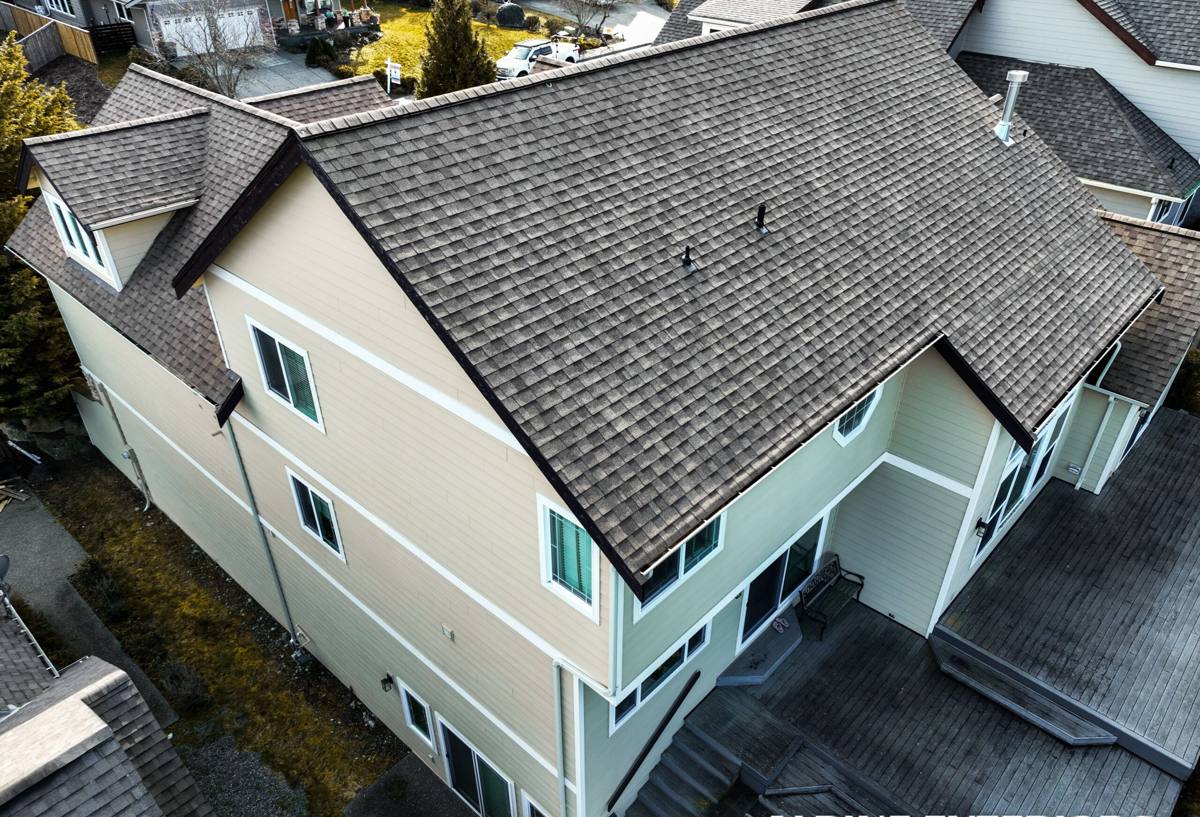
Homes near Mountain Lake sit under heavy tree cover, tucked into the terrain on Orcas Island where afternoon sun is scarce and shade lingers most of the day. That combination — filtered light, still air, and moisture that doesn't burn off quickly — is tough on wood and composite decking alike. Add in San Juan County's salt-laden air drifting up from the shoreline, months of driving rain each winter, and a moss season that can stretch from fall through spring, and you get decks that age faster here than they would in a drier, sunnier part of the state.
We repair decks around Mountain Lake regularly enough to know the failure patterns before we even get up the ladder or under the joists. This page covers what actually goes wrong, what a correct repair looks like, and how we handle the job from first look to final walkthrough.
Why This Microclimate Is Hard on Decks
Shade and Moisture Retention
Decks in open, sunny yards dry out between rain events. Decks shaded by fir and cedar canopy near Mountain Lake don't get that break. Moisture sits on the deck boards, in the ledger connection, and under the structure longer than manufacturers ever account for in their warranty language. That extended dry time — or lack of it — is the single biggest reason we see rot show up years earlier here than on a similar deck built in full sun elsewhere on the island.
Moss and Organic Buildup
Moss doesn't just look bad. It holds water against the wood surface, traps debris in board gaps, and its root structure works into fine cracks and fastener holes, widening them over time. A moss-covered deck surface is also a slip hazard, especially on stairs. Left untreated for a full season or two, moss buildup accelerates surface wear and can mask soft spots developing underneath.
Salt Air and Fasteners
Even set back from the water, Orcas Island homes get salt-laden air moving through on prevailing winds. Over years, that air corrodes standard fasteners, joist hangers, and structural screws faster than inland climates would. Corroded fasteners are one of the most common hidden problems we find when we open up a deck that looks fine from the top.
What We Actually Find When We Inspect Mountain Lake Decks
- Soft or spongy decking boards, especially near the house where shade and moisture concentrate
- Ledger board rot at the house connection — often the most serious issue, since it's structural
- Corroded or failing joist hangers and structural screws
- Loose, wobbly, or rotted railing posts, especially where posts meet the deck frame
- Moss and algae buildup trapping moisture in board gaps and on stair treads
- Undersized or missing flashing at the ledger, letting water track into the house wall
- Fascia and stair stringer rot from splash-back and standing water
- Gaps or cupping in aging composite or wood boards from repeated wet-dry cycling
Most of these start small and stay hidden under the surface. By the time a board feels soft underfoot, the framing beneath it has usually been compromised for a while.
What a Correct Deck Repair Actually Involves
Inspection Before Any Repair Quote
We don't quote a deck repair from a quick visual look. We walk the whole structure, check the ledger connection, probe suspect boards and framing with a moisture meter and a screwdriver, and look underneath from the crawlspace or yard side where possible. A repair scope that skips this step tends to miss the real problem and leaves you paying for a second fix within a year or two.
Structural Repairs Come First
If the ledger board, joists, or posts are compromised, that gets addressed before anything cosmetic. A deck can look fine on the surface while the structure underneath is failing — replacing surface boards over a weak frame just hides the problem and puts anyone standing on that deck at risk.
Matching Materials the Right Way
When we replace boards, we match species and dimension as closely as possible, or we'll tell you honestly if a full re-decking makes more sense than patching. Mixing incompatible wood species or fastener types on a repair often creates new problems — uneven weathering, galvanic corrosion between metals, or moisture traps at the seams.
Flashing and Drainage Get Fixed, Not Just Covered
A lot of deck rot traces back to missing or failed flashing at the ledger board. If we find that during a repair, we fix the flashing and drainage path as part of the job — not as an upsell, but because re-decking over a bad flashing detail guarantees the same failure comes back.
Repair Approach by Deck Component
| Component | Common Problem Near Mountain Lake | Our Repair Standard |
|---|---|---|
| Ledger board | Rot from failed or missing flashing where deck meets house | Remove and inspect wall sheathing behind it; install proper flashing before reattaching |
| Decking boards | Soft spots, cupping, moss staining from prolonged shade | Replace individual boards where sound framing allows; recommend full re-deck if damage is widespread |
| Joists and framing | Corroded hangers, soft wood from trapped moisture | Sister or replace compromised framing; upgrade to corrosion-resistant hardware |
| Railings and posts | Loose or rotted post bases, wobble under load | Rebuild post-to-frame connection to current structural standards, not just re-tighten |
| Stairs and stringers | Splash-back rot, moss on treads | Replace affected stringers/treads; improve drainage at the base to reduce standing water |
Repair vs. Replace: How We Help You Decide
Not every deck problem calls for a full rebuild, and not every deck is worth patching. We give you a straight answer based on what we find, not on what's easiest to sell.
- Repair usually makes sense when the framing is sound and the damage is limited to a handful of boards, a railing section, or an isolated flashing failure.
- Replacement usually makes sense when rot has reached the ledger or multiple structural members, when the deck is old enough that matching materials is impractical, or when repair costs start approaching a large share of rebuild cost.
- Either way, we'll show you what we found underneath before you decide — not just tell you.
What Drives Deck Repair Cost
Every repair is scoped individually, but a few factors consistently move the price:
- How much of the damage is structural (ledger, joists, posts) versus cosmetic (surface boards, fascia)
- Whether flashing and drainage need to be corrected, not just the visible boards
- Access — decks tucked under heavy tree cover or built high off sloped ground near Mountain Lake often take longer to work on safely
- Material choice for replacement boards, which ranges widely between standard lumber, cedar, and composite options
- Whether railing code compliance needs to be brought up to current standard during the repair
We'd rather walk your deck and give you real numbers than quote a range that doesn't mean much once we're under the boards.
Our Process, Start to Finish
1. On-Site Inspection
We walk the deck top to bottom, check the ledger and framing where accessible, and note every issue — structural and cosmetic.
2. Honest Scope and Options
You get a clear explanation of what's wrong, what's causing it, and whether repair or replacement is the smarter long-term move for your specific deck.
3. The Repair Itself
Structural issues get fixed first. Flashing and drainage get corrected where they're the root cause. Materials are matched or substituted with your input, not decided for you.
4. Final Walkthrough
We walk the finished repair with you, point out what was fixed and why, and let you know what to watch for going forward given the shade and moisture conditions around your property.
Why Hire a Crew That Already Works Around Mountain Lake
A deck repair crew that mostly works drier, sunnier parts of the region can miss the specific failure patterns that show up around Mountain Lake — the shaded moisture retention, the moss buildup speed, the salt air's slow work on fasteners. We've seen how these decks age in this particular setting, which means we know where to look first and what corners not to cut on flashing and drainage, since those are the details that determine whether a repair lasts five years or fifteen.
We also know the practical side of working in this area — limited daylight hours in shaded yards, careful staging on sloped lots, and being mindful of the trees and landscaping that make these properties what they are.
Get a Straight Answer on Your Deck
If your deck near Mountain Lake has soft spots, a wobbly railing, or just looks tired after another wet Orcas Island winter, we'll come take a real look and tell you honestly what it needs. There's no pressure and no obligation — just a clear assessment and, if you want one, a written estimate. Fill out the form below to get started.