 Orcas Island Siding
 Siding That Has to Work Harder Around Mountain Lake
Homes in the Mountain Lake area sit in a different microclimate than the open waterfront properties elsewhere on Orcas Island. The forest canopy holds shade and moisture longer through the day, the terrain gains elevation compared to the shoreline, and wind still carries salt off the surrounding water even where you can't see it. That combination — shade, damp air, and salt drift — is a tough environment for exterior siding, and it's why a siding job done for a sunny, open lot doesn't automatically hold up the same way here.
This page covers what siding installation actually needs to look like for a home in this part of San Juan County, what correct workmanship involves, and why the company only installs James Hardie fiber cement rather than the vinyl, LP SmartSide, or cedar products you'll see offered elsewhere.
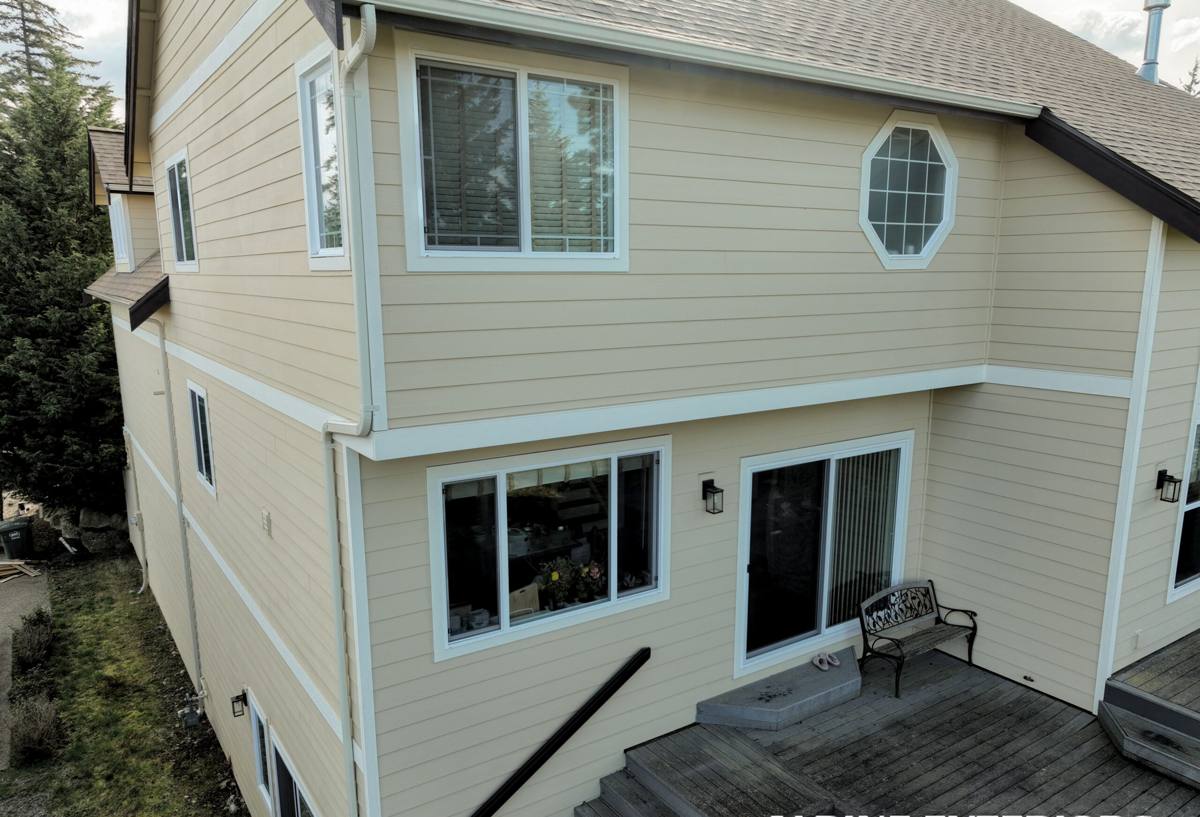
What the Local Climate Does to Siding
Salt Air, Even Inland
You don't have to be on the water for salt to be a factor. Marine air moves across the island and settles on every exterior surface it touches, including siding tucked back in the trees. Over years, that salt exposure accelerates corrosion on fasteners and trim, and it degrades paint and coatings faster than a typical inland climate would.
Driving Rain
Orcas Island gets weather that comes in sideways, not just straight down. Driving rain finds every gap, lap, and seam in a siding system, and it doesn't take much of a mistake in the weather-resistive barrier or flashing details for water to get behind the cladding. Once water is behind the siding, the damage happens where you can't see it — in the sheathing and framing — long before it shows up on the surface.
A Long Moss Season
The shaded, damp conditions around Mountain Lake are close to ideal for moss and algae growth. Siding that stays wet or shaded for extended stretches of the year will host organic growth faster than siding in full sun, and that growth holds moisture against the surface, which compounds every other problem on this list. A siding product's finish and its resistance to moisture absorption both matter more here than they would on a dry, open lot.
Wildfire Exposure at the Wildland Edge
Many homes around Mountain Lake back up to forest. That's part of the appeal of living there, but it also means exterior materials should be evaluated for how they perform near wildland vegetation, not just how they handle rain and salt. Non-combustible cladding is a reasonable, practical consideration for a home in a forested setting.
Why We Install James Hardie Fiber Cement Here
We only install James Hardie siding. We don't offer vinyl, LP SmartSide, Cemplank, Allura, primed spruce, or cedar, and that's a deliberate standard, not a limitation in what we're capable of installing. For a climate like this one, here's what that standard buys a homeowner:
- Fiber cement composition: resists moisture absorption and doesn't swell, rot, or delaminate the way wood-based products can when exposed to years of driving rain and shaded dampness.
- Non-combustible material: a real advantage for homes near forest and dry-season wildfire risk.
- ColorPlus factory finish: a baked-on finish that holds color and resists the fading and chalking that field-applied paint struggles with in salt air.
- HardieZone engineering: James Hardie manufactures different formulations for different climate zones (HZ5 and HZ10), which matters in a marine climate where humidity and moisture cycling are constant.
- Transferable warranty: a meaningful backstop if you sell the home, which is common with lake and island properties.
None of that means other products are junk — vinyl is inexpensive and low-maintenance in mild climates, cedar has real curb appeal, and LP SmartSide has its own following. But each of them asks a homeowner to accept a trade-off — ongoing maintenance, moisture sensitivity, or a shorter service life — that we don't think makes sense to sign a Mountain Lake homeowner up for. Fiber cement, installed correctly, is the product we're willing to put our name behind in this climate.
What a Correct Installation Actually Involves
Fiber cement siding is only as good as the details underneath it. The material itself can handle this climate; a shortcut installation cannot. A correct job includes:
- A weather-resistive barrier installed and lapped correctly, with no gaps for wind-driven rain to exploit.
- Proper flashing at every window, door, and roofline penetration — the most common place water actually gets behind siding.
- Correct starter strip and clearance at the foundation so the bottom edge of the siding isn't sitting in standing moisture.
- Manufacturer-specified fastener patterns and fastener material, since the wrong fastener corrodes faster in salt air and can void the warranty.
- Proper gapping and caulking at butt joints and trim, following James Hardie's published installation guidelines rather than generic siding practice.
- Adequate clearance and ventilation where siding meets roofing, decks, or grade, to avoid trapping moisture against the material.
Every one of those steps is invisible once the job is finished. That's exactly why they matter — nobody inspects them again until there's a problem, so they need to be right the first time.
Our Process on Mountain Lake Jobs
1. On-Site Assessment
We walk the home, check the condition of the existing siding and the sheathing behind it where accessible, and note site-specific issues — tree cover, shaded sides of the house, drainage patterns, and any areas showing existing moss or moisture staining.
2. Removal and Substrate Check
We remove the old siding and inspect the sheathing and framing underneath before anything new goes up. Water damage found at this stage gets addressed before we close the wall back up — not left behind a new layer of siding.
3. Weather Barrier and Flashing
This is the step that determines whether the siding actually keeps water out for the next several decades. We install and detail the weather-resistive barrier and flashing to manufacturer specification before a single piece of Hardie board goes on.
4. Installation to Manufacturer Spec
Siding, trim, and fasteners go in following James Hardie's installation requirements — fastener spacing, clearances, and caulking included — because deviating from spec is how warranties get voided and how moisture problems start.
5. Final Walkthrough
We walk the finished exterior with the homeowner, cover basic care, and answer questions about how the siding will hold up through the wet season.
Comparing Siding Options for This Climate
| Factor | James Hardie Fiber Cement | Vinyl | Cedar / Wood | LP SmartSide |
|---|---|---|---|---|
| Moisture resistance | Strong when installed to spec | Good, but can warp/buckle | Requires ongoing sealing | Engineered wood; moisture-sensitive at cut edges |
| Combustibility | Non-combustible | Combustible | Combustible | Combustible |
| Moss/algae resistance | Good with factory finish | Moderate | Prone in shaded, damp areas | Moderate |
| Finish longevity | Factory-baked ColorPlus finish | Color molded in, can fade/chalk | Needs repainting/staining cycles | Field-applied paint over primer |
| Typical maintenance | Low | Low | High | Moderate |
Signs Your Current Siding Needs Attention
- Persistent moss or dark streaking on shaded walls that returns soon after cleaning
- Soft spots, bubbling, or visible warping, especially near ground level or under eaves
- Paint that's peeling or chalking faster than it used to
- Visible gaps or separation at trim, corners, or butt joints
- Musty smell or soft drywall on interior walls that share an exterior wall
- Siding that was installed more than 20-25 years ago and has never been fully inspected behind the surface
Maintenance in a Shaded, Moss-Prone Setting
Even the right siding needs some upkeep in a climate like this. For homes around Mountain Lake, that generally means periodic gentle washing to keep moss and algae from establishing on shaded walls, keeping gutters and downspouts clear so water isn't sheeting down the siding face, and trimming back vegetation that keeps a wall damp and shaded longer than necessary. None of that is heavy labor, but skipping it lets moisture problems build slowly and quietly.
Why Hire a Crew That Already Works This Area
A siding crew that mostly works dry, open sites in other parts of the county can do a technically fine installation and still miss the details that matter here — flashing detail at a shaded valley, fastener choice for salt exposure, or clearance decisions around a wet, wooded lot. Working Mountain Lake and the surrounding Orcas Island terrain regularly means we're not guessing at how this specific combination of shade, rain, and salt air behaves over a Pacific Northwest winter — we've seen what holds up and what doesn't, and we install accordingly.
If you're weighing a siding replacement or want a second opinion on what's happening behind your current siding, we're happy to take a look and give you an honest assessment. Request a free, no-pressure estimate using the form below.