 Orcas Island Siding
 Building New on San Juan Island? Get the Windows Right Before the Walls Close Up
New construction gives you one real shot at getting windows installed correctly. Once siding, trim, and interior finish work are done, fixing a bad rough opening or a missed flashing step means tearing into finished work. On San Juan Island, that first-shot pressure is higher than in most parts of the country. Homes here sit exposed to salt-laden wind off the water, driving rain that comes in sideways during winter storms, and a damp, mossy season that can stretch for months. Windows installed without those conditions in mind tend to show problems years sooner than they should.
We're a local crew based on Orcas Island, working new-construction window installs on San Juan Island as part of our regular San Juan County service area. That short ferry ride matters more than people expect — it shapes scheduling, material staging, and how we sequence a job, all of which we cover below.
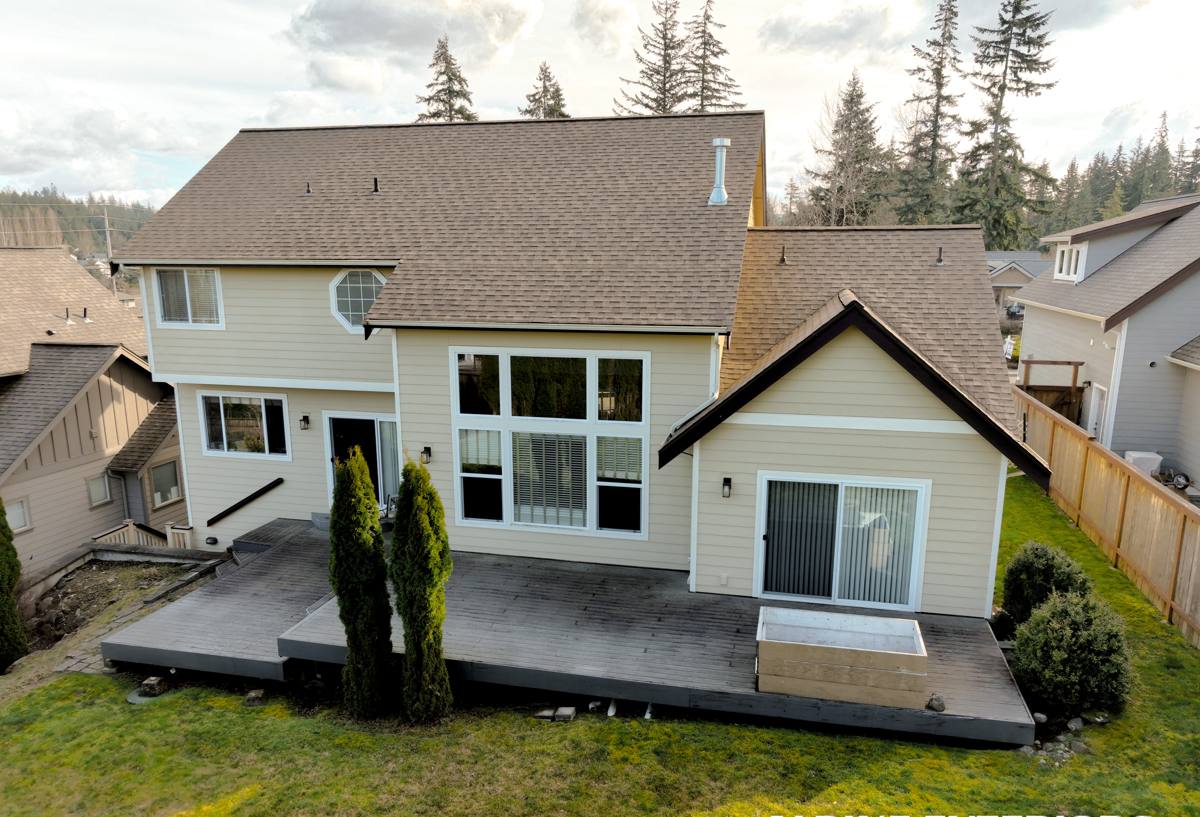
What San Juan Island's Climate Actually Does to a New Window Installation
Salt Air and Marine Corrosion
Homes anywhere near the water on San Juan Island take on airborne salt, even at a distance from the shoreline. Salt accelerates corrosion on exposed fasteners, uncoated metal flashing, and lower-grade hardware. In a new build, this is a material-selection problem more than an installation problem — the wrong flashing metal or fastener spec can start corroding within a few seasons, long before the window itself would otherwise need attention.
Driving Rain and Wind-Driven Water
Storms in the San Juans frequently push rain sideways, not straight down. That means water pressure at a window opening isn't just a bead of caulk problem — it's a drainage-plane and flashing-sequence problem. A new-construction opening has to be built so water that gets past the exterior cladding has a clear, gravity-fed path back out, every time, in every wind direction the house will actually see.
The Long Moss and Damp Season
San Juan County's wet season runs long, and moss and algae growth on north-facing and shaded elevations is a normal part of island life. Around windows specifically, prolonged dampness at sills and trim is what eventually leads to rot in wood components and staining or degradation in lower-quality cladding. New construction lets us build in sill pans, back-dam details, and proper slope from day one, instead of retrofitting them later.
What a Correct New-Construction Window Installation Involves
Rough Opening and Flashing Sequence
The rough opening has to be framed square, level, and sized to the manufacturer's tolerance — not "close enough." From there, the flashing sequence follows a strict shingle-lap order: sill pan first, then the window unit, then jamb flashing, then head flashing, each layer overlapping the one below it so water always sheds outward and downward. Skipping or reversing any layer creates a place for water to collect instead of drain, and on an island with our rain patterns, that shows up as a problem within a few wet seasons, not decades.
Sill Pans and Back Dams
A sill pan under the window unit, with a back dam at the interior edge, is what actually protects the framing if water ever does get past the primary seal. This is inexpensive to build correctly during new construction and expensive to add after the fact. We treat it as non-negotiable on every install, not an upgrade option.
Nailing Fin vs. Block Frame Windows
Most new-construction homes here use nailing-fin windows, which integrate directly into the water-resistive barrier and flashing system. Block-frame windows, more common in masonry or certain architectural styles, need a different flashing approach built around the frame itself rather than a fin. Either can perform well on San Juan Island — what matters is that the flashing details match the frame type the house actually uses, and that the installer isn't applying a generic approach to a window that needs something specific.
Sealants and Backer Rod
Exterior sealant is the last line of defense, not the first. It has to be paired with backer rod sized correctly for the joint width so the sealant forms a proper hourglass bead rather than a flat skin that cracks under movement. In a marine climate, we use sealants rated for UV and salt exposure, since standard interior-grade caulk breaks down faster in this environment.
Choosing Frame Materials for an Island, Marine Environment
Frame material choice matters more here than in a drier, inland climate. The table below reflects how the common options actually hold up under San Juan Island conditions, along with where they land on relative cost.
| Frame Material | Salt Air / Corrosion Behavior | Moisture & Rot Resistance | Relative Cost |
|---|---|---|---|
| Vinyl | Doesn't corrode; hardware quality varies by manufacturer | Good — won't rot, but can warp with dark colors in direct southern exposure | Lower |
| Fiberglass | Excellent — very stable, minimal expansion/contraction | Excellent, low maintenance | Mid to upper |
| Aluminum-Clad Wood | Good on the exterior face if properly finished; wood core needs the seal maintained | Strong if sealed and maintained; vulnerable if finish fails | Upper |
| Bare Aluminum | Prone to corrosion and pitting near saltwater over time unless marine-rated | Good against rot since there's no wood, but thermal performance is weaker | Varies |
We don't push one material as universally "best" — the right call depends on the home's exposure, the architectural style, and budget. What we will tell you honestly is which options carry more long-term maintenance in a salt-air, high-moisture setting, so you're not surprised five years in.
Glass Packages and Orientation for San Juan Island Homes
Glass selection is where a lot of new-construction budgets get spent, and it's worth doing deliberately rather than defaulting to whatever the builder's spec sheet lists. A few things worth weighing for this area specifically:
- Low-E coatings — reduce heat loss through the glass, which matters through our long, damp winters when interior heating runs for months at a stretch.
- Argon or krypton gas fill — improves insulating performance in double- or triple-pane units; more valuable on north- and west-facing walls that take the brunt of winter wind.
- Orientation-specific glazing — south- and west-facing water views often call for a different low-E coating balance than north-facing rooms, to manage solar gain without killing the view's clarity.
- Condensation resistance — a real consideration given how humid and cool the air gets here for extended stretches; a poorly specified glass package will fog or sweat on interior surfaces during cold snaps.
None of this needs to be guesswork. During a new build we walk the plans, talk through which rooms face open water or prevailing wind, and match glass packages room by room instead of applying one spec to the whole house.
How Our New-Construction Process Works on San Juan Island
- Plan review and coordination with your builder. We look at window schedules and rough opening dimensions before framing is finalized, so nothing gets built to the wrong size.
- Material staging and ferry logistics. Windows, flashing components, and sealants get ordered and staged with the ferry schedule in mind — island jobs run smoother when materials arrive as a complete set instead of in scattered trips.
- Rough opening verification. We check every opening against the actual window units before installation day, not after — catching a framing error before install is a fix; catching it during install is a delay.
- Installation and flashing. Units go in following the sill pan, jamb, and head flashing sequence described above, integrated with the home's water-resistive barrier as it's being built, not patched in afterward.
- Interior and exterior seal-out. Sealants, backer rod, and trim details are finished on both sides, with attention to the sill detail that will see the most water over the life of the house.
- Walkthrough. We go through the finished openings with you or your builder before the crew leaves the site.
Mistakes We Regularly See in New-Construction Window Work
Most window problems we get called out to fix on existing homes trace back to shortcuts taken during original construction. On San Juan Island's climate, these mistakes surface faster than they would elsewhere:
- No sill pan or back dam — water that gets past the primary seal has nowhere to go but into the framing.
- Flashing installed out of sequence, so a lower layer sits on top of an upper layer instead of underneath it.
- Fasteners or flashing metal not rated for salt-air exposure, leading to early corrosion.
- Caulk used as the primary water barrier instead of a backup to proper flashing.
- Rough openings cut oversized "to make the window fit easier," leaving gaps that are hard to insulate and seal correctly.
- Window selection made purely on price without factoring in the home's actual sun and wind exposure.
What Drives Cost on a New-Construction Window Job Here
Every new build is different, so we won't quote a number without seeing the plans, but a few factors consistently move the price on San Juan Island jobs more than people expect:
| Cost Factor | Why It Matters Here |
|---|---|
| Frame material | Vinyl runs lower up front; fiberglass and clad-wood cost more but hold up better against salt air and moisture long term. |
| Window count and size | Larger view openings toward the water add structural and glazing cost beyond a standard window. |
| Glass package | Upgraded low-E coatings and gas fill add cost per unit but reduce heating load through our long winters. |
| Delivery logistics | Ferry scheduling and barge freight for larger orders can affect lead time and, on bigger jobs, delivery cost. |
| Site exposure | Homes fully exposed to wind and salt spray often justify upgraded hardware and flashing metal over a standard spec. |
Why It Matters That Your Crew Already Works San Juan Island
A contractor who normally works the mainland and occasionally takes an island job is working outside their usual routine — figuring out ferry timing, material logistics, and weather windows on the fly, often at your expense in delays or missed details. We're based on Orcas Island and work San Juan Island regularly as part of San Juan County, which means the ferry schedule, the seasonal weather patterns, and the realities of getting a crew and materials onto the island on time are already built into how we plan a job, not something we're learning as we go.
It also means we're not disappearing after the last window is set. If a warranty question comes up or you want a sill checked after the first hard winter storm, we're a short ferry ride away, not a company that has to schedule a special trip back to the islands.
Ready to Talk About Your New-Construction Windows?
If you're building on San Juan Island and want windows installed correctly the first time — with flashing, sill details, and material choices matched to what this climate actually does to a house — we're happy to look at your plans. Reach out for a free, no-pressure estimate; there's a form right below to get started.