 Orcas Island Siding
 Why Eastsound Roofs Age Differently Than Mainland Roofs
A roof in Eastsound doesn't fail the same way a roof in a dry inland suburb does. On Orcas Island, three things work on a roof at once: salt-laden air moving off the water, long stretches of driving rain during the wet months, and a moss season that can run from early fall through spring under the tree cover that shades so many San Juan County properties. None of that means a roof here can't last as long as one anywhere else. It means the installation has to account for those conditions from the start, not patch around them later.
Salt air accelerates corrosion on exposed metal fasteners, flashing, and vent components. Sustained rain finds every weak seam and lapped joint eventually, especially on lower-slope sections and valleys. And moss doesn't just sit on the surface looking bad — its root structure holds moisture against the shingle mat and lifts edges over time, which is how a cosmetic problem becomes a leak. A correct install treats all three as design inputs, not afterthoughts.
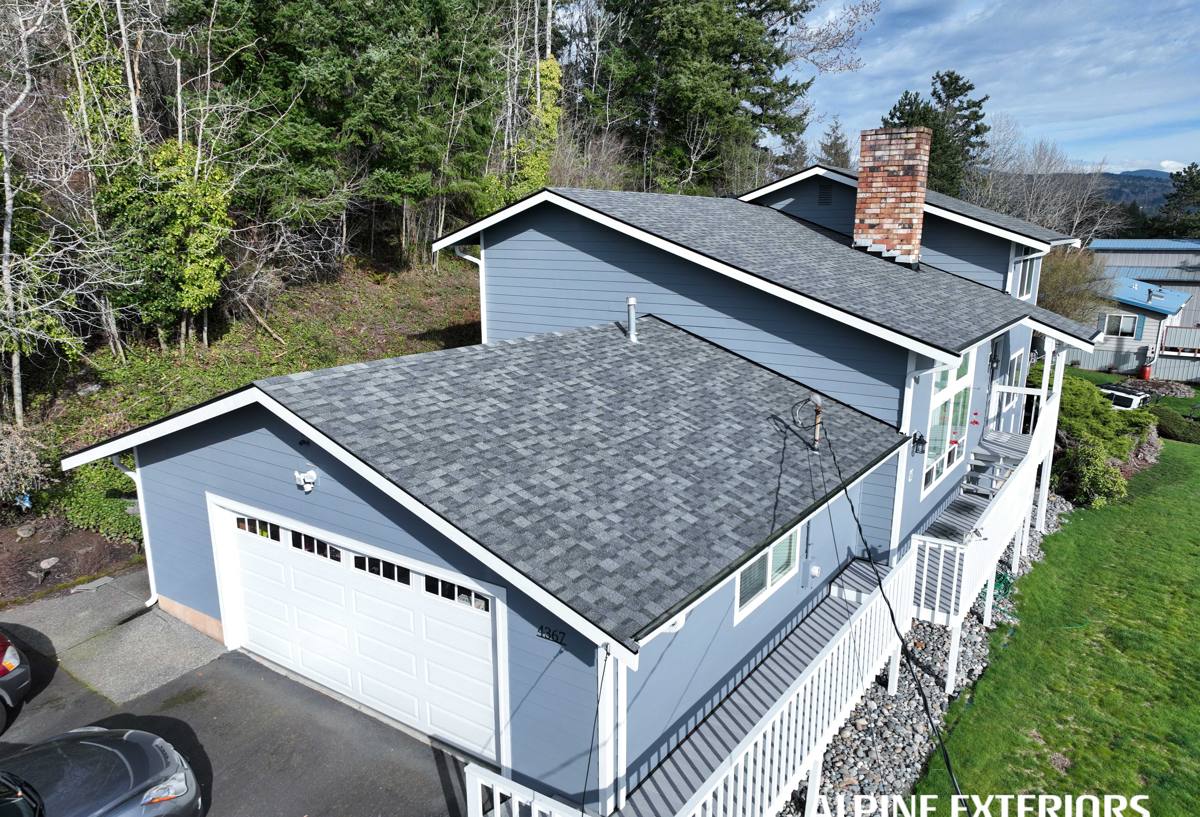
What a Correct New Roof Installation Actually Involves
"New roof" covers a lot of ground, and the difference between a roof that performs for its full expected life and one that causes problems in year six almost always comes down to what happens underneath the shingles, not the shingles themselves.
Tear-Off and Deck Inspection
We remove the existing roofing down to the deck rather than layering over it. That's the only way to actually see the plywood or plank decking underneath — soft spots, old water staining, and rot hide under existing shingles and only show up once they're gone. Any damaged decking gets replaced before anything new goes down. Skipping this step is one of the most common shortcuts in the trade, and it's the one most likely to cause a callback within a few years.
Underlayment
Given how much rain the island sees, we treat underlayment as a real second line of defense, not a formality. Self-adhered membrane at eaves, valleys, and other vulnerable transitions, paired with a synthetic underlayment across the field, gives the roof a backup layer if wind-driven rain ever gets past the shingles — which does happen in a real storm, on any roof, regardless of material.
Flashing
Flashing around chimneys, skylights, sidewalls, and roof-to-wall transitions is where most leaks actually start — not in the open field of shingles. We install new flashing rather than reusing old pieces, and we use corrosion-resistant metals given the salt exposure common near the water on Orcas Island.
Ventilation
Balanced intake and exhaust ventilation keeps the attic space dry and temperature-stable, which matters for shingle life and for controlling condensation in our damp climate. Poor ventilation is a quiet contributor to premature aging that homeowners rarely notice until the roof is already failing early.
Material Choices for Eastsound Homes
There's no single "right" roofing material for the island — the right choice depends on the home's exposure, roof pitch, budget, and how much upkeep the owner wants to take on. Here's how the common options stack up for a coastal, tree-shaded, high-moisture setting like Eastsound:
| Material | Typical Lifespan | Moss/Algae Resistance | Maintenance Load |
|---|---|---|---|
| Standard asphalt composition shingle | 20–25 years | Moderate; benefits from algae-resistant granules | Periodic moss removal recommended |
| Algae-resistant (AR) composition shingle | 25–30 years | Better than standard, not immune | Lower, but not maintenance-free |
| Standing seam metal | 40+ years | High — moss struggles to root on smooth metal | Low; occasional debris clearing |
| Cedar shake | Varies widely by care | Low without diligent upkeep | High — regular treatment and cleaning needed |
We're upfront about trade-offs rather than pushing one product. Metal costs more up front but asks the least of an owner over time, which appeals to second-home owners and anyone who doesn't want to think about their roof for decades. Composition shingle remains the most common choice islandwide because it balances upfront cost with solid performance when installed correctly. Cedar has real aesthetic appeal that fits a lot of Orcas Island homes, but under heavy tree cover and moisture it demands a maintenance commitment we make sure homeowners understand before they commit to it — not because the material is flawed, but because neglect shows up faster on cedar than on other options.
Moss, Algae, and Ventilation: The Island-Specific Concern
Almost every roof inspection we do in and around Eastsound turns up some degree of moss or algae staining, even on newer roofs. It's simply a byproduct of shade, moisture, and mild temperatures — not a sign of a bad roof. What matters is whether the roof was set up to shed moisture efficiently and whether the owner keeps up with basic seasonal maintenance. During installation, we position ridge and soffit vents to encourage airflow that helps sections of the roof dry out between rain events, and we talk through simple maintenance timing so moss doesn't get the chance to establish a root hold in the shingle mat.
Our Installation Process, Start to Finish
- On-site assessment — we walk the roof and attic, check decking condition where visible, and note pitch, valleys, and any tricky transitions before quoting anything.
- Written scope and material selection — you get a clear breakdown of what's being replaced, what underlayment and flashing package is included, and which material options fit your home and budget.
- Tear-off and deck repair — full removal of old roofing, deck inspection, and replacement of any compromised sheathing.
- Underlayment and flashing installation — ice-and-water membrane at vulnerable areas, synthetic underlayment across the field, new flashing throughout.
- Roofing material installation — installed to manufacturer spec, including proper nailing patterns and exposure, which directly affects wind and warranty performance.
- Ventilation check — intake and exhaust confirmed balanced for the attic size and roof design.
- Site cleanup and magnetic sweep — full debris removal and a nail sweep of the property before we consider the job done.
- Final walkthrough — we go over the finished roof with you before we call it complete.
Permits and Practical Considerations in San Juan County
Roof replacement projects on Orcas Island typically fall under San Juan County building requirements, and depending on the scope of work — particularly if decking or structural elements are being replaced — a permit may be required. We handle that conversation as part of scoping the job rather than leaving it for the homeowner to sort out, and we'd rather confirm requirements with the county for your specific property than guess. Island logistics also matter in ways they wouldn't on the mainland: material deliveries need to be scheduled around ferry timing, and crews need to plan weather windows carefully given how quickly conditions can shift out here. A crew that works Eastsound regularly has already built those realities into how they schedule and stage a job.
Signs Your Roof Needs Replacement, Not Just Repair
Not every roof problem calls for full replacement. But a few signs usually mean patching won't hold for long:
- Granule loss heavy enough that shingles look bald or patchy in sunlight
- Shingles curling, cracking, or lifting at multiple points across the roof, not just one spot
- Daylight visible through the roof deck from inside the attic
- Soft or spongy decking felt underfoot during inspection
- Repeated leaks in different locations after previous repairs
- Heavy, established moss growth with visible lifting at shingle edges
- A roof approaching or past the upper end of its material's expected lifespan
If you're only seeing one or two of these, a targeted repair may genuinely be the more honest recommendation — we'll tell you that rather than push a full replacement you don't need yet.
What to Ask Any Contractor Before You Hire Them
Whether you call us or someone else, these questions separate a solid contractor from a risky one, especially on an island where callbacks are harder to schedule quickly:
- Are you licensed and insured to work in Washington State, and can you provide proof?
- Do you tear off down to the deck, or do you offer to layer over existing roofing?
- What underlayment and flashing package is included, not just the shingle brand?
- How do you handle decking repairs discovered mid-project — is it a change order or a surprise?
- Do you regularly work on Orcas Island, or is this a one-off trip for your crew?
- What does the workmanship warranty cover, separate from the manufacturer's material warranty?
- How do you handle debris cleanup and nail sweeps when the job wraps?
Why a Crew That Already Works Eastsound Matters
Roofing crews that don't regularly work the islands tend to underprice the logistics — ferry scheduling, weather windows, and material staging — and either cut corners to make the numbers work or come back for a second trip that costs everyone time. A crew based here and working Eastsound regularly already knows how to sequence a tear-off around a rain forecast, how to get materials over on the right ferry run, and what this specific climate does to a roof over ten or twenty years, because we've seen it firsthand on other roofs nearby. That local knowledge shows up in small decisions throughout the job — where extra underlayment goes, how flashing is detailed, how ventilation is balanced — that a visiting crew is less likely to think through the same way.
If you're weighing repair versus replacement, comparing materials, or just want a straight assessment of what your roof actually needs, we're glad to take a look. Use the form below to request a free, no-pressure estimate for your Eastsound property.