 Orcas Island Siding
 Friday Harbor is the county seat of San Juan County, sitting on San Juan Island a short inter-island ferry ride from Orcas — and it deals with the same marine climate that makes roofing here a different job than roofing inland. Salt-laden air off the water, wind-driven rain that doesn't fall straight down, and a moss season that can run most of the year on shaded, north-facing slopes all put sustained stress on a roof system. If you're planning a new roof for a home in or around Friday Harbor, the material you choose and the details of the install matter more here than they would somewhere drier and calmer, and that's what this page is about.
What Friday Harbor's Climate Puts a Roof Through
A roof in this part of San Juan County is doing more work than the same roof would be doing on the mainland. Salt-carrying marine air accelerates corrosion on exposed fasteners, flashing, and metal roofing components faster than it would inland. Storms coming off the water tend to drive rain sideways rather than straight down, which pushes moisture up under shingle tabs, into valleys, and around penetrations that a roof's design is supposed to shed water away from, not fight it head-on. And a lot of Friday Harbor and San Juan Island properties sit under fir, madrona, or cedar canopy, which keeps roof surfaces shaded and damp long after a storm has passed — exactly the condition moss needs to take hold and spread.
Where Moss and Standing Moisture Cause the Most Damage
Moss and lingering moisture rarely show up evenly across a roof. North-facing slopes, valleys, and any low-slope section that doesn't get direct sun stay wet the longest, and that's where moss typically establishes first. Once it does, moss lifts shingle edges as it grows, holds water directly against the roofing surface, and works its way under tabs and around fasteners — accelerating the exact kind of wear a good roof system is designed to resist. Gutters under tree canopy fill with needles and debris faster too, and a clogged gutter backs water up under the roof edge instead of moving it off the roof, which is a common, preventable source of edge and fascia damage on shaded properties.
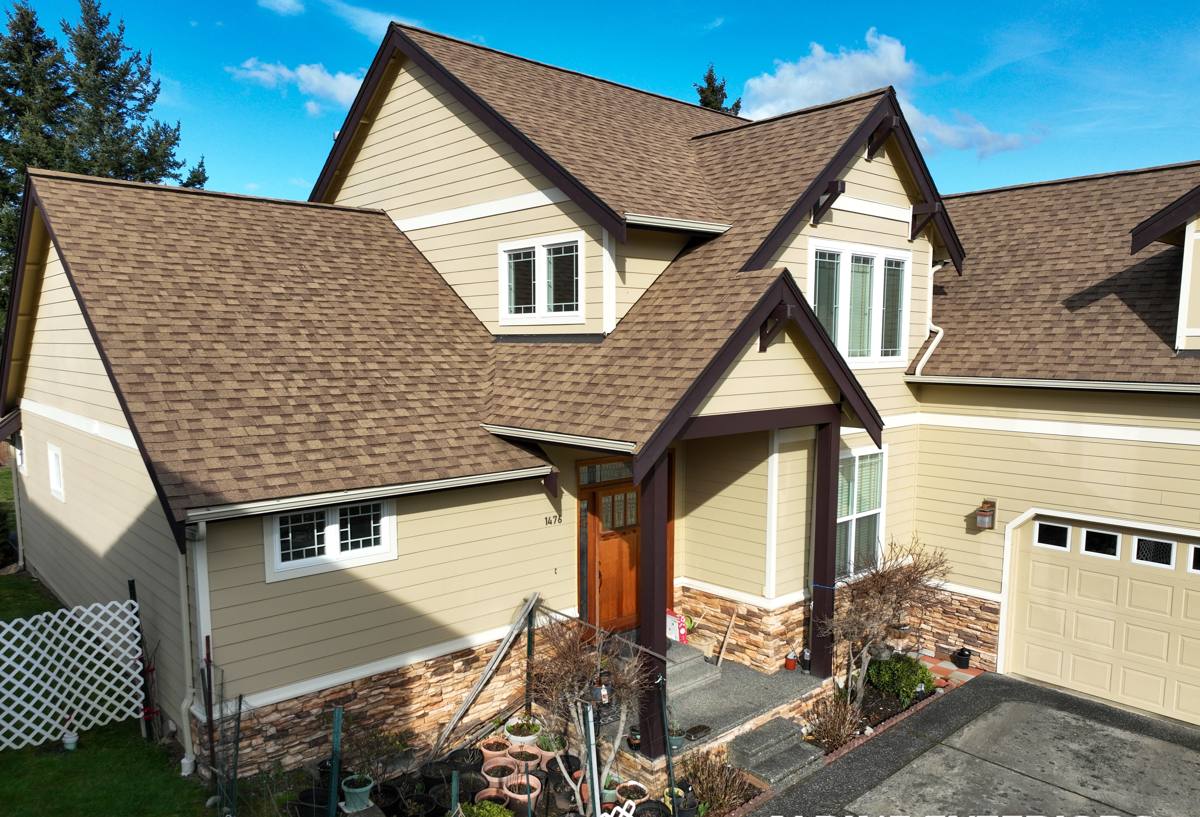
Signs a Roof Is Due for Full Replacement, Not Another Patch
Patch repairs make sense for an isolated problem on an otherwise sound roof. They stop making sense once the underlying material and underlayment are aging across the whole roof, because at that point every new patch is treating a symptom while the rest of the roof keeps deteriorating on the same timeline. Here's what tends to signal it's time for a full replacement rather than another repair:
- Granule loss and bald spots across multiple slopes, not just one localized area
- Shingles that are curling, cupping, or cracking rather than lying flat
- Moss or algae growth that keeps returning after cleaning, especially on shaded slopes
- Soft spots or sagging visible when walking the roof or viewed from the attic side
- Daylight visible through the roof deck from inside the attic
- Leaks that have shown up at more than one penetration or location
- A roof at or past its expected service life, with a history of repeated repairs in the same areas
Choosing a Roofing System Built for This Coastline
There isn't one universally "right" roofing material — the right choice depends on the home's design, budget, and how much long-term maintenance the owner wants to take on. What matters is choosing with this specific climate in mind rather than a generic recommendation. Here's how the common options compare on the factors that actually matter around Friday Harbor:
| Factor | Architectural Asphalt Shingle | Standing Seam Metal | Synthetic Composite |
|---|---|---|---|
| Wind resistance | Good with proper nailing and rated products | Excellent, minimal uplift risk when installed correctly | Good, varies by product line |
| Moss and algae resistance | Better with algae-resistant granules; still needs shaded-slope maintenance | High — smooth surface gives moss little to grip | Moderate to high depending on surface texture |
| Salt-air corrosion risk | Low for the shingle itself; fasteners need corrosion-resistant coating | Depends heavily on panel and fastener metal — must be rated for coastal exposure | Low, core material is non-metallic |
| Typical maintenance | Periodic moss treatment and gutter clearing on shaded slopes | Minimal — occasional fastener and seam check | Low to moderate |
| Upfront cost | Lowest of the three | Highest | Mid-range to high |
Whichever surface material a homeowner picks, the roof's real coastal durability comes as much from the fastener grade, flashing metal, and ventilation design underneath it as from the shingle or panel itself. A premium surface material installed with the wrong fasteners or poor ventilation will still underperform here.
Underlayment and Ventilation Matter As Much As the Surface Material
A synthetic underlayment across the whole deck, with self-adhered ice-and-water membrane at eaves, valleys, and around every penetration, gives a roof a real second line of defense against wind-driven rain that gets past the primary surface. Balanced intake and exhaust ventilation matters just as much — a roof deck that can't breathe traps moisture underneath it, which is exactly the damp, dark environment that encourages rot in the decking and moss growth on the surface above it. On a shaded, moss-prone property, ventilation isn't a minor spec detail — it's one of the bigger levers for how long the roof actually lasts.
What a Correct New Roof Installation Actually Involves
A roof that's going to hold up through repeated wet seasons here needs every layer done right, not just a new surface material laid over the old problems. A correct installation includes full tear-off to the bare deck, an inspection and repair of any damaged sheathing before anything new goes down, drip edge at all eaves and rakes, ice-and-water shield at eaves, valleys, and penetrations, a synthetic underlayment across the full deck, correct flashing at every chimney, vent, skylight, and wall intersection, a proper starter course, field material installed to the manufacturer's exposure and fastening spec, a ridge vent tied into a balanced ventilation system, and a full site cleanup including a magnetic sweep for stray nails.
Flashing Details That Get Skipped on Rush Jobs
Flashing is where a lot of preventable leaks actually start, and it's also where corners get cut when a crew is moving fast. Step flashing woven correctly at every wall intersection, proper counter-flashing at chimneys instead of a bead of caulk standing in for it, quality pipe boots rather than the cheapest stock option, and valley flashing installed to shed wind-driven rain rather than just standing rainfall — these are the details that separate a roof that handles a real coastal storm from one that starts leaking at the first sideways rain. None of this is visible once the roof is finished, which is exactly why it matters to know it was done right in the first place.
How We Approach a Roof Replacement in Friday Harbor
A roof replacement on San Juan Island has to account for weather windows and ferry-dependent material delivery in a way a mainland job doesn't, so sequencing and staging matter. Our process generally runs:
- On-site inspection of the existing roof, decking, and ventilation, followed by a written estimate and material recommendation
- Material selection and delivery scheduled around ferry logistics and a realistic weather window
- Full tear-off to the bare deck, with the old material hauled off the site
- Deck inspection and any needed sheathing repair before new material goes down
- Installation of drip edge, ice-and-water shield, underlayment, and flashing at every penetration and intersection
- Installation of the field roofing material to manufacturer spec, followed by ridge venting tied into the home's ventilation system
- Full site cleanup, including a magnetic nail sweep of the yard and driveway
- Final walkthrough with the homeowner and all warranty paperwork handed over
Weather and ferry scheduling both factor into how a project gets sequenced. We build the timeline around a realistic dry window rather than promising a date and hoping the weather cooperates, and we plan material delivery early enough that a missed ferry connection doesn't stall a tear-off with the deck exposed.
Cost Factors in a Friday Harbor Roof Replacement
Every roof is different, so a specific number isn't useful until we've actually measured the roof and assessed its condition — but the factors that move the price are consistent:
| Factor | Why It Affects Cost |
|---|---|
| Roof size and pitch | More surface area and steeper pitches mean more material and more labor time |
| Number of existing layers | Tearing off multiple old layers takes more labor and disposal than a single layer |
| Decking condition | Rotted or soft sheathing found during tear-off needs replacement before new material goes down |
| Material choice | Asphalt, metal, and synthetic systems carry different material and labor costs |
| Roof complexity | Valleys, dormers, skylights, and chimneys all add flashing labor and material |
| Site access and logistics | Material staging and delivery on an island adds planning time that a mainland job doesn't require |
In broad terms, a straightforward single-layer tear-off on an average home runs in the low-to-mid five figures, with steep pitches, multiple old layers, extensive deck repair, or a metal system pushing that higher. We'd rather give an honest range up front and a firm number after inspection than quote blind.
What to Look for When Hiring a Roofing Contractor in Friday Harbor
Roofing is one of the few home projects where a mistake stays hidden until it fails, so vetting the contractor matters more than most other trades. Before hiring anyone for a roof replacement on San Juan Island, check for:
- A current Washington contractor license and active liability insurance
- Manufacturer certification for the specific roofing system being quoted
- A written scope that names the underlayment, ice-and-water shield, and flashing details, not just "new shingles"
- A clear plan for tear-off disposal and site cleanup, including nail sweep
- A realistic project timeline that accounts for weather and island delivery logistics
- Workmanship and manufacturer warranty terms spelled out in writing before work starts
A contractor who can answer those questions specifically, rather than in general reassurances, is telling you something real about how they run a job.
Why Local, San Juan County Experience Matters
A crew that already works Friday Harbor and the rest of San Juan County knows the ferry schedule, knows how to stage materials so a job doesn't stall waiting on a delivery, and has seen firsthand how salt air and shaded canopy treat fasteners, flashing, and shingle surfaces over time. That's a different starting point than a crew that takes an occasional island job and specs the work the same way they would on the mainland. Given what driving rain, salt air, and a long moss season do to a roof over 20-plus years, that local familiarity shows up in the details that actually determine how long the roof lasts.
If you're planning a new roof for a home in Friday Harbor or anywhere else in San Juan County, we're glad to come take a look, walk the roof, and give you a straight assessment of its condition and what we'd recommend. Reach out below for a free, no-pressure estimate.