 Orcas Island Siding
 Why North Beach Decks Take a Different Kind of Beating
North Beach sits close enough to the water that every deck out here deals with three things a deck in a sheltered inland yard rarely has to: salt-laden air, wind-driven rain that gets pushed sideways into ledger boards and railings, and a long stretch of the year — late fall through spring, sometimes longer in shaded yards — where moss, algae, and lichen have every reason to take hold on horizontal wood surfaces. None of that is exotic knowledge to anyone who's lived on Orcas Island for a while, but it matters a lot when you're choosing lumber, fasteners, and a build sequence for a deck that's supposed to last.
A deck built the same way you'd build one in a dry inland part of San Juan County will usually look fine for the first year or two. The problems show up later — fastener corrosion bleeding rust streaks into the boards, a ledger connection that's been quietly trapping moisture against the house, or a walking surface so slick with moss by February that it's genuinely unsafe. Building for North Beach's conditions from day one costs a little more up front in material choices and detailing. It costs a lot less over the life of the deck.
What a Deck Built for This Coastline Actually Needs
Correct deck construction isn't just picking a nice-looking decking board and screwing it to some joists. On a site exposed to salt air and heavy rain, the framing, fasteners, and drainage details underneath the visible surface do most of the work of keeping the deck sound for decades.
Fasteners and Hardware That Won't Corrode
Standard galvanized fasteners hold up fine in a lot of the country. Close to saltwater, they're often the first thing to fail — you'll see it as rust streaking or, worse, hardware that's lost real strength after a handful of years. For North Beach builds we use stainless steel or high-grade coated fasteners and structural hardware rated for coastal exposure, including joist hangers, ledger bolts, and post bases. It's a modest cost difference on the material invoice and a real difference in how the structure ages.
Footings and Framing for Sloped, Rocky Ground
A lot of North Beach lots have the terrain you'd expect on this side of Orcas Island — sloped, sometimes rocky or with shallow soil over bedrock, occasionally with limited access for equipment. Footing design has to respond to what's actually in the ground on your lot, not a generic assumption. That can mean deeper concrete piers, helical piles where digging conventional footings isn't practical, or engineered beam spans that let us set fewer posts in awkward spots. We figure this out during the site visit, not after the crew shows up with a truck full of standard lumber.
Drainage and Airflow Underneath
Decks that trap moisture underneath — from poor grading, blocked airflow, or a ledger board that isn't properly flashed — are the ones that develop rot and mold problems, especially with the rainfall this part of Washington gets. Proper flashing at the ledger, a water-shedding gap where decking meets the house, and grading or drainage that moves water away from posts and footings are not optional extras. They're the difference between a deck that needs attention in year five and one that doesn't need real attention for twenty-plus years.
Choosing Decking Material for Salt Air and Moss
There's no single "best" decking material for every North Beach home — it depends on your budget, how much upkeep you want to do, and how exposed the deck is to salt spray and shade. Here's how the common choices actually compare in this climate.
| Material | Moisture & Salt Air Behavior | Moss/Algae Resistance | Maintenance | Relative Cost |
|---|---|---|---|---|
| Cedar | Naturally decay-resistant, but surface graying and moisture uptake happen faster near saltwater | Needs regular cleaning and periodic treatment to stay ahead of growth | Annual cleaning, periodic sealing/staining | Mid |
| Pressure-Treated Pine | Treated for rot resistance; fasteners and hardware must be rated to match the treatment chemicals | Prone to moss in shaded, damp spots without upkeep | Annual cleaning, periodic sealing | Lowest |
| Composite Decking | Doesn't absorb moisture or rot; performance varies by product quality | Textured composites can still host surface moss/algae if never cleaned | Occasional washing, no sealing/staining | Mid-High |
| PVC / Capped Polymer | Fully moisture-resistant, doesn't support wood rot | Smoother surface sheds moss buildup more easily than wood-grain composites | Occasional washing | Highest |
We're not tied to one brand or material, and we'll tell you honestly where each option makes sense. A shaded, north-facing deck that's going to sit damp for months collects moss no matter what you put down — the real variable is how easy that material is to clean and how much it degrades if you fall behind on maintenance some years. Wood costs less up front and asks more of you over time; composite and PVC cost more up front and ask less of you later. We size that trade-off against your budget and how you actually plan to use and maintain the space.
Railings, Stairs, and Wind Exposure
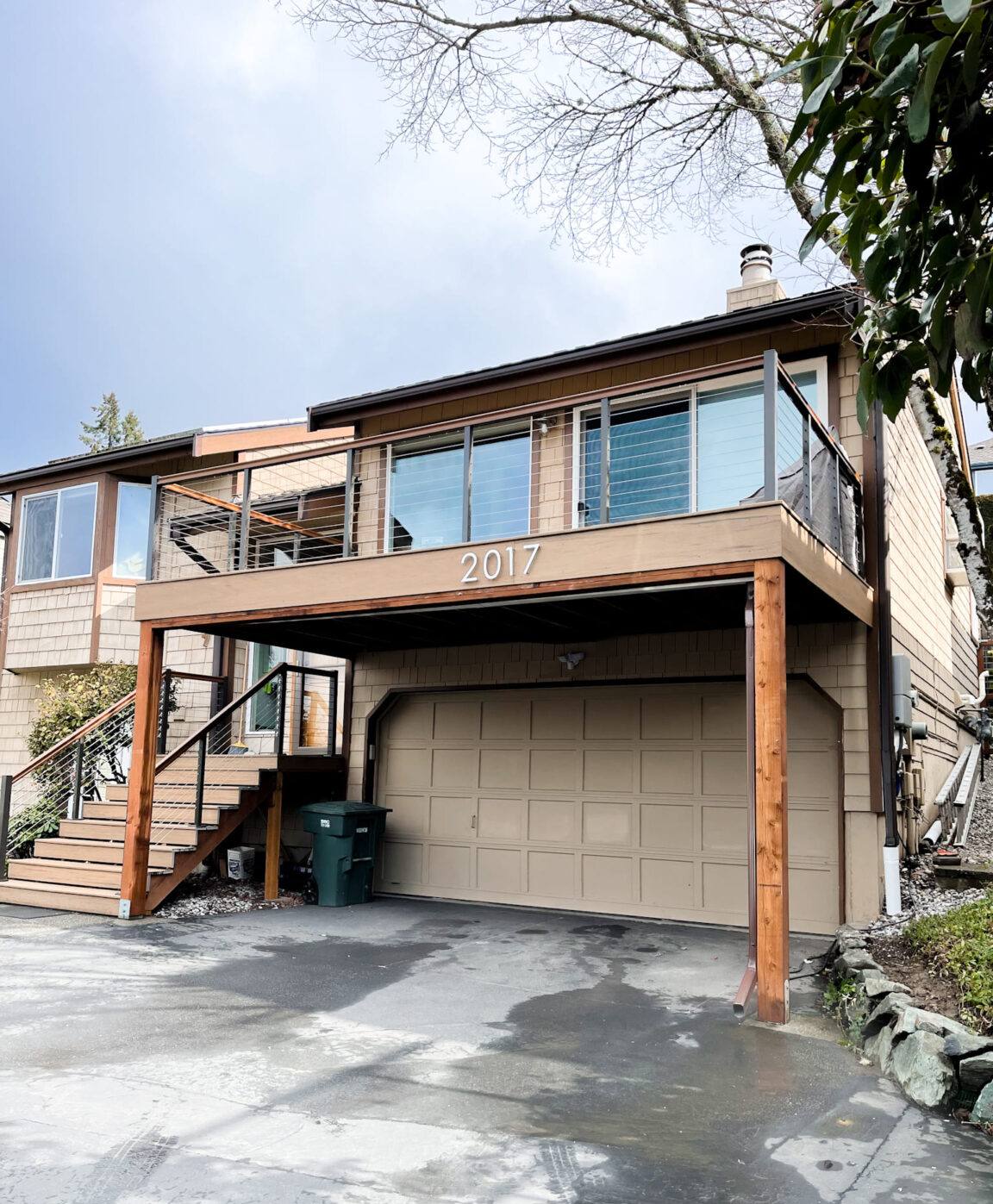
Elevated decks with a water view are common on this stretch of the island, and elevation plus open exposure means wind loads on railings are a real design consideration, not an afterthought. Railing posts need to be properly through-bolted or anchored — not just toe-screwed — to hold up against sustained wind and the occasional real storm off the water. Stair stringers and treads get the same fastener and framing treatment as the rest of the deck, since stairs see concentrated foot traffic and are often the first place moss buildup turns into a slip hazard.
Where a deck's whole purpose is the view, we also think about baluster spacing and rail height that meet code without turning the railing into a visual wall between you and the water — there's usually a way to do both.
Our Deck Building Process
- Site visit and assessment: We look at slope, soil, sun/shade exposure, proximity to the water, and how the space will actually be used before recommending anything.
- Design and material selection: We walk through decking, railing, and structural options with honest trade-offs — no upselling you into a material your site doesn't need.
- Permitting: We handle the San Juan County permit process for the project, including any shoreline-related requirements that apply to your specific lot.
- Framing and footings: Built to the ground conditions on your lot, with coastal-rated hardware and fasteners throughout.
- Decking, railing, and finish work: Installed to shed water correctly and hold up to salt air from the start.
- Walkthrough: We go over the finished deck with you, including what maintenance it actually needs — not a generic checklist, but what applies to your material and your site.
Maintenance North Beach Decks Actually Need
Every deck out here needs some seasonal attention — the question is how much, and that depends heavily on the material and how shaded the deck is. A basic annual routine goes a long way toward avoiding bigger repairs:
- Sweep debris and standing organic matter (leaves, needles) off the deck surface regularly, especially into fall
- Wash the surface at least once a year — more often in shaded or north-facing areas — to keep moss and algae from establishing
- Check railing posts and stair connections annually for looseness or corrosion at fastener points
- Inspect ledger flashing and the gap where decking meets the house for signs of trapped moisture
- Clear leaves and debris from underneath the deck to keep airflow moving and reduce moisture buildup
- For wood decking, reapply sealant or stain on the schedule the product calls for — don't wait until it's visibly failing
Permits and Local Considerations
Deck construction on Orcas Island falls under San Juan County's permitting requirements, and depending on how close your lot is to the shoreline, that can involve additional shoreline development review. We handle this as part of the project rather than leaving it for the homeowner to sort out, and we'll tell you upfront if your specific lot is likely to need extra time in the permitting process because of its location.
Material delivery to Orcas Island also runs through the ferry system, which means lead times for specialty decking or hardware need to be planned into the schedule rather than treated as a same-week decision. We build that into our timelines from the start so it doesn't turn into a surprise delay partway through your project.
Why Hire a Crew That Already Works North Beach
A contractor who mostly builds decks in drier, more sheltered parts of the county can still do competent framing — but they may not default to coastal-rated fasteners, may not think through ledger flashing for driving rain, and may not have a feel for how fast moss takes hold on a shaded North Beach lot. Those aren't dramatic mistakes on day one. They're the kind of gaps that turn into a rusted railing bracket or a soft spot near the ledger a few years down the line.
Working regularly in this part of San Juan County also means fewer surprises on logistics — ferry-dependent material scheduling, typical soil and slope conditions on North Beach lots, and what the county actually wants to see in a shoreline-adjacent permit application. That familiarity translates into a smoother project and a deck that's built correctly the first time for the conditions it actually has to survive.
If you're planning a new deck or replacing one that hasn't held up to the salt air and rain, we're happy to come take a look and give you a straightforward, no-pressure estimate — just fill out the form below.