 Orcas Island Siding
 Why Decks Wear Out Faster in Obstruction Pass
Obstruction Pass sits on the exposed east side of Orcas Island, where salt-laden air off the water meets thick fir and cedar canopy that keeps much of the ground and many decks in shade for long stretches of the year. That combination is hard on outdoor structures in a specific way: the salt air accelerates corrosion in fasteners and hardware, while the shade and moisture keep wood surfaces damp long after a storm has passed. Add San Juan County's long moss season — roughly October through May — and you get decks that grow a green film in the joints and low spots faster than they would inland, holding water against the boards and framing underneath.
None of this means a deck can't last decades out here. It means the materials, fasteners, and drainage details have to be chosen for this specific environment, not for a generic Pacific Northwest listing. A deck built the same way you'd build one in a dry inland subdivision will show rot, fastener staining, and soft spots years earlier in Obstruction Pass.
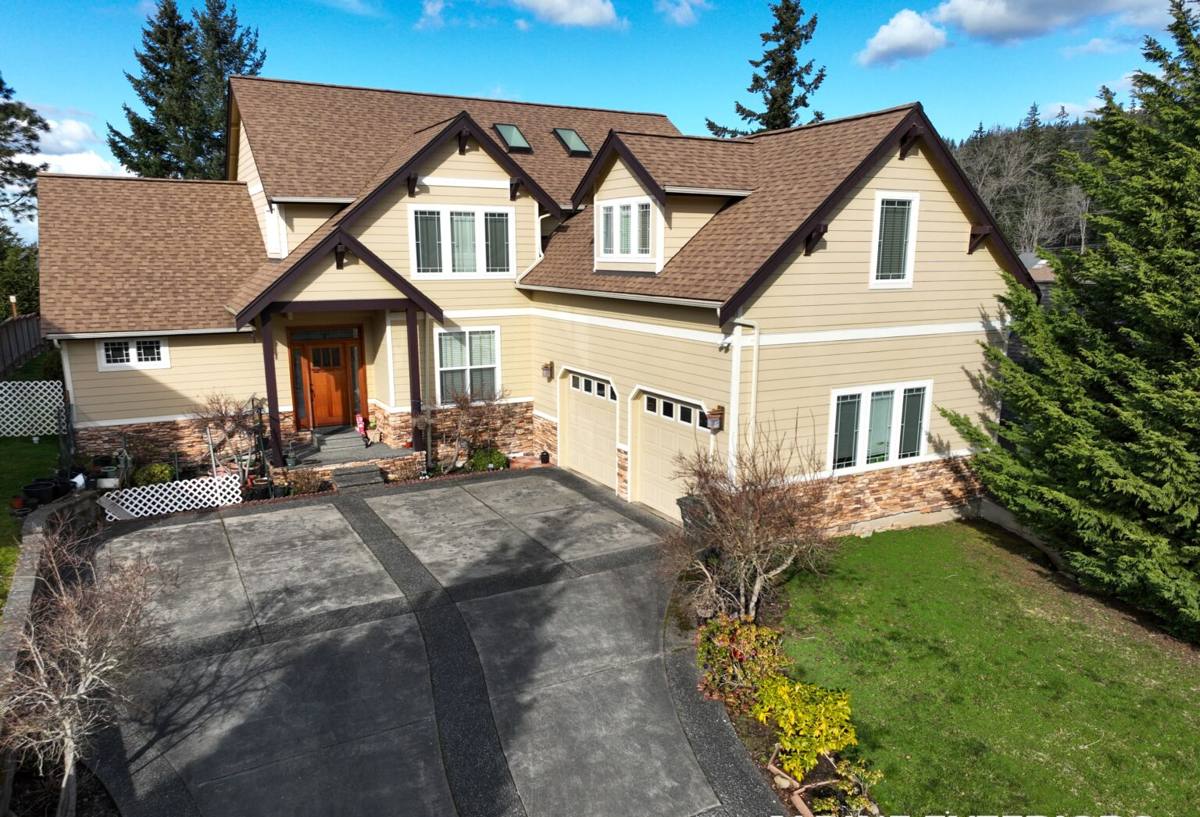
Repair, Resurface, or Full Replacement?
Homeowners often call asking for a "repair" when what the deck actually needs is a full replacement. The difference matters because it changes both the cost and how long the fix will last.
Signs you're looking at a repair
- One or two boards are cupped, splintering, or soft, but the rest of the decking is sound
- Railings are loose but the posts themselves aren't rotted at the base
- Surface graying or mild moss growth with no soft spots when pressed
Signs the deck needs full replacement
- Soft or spongy decking in multiple areas, especially near the house or in low, shaded corners
- Rust streaking or crumbling around fastener heads, a sign moisture has been sitting in the wood
- Ledger board (where the deck attaches to the house) shows any softness — this is a structural safety issue, not cosmetic
- Joists or beams visible from underneath show rot, splitting, or insect damage
A deck that's failing at the ledger or the framing level isn't a candidate for new boards on top of old problems. Replacement means starting from the structure and building up correctly, with the right materials for this climate at every layer.
Materials That Actually Hold Up Here
The decking surface gets the attention, but in a salt-air, high-moss environment the framing and fasteners matter just as much. We steer clients toward material combinations that resist both the salt corrosion and the constant damp, rather than whatever is cheapest at the yard that week.
| Material | How it handles salt air & moss | Trade-off |
|---|---|---|
| Pressure-treated fir/pine framing | Good rot resistance when properly ventilated underneath | Needs stainless or coated fasteners nearby, or corrosion starts early |
| Cedar decking | Naturally rot- and insect-resistant, ages to a natural gray | Needs periodic cleaning to keep moss from taking hold in shaded areas |
| Composite decking | Doesn't absorb moisture into the board itself, resists moss staining | Can still grow surface moss film if never cleaned; hidden framing still needs real wood care |
| Standard hot-dip galvanized fasteners | Adequate inland | We generally avoid these near the water — salt air corrodes them faster than the wood around them lasts |
| Stainless steel fasteners & hardware | Best resistance to salt-air corrosion | Higher upfront cost, but avoids the rust-streaking and loosening we see on older Obstruction Pass decks |
Our standard for anything within the marine-influenced zone of Orcas Island is stainless or high-grade coated fasteners throughout, regardless of what decking material is chosen. It's a small percentage of the total job cost and it's the single biggest factor in whether a deck is still tight and quiet in fifteen years or loose and rust-stained in five.
A Note on Product Choice
We'll talk through cedar, treated wood, and composite options honestly, including where each one is more maintenance than homeowners expect. Composite is often marketed as "no maintenance," but in a shaded, moss-prone spot like Obstruction Pass it still needs periodic washing to keep organic growth from taking hold on the surface. We'd rather tell you that upfront than have you surprised later.
What's Underneath Matters More Than the Boards on Top
Framing, ledger attachment, and drainage are where most premature deck failures start, and they're invisible once the decking is installed. A correct replacement addresses:
- Ledger flashing — proper metal flashing and a gap or membrane between the ledger and the house siding, so water shed off the deck can't wick into the wall behind it
- Joist protection — a barrier or coating on the tops of joists where standing water does the most damage over time
- Airflow underneath — enough clearance and venting so the underside of the deck can actually dry out between rains instead of staying damp all winter
- Post bases — posts set on proper standoff hardware rather than resting directly on concrete or soil, which is a common source of hidden base rot on older Orcas Island decks
- Fastening hardware — joist hangers, structural screws, and connectors matched to the corrosion environment, not just whatever ships with a standard hardware kit
Our Deck Replacement Process
- On-site assessment — we check the ledger, framing, and any post bases we can access, not just the surface boards, so the estimate reflects what's actually there
- Honest scope conversation — we tell you plainly whether this is a resurface or a full tear-out, and why
- Material selection — walking through decking, fastener, and hardware options suited to Obstruction Pass conditions and your budget
- Tear-out and disposal — old decking, and any framing that doesn't pass inspection, removed and hauled off
- Structural rebuild — ledger flashing, joists, post bases, and connectors brought up to a standard built for salt air and long wet seasons
- Decking and railing installation — installed with attention to drainage slope and gaps that let the deck actually dry
- Final walkthrough — going over care and cleaning specific to the material you chose
Permits and Structural Sign-Off
Deck replacement work on Orcas Island falls under San Juan County's building permit process, and anything involving structural changes to the ledger, framing, or footprint typically needs a permit and inspection. This isn't paperwork for its own sake — the ledger connection is the single most common point of structural failure on older decks, and an inspection catches problems before they become expensive or dangerous. We handle the permit process as part of the job rather than leaving it for the homeowner to sort out separately.
What Drives the Cost
Every deck is different, but the same handful of factors move the price up or down on most Obstruction Pass projects.
| Factor | Why it matters |
|---|---|
| Framing condition | A structure that needs full rebuild costs more than one where the framing is sound and only decking/railing is replaced |
| Decking material | Cedar, treated wood, and composite all sit at different price points, with composite generally the highest upfront |
| Fastener and hardware grade | Stainless hardware costs more than standard galvanized, but is the right call this close to salt water |
| Site access | Ferry-dependent material delivery and tighter, wooded lots common on Orcas Island can add time compared to easy-access mainland jobs |
| Deck size and height | Larger decks and those with significant elevation change (stairs, multiple levels) take more labor and material |
| Railing style | Simple wood railing costs less than cable, glass, or composite railing systems |
We give a firm, itemized estimate before any work starts, so there's no guessing about where the money is going.
Keeping a New Deck Healthy in This Climate
A well-built deck still needs some seasonal attention in a moss-prone, salt-air location. This is the basic upkeep we recommend to every Obstruction Pass client after a replacement:
- Sweep or blow off fallen needles and leaves regularly in fall — trapped organic debris is what starts moss growth in shaded corners
- Rinse salt spray and grime off the surface a few times a year, especially on decks with direct water exposure
- Check railings and fastener heads once a year for early rust staining or looseness
- Keep gutters and downspouts near the deck clear so runoff isn't dumping extra water onto or under the structure
- Re-oil or reseal wood decking on the schedule appropriate to that product — don't wait until it's visibly gray and dry
Why It Matters to Hire a Crew That Already Works Obstruction Pass
A lot of deck problems we get called out to fix aren't from bad workmanship in general — they're from decks built to specs that work fine elsewhere but weren't adjusted for this specific stretch of coastline. Crews unfamiliar with the area sometimes use standard fastener grades, skip extra ledger flashing, or under-vent the framing because that's what works in a drier, less shaded location. On Orcas Island, and specifically in a marine-exposed, moss-heavy spot like Obstruction Pass, those shortcuts show up early. Working this area regularly means we already know which details can't be skipped here, and we plan material logistics — including ferry scheduling for delivery — into the timeline from the start rather than as a surprise delay.
If your deck is showing soft spots, rust staining, or persistent moss, or if you're just ready to replace an aging deck before it becomes a safety issue, we're happy to take a look and walk the property with you. Reach out for a free, no-pressure estimate — there's a form below to get started.