 Orcas Island Siding
 Why Obstruction Pass Puts Extra Demands on a Window
Homes around Obstruction Pass sit close to the water and under a lot of tree cover, which is a beautiful place to live but a hard environment for a window. Salt-laden air moves in off the water and slowly works on anything metal — hinges, cranks, fasteners, and flashing that isn't rated for it. Winter storms bring driving rain that comes in sideways as much as it falls straight down, which means water gets pushed at a window opening from angles that a basic installation was never built to handle. And because so many lots here are wooded and shaded, that moisture doesn't dry out quickly. San Juan County's long moss season keeps trim, sills, and siding damp for months at a time, which accelerates rot in wood components and breaks down caulk and sealants faster than they'd fail in a drier, sunnier location.
None of this means a window installation on Orcas Island has to be complicated. It means the details that get skipped on an easy inland job — proper flashing sequencing, the right fastener metal, sealants rated for constant moisture — are the details that actually matter here.
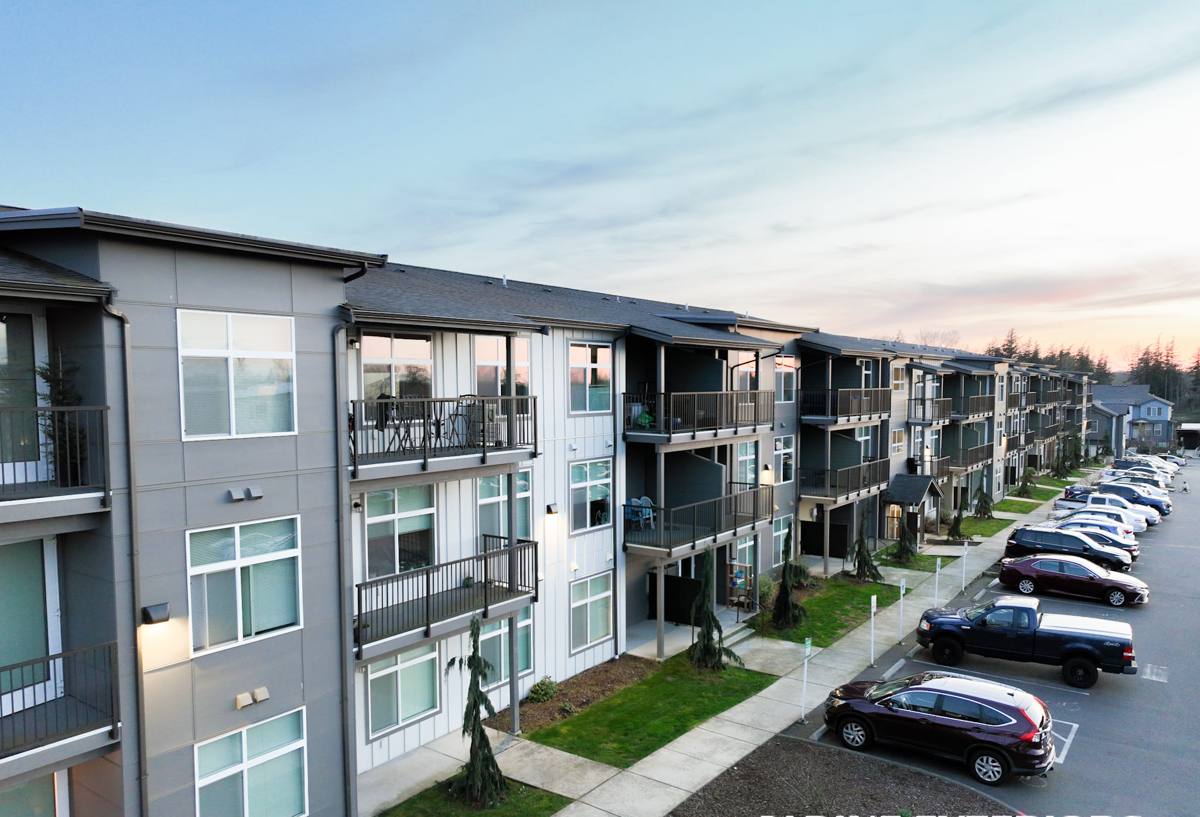
Signs Your Current Windows Are Losing That Fight
Most homeowners don't think about their windows until something goes wrong. In this climate, the early warning signs are usually subtle and worth catching before they turn into a bigger repair:
- Fogging or a hazy film between the panes of a double-pane window — the seal has failed and the gas fill is gone
- A sill or lower corner that feels soft, spongy, or spongy-soft when you press on it
- Paint or finish peeling or blistering on wood trim around the frame
- A noticeable draft near the frame on windy days, even with the window latched shut
- Dark staining, streaking, or a persistent green/black tinge on the sill or exterior casing
- Windows that are hard to open, close, or lock — frames can swell or warp as moisture gets into the wood or the sash sags
- Visible daylight or gaps around the frame from outside
Any one of these on its own isn't an emergency. Several of them together, especially on a window facing the water or prevailing weather, usually means moisture has already gotten past the original flashing and it's worth having someone take a real look.
What a Correct Installation Actually Involves
Removing the Old Window and Checking the Opening
The old window comes out, and before anything new goes in, the rough opening gets inspected — sill, jambs, and the header above. This is the point where hidden rot shows up, especially on older homes near the water where a previous installation may have skipped a sill pan or used the wrong caulk. Any soft or damaged framing gets addressed before the new window goes in. Skipping this step is how a brand-new window ends up leaking within a couple of winters, because the problem was never in the window — it was in the opening underneath it.
Flashing and Water Management
This is the part that matters most in a driving-rain climate. A correct installation builds a sill pan with a back dam so any water that does get past the window has somewhere to go besides your wall cavity, and integrates the flashing tape with the weather-resistive barrier in the right shingle-lap order — each layer overlapping the one below it, so water is always directed outward and down, never trapped behind a seam. Head flashing above the window gets the same attention. It's slow, methodical work, and it's the difference between a window that sheds a coastal storm and one that quietly feeds water into the wall.
Sealing, Insulation, and Fasteners
Around the frame, low-expansion foam or backer rod and sealant fill the gap without bowing the frame out of square — over-filling with high-expansion foam is a common shortcut that causes windows to bind or operate poorly within a year. On the exterior, we use fasteners rated for a marine environment — stainless steel or hot-dip galvanized, not the standard-coated screws that will show rust streaks down your siding within a couple of seasons. Interior air sealing gets finished last, since a tight interior seal paired with a well-flashed exterior is what actually keeps a home comfortable and dry.
Choosing a Window That Can Handle the Climate
Material choice matters more here than it would somewhere drier and further from salt water. There's no single "best" window — it depends on your home's exposure, your maintenance appetite, and your budget.
| Material | Salt Air / Moisture Behavior | Maintenance | General Cost Position |
|---|---|---|---|
| Vinyl | Won't corrode or rot; performs well near the water when hardware is quality-grade | Low — occasional cleaning | Lower |
| Fiberglass | Very stable in moisture and temperature swings; holds paint well if a custom color is wanted | Low to moderate | Mid to upper |
| Wood-clad (exterior clad, wood interior) | Good if the cladding and flashing details are done right; the wood interior needs to stay dry and sealed | Moderate — interior finish upkeep | Upper |
| Aluminum | Strong and slim-profile, but bare aluminum hardware and trim can pit and corrode faster in salt air unless properly coated | Moderate | Mid to upper |
Solid wood windows without a protective exterior cladding are the one category we steer people away from directly on the water side of a home — not because wood is a bad material, but because maintaining bare exterior wood against constant salt air and moss-season moisture is a demanding, ongoing job, and the trade-off usually isn't worth it for most owners. Where wood's warmth and appearance matter to a homeowner, a wood-interior/clad-exterior unit gets that look with far less upkeep.
Our Installation Process
- Assessment and measurement — we look at each opening, note any signs of existing water intrusion, and take precise measurements.
- Material selection and ordering — we help you weigh material trade-offs for your home's exposure, then order. Because everything for an island job has to come over on the ferry, we build in realistic lead time and try to order everything needed in one pass.
- Scheduling around weather — we plan installation for a dry window in the forecast whenever possible, since an open rough opening in a rainstorm is exactly what we're trying to avoid.
- Removal and opening inspection — old window out, framing checked, any repair needs discussed with you before we move forward.
- Flashing and installation — sill pan, back dam, shingle-lapped flashing tape, correct shimming and fastening.
- Sealing and finish work — interior and exterior sealant, trim work, and cleanup.
- Walkthrough — we test operation and locks with you before we consider the job done.
Permits, Access, and Other Obstruction Pass Realities
San Juan County generally treats a straightforward like-for-like window replacement differently than a job that resizes an opening or is part of a larger remodel — the latter is more likely to require a permit. We check the scope of your project against county requirements before work starts and handle that paperwork where it's needed, rather than leaving you to figure it out.
Access is its own consideration out here. Obstruction Pass homes tend to sit on quieter, narrower roads with limited space for staging materials, and some properties are seasonal or vacation homes where the owner isn't on-island during the work. We coordinate scheduling and access details in advance so a trip isn't wasted, and because everything for the job travels by ferry, getting measurements and material orders right the first time matters — a missed detail that requires a return trip costs real time on this side of the water in a way it wouldn't inland.
What Affects the Cost of a Window Installation Here
Every home is different, so any number below is a general range, not a quote — but these are the factors that move the price up or down.
| Factor | Effect on Cost |
|---|---|
| Number of windows replaced at once | Doing several windows in one visit spreads out setup and travel costs per window |
| Material chosen | Vinyl runs lower; fiberglass and wood-clad run higher |
| Condition of the existing opening | Rot repair or reframing adds labor and material beyond the window itself |
| Site access | Difficult staging, limited parking, or steep terrain adds time |
| Like-for-like vs. resized opening | Resizing or structural changes add framing work and possibly permitting |
As a rough general sense of the market, a straightforward like-for-like window replacement often lands somewhere in the low-to-mid hundreds to a couple thousand dollars per window installed, with the material and any needed repair work being the biggest swing factors — a real number only comes from seeing the actual opening.
Why Hiring a Crew That Already Works Obstruction Pass Matters
A crew that hasn't worked this stretch of Orcas Island before is learning on your job — figuring out the ferry schedule, finding out mid-project that a permit was needed, or specifying hardware that looks fine on paper but corrodes within two winters of salt exposure. A crew that already works Obstruction Pass regularly has already solved those problems: we know to order everything in one pass instead of making costly return ferry trips, we know which fastener and flashing products actually hold up here versus which ones just meet a minimum spec, and we know how San Juan County's permitting process treats a typical window job. That local familiarity isn't a marketing line — it's what keeps your project on schedule and keeps water out of your walls for the long run.
If your windows around Obstruction Pass are showing their age, or you're planning ahead for a replacement before the next storm season, we're happy to come take a look. The estimate is free, there's no pressure, and you'll get a straight answer about what your home actually needs.