 Orcas Island Siding
 Why Roofs Wear Differently on Orcas Island
A roof on Orcas Island earns its keep. Between the salt-laden air coming off the surrounding waters, the long stretches of driving rain typical of the Pacific Northwest, and the shaded, damp conditions that let moss take hold for much of the year, an asphalt shingle roof here works harder than the same roof would thirty miles inland. San Juan County's marine climate doesn't just mean more rain — it means rain that comes sideways in a west wind, humidity that never fully lets a roof dry out between storms, and tree cover that keeps north-facing slopes shaded and damp long after the rest of the roof has dried.
None of that means asphalt shingles are the wrong choice for the island. They're still one of the most practical, cost-effective, and repairable roofing materials available, and a well-installed shingle roof holds up fine under these conditions for decades. But "well-installed" is doing a lot of work in that sentence. The difference between a shingle roof that lasts and one that fails early almost always comes down to details most homeowners never see: what's under the shingles, how the edges and penetrations are flashed, and whether the roof can actually breathe.
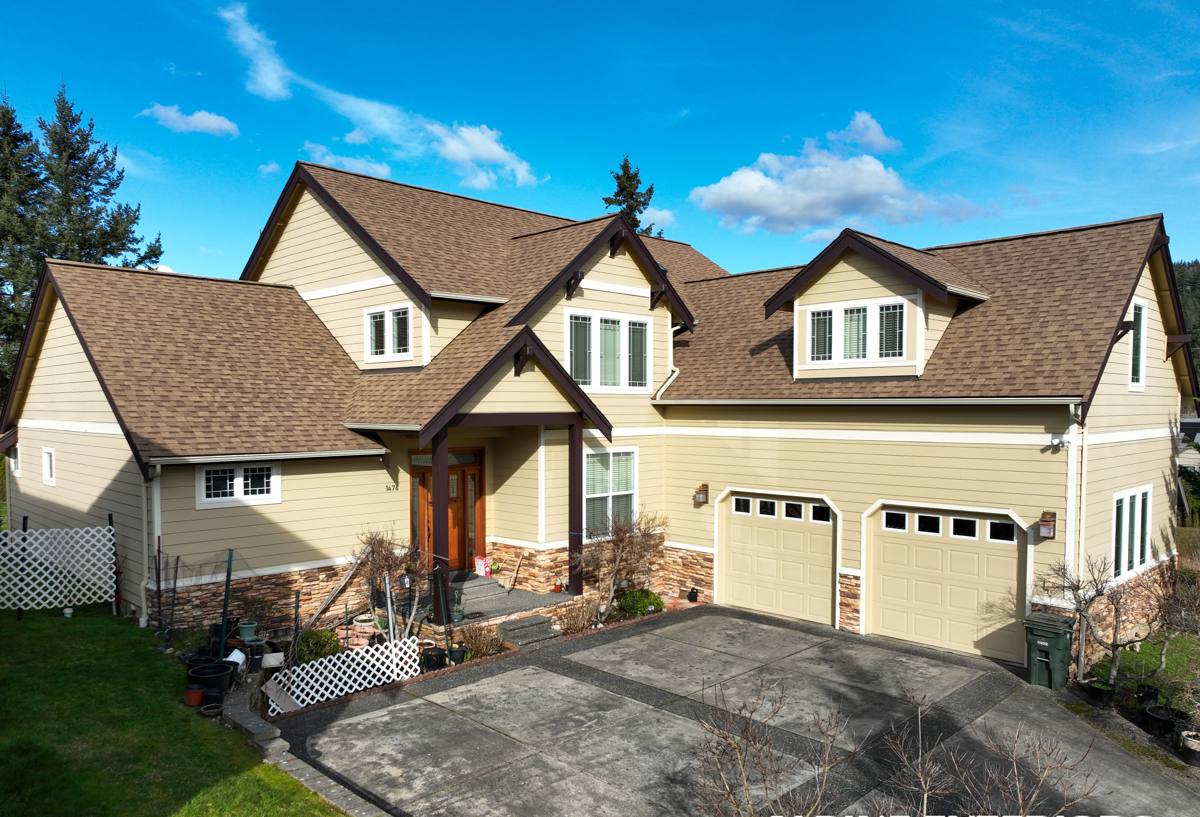
What a Correct Asphalt Shingle Roof Needs in This Climate
Underlayment and Ice-and-Water Protection
On a roof that dries slowly and takes rain from multiple directions, the underlayment matters as much as the shingles themselves. We install self-adhered ice-and-water shield membrane at eaves, valleys, and around every penetration — the spots where wind-driven rain is most likely to find a way in — backed by a synthetic underlayment across the rest of the deck. This isn't an upsell; it's the layer that keeps a roof watertight if a shingle ever gets lifted or damaged in a storm.
Ventilation
A shingle roof in a damp climate needs somewhere for moisture to go. Without balanced intake and exhaust ventilation, warm, moist air gets trapped in the attic, condenses against the underside of the roof deck, and creates the kind of hidden moisture problem that rots sheathing from the inside — long before the shingles themselves show any sign of trouble. We check soffit intake and ridge or box-vent exhaust on every re-roof and correct the balance where it's missing.
Flashing and Fastening
Valleys, chimneys, skylights, and wall-to-roof transitions are where the vast majority of shingle roof leaks actually start — not out in the open field of the roof. Correct step flashing, counter-flashing, and valley metal, properly lapped and sealed, matter more on Orcas Island than in a drier climate, simply because there's more water looking for a way through. We also follow manufacturer nailing patterns exactly; shingles that are underdriven, overdriven, or nailed too high are far more likely to lift in the wind events that roll through the islands every winter.
Choosing the Right Shingle for Orcas Conditions
Not every asphalt shingle is built the same, and the differences matter more here than they would in a mild, dry inland climate. The biggest factor for island homes is algae and moss resistance — standard shingles will develop dark streaking and moss growth noticeably faster under the shade and moisture common on Orcas than shingles with algae-resistant granules built in. Wind rating is the second factor worth understanding, since exposed sites and open water crossings can see stronger gusts than sheltered inland lots.
| Shingle Type | Typical Lifespan | Algae Resistance | Best Fit |
|---|---|---|---|
| Standard 3-tab | 15–20 years | Low unless treated | Budget-conscious, low-slope accessory roofs |
| Standard architectural (dimensional) | 25–30 years | Moderate | Most primary homes with regular upkeep |
| Algae-resistant architectural | 25–30+ years | High — copper- or zinc-infused granules | Shaded, damp, or heavily wooded Orcas lots |
We're happy to walk through specific manufacturer lines during an estimate — several established manufacturers, including GAF, CertainTeed, and Owens Corning, all make algae-resistant architectural products suited to a marine climate. What matters more than the brand name is matching the product's granule technology and wind rating to the specific exposure of your roof.
Moss: The Slow Problem Most Homeowners Underestimate
Moss doesn't damage a roof overnight, which is exactly why it's dangerous. It establishes on the shaded, north-facing slopes first, holds moisture against the shingle surface, and over a long moss season — which on Orcas Island can stretch from fall through spring — it works granules loose and keeps that section of roof wetter than the rest for far longer after every rain. Left unchecked for years, moss can shorten the life of an otherwise sound shingle roof significantly, and thick growth can also work under shingle tabs and lift them.
The fix isn't aggressive pressure washing, which strips granules and does more harm than the moss itself. It's a combination of gentle removal, zinc or copper strips installed near the ridge (rain washing over them naturally inhibits regrowth), keeping overhanging branches trimmed back to let light and air reach the roof, and choosing algae-resistant shingles on the sections most exposed to shade in the first place.
Our Asphalt Shingle Roofing Process
- Inspection and scope. We look at the existing roof, deck condition, ventilation, flashing details, and any moss or moisture history before recommending tear-off versus overlay.
- Deck assessment. Any soft, delaminated, or water-damaged sheathing gets identified and replaced — shingles are only as good as the deck underneath them.
- Underlayment installation. Ice-and-water membrane at eaves, valleys, and penetrations, synthetic underlayment across the field.
- Flashing. New step flashing, counter-flashing, and valley metal installed or reused only where it's still sound.
- Shingle installation. Manufacturer-specified nailing pattern and exposure, with attention to starter courses and ridge caps — two areas where shortcuts show up first.
- Ventilation check. Intake and exhaust balance confirmed or corrected.
- Cleanup and walk-through. Site cleared of debris and nails (we run a magnetic sweep), and we walk the finished roof with you before calling the job done.
Why a Crew That Already Works Orcas Island Matters
Roofing logistics on an island aren't the same as on the mainland. Material deliveries, crew scheduling, and weather windows all have to account for ferry timing, and a contractor unfamiliar with that reality can turn a straightforward re-roof into a multi-week headache. A crew that already works Orcas Island builds ferry logistics and weather-window planning into the schedule from the start, rather than discovering the problem mid-project.
There's also a practical advantage in knowing the island's housing stock — the mix of older cabins, newer builds, and homes with additions built at different times, each with their own roof geometry and quirks. A crew with island experience has seen how these roofs age under San Juan County conditions specifically, not just under generic Pacific Northwest assumptions, and that shows up in better decisions about materials and details on your particular roof.
Cost Factors to Understand Before You Budget
We won't quote a number without seeing the roof, but these are the factors that move the price up or down on most Orcas Island shingle roofing projects:
| Factor | Why It Matters |
|---|---|
| Tear-off vs. overlay | A second layer over existing shingles costs less up front but hides deck problems and shortens the life of the new roof — we recommend tear-off on most homes. |
| Roof pitch and access | Steep or high roofs, and roofs with limited staging access on a given lot, require more safety setup and labor time. |
| Deck repair | Rotted or delaminated sheathing found during tear-off adds material and labor that can't always be predicted in advance. |
| Shingle tier | Standard architectural shingles cost less than algae-resistant or premium lines, but the added resistance often pays for itself on shaded Orcas lots. |
| Complexity of flashing details | Multiple valleys, chimneys, skylights, or roof-to-wall transitions add time regardless of shingle choice. |
A Homeowner's Maintenance Checklist
Between professional inspections, a few simple habits go a long way toward protecting a shingle roof in this climate:
- Clear gutters and downspouts each fall, before the heaviest rain arrives
- Keep overhanging branches trimmed back to reduce shade and debris on the roof
- Watch for dark streaking or green growth on north-facing slopes — early moss, not yet a structural issue
- Check attic ventilation isn't blocked by insulation or storage
- After any major windstorm, look for lifted or missing shingles from the ground rather than climbing up
- Have flashing around chimneys and skylights checked every few years, since sealant and metal both age faster in salt air
If your roof is showing moss, granule loss, or you're just not sure how much life it has left, we're glad to take a look. Fill out the form below for a free, no-pressure estimate on your asphalt shingle roofing project.