 Orcas Island Siding
 Roofing in Olga Takes a Different Kind of Wear
Olga sits on the water side of Orcas Island, which means every roof here is dealing with three things at once: salt-laden air off the sound, long stretches of driving rain, and a moss season that can run most of the year in the shaded, damp spots. None of these are dramatic on their own. Together, over a few winters, they're what turns a roof that looked fine last fall into one that's leaking by spring. A roof repair here isn't just patching a hole — it's figuring out which of those three forces did the damage, and fixing the job so the same failure doesn't come back in eighteen months.
We work on homes across this part of San Juan County, and the roofs in Olga tend to show a specific pattern: metal fasteners corroding faster than they would inland, moss packing into north-facing valleys and behind chimneys, and wind-driven rain finding its way in sideways rather than straight down. A repair that only addresses the visible leak and ignores the cause is a repair you'll be paying for twice.
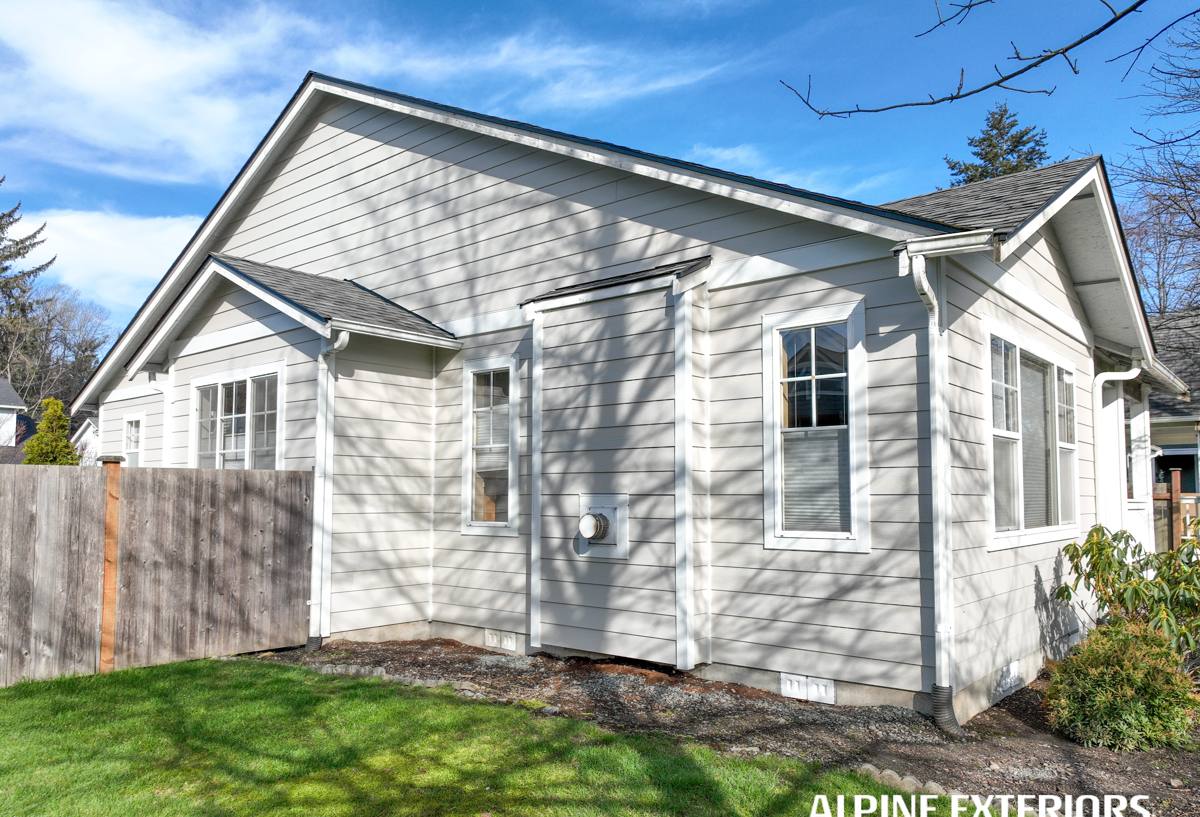
How Salt Air, Rain, and Moss Actually Damage a Roof
Salt Air
Airborne salt accelerates corrosion on anything metal — nail heads, flashing, gutter fasteners, and the metal components inside some shingle and shake systems. Once a fastener starts to corrode, it loses grip, and that's often the first domino in a leak that shows up somewhere else entirely, like a stain on an interior ceiling far from where the water actually got in.
Driving Rain
Storms off the water in this part of Washington rarely come straight down. Wind-driven rain gets pushed sideways and upward under shingle edges, around vent boots, and through any gap in flashing that would never leak in a calm, straight-down rain. This is why a roof can pass a casual visual check and still leak hard during the next real storm — the water is testing joints and laps, not open holes.
Moss and Algae
Shaded roof sections, north slopes, and areas under overhanging trees stay damp longer here than almost anywhere else in the state. Moss holds moisture directly against roofing material, works its way under shingle tabs and shake courses as it grows, and can lift material just enough to let wind-driven rain in behind it. Left alone, moss doesn't just look bad — it's actively prying the roof open.
Signs an Olga Roof Needs Repair Now, Not Later
- Granules collecting in gutters or at downspout outlets (a sign of shingle wear, not just aging)
- Dark streaking or thick moss growth on north-facing slopes or shaded valleys
- Soft spots, sagging, or a slight give underfoot near valleys or chimneys
- Water stains on interior ceilings, especially ones that only appear after wind storms
- Lifted, curling, or missing shingle tabs, particularly along ridge lines and edges
- Rust streaks below metal flashing, vent boots, or exposed fasteners
- Daylight visible through the roof deck from inside the attic
- Gutters pulling away from the fascia, which lets water run behind the roof edge instead of off it
Any one of these on its own might be minor. Two or three together usually mean water has already been getting in longer than the visible damage suggests.
What a Correct Roof Repair Actually Involves
A roof repair done right isn't just swapping out the shingles or shakes that look bad. It starts with tracing the leak to its actual entry point, which is frequently several feet from the stain or drip location, since water travels along the underlayment and framing before it shows itself. From there, the work generally includes:
- Removing damaged and surrounding roofing material to expose the deck and underlayment underneath
- Checking the roof deck itself for soft or rotted wood, which has to be replaced before anything goes back on top
- Inspecting and replacing flashing around chimneys, vents, valleys, and wall intersections — flashing failure is behind more leaks here than worn-out field shingles
- Installing new underlayment in the repaired section, tied properly into the existing roof so water sheds over laps instead of into them
- Matching and installing new roofing material, set with corrosion-resistant fasteners suited to a marine environment
- Clearing moss and treating the surrounding area so growth doesn't immediately undermine the fresh work
Skipping the deck inspection or reusing old flashing to save time is how a "repair" turns into a callback. We'd rather spend an extra twenty minutes confirming the deck is sound than patch over a problem that's still there.
Roofing Materials Common on Orcas Island Homes
The right repair approach depends heavily on what's already on the roof. Here's how the common types hold up under Olga's specific conditions:
| Roofing Type | How It Handles Salt Air | How It Handles Moss | Repair Considerations |
|---|---|---|---|
| Composition (asphalt) shingle | Fasteners are the main vulnerability; the shingle material itself holds up well | Moderate — moss can lift tabs over time in shaded areas | Matching shingle color/style can be hard on older roofs; granule loss signals broader wear beyond the leak point |
| Cedar shake | Handles salt air reasonably well when maintained, but fasteners still corrode | High vulnerability — moss holds moisture directly against wood and accelerates rot | Requires more frequent moss management; individual shake replacement is labor-intensive but very doable |
| Standing seam metal | Coated metal handles salt air well; uncoated or damaged coating corrodes faster | Low — moss struggles to gain a foothold on smooth metal | Repairs focus on seams, fasteners, and flashing rather than field material |
| Membrane/flat roofing | Generally stable, but seams and edge details are the weak points | Low on the field, but debris and organic buildup at drains needs regular clearing | Leaks are almost always at seams, penetrations, or drain flashing, not the membrane field itself |
We'll tell you honestly which category your roof falls into and what that means for repair versus longer-term planning — we're not going to push a full material change when a targeted repair will genuinely hold up.
Our Roof Repair Process
1. On-Site Assessment
We get on the roof, not just in the attic or on a ladder from the ground. That's the only way to actually see flashing condition, moss extent, and fastener corrosion instead of guessing from photos or a driveway look.
2. Honest Diagnosis
We explain what's actually failing and why, including whether it's a contained repair or a sign the roof is nearing the end of its useful life. If a full replacement is genuinely the better long-term value, we'll say so — but we won't recommend one just because a repair is less profitable for us.
3. A Clear, Written Scope
Before any work starts, you get a plain description of what's being repaired, what materials will be used, and what the timeline looks like. No vague line items.
4. The Repair Itself
Deck inspection, flashing work, moss clearing, and material replacement, done in that order so nothing gets covered up before it's checked.
5. Cleanup and Walkthrough
We clear debris, including old moss and granules, and walk the repaired area with you so you know exactly what was done and what to watch for going forward.
Moss and Salt Air Don't Stop After the Repair
A repair fixes the current problem, but Olga's climate doesn't take a break once the work is done. A few habits make a real difference in how long a repair — or the roof around it — actually lasts:
- Keep gutters and downspouts clear so water isn't pooling against roof edges or fascia
- Trim back branches that shade roof sections and keep them damp longer than they need to be
- Have moss physically removed rather than just chemically killed and left in place, since dead moss still holds moisture
- Do a visual roof check after major wind storms, especially ones with strong gusts off the water
- Rinse accumulated salt residue off metal roofing and flashing periodically if the home is directly exposed to onshore wind
What Affects the Cost of a Roof Repair
We're not going to quote a number without seeing the roof, but the honest range for a typical spot repair on an Olga home runs from a few hundred dollars for a small, contained flashing or shingle fix up to a couple thousand for a larger area involving deck replacement. Here's what actually drives that range:
| Factor | Why It Matters |
|---|---|
| Extent of deck damage | Rotted plywood or sheathing has to be cut out and replaced before new roofing goes on — this is often the biggest cost swing |
| Roof pitch and access | Steeper roofs and homes with difficult access take longer and require more safety setup |
| Material match | Matching older shingle or shake styles can require sourcing time, especially on a roof that's been up for many years |
| How many failure points | A single flashing leak is a different job than a roof with moss damage in three separate valleys |
| Repair vs. staged replacement | If several areas are failing at once, it's sometimes more cost-effective to plan a partial re-roof than repeat repairs annually |
Why It Matters to Hire a Crew That Already Works Olga
Roof repair advice that works in a drier inland climate doesn't always hold up here. A crew that hasn't dealt with wind-driven rain off the water, or that treats moss as a cosmetic issue instead of a structural one, is more likely to under-scope the job. Working regularly around Orcas Island and the rest of San Juan County means we're not guessing at how salt air treats fasteners or how fast moss regrows on a shaded north slope — we've seen it play out on roofs very similar to yours, repeatedly, across real winters.
It also means we're not a mainland crew squeezing in a ferry trip between other jobs. Being local to the island affects everything from response time after a storm to being available if a question comes up after the work is finished.
Get a Straightforward Look at Your Roof
If you're seeing moss buildup, a stain that shows up after storms, or you just want a second opinion before winter, we're happy to come take a look. The estimate is free, there's no pressure to act on it immediately, and you'll get a straight answer about whether it's a repair, a bigger issue, or something worth just keeping an eye on. Use the form below to get in touch.