 Orcas Island Siding
 Siding Repair in Rosario: Built Around What This Coastline Does to a Wall
Rosario sits on the east side of Orcas Island, close enough to the water that homes there take the full brunt of what the Salish Sea sends inland: salt-laden marine air, winter storms that drive rain sideways rather than straight down, and a moss season that can run most of the year on shaded walls tucked under fir canopy. None of that is unusual for San Juan County, but it does mean siding damage in Rosario tends to follow a specific pattern, and a repair that doesn't account for that pattern usually fails again within a season or two.
We install James Hardie fiber cement siding exclusively, and we also repair siding on homes across Orcas Island regardless of what's currently on the wall. This page is about that repair work specifically, what causes it, what a correct repair job actually involves, and how we decide between a targeted fix and something bigger.
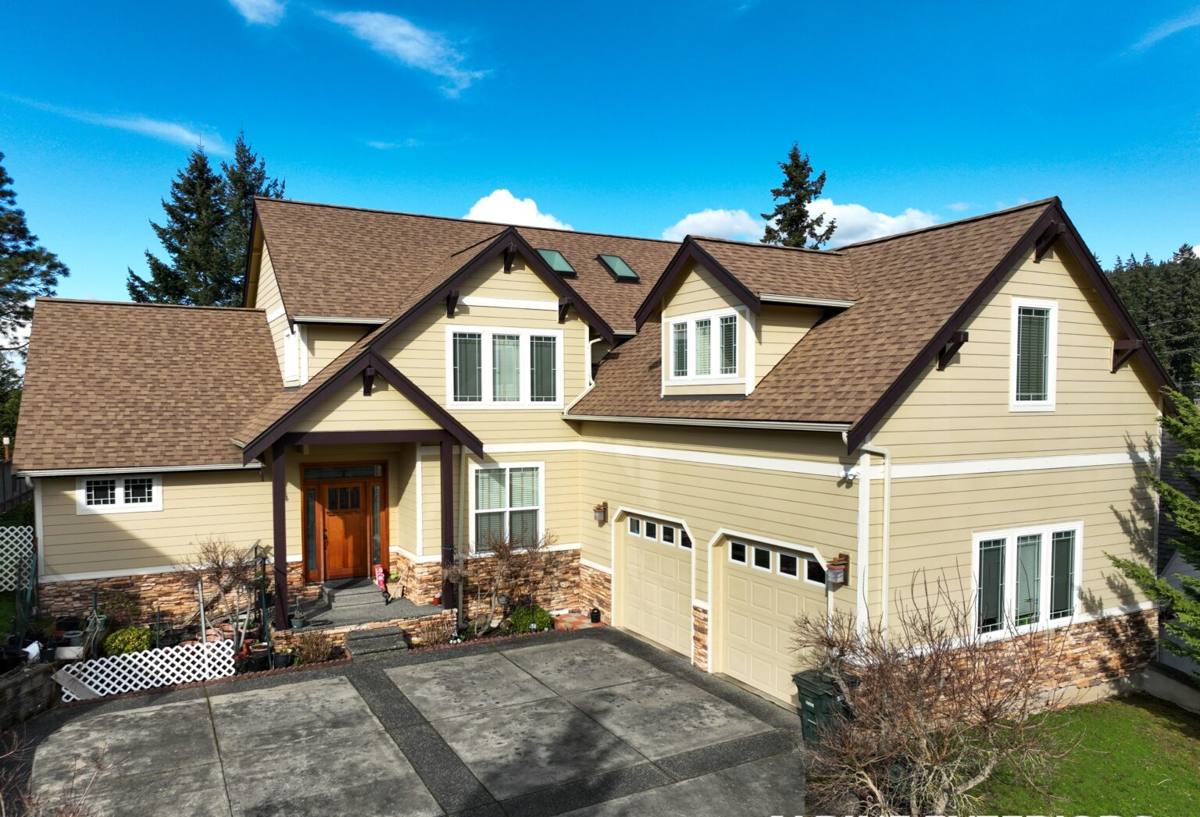
What Salt Air, Driving Rain, and Moss Actually Do to Rosario Siding
Salt Air and Corrosion
Rosario's proximity to open water means a steady dose of salt-laden air moving across the property, storm or no storm. Over years, that salt accelerates corrosion in fasteners, flashing, and trim hardware well before the siding material itself shows obvious wear. A repair that reuses corroded fasteners or skips replacing failing flashing is a repair that's already on a countdown to needing redone.
Wind-Driven Rain
Storms coming off the water in this part of the island rarely drop rain straight down. Wind pushes it sideways into butt joints, corner trim, and any gap around a window or door opening. That sideways load is why damage often shows up somewhere other than where the water actually got in — a stain low on an interior wall can trace back to a failed joint several feet away and higher up.
A Long Moss Season
Rosario's mix of open, water-facing exposure and heavily treed lots means moss and mildew pressure varies a lot from one wall to the next, but it's rarely absent for long. Mild temperatures and near-constant moisture add up to a growing season for moss that can run close to year-round on north-facing or shaded elevations. Any siding that's porous, or that holds moisture against the substrate instead of shedding it, becomes a surface moss can take hold on, and that trapped moisture is what turns a cosmetic problem into a structural one.
Common Siding Repair Issues We See in Rosario
- Soft or spongy siding near grade, around decks, or below window sills where water lingers longest
- Moss or dark staining that returns quickly after cleaning, especially on shaded, north-facing walls
- Cracked, warped, or delaminating boards on older wood-based or engineered-wood siding
- Rust streaking from corroded fasteners or trim hardware
- Open or cracked caulk joints at corners, butt joints, and window and door trim
- Storm damage — cracked, chipped, or missing sections after wind events off the water
- Peeling paint or a chalky, failing finish on field-painted siding
Repair vs. Replacement: How We Make the Call
Not every siding problem in Rosario needs a full tear-off, and not every problem should be patched. The honest answer depends on how far the damage has spread and what's underneath it, which is why we look at the actual wall before recommending either option.
| Situation | Repair usually makes sense | Replacement usually makes sense |
|---|---|---|
| Damage extent | Isolated to one section, panel, or trim run | Spread across multiple walls or elevations |
| Sheathing condition | Substrate underneath is still sound | Moisture has reached and softened the sheathing |
| Cause of damage | A single identifiable event — storm impact, one failed joint | Ongoing moisture intrusion from age or systemic install issues |
| Existing material | Still available or closely matchable | Discontinued product, or condition makes matching impractical |
| Siding age | Well within expected service life | Original siding is decades old and nearing the end of it |
Sometimes the answer is a mix — repair the sections that are sound and plan replacement for the elevation that's genuinely failing, rather than an all-or-nothing decision made before anyone's actually opened up the wall.
What a Correct Siding Repair Involves
A repair that just covers the visible damage without addressing why it happened is a repair that comes back. We treat diagnosis as the first and most important step, not an afterthought before the real work starts.
Finding the Actual Water Path
Because wind-driven rain moves sideways, the spot where damage shows up isn't always where water is getting in. Before any board comes off, we trace the problem back to its source — a gap in flashing, a failed joint, a clearance issue near grade — so the repair fixes the cause and not just the symptom.
Checking the Substrate
Once damaged siding comes off, we check the sheathing and house wrap underneath for soft spots or trapped moisture. Closing a wall back up over damaged sheathing just hides a problem that keeps getting worse behind the new siding, and it's the single most common reason a "repaired" wall fails again within a couple of years.
Matching Material and Finish
On James Hardie siding, matching an existing ColorPlus finish or profile correctly matters for both appearance and long-term performance — a mismatched patch is one of the more obvious signs of a rushed repair. On other materials, we're upfront about what can and can't be matched closely, since some older products are no longer manufactured.
Flashing, Fastening, and Clearance
Any repair gets the same flashing detail, fastener spec, and clearance from grade that a full installation would get. A patch that skips those details because "it's just a repair" is exactly the kind of shortcut that turns into a callback.
Repairing Non-Hardie Siding in Rosario
Plenty of homes in Rosario have cedar, vinyl, LP SmartSide, or another engineered-wood product already on the wall, and we repair those materials when a targeted fix is the right call. What we won't do is install new sections of those products as part of a repair without being straightforward about the trade-off: a patch on aging cedar or engineered wood is buying time on a material that will likely need the same maintenance and eventually the same repair again, especially in a climate that's this hard on wood-based siding.
When damage on a non-Hardie home is limited and the rest of the siding is sound, we'll say so and do the targeted repair. When the pattern points to a material that's reached the end of what it can reasonably do in this environment, we'll tell you that too, and talk through what a partial or full transition to James Hardie fiber cement would look like on your timeline, not ours.
Our Repair Process
Inspection and Diagnosis
We walk the property, identify every area of concern, and trace visible damage back to its actual cause rather than just measuring the square footage that looks bad.
Written Estimate
You get a clear scope and price before anything comes off the wall, including what we expect to find once we open up the affected area and how that could change the plan.
Repair and Substrate Check
Damaged material comes off, the substrate gets checked and addressed if needed, and new material goes in with correct flashing, fastening, and clearance detail.
Finish and Walkthrough
We match finish and trim as closely as the material allows, then walk the completed repair with you and cover what to watch for going forward.
Signs Your Rosario Home Needs a Siding Repair Looked At
| Factor | What It Affects | Why It Matters in Rosario |
|---|---|---|
| Extent of damage | Repair scope and labor | Wind-driven rain off the water can spread hidden damage past what's visible from the ground |
| Substrate condition | Whether sheathing repair is needed before new siding goes on | Trapped moisture behind older siding is common on shaded, east-facing walls |
| Material match | Availability and cost of matching product | Older or discontinued siding lines can be harder to match seamlessly |
| Site access | Labor time and material staging | Waterfront and tree-covered lots can add setup time compared to open sites |
| Scheduling | Lead time for materials and crew | Materials and crew travel to Orcas Island run around ferry schedules, which we build into the timeline |
Why a Crew That Already Works Rosario Matters
A contractor who works Orcas Island regularly, not one flying in for a single job, has already seen how salt air, driving rain, and moss actually behave on homes in this exact area over a full year of seasons. That shapes practical decisions during a repair: which elevations in Rosario stay wet longest after a storm, where a quick patch is genuinely enough and where it isn't, and how to schedule materials and crew time around ferry access instead of discovering that constraint mid-project. It also means that if a repair needs a follow-up look down the road, it's a call to a crew still working this island, not a company that did one job and moved on.
If your Rosario home has siding damage, whether it's a single storm-damaged section or something you're not sure is worth fixing, we're glad to take a look and give you a straight answer. Reach out using the form below to schedule a free, no-pressure estimate.