 Orcas Island Siding
 Why Metal Roofing Fits San Juan Island
San Juan Island sits out in the water, and that changes what a roof has to put up with compared to a house twenty miles inland. The salt air off the water accelerates corrosion on anything with exposed steel. Driving rain off winter storms finds every weak seam and nail hole. And the wet, shaded conditions here in San Juan County grow moss on almost any roof surface that doesn't get consistent sun, sometimes within a couple of years of installation. Metal roofing, installed correctly, handles all three of these better than most other roofing materials — but "installed correctly" is doing a lot of work in that sentence, and it's where a lot of roofs on the island run into trouble.
This page is specifically about metal roofing for homes in and around San Juan Island — what the climate actually does to a roof out here, what a correct installation looks like, and how we approach the job differently because we already work in this environment.
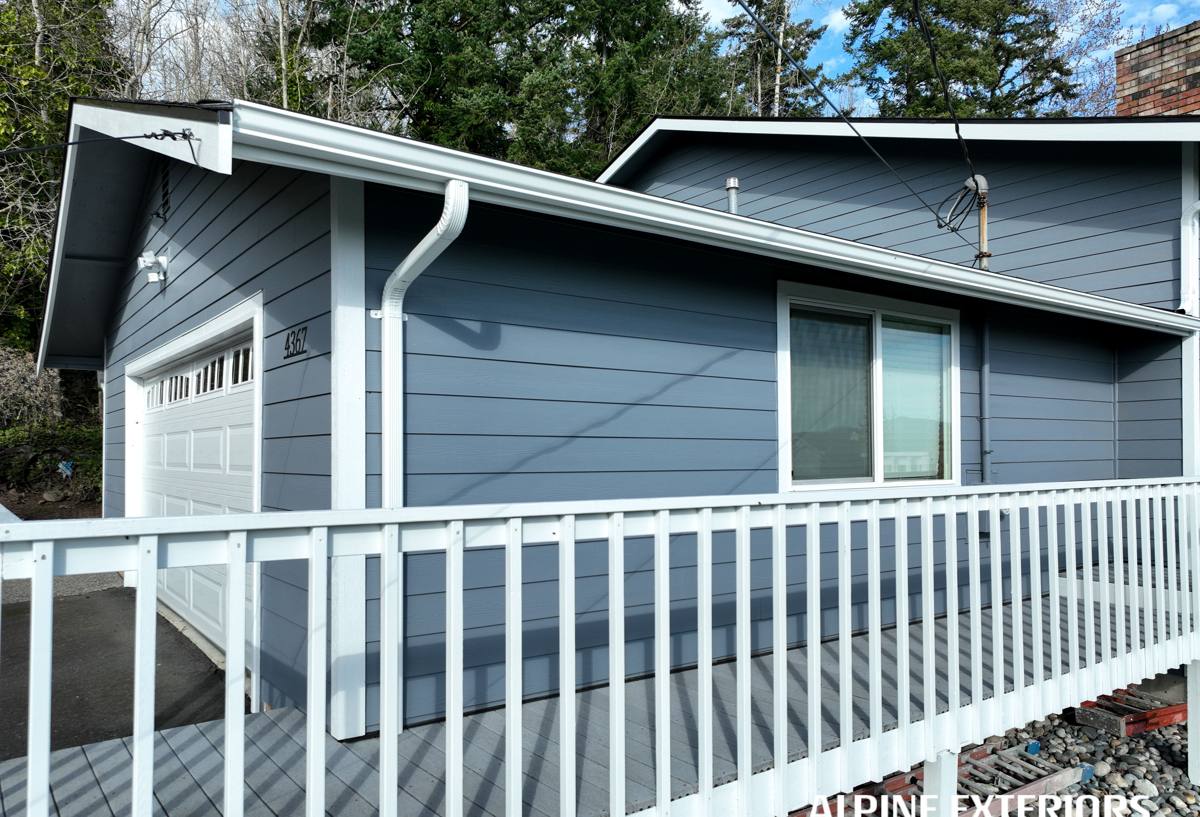
What Salt Air, Rain, and Moss Actually Do to a Roof
Salt Air and Corrosion
Airborne salt is corrosive to bare or poorly coated metal, and it doesn't need to be right on the beach to matter — wind carries it well inland on an island this size. Fasteners, flashing, and panel edges are where corrosion typically starts first, because that's where a coating is most likely to be thin, scratched during installation, or cut through entirely. A metal roof with the wrong fastener material or an unprotected cut edge will show rust streaks years before the panel field does.
Driving Rain and Water Paths
Storms here don't always come straight down — wind-driven rain can push water sideways and upward under laps, ridges, and around penetrations like vents and chimneys. A roof that would be fine in calm rainfall can leak on San Juan Island if the underlayment, flashing details, and fastener sealing weren't built with wind-driven water in mind from the start.
Moss and Organic Buildup
Moss needs moisture and shade to establish, and much of San Juan Island has both — tree cover, marine humidity, and roof sections that rarely see direct sun. Moss itself doesn't eat through metal the way it can degrade asphalt shingles, but it does hold moisture against the roof surface longer, which speeds up wear at seams, fasteners, and any spot where the coating is compromised. Moss buildup in valleys and around penetrations can also back water up under laps during heavy rain.
Choosing the Right Metal Roofing System
Not all metal roofing is built the same way, and the differences matter more here than in a drier, calmer climate. The two main categories homeowners choose between are standing seam panels and exposed-fastener panels.
| Feature | Standing Seam | Exposed Fastener |
|---|---|---|
| How panels attach | Hidden clips, no fastener penetrations through the panel face | Screws driven directly through the panel |
| Weak point over time | Seam quality at install; otherwise very few penetration points to fail | Fastener seals and washers, which wear and need eventual replacement |
| Performance in wind-driven rain | Generally stronger, since there are far fewer penetration points for water to find | Can perform well but is more dependent on correct fastener spacing and sealant |
| Upfront cost | Higher | Lower |
| Long-term maintenance | Lower — mainly inspection and keeping debris out of seams and valleys | Higher — fastener washers are a wear item and should be checked periodically |
For a home exposed to the open water or prevailing storm direction, we generally recommend standing seam because it has fewer places for wind-driven rain to get in. For a more sheltered home, a well-installed exposed-fastener system can be a reasonable, more affordable option — the key word being well-installed, since this system has less margin for error at every screw.
What a Correct Metal Roofing Installation Involves
Metal roofing is unforgiving of shortcuts in a way that shows up later, not on installation day. A roof that looks fine when it's finished can still fail in three or four years if the details underneath weren't done right. On San Juan Island specifically, we pay close attention to:
- A synthetic, high-temperature-rated underlayment as a true water barrier, not just a slip sheet — this is the roof's backup when wind pushes rain under a lap
- Ice-and-water shield or equivalent self-adhered membrane at eaves, valleys, and around every penetration, since these are the spots where wind-driven rain concentrates
- Fasteners and flashing metal matched to the panel material to avoid galvanic corrosion between dissimilar metals — a common source of early rust streaking near the coast
- Proper panel overlap and fastener spacing set for our wind exposure, not a generic inland spec
- Sealed, formed flashing at ridges, hips, and wall transitions rather than caulk used as a substitute for correct metal work
- Ventilation that keeps the underside of the deck dry, since trapped moisture under a metal roof causes rot regardless of how good the metal itself is
Any one of these done wrong won't necessarily cause a problem on day one. It causes a problem in year three or four, usually during the first real storm season that tests it, which is why the installation details matter as much as the panel choice.
Living With Moss on a Metal Roof
Metal roofing is far more moss-resistant than shingles, but "resistant" isn't "immune," especially in the shaded, damp pockets common on this island. A few honest points on this:
Moss is more likely to take hold in valleys, around vent boots, and anywhere debris collects and holds moisture — not evenly across the whole roof. Keeping gutters and valleys clear of needles and leaves does more to prevent moss than any treatment applied after the fact. Zinc or copper strips near the ridge can help slow moss growth over time as rain washes trace metal down the roof, and this is a reasonable add-on for a heavily shaded home. What we don't recommend is aggressive pressure washing or harsh chemical moss killers on a finished metal roof — pressure washing can strip protective coatings and force water under laps, and some moss treatments are more corrosive to metal and gutters than the moss itself. A soft wash and manual clearing of debris is the safer long-term approach.
Cost Factors for Metal Roofing on San Juan Island
Metal roofing costs more upfront than asphalt shingles, and a few things specific to this area affect where a given job lands in that range.
| Factor | Why It Matters Here |
|---|---|
| Panel system type | Standing seam costs more than exposed-fastener, largely due to labor and hidden-clip hardware |
| Roof complexity | Valleys, dormers, and multiple roof planes all add flashing work, which is where quality and cost both concentrate |
| Material delivery | Ferry scheduling and barge freight for a full roofing package take more lead time than a mainland delivery, which affects project scheduling more than sticker price |
| Existing roof condition | Rot or moisture damage found under old roofing during tear-off is common in older island homes and is priced once it's actually found, not guessed at upfront |
| Coating and gauge | Heavier-gauge panels and better factory coatings cost more but hold up longer against salt air exposure |
We'd rather walk a homeowner through an honest range and the reasons for it than quote a number that doesn't survive tear-off day.
Our Process, Start to Finish
Assessment
We start with an on-site look at the existing roof, the home's exposure to wind and rain direction, and any moss or moisture issues already present — not a drive-by estimate.
System Recommendation
Based on that exposure and the homeowner's budget, we recommend a panel system and go over the trade-offs honestly, including where a lower-cost option is genuinely fine and where it isn't.
Tear-Off and Deck Inspection
Old roofing comes off completely so the deck can be checked for rot or soft spots, which is common to find on older homes here and needs to be fixed before new roofing goes down, not covered over.
Installation
Underlayment, flashing, and panels go in following the details above — matched fasteners, sealed penetrations, and spacing set for our wind exposure.
Final Walkthrough
We walk the finished roof with the homeowner, point out anything they should keep an eye on seasonally, and answer questions before we consider the job done.
Why Hire a Crew That Already Works San Juan Island
A roofing crew based on the mainland can absolutely install a metal roof. What they don't always have is day-to-day familiarity with how this specific stretch of San Juan County behaves — which homes catch the worst of the wind-driven rain, which yards hold enough shade to grow moss fast, and what ferry-dependent scheduling means for keeping a project moving instead of stalling out waiting on materials. We work on the island regularly, which means fewer surprises mid-project and a roofing spec that's built around this climate from the first conversation, not adjusted after something goes wrong.
If you're weighing metal roofing for a home on San Juan Island, we're happy to take a look and talk through what actually makes sense for your roof's exposure and budget — no pressure, no obligation. Use the form below to request a free estimate.