 Orcas Island Siding
 Roofing a Home on Shaw Island Is Its Own Kind of Job
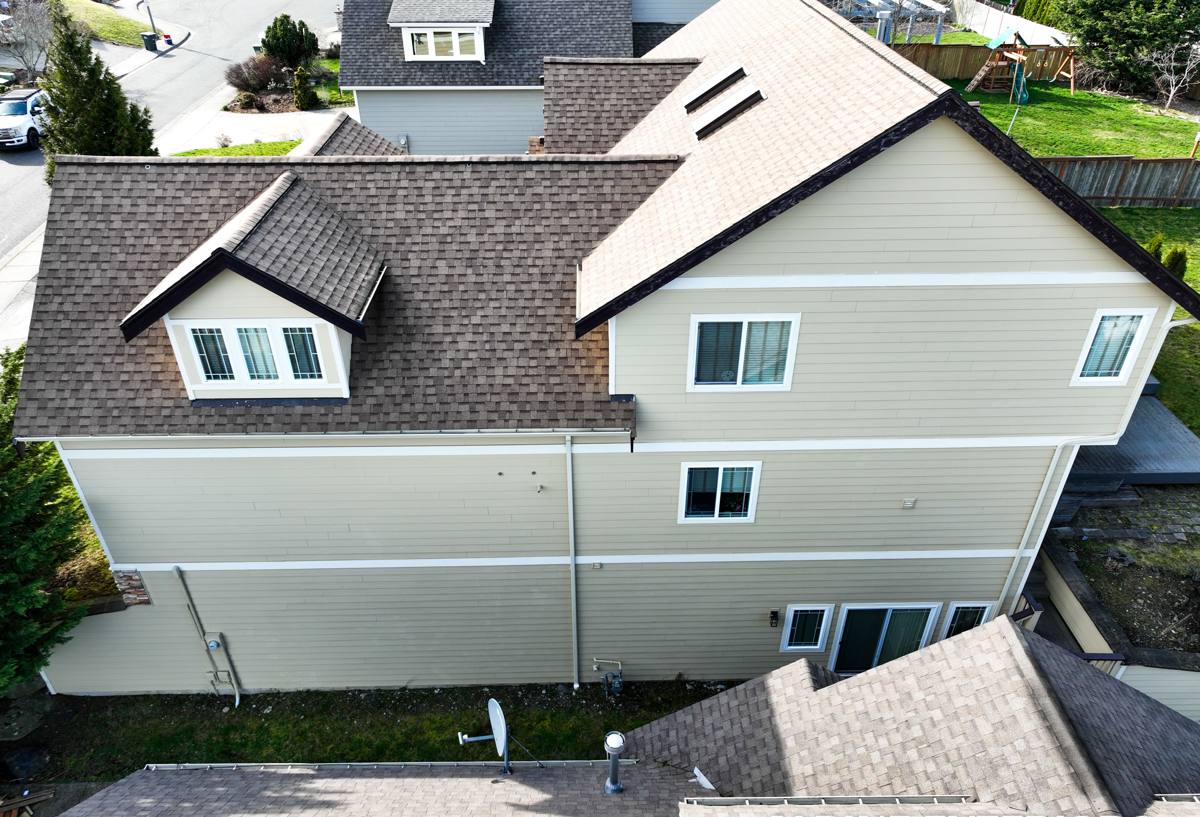
Shaw Island sits in the heart of San Juan County, reachable only by ferry, surrounded by saltwater on every side. That setting is part of what makes the island worth living on — and part of what makes roofing here different from roofing a house forty miles inland. Salt-laden air, wind-driven rain off the water, and long stretches of shade and moisture that feed moss growth all work on a roof in ways that don't show up in a general contractor's playbook. An asphalt shingle roof installed correctly for Shaw Island's conditions can go the distance. One installed with mainland assumptions tends to show its age early — curling shingles, black streaking, soft spots at the valleys, moss creeping under the tab edges.
This page is about doing that job right: what the climate actually does to a shingle roof out here, what a correct installation looks like, and how we handle the logistics of working on an island that most crews only visit once or twice a year.
What Shaw Island's Climate Does to a Shingle Roof
Salt Air
Airborne salt from the surrounding waters settles on every exposed surface, including the roof. Over years, it accelerates corrosion on any metal component that isn't rated for a marine environment — nails, flashing, valley metal, vent stacks. A roof that's fine for five years inland can start showing rust streaks and fastener failure much sooner out here if the wrong materials went in.
Driving Rain
Storms coming off the water tend to arrive with wind behind them, which pushes rain sideways instead of letting it run straight down the slope. That matters because a shingle roof's weather resistance depends on water shedding downhill, layer over layer. Wind-driven rain finds every shortcut — an under-lapped shingle, a poorly sealed nail, a flashing detail that was "close enough." On Shaw Island, close enough eventually leaks.
Moss Season
Shade from mature trees, cool damp air, and a long wet season combine to make moss a near-constant presence on north-facing and shaded slopes. Moss isn't just cosmetic. It holds moisture against the shingle surface, works its way under tab edges, and can lift shingles enough for wind and rain to get underneath. Left unchecked over several seasons, moss growth shortens a roof's usable life significantly.
What a Correctly Installed Roof Needs Out Here
None of the challenges above are unusual for the San Juan Islands — but they do change what "correct installation" means. A roof built to a generic spec sheet and a roof built for this specific climate can look identical from the ground and age completely differently.
- Corrosion-resistant fasteners and flashing — hot-dip galvanized or stainless steel nails and flashing, not standard mill-galvanized, to resist the salt air over the long term.
- Full underlayment coverage, including synthetic underlayment or ice-and-water shield at eaves, valleys, and around every penetration, so wind-driven rain that gets past the shingle layer still has a second line of defense.
- Properly lapped and step-flashed valleys and walls, sealed and layered for water moving sideways under wind pressure, not just water running straight downhill.
- Balanced attic ventilation, so moisture generated inside the home doesn't condense against the roof deck from below — a problem that compounds with the area's humidity.
- Shingles rated for the wind exposure of an open, water-adjacent site, with the manufacturer's high-wind nailing pattern actually followed, not just the standard pattern.
Choosing the Right Shingle for a Coastal San Juan County Home
Not every asphalt shingle product is a good fit for a site this exposed to salt air and moisture. The table below is a general guide to how the common tiers compare for a home in this setting — actual product selection should still be based on your roof's specific slope, exposure, and budget.
| Shingle Type | Typical Wind Rating | Algae/Moss Resistance | Best Fit |
|---|---|---|---|
| Standard 3-tab | Lower end of the range | Minimal unless specified | Budget-driven projects on sheltered, low-slope roofs |
| Architectural / laminate | Mid to high range | Available with algae-resistant granules | Most Shaw Island homes — good balance of durability and cost |
| Premium / designer laminate | High end of the range | Algae-resistant granules standard on most product lines | Exposed, high-wind sites or homeowners prioritizing longevity |
For most homes here, we lean toward architectural shingles with algae-resistant granules as the practical middle ground — they hold up to wind and moisture noticeably better than 3-tab product, without the premium price tag of the top-tier lines. The algae-resistant granules don't stop moss outright, but they do slow the algae staining that shows up as dark streaking on shaded, damp roof faces, which is a separate but related problem in this climate.
Moss, Trees, and Ongoing Maintenance
A well-installed roof still needs upkeep in this environment, especially on lots with mature tree cover. A few habits make a real difference in how long a shingle roof lasts on Shaw Island:
- Keep overhanging branches trimmed back so roof surfaces get more sun and dry out faster after rain.
- Have moss physically removed rather than just treated — chemical treatments slow regrowth but don't undo the lifting and moisture damage moss has already caused.
- Clear gutters and valleys of needles and debris each fall, before the wet season settles in, so water has a clear path off the roof.
- Check zinc or copper control strips periodically if your roof has them — they help suppress moss regrowth on shaded slopes but aren't a substitute for periodic manual cleaning.
None of this is glamorous work, but skipping it is the single biggest reason otherwise well-built roofs fail early out here.
Our Process for Shaw Island Projects
Getting to the Island
Shaw Island is ferry-served, which means every roofing project here has a logistics layer that mainland jobs don't. Materials, equipment, and crew all have to move on a schedule, and staging has to be planned so we're not making unnecessary extra trips. We build that into the project timeline up front, rather than treating it as a surprise delay once work has started.
Inspection and Scope
We start with a full roof inspection — deck condition, existing ventilation, flashing details, and how much moss or moisture damage is already present — so the estimate reflects what your roof actually needs, not a generic package.
Tear-Off and Deck Check
Old roofing comes off down to the deck, which gets inspected for soft spots or rot before anything new goes on. Any deck repairs are addressed at this stage, not covered over.
Install, Flashing, and Ventilation
Underlayment, flashing, and shingles go in as a system, using the fastener and flashing standards described above. Ventilation is checked and corrected where needed rather than left as-is out of convenience.
Cleanup and Walkthrough
Debris and old materials are hauled off the island, and we walk the finished roof with you before we consider the job done.
Why Local Experience on the San Juan Islands Matters
A roofing crew that hasn't worked the islands before tends to underestimate two things: how much the ferry schedule shapes a project timeline, and how differently salt air and moss treat a roof compared to a mainland site. That inexperience usually shows up later — in fastener corrosion, moss damage that was underestimated, or a project that dragged on because logistics weren't planned for. Working across Orcas Island, Shaw Island, and the surrounding San Juan County communities day in and day out means we plan trips efficiently, order materials with island delivery in mind, and specify hardware and shingle products that are actually suited to this environment rather than a generic spec sheet.
Signs Your Shaw Island Roof May Need Attention
- Moss visible on north-facing or shaded slopes, especially thick growth near valleys or the roof edge
- Dark streaking across the shingle surface, particularly on shaded areas
- Curling, cupping, or cracked shingle tabs
- Rust staining around nail heads, flashing, or vent stacks
- Granules collecting in gutters or at the base of downspouts
- Soft or spongy spots when walking the roof, or visible sagging from the ground
- Daylight visible through the roof deck from inside the attic
- Water stains on interior ceilings after a wind-driven storm
Any one of these on its own isn't necessarily an emergency, but a roof showing several at once is usually past the point where a small repair will hold it.
Getting Started
Every roof on Shaw Island deals with the same combination of salt air, driving rain, and moss — but every roof carries that weight a little differently depending on age, tree cover, and how it was originally built. If you're noticing moss buildup, staining, or you're just due for an honest look at where your roof stands, we're glad to come take a look. Fill out the form below for a free, no-pressure estimate.