 Orcas Island Siding
 Salt Air, Driving Rain, and a Long Moss Season
Shaw Island sits surrounded by saltwater in San Juan County, and that location shapes everything about how windows age here. Wind carries fine salt spray onto siding and glass, wind-driven rain finds its way into any gap a standard installation leaves behind, and the shaded, damp understory common on the island keeps humidity high long after the rest of Washington has dried out for the season. That combination is hard on window frames, hardware, and seals in ways that homeowners further inland rarely deal with.
Salt residue accelerates corrosion on hinges, locks, and cranks. Driving rain tests weatherstripping and flashing details that would hold up fine in a calmer climate. And a long moss season means algae and mildew get a foothold on sills, trim, and glazing beads if a window's drainage and airflow aren't right. Custom windows built and installed with this environment in mind last longer and perform better than off-the-shelf units put in without regard for where they're going.
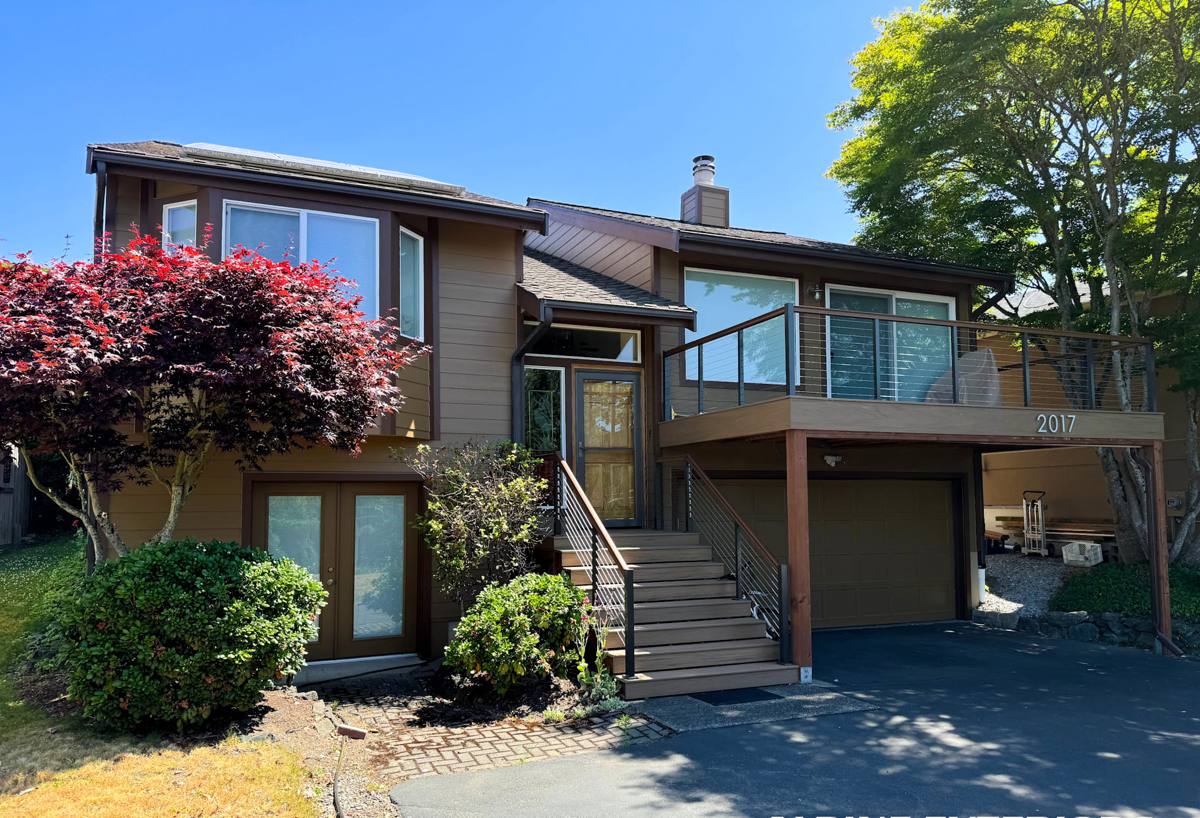
What "Custom" Actually Means for a Shaw Island Home
Older and Character Homes
Many homes on Shaw Island are older cabins, cottages, and farmhouses, and decades of settling, moisture cycling, and foundation movement mean rough openings are rarely perfectly square or standard-sized anymore. A true custom approach starts with measuring the actual opening as it exists today, not assuming it matches a catalog size. That's the difference between a window that fits cleanly and one that gets forced in with extra shims, gaps, and caulk trying to make up for a poor fit.
Additions, Sunrooms, and Irregular Shapes
Additions, converted porches, and sunrooms often have openings that don't match the rest of the house — different header heights, angled walls, or wider spans than a standard window is built for. Custom sizing and, where needed, custom shapes let those spaces get windows that actually belong there instead of a compromise that looks and performs like an afterthought.
Choosing Window Materials That Hold Up Near Salt Water
Material choice matters more here than it does a few miles inland. Some materials handle salt air and constant moisture cycling well with minimal upkeep; others need more attention to keep looking and performing the way they should. Here's an honest comparison of the main options homeowners on Shaw Island choose between.
| Material | Salt Air & Moisture Behavior | Maintenance | Typical Lifespan |
|---|---|---|---|
| Vinyl | Won't corrode or rot; performs consistently in salt air | Low — occasional rinse and hardware check | 20-30+ years |
| Fiberglass | Very stable in temperature swings and moisture; strong seal retention | Low | 30-40+ years |
| Wood, clad exterior | Good if cladding and flashing details are done right; interior wood still needs protection | Moderate — periodic inspection of cladding seams and interior finish | 20-30+ years with upkeep |
| Aluminum | Can corrode with sustained salt exposure unless properly finished and maintained | Moderate to high near the water | Varies widely with finish quality |
We don't push one material as the only right answer for every home. A wood-clad window can be the right call for a historic-style home if the owner is prepared for the added upkeep; vinyl or fiberglass is often the lower-maintenance choice for a rental or vacation property. What matters is choosing with the island's climate in mind rather than defaulting to whatever's cheapest at a big-box store.
Signs Your Current Windows Are Already Failing
Salt air and moisture damage often show up gradually, which means homeowners live with a failing window for a year or two before realizing it's more than a minor annoyance. Watch for these signs:
- Fogging or haze trapped between panes — the seal has failed and the insulating gas is gone
- Sashes that stick, swell, or won't latch fully, especially after wet weather
- Soft, spongy, or discolored wood at the sill or interior trim
- Moss, algae, or persistent mildew growing right at the frame or glazing line
- Noticeable drafts even with the window fully latched
- Caulk or paint failing every year instead of holding for several
- Condensation pooling on the interior sill during cold, wet stretches
Any one of these on its own might just need attention. Several at once, especially on a window more than fifteen or twenty years old, usually means it's cheaper in the long run to replace than to keep patching.
What a Correct Custom Window Installation Involves
Flashing and Water Management
The window itself is only part of the job — how water is managed around it matters just as much, if not more, in a climate with driving rain. That means properly lapped sill pan flashing, correct integration with the house's weather-resistant barrier, and head flashing that sheds water away from the opening rather than letting it sit against the frame. Skipping or rushing this step is the single most common reason a window leaks within a few years, no matter how good the window itself is.
Sealing, Insulation, and Fastening
A correct install uses low-expansion foam or appropriate insulation around the frame rather than overpacking it, which can bow the frame and cause operational problems. Fasteners need to be rated for exterior exposure so they don't corrode and fail early. And exterior sealant should go over backer rod at the right joints — not as a thick bead trying to cover up a bad fit.
Our Process, From Estimate to Cleanup
- On-site measure and assessment — we look at the actual opening, existing flashing condition, and any moisture or rot issues before quoting anything.
- Honest material and options review — we walk through the real tradeoffs between materials and glass packages for your specific exposure and budget, no upselling.
- Ordering and scheduling — custom units take lead time to build, and we plan delivery and install dates around weather windows and ferry logistics so materials and crew arrive together.
- Careful removal — interior floors and furnishings are protected, and old units are removed without unnecessary damage to surrounding siding or trim.
- Installation with proper flashing and sealing — done to the standard described above, not shortcuts to save an hour.
- Walk-through and cleanup — we test operation, check the seal, and leave the site clean before we call the job done.
Energy Performance and Comfort in a Marine Climate
Western Washington's marine climate means mild but persistently damp conditions rather than extreme cold, so the priority is usually reducing drafts, controlling condensation, and keeping interior glass surfaces from feeling cold to the touch — not chasing the highest possible insulation rating for a harsh winter climate that doesn't really exist here. Low-E glass coatings help manage heat loss and solar gain year-round, and double-pane units with a quality low-E coating are the standard choice for most homes. Triple-pane can make sense for a north-facing room or a home with unusually high heating costs, but it's not a blanket requirement here the way it might be in a colder inland climate.
Good window performance also shows up as fewer condensation problems. A properly sealed, well-insulated frame keeps interior glass and sill temperatures higher, which cuts down on the moisture buildup that feeds mildew and window rot over time — a real concern given how much of the year Shaw Island stays damp.
Why It Matters to Hire a Crew That Already Works Shaw Island
Shaw Island's access is entirely ferry-dependent, with no bridge connection to the mainland. That changes how a window project needs to be planned. Materials and crew both have to arrive on the same schedule, weather windows for exterior work need to be watched more closely since a missed ferry can mean a lost day, and permitting runs through San Juan County, which has its own process separate from mainland jurisdictions. A crew that regularly works the island already has these logistics worked out, so your project isn't the one where the schedule falls apart over a missed sailing or a permit detail nobody accounted for.
There's also a practical familiarity that builds up from repeated work in this specific environment — knowing which flashing details actually hold up against wind-driven rain off the water, and which materials age well versus poorly once salt air gets into the mix. That's knowledge that comes from doing the work here repeatedly, not from a general contracting background applied to an island job as an afterthought.
Protecting Your Investment After Installation
A correctly installed custom window is a long-term investment, and a little seasonal attention keeps it performing that way:
- Rinse salt spray and grime off glass and frames periodically, especially after storms
- Keep gutters clear and trim vegetation back so trapped moisture and shade don't feed moss growth at the frame
- Do a quick annual check of exterior caulking and touch up any cracked or separated joints before they let water in
- Avoid pointing a pressure washer directly at seals and weatherstripping — it can drive water past a joint that would otherwise hold
- Operate hardware through its full range a few times a year so hinges and locks don't seize from disuse and salt buildup
If you're dealing with drafty, foggy, or failing windows on Shaw Island, or you're planning a renovation that calls for custom sizes or shapes, we're happy to take a look and give you a straightforward, no-pressure estimate. Use the form below to get started.