 Orcas Island Siding
 Roofing on a Ferry-Access Island
Shaw Island doesn't have a bridge, a stoplight, or much in the way of retail, and most people who live there wouldn't want it any other way. But that same quiet, ferry-only setup changes how a roofing project has to be run. Every bundle of shingles, every roll of underlayment, every tool and every crew member has to make the Washington State Ferries crossing before work can start, and the schedule doesn't bend for a contractor who shows up unprepared. A roof installation on Shaw Island isn't harder because the work itself is different — it's harder because the planning around it has to be tighter.
We work throughout Orcas Island and the surrounding San Juan County islands, including Shaw, so ferry timing, weather windows, and delivery logistics get built into the estimate from the start, not figured out after material is sitting on a dock waiting for a boat.
What Salt Air, Driving Rain, and Moss Do to a Roof Here
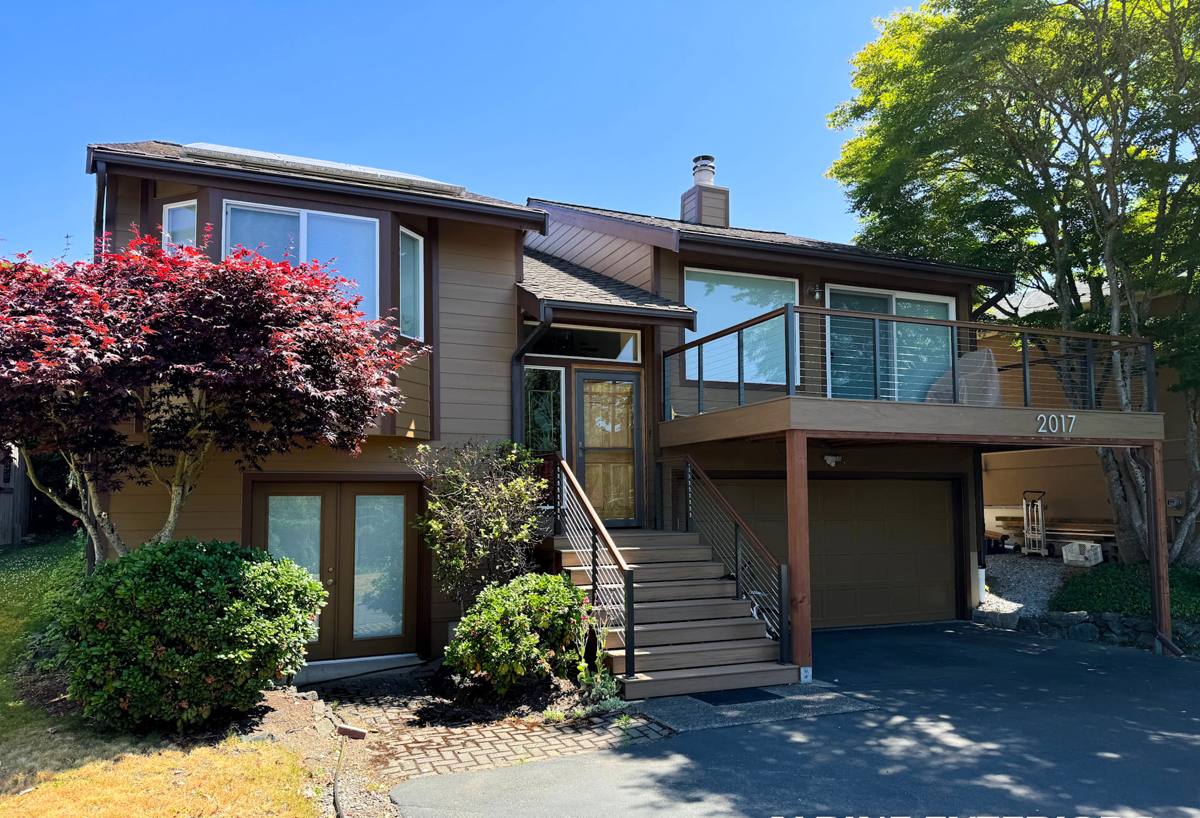
Every roofing material sold has a rated lifespan, and almost none of those ratings were calculated with a Salish Sea shoreline in mind. Homes on Shaw Island face a specific combination of conditions that shortens roof life faster than the manufacturer's paperwork suggests.
Salt Air and Metal Components
Airborne salt accelerates corrosion on anything metal: nail heads, flashing, drip edge, and roof vents. Once corrosion starts at a fastener or a seam, water follows the same path inward. This is why the metal components on a coastal roof matter as much as the shingle or panel on top of them, and it's why we don't treat flashing and fasteners as an afterthought.
Wind-Driven Rain
Storms coming off the water tend to bring rain sideways, not straight down. Sideways rain finds weaknesses that a calm, vertical downpour never would — lifted shingle tabs, undersized flashing, gaps around vent pipes and chimneys. A roof that would hold up fine in a drier inland climate can leak here simply because it wasn't detailed for wind-driven water.
Moss and Shade
Tree cover is part of what makes this area beautiful, and it's also what keeps roofs damp longer after every rain. Moss and moss-fed algae take hold fastest on north-facing slopes and anywhere shaded by overhanging branches, and once established, moss holds moisture against the roofing material around the clock. Over years, that constant dampness works into shingle mat, lifts edges, and shortens the life of the roof underneath it — long before the shingles themselves would otherwise wear out.
Signs You Need a New Roof, Not Another Patch
Not every roof problem calls for full replacement, but on an island where a repair crew can't just swing by tomorrow, it pays to know the difference between a fixable issue and a roof that's telling you it's done. Look for:
- Granule loss heavy enough that gutters or downspouts are visibly collecting grit
- Shingles that are curling, cupping, or cracking across large sections rather than one isolated spot
- Soft or spongy decking felt underfoot in the attic, or daylight visible through the roof boards
- Persistent moss or dark streaking that comes back within a season of cleaning
- Repeated leaks in different spots after previous patch repairs
- Flashing around chimneys, skylights, or vent pipes that's rusted, lifted, or separating from the roof
- A roof that's simply reaching the end of its expected material life, regardless of visible damage
If a roof is showing one or two of these signs in isolated areas, a targeted repair can often buy several more years. If several are showing at once, or the roof is already past its expected service life, replacement is usually the more honest recommendation — patching an old roof repeatedly ends up costing more over time than doing the job right once.
Roofing Materials That Actually Hold Up in This Climate
There's no single "best" roofing material for every home — it depends on the roof's exposure, the home's structure, and how much long-term maintenance an owner wants to take on. Here's how the common options compare for a shoreline, tree-covered property like the ones on Shaw Island:
| Material | Salt Air Durability | Moss Resistance | Maintenance Burden | Relative Cost |
|---|---|---|---|---|
| Architectural asphalt shingle | Good, with corrosion-resistant fasteners and flashing | Moderate — benefits from periodic cleaning | Low to moderate | Lowest upfront |
| Standing seam metal | Very good with proper coatings and stainless fasteners | High — sheds moisture quickly, little for moss to grip | Low | Higher upfront, lower lifetime |
| Cedar shake | Fair — needs regular treatment near salt exposure | Low without diligent upkeep | High | High, with ongoing upkeep costs |
| Synthetic/composite shingle | Good | Moderate to good depending on product | Low | Mid to high |
Our standard is to steer most Shaw Island homeowners toward a quality architectural asphalt shingle or a metal roof, depending on budget and roofline. Cedar shake can still be the right visual choice for a specific home, but we're upfront that it demands more attention in a damp, shaded, salt-air environment than the other options — that's a maintenance conversation we have before a contract gets signed, not after.
What a Correct New Roof Installation Involves
A roof is only as good as the parts nobody sees once the job is finished. The shingle or panel on top gets all the attention, but the layers underneath are what actually keep a home dry through a wet winter.
Tear-Off and Deck Inspection
We remove the old roofing down to the deck rather than layering over it. That's the only way to actually see the plywood or plank decking underneath, catch any soft or water-damaged sections, and replace them before new material goes down. Roofing over rotten decking just hides a problem that gets more expensive to fix later.
Underlayment and Flashing
Given how much wind-driven rain this area sees, underlayment choice matters more here than in drier climates. We use ice-and-water shield membrane at eaves, valleys, and around every penetration — chimneys, skylights, vent stacks — because those are the spots where wind-driven rain and ice damming cause the most damage. Flashing gets replaced, not reused, and fastened with corrosion-resistant hardware suited to a salt-air environment.
Ventilation
Proper intake and exhaust ventilation keeps the attic space at close to outside temperature and humidity, which reduces condensation buildup and helps shingles last their full rated life. A roof that looks perfect on the outside but traps warm, moist air underneath will fail from the inside out — this is one of the most commonly skipped details in a rushed roofing job, and one of the most important for long-term performance.
Our Process, From Estimate to Final Walkthrough
Because access to Shaw Island runs on a ferry schedule rather than a highway, we plan the sequence of a project more tightly than we would on the mainland. Our process generally runs:
- On-site assessment — we inspect the existing roof, decking condition, ventilation, and any problem areas, and walk the homeowner through what we find
- Written estimate and material selection — options are laid out honestly, including trade-offs in cost and maintenance, with no pressure to upsell a product the home doesn't need
- Scheduling around ferry and weather windows — material delivery and crew crossings are planned around forecasted dry stretches, since an open roof deck and a surprise squall don't mix
- Tear-off and deck repair — old roofing comes off, decking is inspected and repaired as needed
- Underlayment, flashing, and new roofing installation — installed to manufacturer specification and matched to the home's exposure
- Site cleanup — old material, debris, and stray fasteners are cleared from the property, including a magnetic sweep of the ground
- Final walkthrough — we go over the finished roof with the homeowner before calling the job complete
Permits, Access, and Logistics Specific to Shaw Island
San Juan County requires permits for roof replacement work, and a contractor familiar with the county's process avoids the delays that come from paperwork done wrong the first time. Beyond permitting, working on Shaw Island brings a handful of practical realities that don't come up on the mainland: dumpster and material staging has to account for ferry loading limits, crew scheduling has to build in crossing times on both ends of the day, and tree cover close to many homes can affect how equipment and ladders get positioned safely.
None of this is complicated for a crew that already works these islands regularly — but it does mean a mainland-based contractor unfamiliar with island logistics can end up costing a homeowner extra trips, extra ferry fares, and a longer timeline than necessary. Hiring a crew that already has a rhythm for working Shaw Island and the rest of San Juan County is less about convenience and more about the job actually staying on schedule.
Caring for Your New Roof Year-Round
A correctly installed roof still benefits from basic upkeep, especially in a climate that grows moss on a schedule of its own. We recommend homeowners:
- Have gutters and downspouts cleared at least twice a year, more often under heavy tree cover
- Keep overhanging branches trimmed back to reduce shade and debris buildup on the roof surface
- Schedule a periodic visual inspection, particularly after major windstorms
- Address minor moss growth early, before it has years to work into the roofing material
- Keep an eye on attic ventilation, especially if insulation or venting is ever added or altered later
A little routine attention goes a long way toward getting the full service life out of a new roof in this climate, rather than fighting the same moss and moisture problems the old one had.
If your Shaw Island home needs a new roof, or you're not sure whether a repair or full replacement makes more sense, we're glad to take a look. Estimates are free, honest, and come with no pressure — just a straight answer about what your roof needs and why.