 Orcas Island Siding
 Siding Installation on Orcas Island's West Beach
West Beach sits on the exposed west side of Orcas Island, with a direct, open-water line of sight that catches weather most sheltered parts of the island never see. That orientation matters more than most homeowners realize when it comes time to side a house. A wall facing open water takes a different beating than a wall tucked into a cove or set back under tree cover, and siding installed without that difference in mind tends to show problems years before it should. We work on Orcas Island regularly, and West Beach is territory we know — not as a name on a map, but as a stretch of coastline with its own specific installation demands.
This page is about one job in one place: installing siding correctly on a West Beach home. We install James Hardie fiber cement exclusively, and everything below explains what that choice is based on and what a correct installation actually requires on this part of the island.
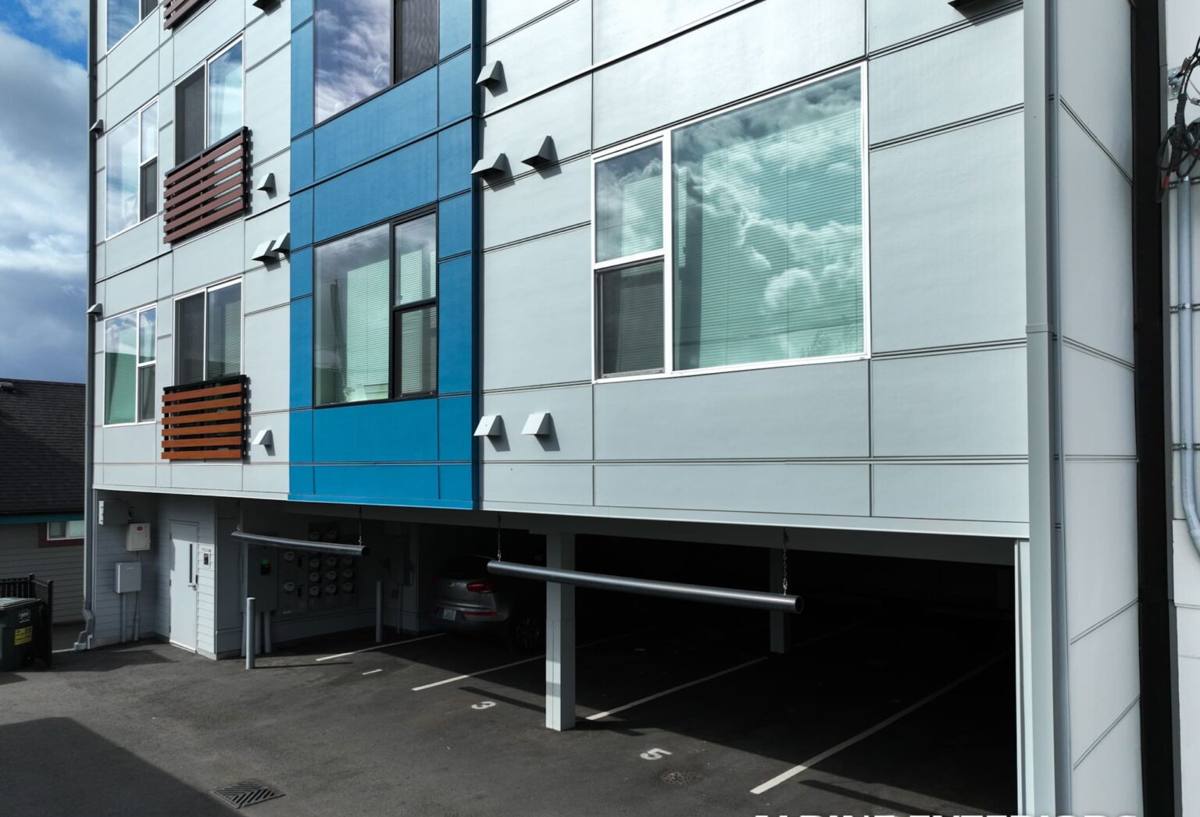
What West Beach's Exposure Does to Siding
Salt Air, Constantly
Homes with open water exposure on West Beach take a steadier, heavier dose of salt-laden air than properties set back from the shoreline or shielded by higher ground elsewhere on the island. Salt accelerates corrosion on fasteners, flashing, and exposed metal trim, and it breaks down lower-quality finishes faster than a sheltered inland site ever would. On a wall facing open water, the margin for a cut corner on hardware or finish quality is thinner than almost anywhere else on Orcas.
Driving Rain With Nothing to Break It
Storms moving through the San Juans don't drop rain straight down on a west-facing, open-water lot — wind drives it sideways into the wall, and West Beach doesn't have the tree lines or terrain that break that wind on more sheltered parts of the island. That sideways-driven rain works its way into butt joints, corner trim, and window flashing far more aggressively than the same storm would on a protected lot a mile inland. Siding details that would hold up fine on a sheltered site get tested harder here, every time weather comes off the water.
A Long Moss Season
Mild temperatures and near-constant moisture across San Juan County add up to a moss and mildew season that can run most of the year on shaded, north-facing walls. West Beach properties with any tree cover or north-facing elevations see this early and see it stick around, since damp surfaces that don't get direct sun stay wet long after a storm has passed. Any siding material with even a little surface porosity becomes a growth surface under those conditions.
What Correct Siding Installation Actually Requires Here
Material choice only gets a West Beach home halfway there. The rest comes down to installation detail, and on an open-water lot, those details carry more weight than they would on a calmer site. A correct installation includes:
- A rain screen gap behind the siding so any moisture that gets past the surface can drain and evaporate instead of sitting against the wall sheathing
- Fasteners rated for salt-air, marine exposure, placed at manufacturer-specified spacing rather than "close enough"
- Properly lapped house wrap and flashing at every seam and penetration, oriented to shed wind-driven rain coming off open water
- Sealed, correctly detailed butt joints and trim transitions — the first place driving rain finds a way behind the siding if they're rushed
- Proper clearance from grade, decks, and roof lines so siding isn't wicking moisture from below
- Flashing integrated at every window and door opening, not caulked over as an afterthought
None of this is exotic. It's the manufacturer's own installation spec, followed consistently on the parts of the job that are hardest to see once the siding is up and the crew has moved on.
Why James Hardie Fiber Cement Is What We Install
We install one siding system, and it's James Hardie fiber cement. We don't install LP SmartSide, vinyl siding, Cemplank, Allura, primed spruce, or cedar. That's a professional standard built around what actually holds up on exposed, open-water Orcas Island lots like West Beach — not a sales pitch for whatever happens to be in stock.
- Non-combustible core: Fiber cement doesn't feed a fire the way wood-based siding can, which matters on a wooded island where wildfire risk is a real seasonal concern.
- No organic core for salt air and moisture to work into: Unlike wood-based products, there's no substrate for constant dampness and salt exposure to slowly break down over time.
- Factory-applied ColorPlus finish: The color is baked on under controlled factory conditions instead of brushed on in the field, so it holds up against fading and moisture far longer than a field-applied finish exposed to constant salt air.
- Climate-engineered HZ product lines: Hardie builds formulations specifically for regions dealing with sustained moisture and coastal exposure, rather than one generic product for every climate.
- Strong transferable warranty: Backed by the manufacturer when installation follows spec, which matters to island homeowners thinking about resale down the road.
Installed correctly, it's the product we've seen hold up through repeated wet seasons on exposed parts of this island without asking a homeowner to carry the recurring maintenance risk that wood-based or vinyl products do.
Choosing the Right Hardie Product for a West Beach Home
| Product Line | Best Use | Why It Fits an Open-Water Lot |
|---|---|---|
| HardiePlank lap siding | Most single-family homes | Traditional lap profile sheds wind-driven rain effectively with correct overlap and flashing |
| HardiePanel vertical siding | Accent walls, gables, modern designs | Clean lines that pair well with contemporary island builds and simplify joint detailing |
| HardieShingle siding | Cottage and craftsman-style homes | Textured, traditional look without the moisture absorption and upkeep of real wood shingle |
| HardieTrim boards | Corners, window and door casing, fascia | Factory-finished trim resists the same salt exposure as the field siding, so trim and wall age together |
Color and profile are a homeowner's call, but the underlying product family and installation approach come down to how exposed the specific lot is. A protected wall set back from the water can sometimes carry a lighter detailing approach than a wall taking direct wind and spray, and we spec accordingly rather than treating every wall on the house the same.
How the Installation Process Works
- On-site walkthrough: We look at the home in person, checking existing siding condition, wall orientation relative to the water, moss and moisture patterns, and any signs of hidden damage before quoting anything.
- Tear-off and substrate check: Old siding comes off and we inspect the sheathing underneath for rot, soft spots, or trapped moisture — issues that are common on older siding facing open water and need to be addressed before new siding goes on, not covered up.
- House wrap and flashing: A properly lapped weather-resistive barrier and flashing system goes on first, detailed to shed wind-driven rain at every seam, window, and door.
- Rain screen installation: A drainage gap goes in behind the siding so any moisture that does get past the surface has somewhere to go instead of sitting against the wall.
- Siding installation: Hardie boards or panels go on to manufacturer spec — correct fastener type and spacing, proper clearance from grade and roof lines, sealed and detailed joints.
- Trim and final detailing: Corners, window and door casing, and fascia go in last, matched to the field siding so the whole wall assembly ages together.
- Final walkthrough: We go over the finished work with the homeowner and explain what maintenance, if any, the installation will need going forward.
Cost Factors for a West Beach Siding Job
| Factor | What It Affects | Open-Water Consideration |
|---|---|---|
| Tear-off vs. overlay | Labor scope and access to the substrate | Tear-off is usually the honest call on an exposed wall — it's the only way to confirm sheathing hasn't taken hidden moisture damage |
| Substrate condition | Repair costs before new siding goes on | Salt air and driving rain accelerate hidden rot faster than a sheltered inland wall |
| Wall orientation | Fastening and flashing detail requirements | Walls facing directly into open water need tighter detailing than a leeward or tree-sheltered elevation |
| Trim and joint complexity | Labor time and material | More corners and joints mean more places driving rain can test a rushed seal |
| Site access and logistics | Material delivery and staging time | Island scheduling means materials and crew time need to be planned around delivery, not a same-day call |
These are general drivers, not a quote. Every West Beach lot sits at a slightly different distance from the water and under different tree cover, so we walk the property before putting a real number on the work.
Signs a West Beach Home Needs New Siding
- Moss or dark staining that returns quickly after cleaning, especially on shaded or north-facing walls
- Soft or spongy siding, particularly low on the wall or around window and door trim
- Rust staining or visibly corroded fasteners and metal trim
- Cracked or gapping caulk at butt joints and corner trim
- Peeling paint, chalking, or visible warping on walls that face open water directly
- Rising energy bills that suggest the wall assembly isn't sealing the way it used to
Why a Crew That Already Works West Beach Matters
A crew that installs siding on this stretch of Orcas Island regularly knows how salt air, wind-driven rain, and moss actually behave on real West Beach walls over a full year — not just how a product performs on a spec sheet. That experience shapes practical calls on install day: which elevations need the tightest flashing detail, how much clearance a given lot's grade and drainage actually call for, and where extra time on a joint or corner pays off years later. It also matters for logistics. Getting materials and a crew out to an island job takes planning that a mainland job doesn't, and a crew that already works this area builds that into scheduling instead of treating it as a surprise.
If your West Beach home needs new siding, or you're not sure whether what you're seeing is a repair or a full re-side, we're glad to take a look and give you a straight answer. Reach out using the form below to schedule a free, no-pressure estimate.