 Orcas Island Siding
 Why North Beach Homes Wear Out Siding Faster
North Beach sits close enough to the water that the air itself is part of the maintenance problem. Homes here deal with a tougher combination of conditions than a lot of inland properties elsewhere on Orcas Island: salt-laden air moving off the water, wind-driven rain that hits walls at an angle rather than falling straight down, and a long, shaded moss season that keeps north- and west-facing walls damp for weeks at a time. Add in San Juan County's marine climate — mild temperatures but persistent humidity — and you get siding that ages on a different clock than siding a few miles inland.
We've replaced enough siding along this stretch of the island to know the failure patterns are predictable. Waterfront and near-waterfront homes almost always show wear in the same places first: bottom courses near grade, corners exposed to prevailing wind, and shaded walls where moss gets a foothold and never fully dries out. If your siding is original to the house or getting close to the end of its expected service life, it's worth understanding what's actually happening to it before deciding between another round of repairs and a full replacement.
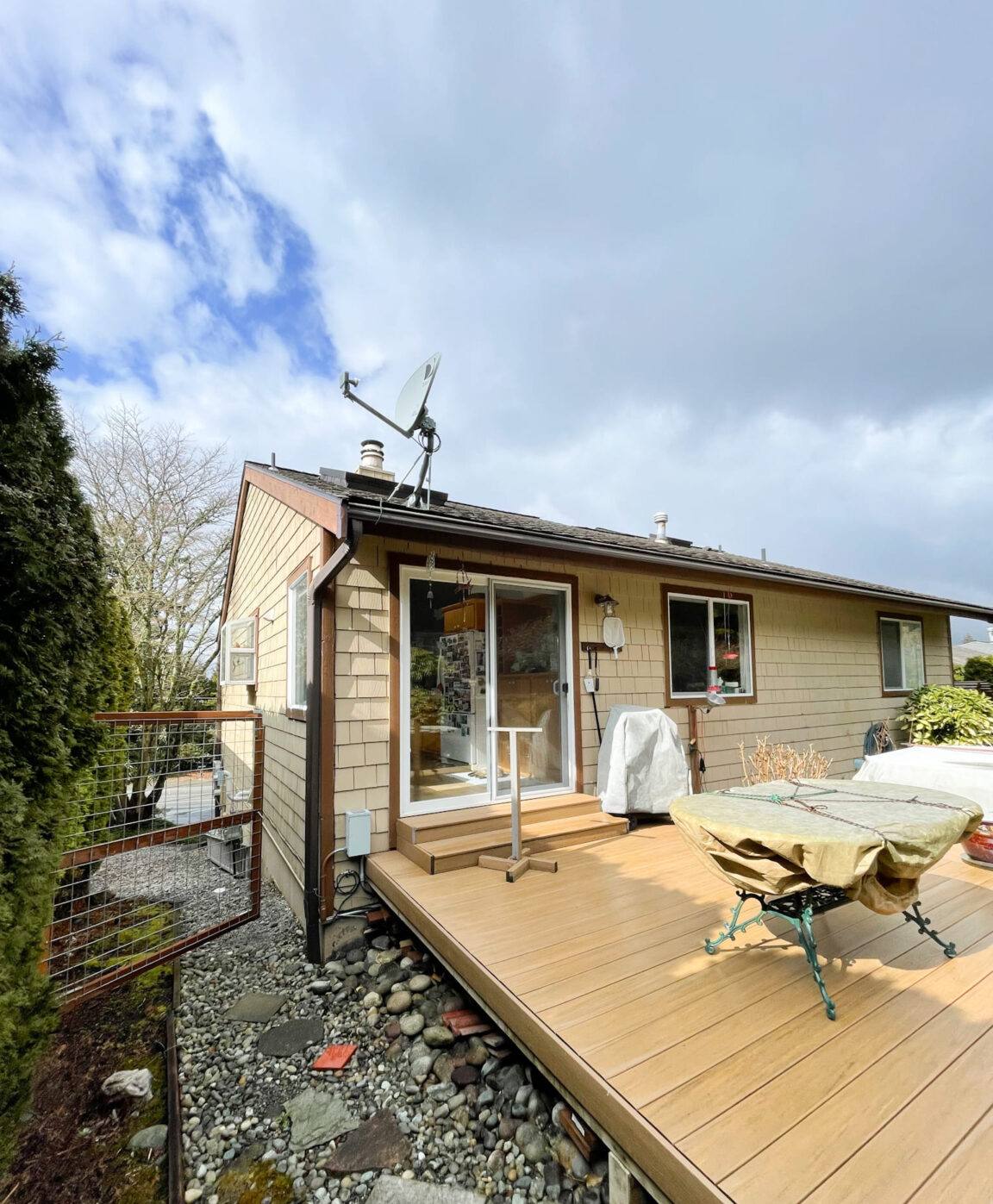
What Salt Air, Rain, and Moss Actually Do to Siding
Salt Air and Surface Breakdown
Airborne salt doesn't just sit on the surface — it works into seams, fastener heads, and any spot where the factory finish has worn thin. On products with a painted-on finish rather than a baked-in one, this shows up as chalking, fading, and eventually finish failure well ahead of the paint's rated lifespan. Metal fasteners and trim are especially vulnerable if they're not rated for coastal exposure.
Wind-Driven Rain and Moisture Intrusion
Standard rainfall assumptions — water runs down and off — don't fully apply on an exposed shoreline lot. Wind pushes rain sideways and upward under laps, into butt joints, and around window and door trim that wasn't flashed with enough margin. Over years, that repeated wetting finds any weak point in the water-resistive barrier behind the siding, and by the time it shows up as a stain or soft spot on the interior, the sheathing behind it has usually been wet for a long time.
Moss, Shade, and Trapped Moisture
Orcas Island's tree cover and long wet season are good for moss and bad for siding. Shaded walls stay damp longer after every rain, and moss holds that moisture directly against the siding surface instead of letting it evaporate. On wood-based products, this is where rot gets started. On any siding, moss buildup traps grime and organic matter in joints and laps, which accelerates finish breakdown even where the substrate itself is sound.
Signs Your North Beach Home Is Ready for Replacement, Not Repair
Not every siding problem calls for a full replacement — but on a home this exposed, patch-and-repair strategies have a shorter useful life than they would inland. Here's what tells us a home is past the point where spot repairs make sense:
- Soft, spongy, or crumbling siding when pressed, especially near the bottom courses or below windows
- Persistent moss or algae staining that returns within a season of cleaning
- Visible warping, buckling, or separation at seams and corners
- Paint or finish that's chalking, peeling, or fading unevenly across the same wall
- Soft spots, discoloration, or a musty smell on interior walls that back up to exterior siding
- Fasteners that are rusting, backing out, or leaving streaks down the siding face
- Siding that's original to a home built more than 20–25 years ago, particularly wood-based products
One or two of these on their own might mean a repair. Several at once, especially on the walls that take the brunt of the weather, usually means the underlying material and moisture barrier are compromised across the whole elevation — and repairing one section just moves the problem to the next one.
Why We Only Install James Hardie Fiber Cement on Shoreline Homes
We standardized on James Hardie fiber cement siding for every home we work on, and homes like the ones on North Beach are exactly why. Fiber cement is non-combustible and dimensionally stable — it doesn't expand, contract, warp, or absorb water the way wood-based sidings do, which matters a great deal on a wall that's damp more often than it's dry. Hardie's ColorPlus finish is baked on and cured at the factory rather than field-applied, which gives it significantly better resistance to fading and chalking from sun and salt exposure than a standard field-painted finish.
Hardie also engineers specific product lines for different climate zones — including a version built for the kind of high-moisture, high-humidity conditions the Pacific Northwest coast produces. That's a meaningful difference from a generic siding product: the material itself is formulated with this climate in mind, not just painted to look good in a showroom. Combined with a strong transferable warranty, it's the product we're comfortable standing behind on a home that's going to spend decades facing the water.
What a Correct Siding Replacement Involves
Tear-Off and Sheathing Inspection
A proper replacement starts with full removal of the old siding, not installation over it. That's the only way to actually see the sheathing underneath — which, on a lot of North Beach homes we've opened up, has some degree of moisture damage hiding behind siding that looked fine from the outside. Any soft, rotted, or delaminated sheathing gets identified and replaced before anything new goes up. Skipping this step is the single most common reason a siding job fails early.
Moisture Barrier and Flashing
Behind the new siding, a correctly lapped water-resistive barrier and properly integrated flashing at every window, door, and penetration is what actually keeps wind-driven rain out — the siding itself is the second line of defense, not the first. On an exposed shoreline wall, we pay particular attention to head flashing above openings and kick-out flashing where rooflines meet walls, since those are the spots that fail quietest and cause the most damage.
Installation to Manufacturer Spec
James Hardie siding has specific fastening patterns, clearance requirements above grade and roof lines, and caulking specifications — all of which affect the warranty and the long-term performance of the finished wall. Correct fastener spacing and type, proper gaps at butt joints, and factory-recommended clearances aren't optional details; they're what separates a job that holds up through twenty years of North Beach weather from one that doesn't.
Our Process, Start to Finish
- On-site inspection and estimate — we look at existing siding, sheathing condition where accessible, and the specific exposure of each elevation before quoting anything.
- Written proposal — product line, color, scope of tear-off, and any sheathing or flashing repair we expect to need, laid out clearly before work begins.
- Permitting — San Juan County requires permits for a lot of exterior work, particularly when sheathing or moisture barrier is being replaced along with the face material; we handle that paperwork as part of the job.
- Tear-off and prep — full removal of old siding, sheathing repair as needed, and installation of the new moisture barrier and flashing.
- Siding installation — installed to James Hardie's specifications for fastening, clearances, and joint treatment.
- Cleanup and walkthrough — site cleared of debris and old material, and a final walkthrough so you know exactly what was done and why.
What Affects the Cost of a North Beach Siding Job
Every home is different, but the same handful of factors drive most of the cost variation we see on jobs in this area:
| Factor | Why It Matters |
|---|---|
| Home size and wall area | More square footage means more material and labor hours |
| Sheathing condition | Rot or moisture damage found during tear-off adds repair work before new siding can go on |
| Siding profile and trim detail | Lap width, board-and-batten, or shingle-style siding carry different material and labor costs |
| Site access | Waterfront lots, steep grades, or limited staging space can affect equipment and labor time |
| Number of openings and penetrations | More windows, doors, and vents mean more flashing and detail work |
| Existing exterior condition | Trim, fascia, or other components needing replacement alongside the siding add scope |
We walk through these factors during the on-site estimate so the number you get reflects your specific home, not a generic average.
Why Local Experience on North Beach Matters
A siding job on a shoreline property comes with logistics that don't apply to an inland job: staging material where wind and rain exposure won't damage it before installation, timing tear-off around weather windows so sheathing isn't left open longer than necessary, and knowing which elevations on a given lot take the worst of the weather before we even start. A crew that's worked this specific stretch of Orcas Island has already seen how these homes fail and what it takes to fix them correctly — that's different from general siding experience applied to a coastal property for the first time.
If your North Beach home's siding is showing its age, we're glad to come take a look and give you a straightforward assessment — no pressure, no obligation. Fill out the form below to schedule a free estimate.