 Orcas Island Siding
 Siding Replacement Built for Life on Orcas Island
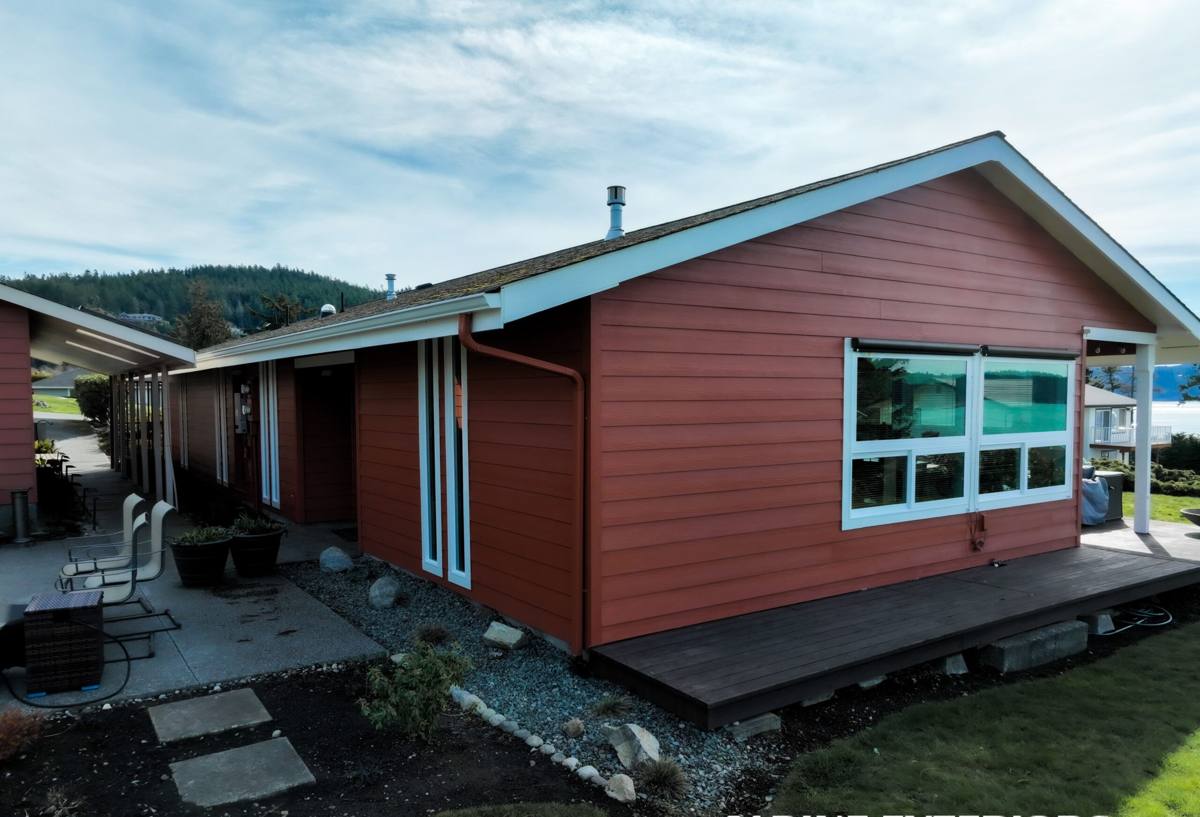
Orcas Island asks more of a home's exterior than most inland communities ever have to think about. Between the salt-laden air off the surrounding waters, the long stretches of driving rain that roll through San Juan County in the fall and winter, and a moss and lichen season that seems to start earlier every year, siding here works overtime. When it's time to replace siding on an Orcas Island home, the goal isn't just to make the house look new again — it's to put a system on the walls that can actually stand up to this specific environment for decades, not just a few seasons.
We work on Orcas regularly, which matters more than it sounds like. A crew that only occasionally makes the trip out doesn't build the same working knowledge of how island homes age, where moisture tends to collect, or which details fail first in a marine climate. We install one product — James Hardie fiber cement siding — because after years of exterior work in this region, it's the system we trust to hold up to what Orcas throws at it.
Why the Orcas Climate Is Hard on Siding
It helps to understand exactly what's working against your siding, because it explains why some materials age gracefully here and others don't.
Salt Air and Moisture
Homes near the shoreline and even those set back into the trees still get regular exposure to salt-carrying air moving off the water. Salt is corrosive to fasteners and hardware, and it accelerates the breakdown of finishes that aren't formulated to resist it. Combine that with San Juan County's damp maritime climate and you get siding that's rarely fully dry for long stretches of the year — a condition that punishes any product with weak moisture resistance.
Driving Rain and Wind-Driven Water
Storms here don't just drop rain straight down — wind pushes it sideways into walls, seams, and trim details. Siding that isn't installed with the right clearances, flashing, and overlaps will let water find its way behind the cladding, where it can sit against sheathing and framing unseen for months.
Moss, Lichen, and Shade
Between the tree cover common on Orcas properties and the extended damp season, north-facing and shaded walls develop moss and lichen growth faster than most homeowners expect. Beyond the cosmetic issue, sustained organic growth holds moisture against the siding surface, which is a slow but steady stress on any material that isn't dimensionally stable or that absorbs water into its substrate.
What a Correct Siding Replacement Actually Involves
Replacing siding is not just stripping off old material and nailing up new panels. On Orcas, cutting corners on the parts you can't see after the job is done is exactly how a home ends up with rot and moisture damage five or ten years later.
Tear-Off and Inspection
We remove the existing siding and take a real look at what's underneath — sheathing condition, evidence of past moisture intrusion, and the state of the existing weather-resistive barrier. This step is where problems get caught while they're still fixable, instead of getting sealed back up behind new siding.
Water Management Layer
A correctly detailed weather-resistive barrier, properly lapped and taped, is what actually keeps bulk water out of the wall assembly. Siding is the first line of defense, but the water-resistive barrier behind it is what protects the structure when wind-driven rain inevitably gets past the surface.
Flashing at Every Penetration
Windows, doors, hose bibs, vents, and any other wall penetration need flashing detailed so water sheds outward and downward, never inward. On a home taking regular wind-driven rain off the water, this detail work is often the difference between a siding job that lasts and one that doesn't.
Proper Fastening and Clearances
Fiber cement siding has manufacturer-specified nailing patterns, fastener types, and minimum clearances from grade, roofing, and decks. Skipping these specs to save time is a common shortcut — and it's exactly the kind of shortcut that shows up as premature failure in a marine environment.
Why We Install Only James Hardie Fiber Cement
We don't install every siding product on the market, and that's a deliberate choice, not a limitation. James Hardie fiber cement is engineered specifically to handle the conditions that define island and coastal exteriors: moisture exposure, temperature swings, and sustained dampness.
- Non-combustible material — fiber cement doesn't feed a fire the way wood-based products can, which matters given how remote parts of Orcas can be from fire response.
- Engineered moisture resistance — Hardie's fiber cement formulation resists the swelling, warping, and rot that plague wood and wood-composite siding in wet climates.
- Climate-engineered product lines — Hardie's HZ5 product designation is formulated for colder, wetter climate zones like the Pacific Northwest, rather than a one-size-fits-all approach.
- ColorPlus factory finish — a baked-on finish applied under controlled conditions holds color and resists fading and chipping far better than field-applied paint, which matters when every gallon of paint and every contractor trip to Orcas comes with real logistics.
- Strong transferable warranty — when a product is backed by a warranty that holds up and can transfer to a new owner, it protects the investment, not just the installation day.
We get asked regularly about vinyl, LP SmartSide, primed spruce, cedar, and other fiber cement brands. Each has situations where it makes sense somewhere in the country. On Orcas specifically — with the salt exposure, rain load, and moss pressure this island sees — we've made the call that James Hardie is the only product we're willing to put our name behind.
Comparing Siding Options for an Orcas Island Home
| Factor | James Hardie Fiber Cement | Vinyl | Wood / Wood Composite |
|---|---|---|---|
| Moisture resistance | Engineered for wet climates | Doesn't absorb water, but can warp and gap | Absorbs moisture; prone to rot without diligent upkeep |
| Salt air durability | Strong, with corrosion-resistant fastening specs | Can become brittle and discolor over time | Finish breaks down faster near salt exposure |
| Fire resistance | Non-combustible | Combustible, can melt or deform | Combustible |
| Finish longevity | Factory-baked ColorPlus finish | Color molded in, but fades and chalks with age | Requires ongoing painting or staining |
| Maintenance in a moss-prone climate | Low; resists sustained moisture damage | Low, but growth still needs cleaning | Higher; trapped moisture accelerates decay |
Our Process, Start to Finish
Because we work Orcas regularly, we've streamlined the logistics that trip up crews who don't — material staging, ferry scheduling, and sequencing work so weather windows aren't wasted.
1. On-Site Assessment
We walk the exterior with you, look at sun and shade exposure on each wall, note where moisture and moss have been an issue, and check trim, window, and roofline details that affect how siding needs to be terminated.
2. Material Planning and Ordering
Because getting materials to Orcas takes real lead time, we plan orders early and account for the extra logistics of island delivery so your project isn't sitting half-finished waiting on a shipment.
3. Tear-Off and Substrate Repair
Old siding comes off, damaged sheathing gets addressed, and any prior moisture damage is repaired before anything new goes up.
4. Water-Resistive Barrier and Flashing
This is the step that protects the home for the next 30-plus years, done to spec every time.
5. Hardie Installation
Siding, trim, and any transition details are installed to James Hardie's fastening, clearance, and caulking specifications — not shortcuts.
6. Final Walkthrough
We review the finished exterior with you, check details at corners, windows, and rooflines, and make sure you know what little maintenance the new siding will actually need.
Signs Your Orcas Home May Need Siding Replacement
- Visible cracking, warping, or soft spots you can press in with light pressure
- Persistent moss or algae growth that returns quickly after cleaning
- Peeling or bubbling paint that keeps coming back despite repainting
- Gaps opening up at seams, corners, or trim boards
- Musty smells or visible staining on interior walls near exterior siding
- Siding that's original to a home built more than 20–25 years ago with wood or older composite product
What Affects the Cost of a Siding Replacement Project
Every home is different, but a few factors consistently drive cost on Orcas projects specifically:
| Cost Factor | Why It Matters on Orcas |
|---|---|
| Home size and wall complexity | More corners, dormers, and trim details mean more labor and material cuts |
| Substrate condition | Hidden rot or moisture damage found during tear-off adds repair scope |
| Access and logistics | Ferry scheduling and material delivery timing affect project sequencing |
| Existing siding removal | Some materials come off faster and cleaner than others |
| Trim and accessory scope | Fascia, soffits, and window trim replaced alongside siding add to the project |
We'll walk your specific home and give you a straightforward estimate rather than a generic per-square-foot number that doesn't reflect what your project actually needs.
Why Hiring a Crew That Already Works Orcas Matters
A mainland contractor unfamiliar with island logistics can turn a straightforward siding job into a scheduling headache — missed ferry windows, material delays, and crews unfamiliar with how quickly weather changes out here. Working with a crew that already understands San Juan County's climate, delivery logistics, and the specific way homes age on Orcas means fewer surprises and a project that moves at the pace it should.
It also means the person installing your siding has actually seen how James Hardie performs on this island over time — which walls take the worst weather, where moss pressure is highest, and what installation details matter most given the salt air and driving rain this community deals with every year.
If your Orcas home's siding is showing its age, we're happy to take a look and give you an honest read on what it needs. Reach out for a free, no-pressure estimate using the form below.