 Orcas Island Siding
 Storm Damage Roof Repair for the Obstruction Pass Area
Homes around Obstruction Pass sit close to the water on the southeast side of Orcas Island, which means they take the full brunt of what San Juan County weather has to offer. Winter southeasters push driving rain sideways under poorly sealed flashing, salt-laden wind off the water works into fastener heads and metal edges, and the shaded, tree-lined lots that make this part of the island so pleasant to live on also keep roofs damp long enough to grow moss for most of the year. A roof that would hold up fine in a drier inland climate can develop real problems out here faster than most homeowners expect.
This page covers what storm damage roof repair actually involves for a home in the Obstruction Pass area — what to look for after a blow, what a correct repair looks like, and how we approach the job when we're called out.
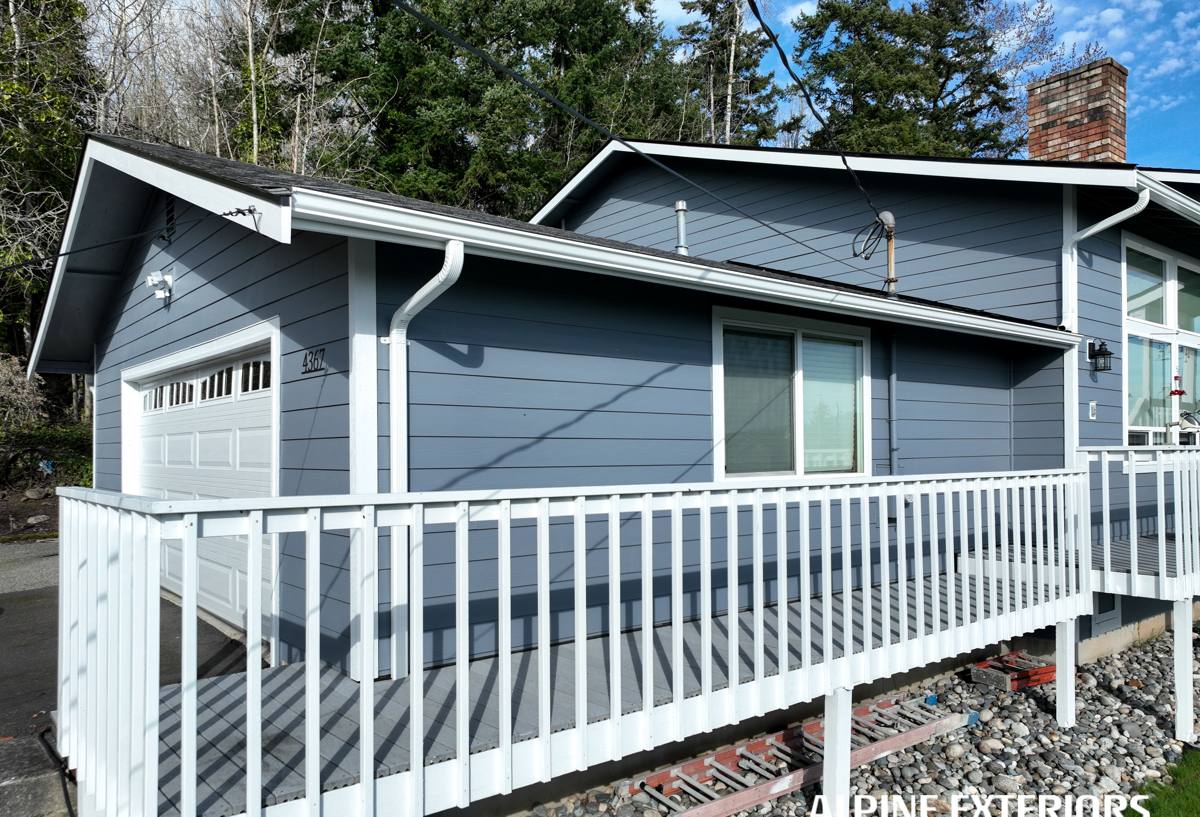
What Storms Actually Do to a Roof Out Here
"Storm damage" covers more than a hole punched through by a falling branch. On Orcas Island, most of the damage we find is quieter and easier to miss:
Wind and Uplift
Sustained wind off the water can lift shingle tabs and metal panel edges just enough to break the seal underneath, without tearing anything off outright. The roof looks intact from the ground, but water is now getting a way in every time it rains.
Driving Rain and Wind-Driven Water
When rain comes in nearly horizontal, it can work backward under shingles, around chimney and skylight flashing, and through vent boots that would otherwise shed water fine in a normal downpour. This is where most of the leaks we get called about after a storm actually start.
Salt Air
Proximity to the water means metal fasteners, flashing, and drip edge corrode faster here than they would further inland. A fastener that's lost its coating can back out or rust through years before it should, opening a path for water right at a seam.
Moss and Trapped Moisture
Orcas Island's long wet season and heavy tree cover give moss plenty of time to establish itself, especially on north-facing slopes and anywhere debris collects. Moss holds moisture against the roofing material, lifts shingle edges as it grows, and can turn a small storm-related weak spot into a much bigger repair if it sits untreated over a winter.
Signs Your Roof Needs a Storm Damage Inspection
Storm damage isn't always obvious from the ground. After any significant wind or rain event, it's worth checking for the following:
- Shingles that look lifted, curled, or out of alignment compared to the rest of the roof
- Granules collecting in gutters or at the base of downspouts
- New or worsening water stains on ceilings or interior walls
- Soft spots, sagging, or discoloration on the underside of eaves and soffits
- Flashing around chimneys, skylights, or vent pipes that looks bent, separated, or rusted
- Moss buildup that's grown noticeably thicker or spread since last season
- Debris, branches, or dents on the roof surface after high wind
- Daylight visible through the roof deck from inside an attic or crawlspace
Any one of these is a reason to get a closer look. On a roof that's already carrying moss or is past its expected service life, storm stress tends to find the weakest point first.
What a Correct Storm Damage Repair Actually Involves
Stopping Further Damage First
If a storm has left an active leak or exposed roof deck, the first priority is a temporary, weather-tight cover — tarping or emergency sealing — to stop water intrusion while a permanent repair is scheduled. Skipping this step, even for a few days, is how a manageable repair turns into a deck replacement.
A Full Roof Assessment, Not Just the Obvious Spot
Wind and rain damage is rarely limited to one visible location. A proper inspection covers the whole roof plane, not just the area near the interior stain, because the water causing a ceiling leak can travel several feet from where it actually entered.
Matching the Repair to the Roofing System
How a repair is done depends on what's already on the roof — asphalt composition shingle, metal panel, or cedar — and its age and condition. Patching a section of aging shingle roofing without addressing surrounding wear can leave you with a repair that looks fine but fails again at the next storm. We assess the whole system before recommending a fix.
Rebuilding the Water Path, Not Just Covering the Hole
A durable repair restores proper shingle or panel overlap, correct flashing laps at penetrations and valleys, and underlayment continuity — the layered system that actually keeps water out. Surface patches that don't restore this layering tend to fail again in the next storm.
Repair vs. Replacement: How We Help You Decide
Not every storm-damaged roof needs to be replaced, and not every roof is worth repairing again. The right call depends on the roof's age, how widespread the damage is, and what condition the rest of the roofing is in.
| Factor | Leans Toward Repair | Leans Toward Replacement |
|---|---|---|
| Roof age | Under 15 years, or recently replaced | Near or past the material's expected service life |
| Extent of damage | Isolated to one section or penetration | Spread across multiple slopes or the whole roof |
| Moss and moisture history | Light, recently treated | Long-term buildup with visible deck staining |
| Underlying material condition | Shingles or panels still flexible and intact elsewhere | Brittle, cracking, or granule loss across the roof |
| Storm frequency going forward | One-off event | Repeated storm exposure on an aging roof |
We'll walk you through where your roof falls on this before recommending either option — our goal is an honest answer, not the bigger invoice.
Our Storm Damage Repair Process
- Inspection. We check the full roof, not just the reported problem area, and document what we find.
- Temporary protection, if needed. Active leaks get covered the same visit to stop further interior or deck damage.
- Written scope and estimate. You get a clear explanation of what's damaged, what we recommend, and what it costs before any work starts.
- Repair. We remove and replace only what's compromised, restoring proper flashing, underlayment, and shingle or panel overlap at every repaired area.
- Final check. We confirm the repair sheds water correctly and look for any secondary issues, like moss or worn flashing nearby, that could cause the next leak.
Materials and Detailing That Hold Up Near the Water
Given the salt air and moisture exposure common to the Obstruction Pass area, we pay particular attention to a few details that matter more here than they would further inland:
- Corrosion-resistant fasteners and flashing rated for coastal exposure, rather than standard-grade hardware
- Ice-and-water shield or equivalent self-adhering underlayment at valleys, eaves, and penetrations, where wind-driven rain is most likely to find a way in
- Proper attic and roof ventilation, so trapped moisture doesn't accelerate moss growth or deck rot from underneath
- Moss treatment and physical debris removal as part of the repair, not just a patch over the symptom
We don't push premium materials for their own sake. Where a standard-grade component will hold up fine, we use it. Where the coastal exposure specific to this part of the island calls for something more durable, we explain why and let you decide.
Insurance and Documentation
Most homeowner's insurance policies distinguish between storm damage and gradual wear, and that distinction affects whether a claim is covered. We document damage with photos and a written assessment at the time of inspection, which gives you a clear record if you decide to file a claim. We're not a public adjuster and won't guarantee a claim outcome, but having accurate documentation from the start makes that conversation with your insurer a lot more straightforward.
Why It Matters to Hire a Crew That Already Works Obstruction Pass
A roofer who mostly works inland projects can still do competent work, but they may not immediately recognize how differently a roof ages a few hundred feet from saltwater versus a mile away. We work regularly on homes throughout the Orcas Island and broader San Juan County area, so we're familiar with the ferry-dependent scheduling, the access considerations on wooded and waterfront lots, and the specific combination of wind exposure, salt air, and moss pressure that shows up in this part of the island. That familiarity means fewer surprises once we're actually on your roof.
If a recent storm has you wondering whether your roof took damage, we're happy to take a look and give you a straight answer — repair, monitor, or replace — along with a free, no-pressure estimate through the form below.