 Orcas Island Siding
 West Sound sits on the quieter side of Orcas Island, but "quieter" doesn't mean sheltered once a real winter system rolls through the San Juan Islands. Wind moves across open water and gets funneled by the surrounding hills, rain comes in at an angle instead of straight down, and a roof that looked fine before the storm can be missing shingles, torn flashing, or a cracked ridge cap once it clears. We work on roofs in and around West Sound regularly, and this page covers what storm damage actually looks like out here, what a correct repair involves, and how our process works from the first call to a finished, weathertight roof.
What West Sound's Exposure Does to a Roof
Every roof on Orcas Island deals with salt-laden marine air, driving rain, and a moss season that can run most of the year on shaded, north-facing slopes. West Sound adds its own wrinkle: homes closer to the water catch wind funneling down the bay with more force than a roof tucked further inland, and that wind doesn't just push against a roof — it gets under any edge that isn't sealed tight. Salt air also accelerates corrosion on exposed nail heads, flashing, and fasteners faster than an inland site would ever see, which means a fastener pattern that held fine for years can start failing sooner here than the manufacturer's warranty numbers would suggest.
Add in the fir and madrona canopy that surrounds a lot of West Sound properties, and you get a second problem layered on top of the wind and rain: falling limbs and a steady drop of needles and debris that collects in valleys, behind chimneys, and in gutters. That debris holds moisture against the roofing material long after a storm passes, which is exactly the condition moss and rot need to get started. None of this means a West Sound roof is doomed — it means the climate here puts specific, sustained stress on the details a roof depends on, and storm repair work has to account for that instead of just patching what's visibly broken.
Wind Exposure Specific to the Bay
Homes with a clearer line to the water tend to take the brunt of gusts moving down the sound, and older roofs with fasteners that have already loosened over a few wet seasons are the first to lose shingle tabs or ridge cap pieces in that kind of wind. Once wind gets under one lifted edge, it works on the next one, which is why storm damage on an exposed West Sound roof often shows up as a cluster of failures along one slope rather than a single isolated spot.
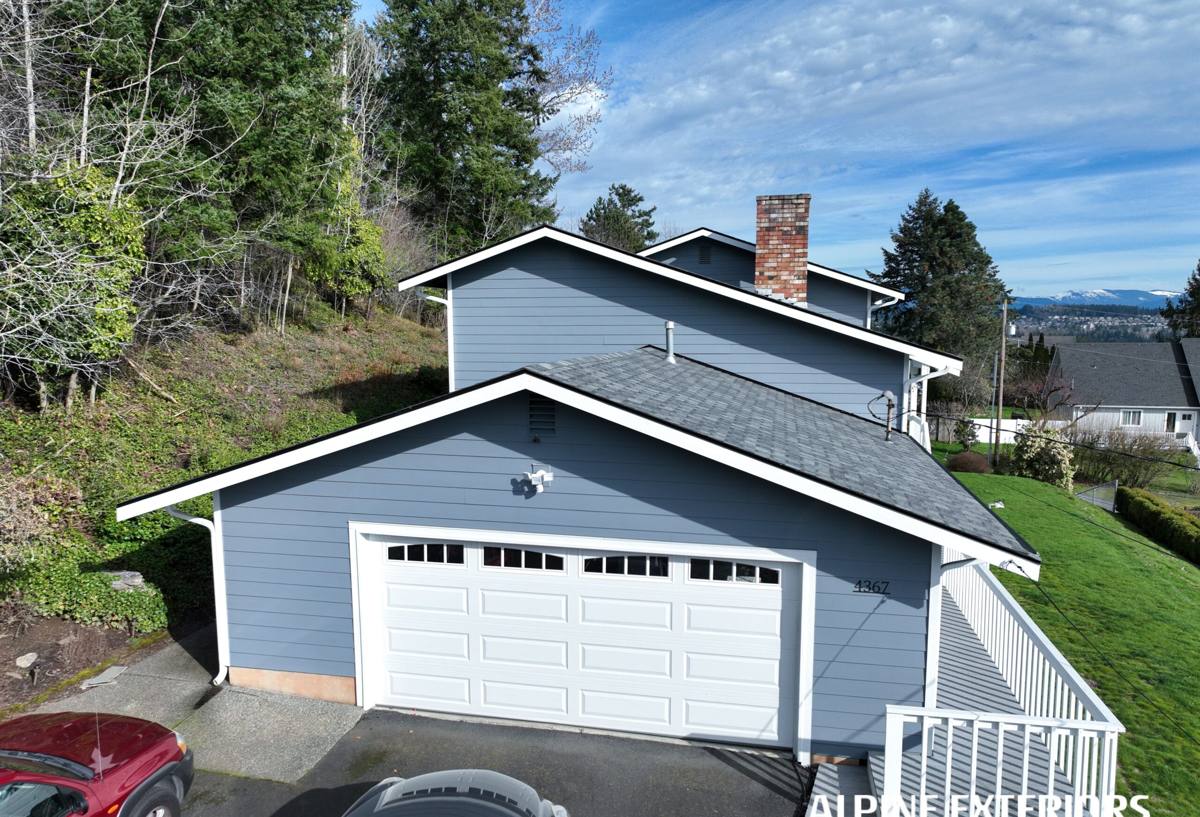
What Actually Counts as Storm Damage
Not all storm damage is dramatic, and homeowners sometimes assume a roof is fine because nothing is obviously missing when they look up from the yard. Storm damage covers a range of failures, some easy to spot and some that only show up on a close inspection:
- Missing, torn, or cracked shingles, especially along ridges, hips, and roof edges
- Lifted or displaced ridge caps where wind got underneath the seal
- Bent, torn, or separated flashing around chimneys, skylights, and valleys
- Granule loss that exposes the shingle mat underneath and accelerates UV and moisture damage
- Punctures or soft spots caused by falling limbs or wind-blown debris
- Damaged or overwhelmed gutters and downspouts that let water back up under the roof edge
The distinction that matters, especially if you're thinking about an insurance claim, is whether the damage traces to a specific storm event or is really just the roof aging under this climate's normal wear. An honest inspection should tell you which one you're dealing with, not just point at a problem and call it storm damage because that's the easier conversation.
Damage That's Easy to Miss From the Ground
A roof can look intact from the driveway and still have real problems. Lifted shingle tabs that haven't fully separated, a cracked pipe boot around a vent, or a flashing seam that's pulled a quarter-inch away from a chimney don't show from below, but they're exactly the kind of openings that let the next storm's rain get underneath the roofing system instead of over it. That's part of why we walk the roof itself rather than assessing storm damage from the ground or from a photo a homeowner sends over.
What a Correct Storm Repair Actually Involves
A correct repair is more than nailing down whatever shingle blew loose. It starts with figuring out how far the damage actually extends — wind that lifted three visible shingles usually loosened fasteners on several more that haven't let go yet, and those need to be addressed now rather than left for the next storm to finish the job. It also means checking the roof deck underneath any area where water got in, since a shingle repair over a deck that's already taken on moisture just seals the problem in rather than fixing it. Flashing has to be re-formed or replaced to the correct profile, not just re-caulked, since caulk is a short-term fix on a metal component that's supposed to shed water on its own. And replacement materials need to match the existing roof closely enough that the repair doesn't become its own weak point — mismatched shingle profiles or the wrong underlayment under a patch can create a new place for wind-driven rain to find a way in.
None of that is complicated work, but it's easy to shortcut, especially when a homeowner just wants the visible problem gone quickly. We'd rather explain what the full scope of a proper repair looks like upfront than hand back a roof that looks fixed and fails again in the next storm.
Our Process, From First Call to Finished Repair
- Inspection and documentation. We walk the roof, identify every point of damage — not just the obvious one — and document it with photos so you have a clear record, whether or not you end up filing an insurance claim.
- Temporary protection, if needed. If the roof is actively letting water in, we get it tarped or covered before we do anything else. Stopping ongoing intrusion matters more than finishing the permanent repair on day one.
- A clear repair plan and honest estimate. We explain what the damage actually requires — a targeted repair, a larger section replacement, or in some cases a conversation about whether a full reroof makes more sense — before any work starts.
- Material sourcing. Getting matching shingles, flashing stock, and underlayment to the island means planning around ferry schedules, so we order and stage materials as early in the process as we can to avoid a homeowner sitting under a tarp longer than necessary.
- The repair itself. Deck inspection and any needed sheathing repair, correct flashing work, and shingle or roofing material replacement matched to the existing roof.
- Cleanup and a final walk-through. Debris cleared, gutters checked, and the repair reviewed with you before we call it done.
Repair or Full Replacement?
Storm damage doesn't automatically mean a new roof, but it's a fair question to ask, and the honest answer depends on a few factors working together rather than any single one.
| Factor | Usually Points to Repair | Usually Points to Replacement |
|---|---|---|
| Roof age | Well within its expected service life | Already near or past the manufacturer's expected lifespan |
| Extent of damage | Localized to one area or slope | Spread across multiple slopes or recurring in the same spots |
| Storm history | First significant damage in several years | Repeated storm damage over a short span, suggesting the roof is losing its ability to hold up |
| Underlying deck condition | Deck is dry and sound once opened up | Deck shows rot, soft spots, or repeated moisture intrusion |
| Overall shingle condition elsewhere on the roof | Remaining shingles are still flexible and well-adhered | Remaining shingles are brittle, curling, or losing granules broadly |
We'll give you a straight read on where your roof falls on that table rather than defaulting to whichever answer is more work for us. Plenty of storm calls end with a targeted repair and nothing more.
Storm Damage and Insurance Claims
If you're planning to file a claim, a few things help the process go smoother. Document the damage with photos as soon as it's safe to do so, before any repair work covers it up. Get an inspection promptly — the longer damaged flashing or exposed underlayment sits open, the more secondary damage builds on top of the original storm event, and insurers can and do distinguish between storm damage and damage that's really deferred maintenance or gradual wear. We're not a public adjuster and we won't represent your claim to your carrier, but we'll give you an honest, documented inspection report that lays out what we found and when it's consistent with storm damage, which is what you need going into that conversation with your insurer.
Why a Crew That Already Works West Sound Matters
Storm repair on an island isn't the same job as storm repair somewhere you can run to a supply house twenty minutes away. Materials have to be planned around ferry schedules, and a contractor who doesn't already account for that can leave a homeowner under a tarp far longer than necessary. A crew that already works in West Sound also has a working sense of which slopes and elevations tend to take the worst of the wind coming down the bay, which fir and madrona debris patterns cause recurring valley and gutter problems on this side of the island, and how San Juan County's permitting works for reroof work when a repair turns into something bigger. That local familiarity doesn't replace a careful inspection of your specific roof, but it does mean fewer surprises and a faster path from "storm just came through" to a roof that's actually weathertight again.
Signs You Need a Storm Damage Roof Inspection
- Water stains or a wet spot on a ceiling or ridge board after a storm
- Shingle pieces or granules visible in the yard, on the ground, or pooled in gutters and downspouts
- Missing or displaced ridge cap sections visible from a distance
- A sagging or soft-feeling area on the roof surface
- Daylight visible through the roof deck from inside the attic
- A fallen limb or debris strike that made contact with the roof, even if nothing looks obviously broken
If any of that sounds familiar after a recent storm, it's worth having someone look before the next system moves through. We offer a free, no-pressure estimate for West Sound homeowners — reach out through the form below and we'll take a look at what your roof actually needs.