 Orcas Island Siding
 Custom Windows Built for West Sound's Marine Climate
West Sound sits close enough to the water that its homes take a different kind of weathering than houses further inland on Orcas Island. Salt-laden air moves through the fir and cedar stands, driving rain comes in sideways off the sound during winter storms, and the shoulder seasons bring weeks of damp, low-light conditions that keep everything — siding, trim, and window frames — wet longer than it would stay in a drier climate. Windows are one of the first places that shows up as a problem, because a window is really a hole in your building envelope with moving parts, seals, and a frame material that either handles moisture or doesn't.
When we talk about "custom windows" for a West Sound project, we mean windows sized, configured, and specified to fit an opening and a house exactly — not a stock size forced into a rough opening with extra trim to hide the gap. On older Orcas Island homes especially, openings are rarely standard dimensions, and a correct custom window install accounts for that from the first measurement.
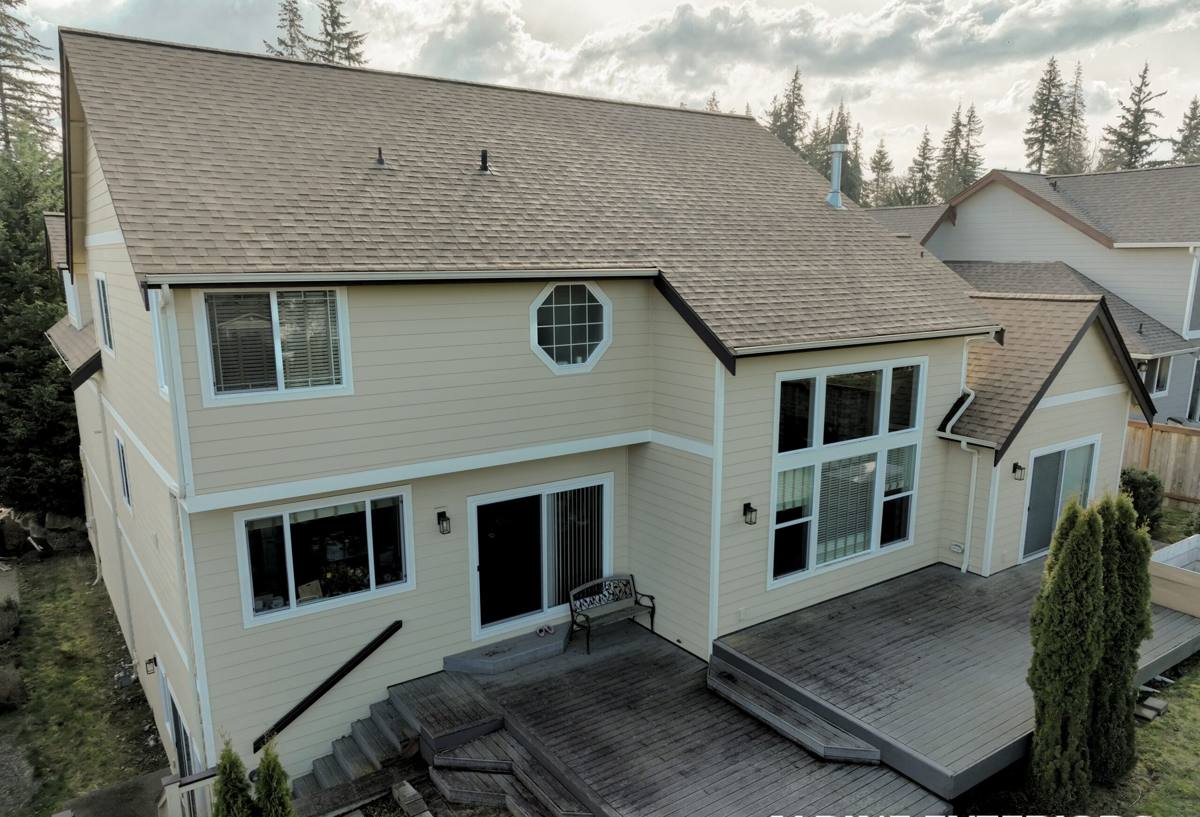
What West Sound Homes Actually Need From Their Windows
We've worked on enough homes in this part of San Juan County to know the failure patterns are consistent. It's rarely the glass that fails first — it's the flashing, the sealant, and the frame material around it.
Salt Air and Metal Components
Window hardware, cranks, and some cladding-integrated flashing systems use metal components that corrode faster this close to saltwater. We favor hardware and flashing metals rated for coastal exposure, and we avoid mixing incompatible metals at flashing junctions, which can accelerate galvanic corrosion over time.
Driving Rain and Wind-Driven Water
West Sound gets weather that comes at the house horizontally, not just straight down. That means window flashing details — head flashing, sill pans, and the way the window integrates with your house wrap or weather-resistive barrier — matter more here than they would on a sheltered inland lot. A window that's watertight in a light rain can still leak in a sideways storm if the sill pan and drainage plane aren't done correctly.
Moss, Mildew, and the Long Wet Season
San Juan County's wet season stretches long, and anything organic-friendly — bare wood trim, unsealed joints, debris-catching sills — becomes a spot for moss and mildew to take hold. That's cosmetic at first, but trapped moisture behind moss or algae growth eventually finds its way into wood trim and sheathing.
What a Correct Custom Window Job Involves
A window replacement or new install is not just popping out an old unit and setting a new one in the same hole. Done right, it's several distinct steps, and skipping any one of them is where leaks and rot start.
- Removing the old window and inspecting the rough opening, sill, and surrounding framing for existing water damage or rot before anything new goes in
- Repairing or replacing any compromised framing, sheathing, or sill material — never installing a new window over damaged wood
- Installing a properly sloped sill pan so any water that gets past the window sheds outward, not into the wall cavity
- Integrating window flashing correctly with the house's weather-resistive barrier, using proper shingle-lap sequencing so water always drains down and out
- Setting the window plumb, level, and square, with correct shim placement so the frame isn't stressed and the sash operates smoothly for years
- Insulating the gap between the window frame and rough opening without over-packing it, which can bow the frame
- Sealing and caulking exterior joints with a product suited to this climate's UV and moisture exposure, plus interior air-sealing
- Reinstalling or replacing exterior trim so it sheds water away from the window rather than channeling it toward the frame
Every one of those steps is invisible once the job is finished and the trim is painted. That's exactly why the workmanship behind the wall matters more than the window brand printed on the glass.
Choosing the Right Window Type and Frame Material
There's no single "best" window material for every West Sound home — it depends on the house's age, siding type, and how exposed the elevation is to weather. We walk homeowners through the real trade-offs rather than pushing one option.
| Frame Material | Strengths in This Climate | Trade-Offs to Consider |
|---|---|---|
| Vinyl | Low maintenance, resists moisture absorption, budget-friendly | Fewer custom color/profile options; can look out of place on period homes |
| Fiberglass | Very stable in temperature swings, holds paint well, strong against warping | Higher upfront cost than vinyl |
| Wood (clad or unclad) | Best fit for historic or high-end architectural styles | Unclad wood needs regular maintenance in a wet, salt-air climate; clad wood shifts more maintenance to the exterior cladding's durability |
| Aluminum | Strong and slim sightlines for larger openings | Poor insulator unless thermally broken; can conduct cold and promote condensation |
For most West Sound homes exposed to direct weather, we lean toward fiberglass or well-detailed vinyl for the exterior-facing performance, and reserve unclad wood for interiors or sheltered elevations where upkeep is realistic for the homeowner to maintain. That's our standard recommendation based on how these materials actually hold up here — not a knock on any manufacturer.
How Our Process Works
1. On-Site Assessment
We start by looking at the actual openings, not just taking a phone order for "10 windows." We check existing flashing, look for signs of past moisture intrusion around sills and headers, and note anything about the elevation's sun and wind exposure that should influence the spec.
2. Measuring and Specifying
Custom work means precise measurements of each opening, since older Orcas Island homes rarely have perfectly uniform rough openings. We spec frame material, glazing package, and hardware based on that specific opening's exposure — a window on the weather side of the house may get a different glazing or flashing detail than one on a sheltered wall.
3. Installation
Install follows the sequence outlined above: inspect and repair the opening, set the sill pan, integrate flashing with the water barrier, set the window, insulate, seal, and trim. We don't shortcut the flashing sequence to save time, because that's the step that determines whether the window is still watertight in five years.
4. Walkthrough
We walk the finished openings with the homeowner, check operation on every sash, and confirm the exterior sealant and trim lines look right before we consider the job done.
Why a Crew That Already Works West Sound Matters
Window flashing details that work fine in a dry inland climate can fail within a few seasons on a marine-exposed wall. A crew that hasn't dealt with San Juan County's rain patterns, salt exposure, and moss growth may default to generic details that aren't wrong exactly, but aren't matched to what this specific area demands. We've seen the failure points on Orcas Island homes firsthand — where moss builds up on sills, where driving rain finds gaps in trim, where salt air eats through the wrong hardware — and we spec and install accordingly. That local pattern recognition is worth more than a lower bid from a crew working here for the first time.
There's also the logistics side: getting materials, crews, and any warranty service to and from Orcas Island takes planning that off-island contractors often underestimate, which can turn into delays or gaps in follow-up service. A contractor already working in West Sound and the surrounding areas doesn't have that friction.
Signs Your Current Windows Need Attention
- Fogging or condensation between panes, which usually means a failed seal on a double- or triple-glazed unit
- Soft or discolored wood trim around the frame, a sign moisture has been sitting there
- Difficulty opening, closing, or locking the sash — often a sign the frame has shifted or swelled
- Visible gaps or cracked caulking at the frame-to-siding joint
- Moss or persistent green growth on the sill or lower trim
- Noticeable draft or temperature difference near the window on a windy day
Any one of these on its own isn't necessarily an emergency, but they're worth having looked at before the next wet season, since problems at the flashing level tend to get more expensive the longer they sit unaddressed.
Maintaining Custom Windows After Installation
A correctly installed window still needs basic upkeep in this climate. Rinse salt residue off exterior frames periodically, especially after storms. Keep sills clear of debris and moss so water has a clear path to drain. Check exterior caulking annually for cracking or separation, since UV exposure and temperature swings break down sealants faster on south- and west-facing walls. If you have unclad wood trim around your windows, plan on repainting or resealing it on a regular cycle — that's the maintenance trade-off that comes with the look.
If you're dealing with drafty, foggy, or aging windows in West Sound, or planning custom window installation as part of a larger renovation, we're happy to take a look and give you a straightforward, no-pressure estimate. Fill out the form below and we'll get in touch to schedule a time to walk the property with you.