 Orcas Island Siding
 Roof Repair Built for West Sound's Weather, Not Generic Weather
West Sound sits on the water side of Orcas Island, which means the roof over your head deals with a different mix of stress than a roof twenty miles inland. Salt-laden air moves off the water and settles on metal flashing, fasteners, and gutter hardware. Driving rain comes in sideways during winter storms and finds every gap a normal roof would never test. And the tree cover that makes this part of San Juan County so beautiful also means shade, needle litter, and a moss season that runs longer than most homeowners expect. A roof repair here has to account for all three at once, not just patch the spot that's leaking today.
We work on Orcas Island roofs year-round, and West Sound is one of the areas we're in regularly. That matters more than it sounds like it should — a repair crew that already knows how this stretch of the island behaves in a January storm makes fewer guesses and fewer callbacks.
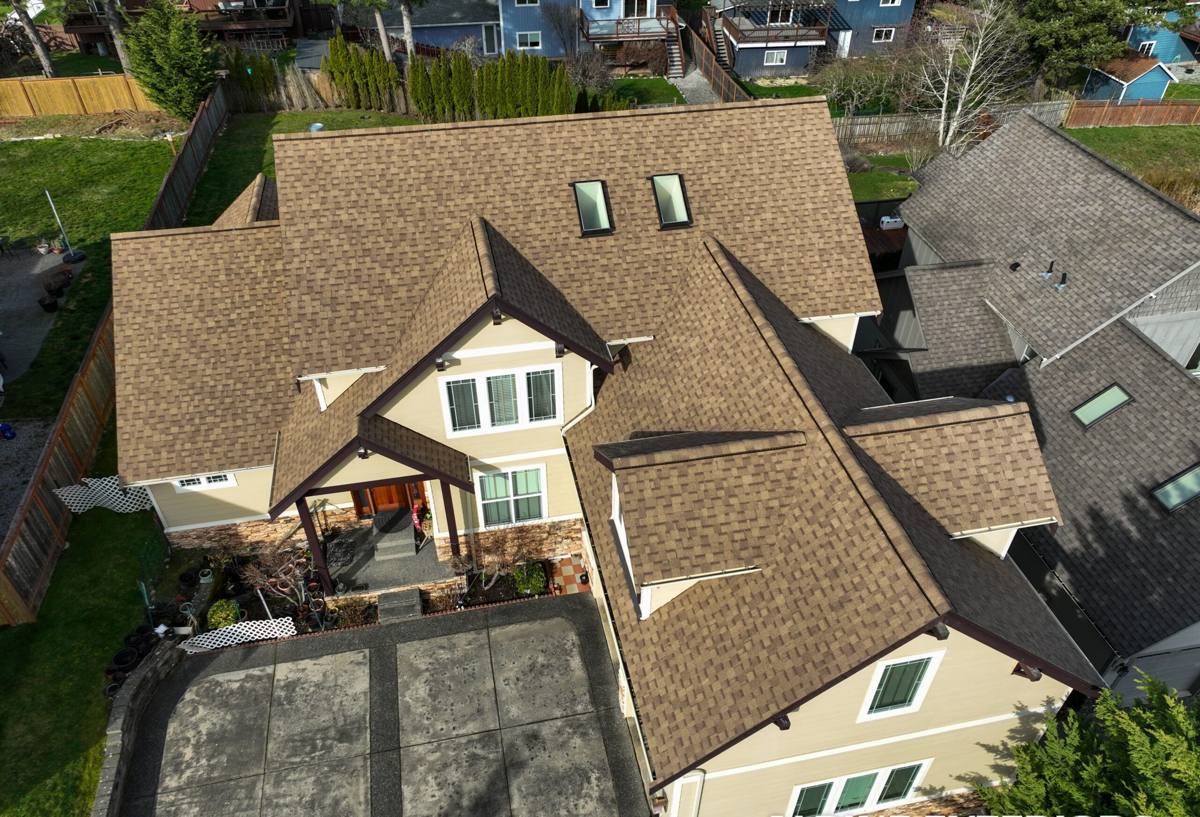
What Actually Damages Roofs in This Part of the Island
Salt Air and Metal Fatigue
Metal flashing, nail heads, and gutter fasteners near the water corrode faster than the same materials would inland. It's slow and easy to miss until a flashing seam opens up or a fastener backs out enough to let water track underneath the roofing material.
Moss and Trapped Moisture
Orcas Island's wet season runs long, and West Sound's tree cover keeps roofs shaded and slow to dry between rains. Moss takes hold in that combination of moisture and shade, and once it's established it lifts shingle edges and holds water against the roof deck instead of letting it shed.
Wind-Driven Rain
Storms coming off the water don't always drop rain straight down — they push it sideways, up under shingle tabs, and into any flashing detail that's slightly loose. A roof that would stay dry in a calm rain can leak in a wind event if the details aren't tight.
Debris Load
Fir needles, cedar debris, and leaf litter build up in valleys and behind chimneys faster here than in more open areas. Left alone, that debris holds moisture against the roofing material and accelerates everything above.
Signs Your Roof Needs a Repair Now, Not a Wait-and-See
Most roof problems in West Sound don't start as leaks — they start as smaller signs that get ignored until winter turns them into an active drip. Here's what we tell homeowners to watch for:
- Dark streaking or thick moss growth concentrated on the shaded or north-facing slopes
- Granules collecting in gutters or at downspout outlets, a sign shingles are wearing thin
- Soft or discolored spots on interior ceilings, especially near chimneys, skylights, or where two roof planes meet
- Lifted, curled, or missing shingle tabs after a windstorm
- Flashing that looks rusted, pulled away from the wall or chimney, or caulked over repeatedly instead of properly reset
- Sagging or spongy-feeling sections of roof deck when walked (a sign moisture has already reached the sheathing)
- Daylight visible through the roof deck from inside an attic or crawlspace
Catching any of these early is almost always a repair-level fix. Waiting turns them into deck replacement, insulation damage, or interior repair — all more expensive than the roof work that started it.
The Repairs We Actually Perform
Moss Removal and Treatment
We remove moss by hand or with low-pressure methods that won't strip granules or damage the roofing material — pressure washing a shingle roof does more harm than the moss itself. After removal, we treat the surface to slow regrowth and check whether nearby tree limbs are keeping that section shaded enough to invite moss back quickly.
Flashing Repair and Replacement
Flashing around chimneys, skylights, sidewalls, and roof valleys is where most West Sound leaks actually originate — not the field of the roof itself. We reset or replace corroded and loose flashing rather than relying on caulk or sealant as a long-term fix, since sealant breaks down under UV and salt air faster than it should.
Shingle and Shake Repair
Localized wind damage, cracked shingles, or worn shake sections get replaced in kind, matched as closely as possible to the surrounding roof so the repair blends rather than standing out as a patch.
Leak Diagnosis and Deck Repair
When a leak's source isn't obvious from the outside, we trace it — water often travels along rafters or sheathing before it shows up on a ceiling, so the drip point inside is rarely straight below the entry point on the roof. If the deck underneath has softened, we replace that section rather than roofing over it.
Valley and Edge Repair
Valleys carry more water than any other part of a roof, and they're where debris collects fastest under tree cover. We repair valley metal and underlayment as a unit rather than patching just the visible surface layer.
Repair vs. Full Replacement — How We Help You Decide
Not every roof problem calls for a full tear-off, and not every roof is a good candidate for another round of patching. We walk homeowners through this honestly rather than defaulting to the bigger job.
| Factor | Repair Makes Sense | Replacement Makes Sense |
|---|---|---|
| Roof age | Under 15–18 years, or a shorter-lived material still within its useful life | Near or past the material's expected lifespan |
| Damage extent | Localized to one or two areas (a valley, a flashing point, a wind-damaged section) | Widespread granule loss, multiple leak points, or deck damage in several areas |
| Underlying deck | Solid, dry sheathing beneath the damaged section | Soft, delaminated, or repeatedly wet sheathing |
| Moss/algae history | First occurrence or caught early | Recurring, heavy growth across multiple seasons |
| Cost outlook | Lower upfront cost, addresses the immediate problem | Higher upfront cost, resets the clock on the whole roof |
We'll tell you plainly which category your roof falls into. A repair that's genuinely enough to solve the problem is the right call more often than people expect — we don't push replacement on a roof that doesn't need it.
How Our Repair Process Works
- Inspection: We get on the roof (not just a look from the ground) to check flashing, valleys, moss coverage, and the deck condition beneath any suspect areas.
- Diagnosis: If there's an active leak, we trace it back to its actual entry point, which is often not where the interior damage appears.
- Written scope and estimate: You get a clear explanation of what's wrong, what we'll do about it, and a straightforward price — no vague allowances.
- Repair work: Moss treatment, flashing, decking, or shingle work is completed to match the surrounding roof as closely as possible.
- Cleanup and walk-through: We clear debris from gutters and valleys as part of the job, not as an upsell, and walk you through what was done.
Materials We Use — and Why
For repair work, we match materials to what's already on the roof wherever possible, since mismatched shingles or shakes stand out and can behave differently in weather. Where we're replacing flashing or underlayment, we favor corrosion-resistant metals and self-adhered membrane at vulnerable points like valleys and chimney saddles — the added upfront cost is small compared to what a second flashing failure costs a few years later in a marine climate. We're selective about relying on sealant as a primary fix; it has its place, but sealant alone breaks down faster under salt air and UV exposure than a properly reset flashing detail, and we'd rather do the job once.
Why a Crew That Already Works West Sound Matters
Getting materials and crews to Orcas Island means working around ferry schedules, which affects how repair timelines get planned — a crew unfamiliar with that logistics reality can end up stretching a simple repair over extra days waiting on materials. We also know which weather windows actually hold long enough to do flashing and deck work properly, rather than rushing a repair between rain bands and risking a callback. And because we see West Sound roofs regularly, we recognize moss patterns, prevailing wind exposure, and salt-air wear specific to this stretch of the island instead of applying a one-size-fits-all approach.
After the Repair: Keeping It From Coming Back
A repair holds longer with a little upkeep. Keeping nearby limbs trimmed back reduces the shade and debris that invite moss. Clearing gutters and valleys once or twice a year — more often under heavy tree cover — keeps water moving instead of pooling. And a quick visual check after any major windstorm catches lifted shingles or shifted flashing before they turn into a leak. We're glad to point out what to watch for on your specific roof when we're out there.
If you're dealing with moss, a leak, storm damage, or just want an honest read on whether your roof needs a repair or something bigger, we're happy to take a look. Reach out for a free, no-pressure estimate using the form below.