 Orcas Island Siding
 Why West Sound Roofs Wear Out Differently
West Sound sits close enough to open water that salt-laden air is a daily fact of life, not an occasional nuisance. Combine that with San Juan County's long wet season, driving rain off the water, and heavy tree cover that keeps roofs shaded and damp for weeks at a time, and you get a roofing environment that ages materials faster than most manufacturer warranties assume. A roof that would last three decades in a dry inland climate can show real trouble in West Sound well before that, especially if it was never built for this specific mix of salt, moisture, and shade.
Moss is the most visible symptom, but it's rarely the actual problem. Moss grows because a roof stays damp longer than it should, which usually points to poor airflow, a north-facing or heavily shaded slope, or shingles that have already lost some of their granule protection. By the time moss is thick enough to notice from the ground, it's often been lifting shingle edges and holding moisture against the roof deck for a season or two already.
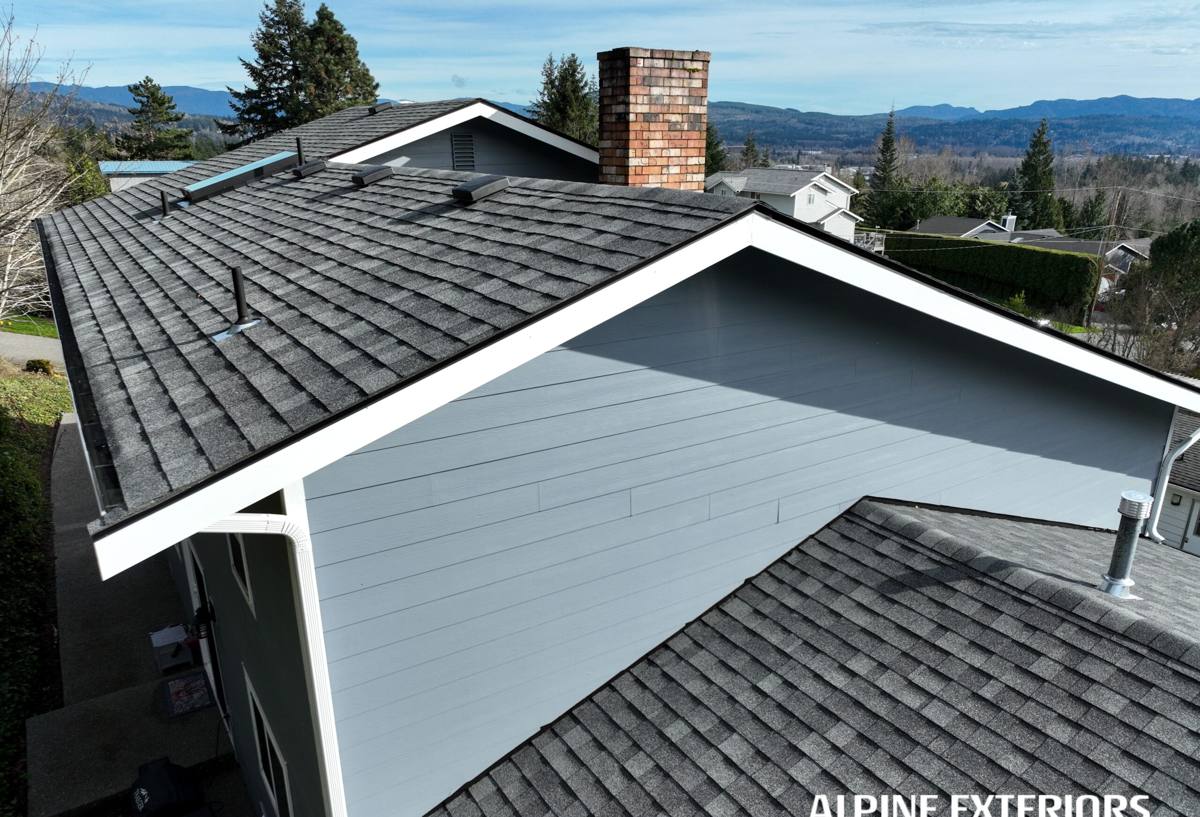
Signs a West Sound Home Is Due for a Roof Replacement
Roofs rarely fail all at once. They give warning signs first, and on Orcas Island those signs tend to show up in specific ways because of the climate. Homeowners doing their own walk-around inspection should look for:
- Moss or dark algae staining that comes back within months of cleaning
- Shingles that are curling, cupping, or missing granules in patches
- Soft or spongy spots on the roof deck, felt from inside the attic as flex
- Rusted, loose, or missing flashing around chimneys, vents, and skylights
- Daylight visible through the roof deck from inside an unfinished attic
- Water stains on ceilings or attic framing, even faint or old-looking ones
- Gutters filling with granules after every rain
- A roof that is 20+ years old and has never had a full tear-off
Any one of these on its own might just mean a repair. Several together, especially on a roof that's already been patched more than once, usually means the underlying materials are past the point where spot repairs make financial sense.
What a Correct Roof Replacement Actually Involves
"Roof replacement" gets used loosely in this trade, and it's worth being specific about what the job should include, because shortcuts here are exactly what causes premature failure in a marine climate like this one.
Full Tear-Off, Not a Layover
We remove the existing roofing down to the deck rather than layering new shingles over old ones. Layovers trap moisture between layers, hide deck damage, and void most manufacturer warranties outright. In a climate this wet, hidden moisture under a second layer is a guaranteed problem later.
Deck Inspection and Repair
Once the old roofing is off, we inspect every square foot of the deck for soft spots, delamination, or rot, particularly around valleys, chimneys, and any area that showed staining from the inside. Damaged sheathing gets replaced before anything new goes down. Skipping this step is one of the most common corners cut in this trade, and it's the one that causes the most expensive problems five or ten years later.
Underlayment Built for Wet Climates
Given the rain West Sound sees, we use underlayment products suited to prolonged wet exposure, with extra attention to valleys, eaves, and any low-slope transitions where water sits longest. Ice-and-water shield style membrane goes in the vulnerable areas regardless of season, since the risk here is driving rain and wind-blown moisture as much as freeze-thaw.
Flashing Done Right
Flashing failures around chimneys, skylights, and wall intersections are one of the most common causes of leaks we find on older Orcas Island roofs. Every flashing point gets replaced, not just re-caulked, as part of a proper replacement.
Ventilation That Actually Balances
Intake and exhaust ventilation have to work together. A ridge vent installed without enough intake at the eaves doesn't fix moisture problems, it can make them worse by pulling damp air the wrong direction. We check the whole ventilation path, not just add a vent and call it done.
Choosing Materials for a Marine, Moss-Prone Climate
There's no single "best" roofing material for every home, but there are real trade-offs worth understanding before you decide, especially given the salt air and shade most West Sound properties deal with.
| Material | Moisture & Moss Behavior | Maintenance | Typical Lifespan Here |
|---|---|---|---|
| Architectural asphalt shingle | Good drainage when installed with proper slope and ventilation; algae-resistant granule options help slow moss/algae staining | Periodic soft-wash cleaning recommended in shaded areas | 20-30 years with good airflow |
| Standing seam metal | Sheds water and moss very effectively due to smooth, slick surface and steep-draining panels | Low; occasional gutter and fastener checks | 40-50+ years |
| Cedar shake/shingle | Attractive but naturally more moisture-absorbent; needs airflow underneath and regular treatment to resist rot and moss in shaded, damp settings | Higher; periodic treatment and cleaning needed | 20-30 years with diligent upkeep |
| Composite/synthetic shingle | Engineered to resist moisture absorption; performance varies by product line | Low to moderate | Varies by manufacturer; check warranty terms |
We're upfront about the trade-offs of each. Cedar looks the part on a wooded Orcas Island lot, but it demands more attention in a climate that keeps roofs shaded and damp for long stretches. Metal costs more upfront but sheds moisture and moss better than almost anything else. Asphalt remains the practical middle ground for most budgets when it's installed with the ventilation and underlayment details this climate actually requires.
Our Roof Replacement Process
- On-site assessment — We walk the roof and attic, checking deck condition, ventilation, flashing points, and shade/moisture patterns specific to your lot.
- Written estimate — Clear scope, material options, and pricing before any work starts, no surprise change orders for things we could have caught up front.
- Material staging — Because of ferry logistics, we order and stage materials ahead of the scheduled start date so weather windows aren't wasted waiting on a delivery.
- Tear-off and deck repair — Old roofing removed, deck inspected and repaired as needed, debris hauled off site.
- Underlayment, flashing, and ventilation install — Done in the sequence that keeps the deck protected even if weather interrupts the job partway through.
- Final roofing installation — Shingles, panels, or shakes installed per manufacturer specification, not shortcuts.
- Walk-through — We review the finished work with you, including what maintenance the specific material will need going forward.
Weather Windows and Scheduling on Orcas Island
Roofing on an island means working around both weather and transport. Materials and crews come over by ferry, so a contractor who already works West Sound regularly has this built into their scheduling rather than treating it as a surprise. We watch for stretches of dry weather rather than assuming any given week will cooperate, and we sequence the tear-off and dry-in stages so a partially finished roof is never left exposed if a storm moves in faster than forecast. This is a basic professional standard, but it matters more here than it would somewhere with a longer reliable dry season.
What Affects the Cost of a Roof Replacement
Every roof is different, but the main cost drivers on West Sound homes tend to be consistent:
| Factor | Why It Matters |
|---|---|
| Roof size and pitch | Steeper and larger roofs take more labor, material, and safety setup |
| Deck condition | Rot or soft sheathing found during tear-off adds repair cost that can't always be predicted beforehand |
| Material choice | Asphalt, metal, cedar, and composite all carry different material and labor costs |
| Number of penetrations | Chimneys, skylights, and vents each need their own flashing detail |
| Access and site conditions | Tree cover, steep driveways, and staging space affect how efficiently a crew can work |
| Ventilation upgrades | Adding or correcting intake/exhaust venting adds scope but pays off in roof longevity |
We won't quote a number without seeing the roof, and we'll flag likely deck repair risk during the estimate rather than let it be a surprise mid-project.
Why a Crew That Already Works West Sound Matters
Roofing is a trade where local experience shows up in the details: knowing which slopes on a given property hold moisture longest, understanding how salt air and shade change a material's realistic lifespan, and having the logistics of island scheduling already worked out instead of learned on your job. A crew that regularly works Orcas Island and West Sound isn't guessing at how this climate treats a roof over time, they've seen it directly on homes nearby.
After the Install: Keeping Moss and Moisture in Check
A correctly installed roof still benefits from basic upkeep in this climate. Keeping gutters and valleys clear of needles and debris, having shaded sections gently cleaned rather than power-washed, and trimming back branches that keep a section of roof in constant shade all extend the life of whatever material you choose. We'll go over the specific maintenance that fits your roof during the final walk-through.
If your West Sound roof is showing any of the signs above, or you'd simply like an honest read on how much life is left in it, we're glad to come take a look. Estimates are free and there's no pressure to move forward until you're ready — use the form below to get started.