 Orcas Island Siding
 Windows Built for the Mountain Lake Microclimate
Homes around Mountain Lake sit differently than the beachfront properties elsewhere on Orcas Island. Set back under fir and cedar canopy, they get less direct salt spray off the water, but they trade that for something almost as hard on windows: shade, standing humidity, and a slower dry-out after every rain. San Juan County's marine climate already means long wet stretches most of the year. Add tree cover that blocks sun and wind from ever really drying a window frame, and you get a slower, quieter kind of deterioration — moss creeping into corners, seals softening before their time, and wood trim staying damp days after the rain actually stops.
That combination doesn't show up all at once. It shows up as a window that used to slide easily and now sticks, or a sill that looks fine until you press a thumb into it and feel give. Correct window installation in this part of Orcas Island has to account for that slow-moisture reality from the first measurement, not patch it later.
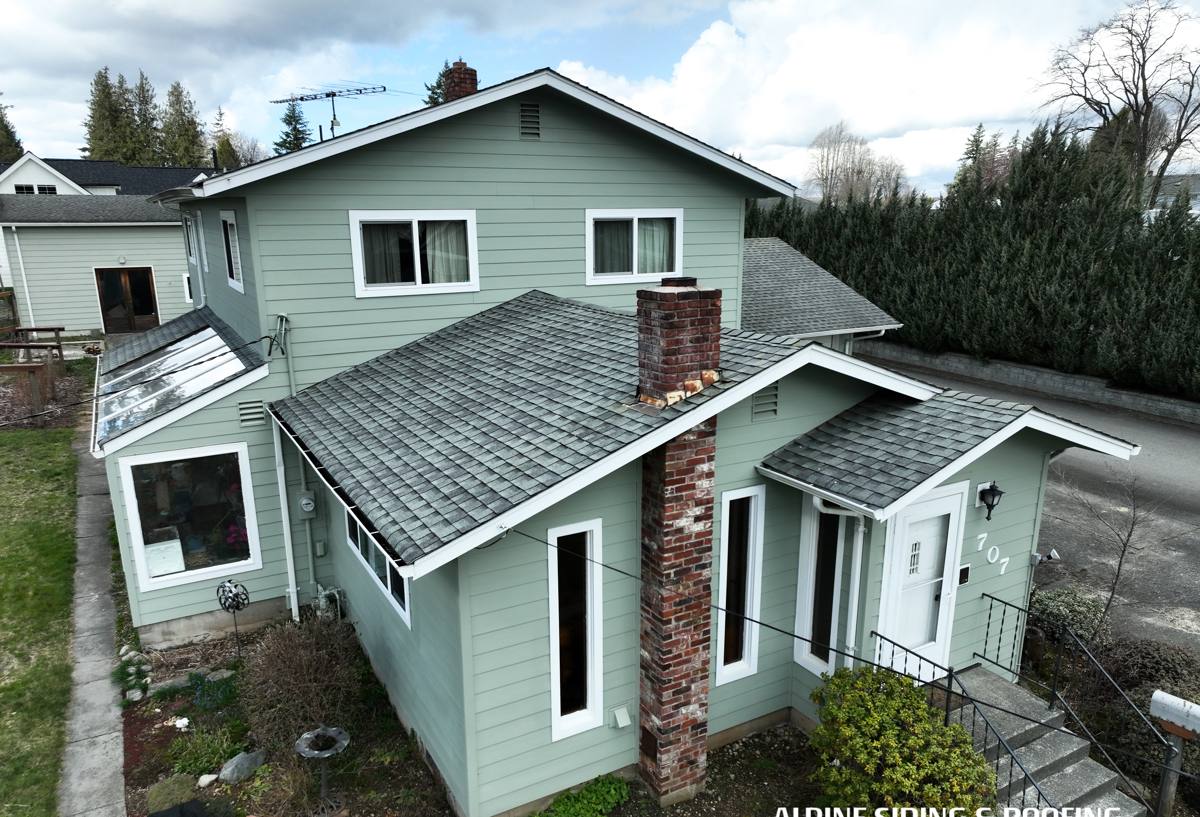
What the Local Climate Actually Does to Windows Here
Moisture that lingers
Driving rain off the water reaches Mountain Lake too, just filtered through more tree cover. The problem isn't the rain itself — it's what happens after. Shaded, tucked-in window walls dry slower than open, sun-exposed ones. Water that would evaporate off a south-facing window in Eastsound can sit in a north-facing frame near Mountain Lake for days, working into any gap in the flashing or caulk.
Moss and organic buildup
A long moss season is part of living anywhere on Orcas Island, but wooded, shaded lots see it worse. Moss holds moisture against wood trim, sills, and even vinyl tracks, and it doesn't need much of a foothold — a hairline gap at a corner joint is enough to get started.
Salt air, still present
Even set back from the shoreline, salt-laden air moves across the whole island. It's less aggressive than a waterfront lot but still accelerates corrosion on hardware, screens, and any exposed fasteners that aren't rated for a marine environment.
Temperature swings
San Juan County doesn't get extreme heat, but the daily swing between a cold, damp morning and a sunny afternoon puts real stress on seals and glazing over years of cycling — especially on older single-pane or early double-pane units.
Signs a Mountain Lake Home Needs Window Attention
- Fogging or a hazy film between the panes of a double-pane window (a failed seal, not a cleaning issue)
- Sashes that stick, drag, or won't stay up without a prop
- Soft, spongy, or discolored wood at the sill or bottom corners of the frame
- Moss or dark streaking building up in frame corners or tracks
- Visible daylight or a noticeable draft at the frame edge
- Condensation forming on the inside of the glass regularly, even in mild weather
- Difficulty locking a window fully, or a lock that no longer pulls the sash tight
Any one of these on its own might just need a repair. Two or three together, especially on the shaded side of a house, usually means the window and its surrounding flashing are past the point where patching makes sense.
What a Correct Installation Actually Involves
Window installation is mostly invisible work. The window itself is the easy part to get right — the flashing, sealing, and integration with the existing wall assembly is where quality separates from shortcuts, and it's where a slow-drying, moss-prone site like Mountain Lake punishes mistakes the hardest.
Removal and opening assessment
Once the old window is out, we check the rough opening for hidden rot, soft sheathing, or old flashing that failed quietly behind the trim. This is often where we find the real story behind a window that seemed fine until it suddenly wasn't.
Flashing and water management
Proper flashing directs water down and out, never letting it pool at the sill or track back into the wall. On a shaded, slow-drying lot, this step matters more than the window brand — a premium window with poor flashing will still let moisture in behind the trim.
Sealing and insulation
Gaps around the frame get sealed and insulated so the window isn't a thermal or moisture bridge into the wall cavity. Over-sealing with the wrong material can trap moisture just as badly as under-sealing, so the right product in the right place matters.
Trim and finish work
Exterior trim gets re-installed or replaced with attention to drainage gaps and paint or sealant lines, since this is where moss typically gets its first foothold if a joint is left tight against standing water.
Choosing the Right Window for a Shaded, Damp Lot
There's no single "best" window material — the right choice depends on how exposed, shaded, and maintained the home will be. Here's how the common options actually compare for a Mountain Lake setting:
| Frame Material | Moisture Behavior | Maintenance | Typical Fit |
|---|---|---|---|
| Vinyl | Won't rot; handles standing humidity well | Low — occasional cleaning of tracks and weep holes | Good all-around choice for shaded, damp lots |
| Fiberglass | Very stable in moisture and temperature swings | Low | Strong long-term option, higher upfront cost |
| Wood | Attractive but vulnerable if seals or paint fail | High — regular repainting/sealing needed | Best for owners committed to upkeep, or drier, sun-exposed walls |
| Wood-clad (wood interior, clad exterior) | Exterior handles weather well; interior still needs some care | Moderate | Good compromise where interior wood look matters |
| Aluminum | Prone to condensation without a thermal break | Moderate | Less common choice for residential re-glazing here |
We don't install every product on that list on every job — our standard is to steer clients toward frame and glazing combinations that hold up to the specific moisture and shade conditions of their lot, even when a flashier option looks better on paper. A window that needs constant upkeep in a spot that never fully dries out isn't doing the homeowner any favors.
Glazing worth asking about
- Double-pane, low-E glass as a baseline for this climate — helps with both heat retention and condensation control
- Argon or similar gas fill for added insulation performance
- Tempered glass where code requires it (near doors, low sills, or wet areas)
Our Process on a Mountain Lake Job
- Site walk and assessment — we look at sun exposure, tree cover, and existing moisture damage before recommending anything
- Honest scoping — we tell you plainly if a window needs full replacement, a repair, or if the surrounding trim/flashing is the real issue
- Material selection — matched to how exposed or shaded that specific wall is, not a one-size answer for the whole house
- Removal and opening check — catching hidden rot or failed flashing before it's covered back up
- Installation — flashing, sealing, and insulation done in the order that actually keeps water out long-term
- Finish and walkthrough — trim, paint or sealant lines, and a final check with you before we call it done
Why Local Experience on Orcas Island Matters
Orcas Island isn't a place where you call in a mainland crew for a same-day fix. Ferry schedules shape everything — when materials arrive, when a crew can get back out for a follow-up, and how a job gets sequenced against the weather window you actually have. A crew that already works Mountain Lake and the rest of Orcas Island plans around that reality instead of getting surprised by it.
Local experience also means recognizing what a shaded, wooded lot near the lake actually does to a window versus what a waterfront lot does. The fixes aren't identical, and a contractor who only sees the island a few times a year is more likely to apply a generic approach instead of one suited to your specific setting.
San Juan County permitting and inspection timelines also move differently than on the mainland. Knowing what's typically required for a window replacement versus a full opening modification — and when a permit is or isn't needed — saves homeowners time and avoids surprises partway through a project.
After Installation: Keeping Windows Ahead of the Moss
- Rinse frame corners and tracks periodically, especially on shaded elevations where moss tends to start
- Clear debris and needles from tracks and weep holes so water can actually drain
- Check caulk lines once a year for cracking or separation, particularly after a hard winter
- Trim back branches or vegetation that keep a window wall in constant shade and dampness, where practical
- Address small drips or drafts early — they're far cheaper to fix than a rotted sill
None of this is complicated, but it's the difference between a window lasting its full expected life and one that starts failing early because moisture had a place to sit year after year.
If you're noticing sticking sashes, soft trim, or moss creeping into your window frames near Mountain Lake, we're happy to take a look and give you a straight answer — no pressure, no upsell. Reach out for a free estimate using the form below.